Quick answer: Nepal can be experienced fully without trekking. A private-vehicle and helicopter-based itinerary covering Kathmandu, Pokhara, Chitwan, and select mountain viewpoints delivers Himalayan views, culture, and wildlife with zero walking days over two to three hours. This is the standard shape of the trip we build for older travellers, physically limited guests, and non-hiking companions who are joining a trekking partner.
The Real Barrier Isn't Age — It's the Assumption That Nepal Means Trekking
Almost every operator in this country markets to trekkers first. Everest Base Camp, Annapurna Circuit, Manaslu — the industry's language is built around trails, altitude gain, and daily walking distances. If you don't trek, or can't, or simply don't want to, it's easy to read that and conclude Nepal isn't for you.
It is. We say this plainly because we've watched the assumption stop people from booking a trip they would have loved. A 68-year-old with a knee replacement, a couple where one partner wants a proper trek and the other wants none of it, a family bringing grandparents along — none of them need to touch a trail to see Everest, walk through a living medieval city, or sit two metres from a rhino in Chitwan. The mountain doesn't require the mountain trail. It requires the right plan.
What a No-Trek Luxury Itinerary Actually Looks Like
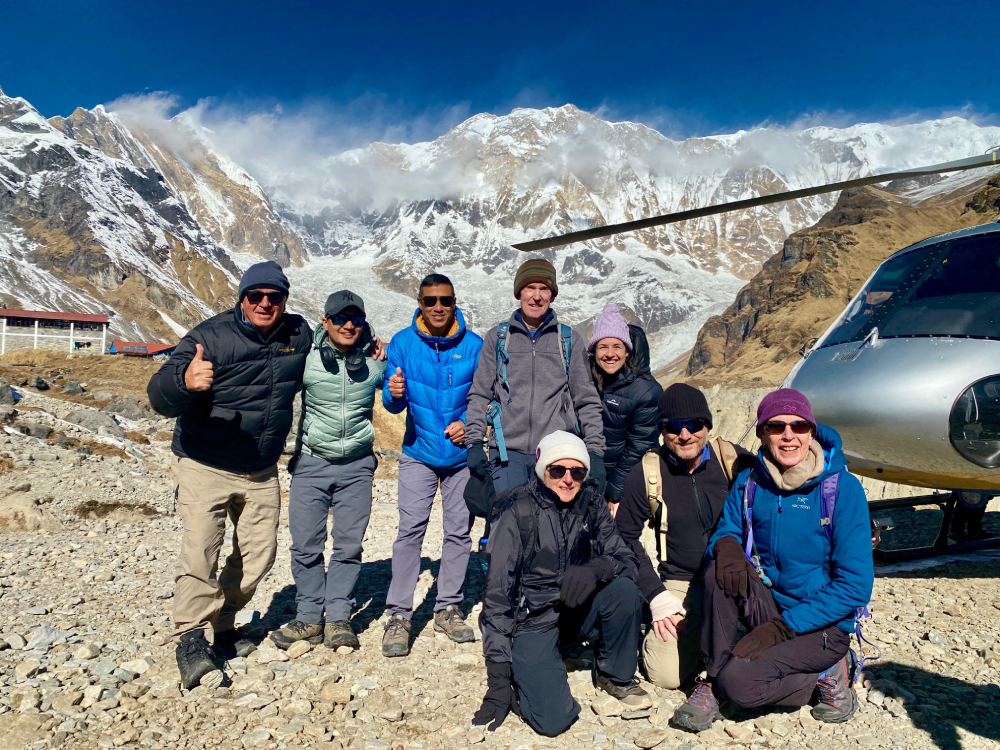
The shape we use most often runs Kathmandu to Pokhara to Chitwan, with an optional helicopter day added into Everest or Mustang. Everything moves by private vehicle or aircraft. No leg of the journey depends on the traveler's ability to walk more than a short, flat stretch.
A representative ten-day version looks like this:
- Days 1–3, Kathmandu: Private heritage touring across Durbar Squares, Boudhanath, Pashupatinath, and Bhaktapur, paced slowly rather than rushed through as a checklist.
- Day 4, Kathmandu to Pokhara: Domestic flight, roughly 25 minutes, in place of the seven-hour road drive.
- Days 5–7, Pokhara: Lakeside days, a cable car ride to World Peace Pagoda for mountain views without a step of trail walking, and a scenic road excursion toward Sarangkot for sunrise over the Annapurna range.
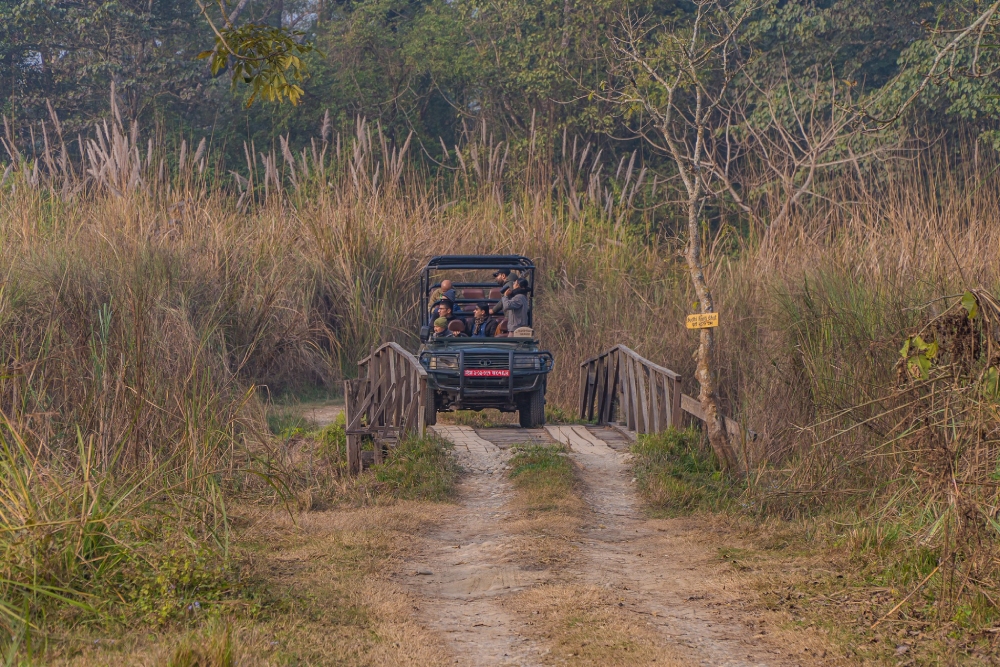
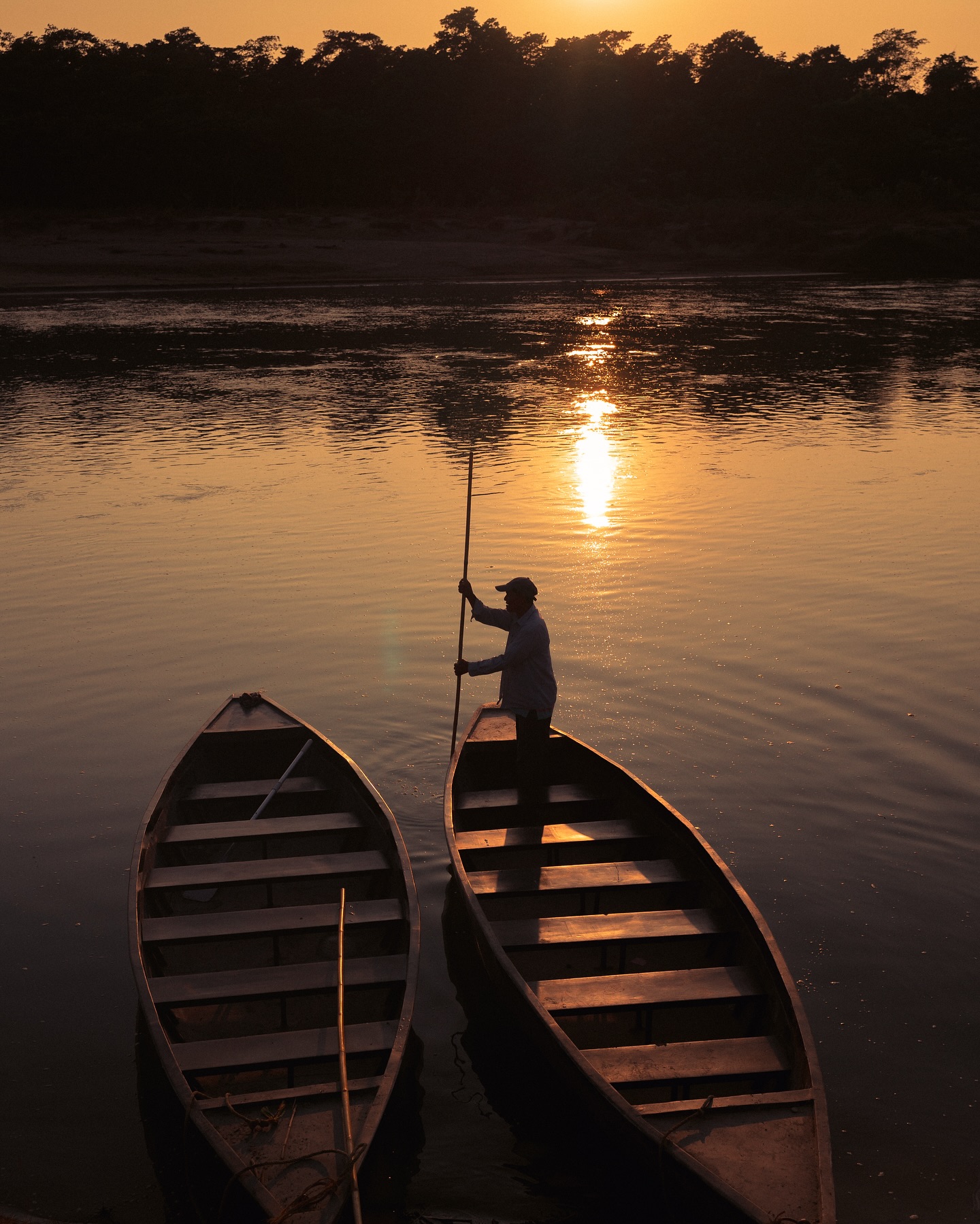
- Days 8–9, Chitwan: Jeep and canoe-based wildlife viewing in Chitwan National Park, no walking safari involved.
- Day 10, Optional: A private helicopter day to Everest or Mustang, flown from Kathmandu or Pokhara depending on the route.
Nothing here is a compromise version of a trekking trip. It's a different trip, built for a different traveller, and it holds its own as a complete way to see the country.
Seeing the Himalaya Without Walking to Them
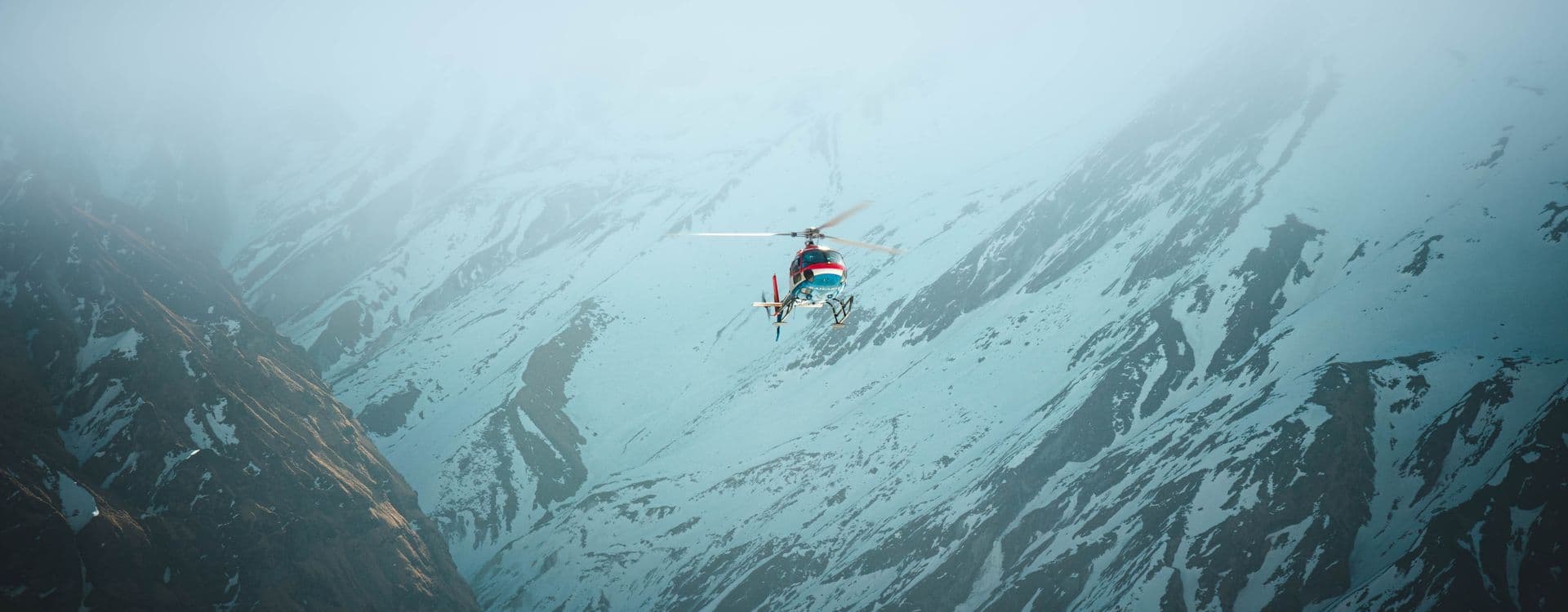
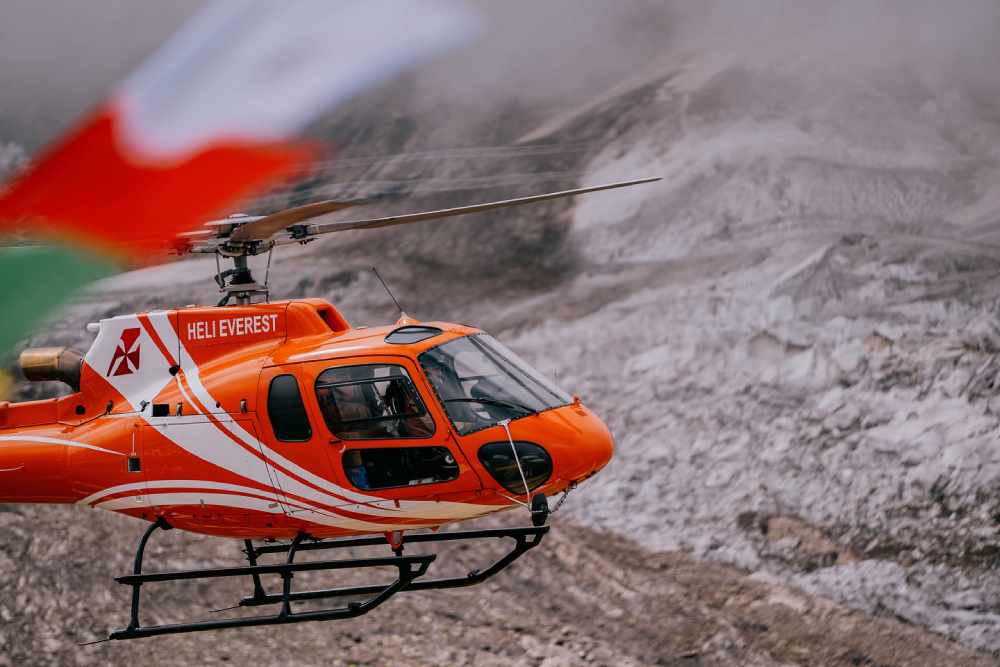
This is usually the first question we get, and it's a fair one: can you actually see Everest without trekking to it? Yes. A private helicopter mountain flight from Kathmandu passes close to Everest, Lhotse, and the wider Khumbu skyline, and several of these routes include a landing near Hotel Everest View, reached by air rather than by the multi-day approach trek most itineraries assume. You get the view the trekkers spend two weeks earning, in a single morning, without a boot touching the trail.
One Guide, One Vehicle, the Whole Trip — Why Continuity Matters More Without a Trek
On a trek, a change of guide at each new region is expected — different terrain, different local specialists. On a non-trekking trip, that same handoff pattern works against the traveller. It resets the relationship, resets the pacing, and turns what should be one continuous journey into a series of disconnected transfers.
We run these trips with a single guide and a single vehicle for the full Kathmandu–Pokhara–Chitwan stretch wherever possible. The guide who explains the significance of a courtyard shrine in Kathmandu is the same person helping a guest into a canoe in Chitwan four days later. They already know how the traveller likes to move through a day, what questions matter to them, and where to slow down. That continuity is not a small convenience. For travellers who aren't trekking, and therefore aren't bonding with a route through physical effort the way trekkers do, the guide relationship carries a larger share of the emotional weight of the trip. It has to hold.
Cultural Depth Without Physical Strain — What Fills the Days Instead of Trail Time
Removing trekking doesn't remove depth. It changes where the depth comes from. Instead of hours on a trail, the days fill with:
- Private, unhurried access to Kathmandu's heritage sites, timed around the courtyards rather than the crowds
- A cooking or craft session with a local family, built around conversation rather than a demonstration
- Chitwan's jeep and canoe-based wildlife programme, which brings you into genuine proximity with rhinos, gharial crocodiles, and river birdlife without a single walking safari
- A slow lake outing in Pokhara, timed for the mountains to appear in the water as the light shifts
None of this is filler between the "real" attractions. For a non-trekking traveller, this is the trip.
Places You Can Actually Visit in Nepal Without Trekking
Kathmandu. The valley is the easiest of all Nepal's regions to see without trekking, and also the richest. Kathmandu Durbar Square, Patan Durbar Square, and Bhaktapur Durbar Square are all flat, paved medieval city centres, reachable by private vehicle and explored entirely on foot within the courtyards themselves, at a pace closer to wandering than touring. Boudhanath, one of the largest stupas in the world, is best visited at dusk, when the monks begin their circumambulation, and the plaza around it settles into something closer to devotion than sightseeing. Pashupatinath, Nepal's most significant Hindu temple complex on the banks of the Bagmati River, rewards a slow, guided visit rather than a quick photo stop, since much of what makes it meaningful — the cremation rituals, the sadhus, the layered history of the ghats — needs context to land. None of this asks anything of the body beyond standing and walking short, level distances.
Pokhara. Lakeside Pokhara trades Kathmandu's density for stillness. A slow boat across Phewa Lake at sunrise, with the Annapurna range reflected in the water before the wind picks up, does more for a traveller than most itineraries give it credit for. The cable car to World Peace Pagoda delivers a genuine, close-up mountain view in under ten minutes, no trail walking involved. For travellers who want the classic Sarangkot sunrise without the pre-dawn hike, a private vehicle up the hill gets you there in time, coffee in hand, for the same view the trekkers earn on foot.
Chitwan. Jeep and canoe-based wildlife viewing cover Chitwan National Park thoroughly — river-edge canoe rides for gharial crocodiles and birdlife, open jeep drives through the sal forest and grassland for rhino and, with real luck, tiger. No walking safari is required to see any of it. We do not offer or support elephant riding as part of any wildlife programme; the animals here are watched, not used. Read more about Chitwan Jeep Safari.
Annapurna. The range is visible by road, not only from the trail. Viewpoints like Sarangkot put the full Annapurna panorama, Machapuchare included, in front of you without a single trekking day, and a scenic drive further along the Pokhara valley rim opens up angles most visiting trekkers never see, because they're moving through the valley floor rather than around its edge. Learn more about the Annapurna helicopter tour.
Everest. Reached by helicopter only in a no-trek itinerary. See "Seeing the Himalaya Without Walking to Them" above.
Mustang. This is one of the few regions in Nepal genuinely open both ways without trekking. Upper Mustang — the walled city of Lo Manthang, the cave monasteries, the wind-carved desert landscape that looks more like Tibet than Nepal — is reachable by helicopter from Pokhara for travellers who want it in a single day, or by private jeep along the now largely motorable road for those who'd rather take the landscape in gradually, with overnight stops along the way. Lower Mustang, including Jomsom, Marpha, and the approach to Kagbeni, is comfortably reached by road or a short domestic flight from Pokhara, with no trekking leg required either way. The choice between helicopter and jeep here is really a choice about pace, not access — both get you in.
Where Physical Limitations Actually Matter (and Where They Don't)
We'd rather be honest here than reassuring for its own sake. Altitude is a genuine factor at Hotel Everest View, sitting at 3,880 metres, regardless of whether a guest walks there or flies. Anyone with a cardiac or respiratory condition should discuss this leg with their physician before booking, trek or no trek.
Outside of that single stop, the concern largely disappears. Kathmandu, Pokhara, and Chitwan all sit below 1,400 metres, well within comfortable range for almost any traveller, mobility aids and all.
Planning a Private Non-Trekking Trip to Nepal
Helicopter days are weather-dependent, particularly around Everest, so we always build in a buffer day rather than scheduling the flight for the final morning of the trip. Outside of that, a non-trekking itinerary is easier to plan on shorter notice than a trekking one, since it doesn't depend on trekking permits or teahouse availability at altitude. For travellers planning from abroad, six to eight weeks ahead is comfortable; anything within four weeks is still workable, with slightly less flexibility on the exact helicopter dates. Contact us for more info.
FAQs
Can you experience Nepal’s mountains without trekking?
Absolutely. Nepal’s mountains do not have to be experienced on foot. A private helicopter can take you from Kathmandu towards Everest for close views of the Khumbu, or from Pokhara into the Annapurna region and Mustang. From Pokhara, you can also reach viewpoints such as Sarangkot by road for sunrise over the Annapurna and Dhaulagiri ranges.
The difference is in how the day is designed. Rather than collecting mountain viewpoints, a well-planned journey can include time for a private landing, a mountain breakfast or lunch, a village visit, or simply enough time to take in the landscape without rushing back to the city.
Is Nepal suitable for travellers who cannot or do not want to trek?
Yes, but the itinerary needs to be designed around access rather than simply removing the trekking days.
Kathmandu offers heritage sites, courtyards, temples, monasteries and traditional neighbourhoods with vehicle access close to the main sights. Pokhara works particularly well for slower travel, with lakeside stays, mountain views, short scenic drives and optional helicopter experiences. Chitwan adds a completely different landscape, with private wildlife experiences in the Terai.
For travellers with limited mobility, the important consideration is not just altitude. Uneven temple courtyards, steps, old-city streets and hotel access can matter just as much, so these details should be assessed before confirming the itinerary.
What is the most comfortable way to see Everest without trekking?
A private helicopter flight from Kathmandu is the most direct option. The experience is not simply an aerial sightseeing flight. Depending on weather and aviation conditions, the journey can include views towards Everest, Lhotse, Nuptse, Ama Dablam and the wider Khumbu, with a landing at a mountain location for views and breakfast.
Hotel Everest View is sometimes included in Everest helicopter programmes, but it sits at 3,880 metres. For travellers who are not accustomed to altitude, it should not be treated as just another breakfast stop. A private flight can instead be planned around the mountain views while keeping the overnight stays at lower elevations.
Do I need to worry about altitude if I am not trekking?
Altitude does not disappear simply because you are travelling by helicopter.
Kathmandu is around 1,400 metres, and Pokhara is around 800 metres, while Chitwan is considerably lower. The issue arises when a helicopter experience takes you temporarily to high-altitude locations such as the Everest region.
For many travellers, this means the itinerary can remain comfortably low-altitude while a mountain flight provides access to the Himalayas. However, anyone with medical concerns or previous difficulty at altitude should discuss the planned elevations with their doctor before travelling.
How long should a luxury Nepal trip be if trekking is not part of it?
Around 8 to 10 days is enough to create a substantial journey without making the itinerary feel rushed.
A possible structure would be several nights in Kathmandu for heritage and cultural experiences, two or three nights in Pokhara for mountain landscapes and slower days, and two or three nights in Chitwan for wildlife. A helicopter experience can then be incorporated according to weather, rather than making the entire trip dependent on one fixed mountain-flight day.
Longer stays make sense when the purpose is deeper cultural or wellness travel rather than simply covering more destinations.
Where can you go in Nepal without trekking?
Quite a lot of Nepal.
Kathmandu and the surrounding valley offer some of the country’s strongest cultural experiences without requiring a trek. Pokhara provides easy access to Himalayan scenery, lakeside landscapes and road-accessible viewpoints. Chitwan offers wildlife and Tharu cultural experiences at low altitude.
For mountain landscapes, Sarangkot and other road-accessible viewpoints provide Annapurna views without a trail. Helicopter journeys open up places that would otherwise require several days of walking, including the Everest region and Mustang.
The important distinction is that “without trekking” does not have to mean “without the Himalayas.” It simply means choosing a different way to reach them.
The Trip Was Never the Trail
Trekking is one way to move through Nepal. It isn't the only way, and it was never really the point. The point is the temple courtyard at the hour before the crowds arrive, the mountain appearing suddenly through a helicopter window, the rhino stepping out of the grass twenty metres from the jeep. None of that requires a trail.
If you want to see Nepal properly, without a single day of walking beyond your own front door, we can build that trip. [Get in touch with Everest Luxury Holidays] to start planning a private, non-trekking journey through Kathmandu, Pokhara, Chitwan, and the Himalaya beyond.