Most "best places to visit in Nepal" lists look the same. Kathmandu, Pokhara, Everest, Chitwan. In that order, with roughly the same descriptions.
That's not this list.
Some of those places are on here — because they deserve to be. But the reason they're here isn't fame. It's what happens when you experience them properly. Nepal is a country that rewards patience and punishes haste. The travellers I've seen get the most from it are the ones who slow down enough to let it in.
I've designed this list the way I design itineraries: around what people remember five years later. Not the viewpoints. The moments. The Newar grandmother who handed you Juju Dhau without being asked. The morning in Namche when the prayer flags went still, and the whole valley went quiet. The way Lo Manthang smells after rain.
These nine places have all given my clients those moments. Here's how to find them.
Explore our full range of luxury Nepal tours or read on to understand why each of these destinations earns its place.
1. Bhaktapur: Where Medieval Nepal Is Still Alive
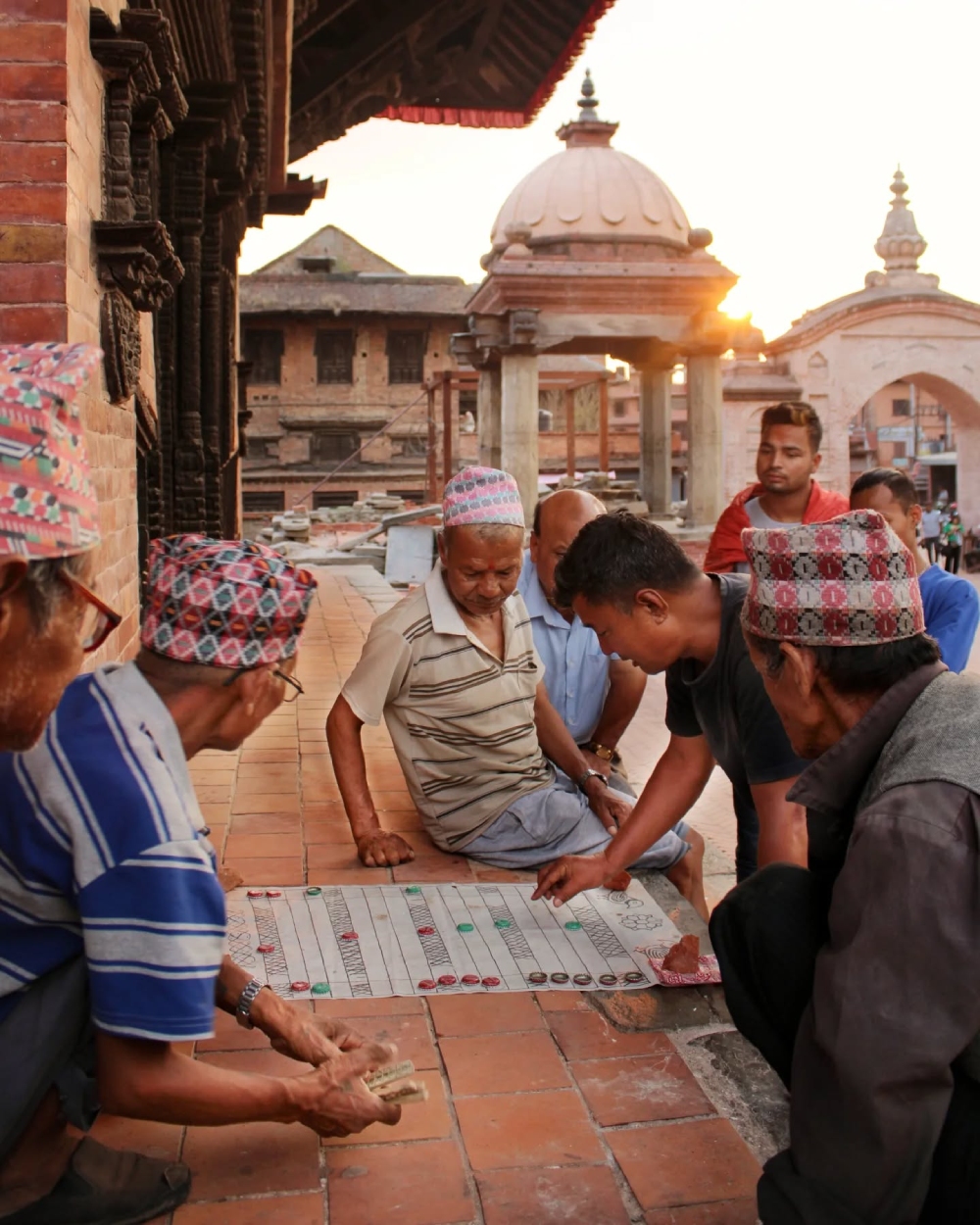
Most visitors come to Bhaktapur for the Durbar Square — the 55-Window Palace, the Nyatapola Temple, and the stone-paved courtyards that UNESCO put on the map. It's worth seeing. But the Durbar Square is just the entrance. The real Bhaktapur starts in the alleys behind it.
I always take clients through Pottery Square — not because it's picturesque, though it is, but because it's working. The potters here aren't performing for tourists. They were here before tourism, and they'll be here after. You watch a man shape a clay pot with his bare hands using a wheel he learned from his father, who learned from his father. You can sit down and try it yourself. The clay does not cooperate. That's the point.
The Newar guides I use in Bhaktapur grew up in the city. They take you into family homes where Nepali is actually the second language — Newari is spoken first. You learn what makes Newar architecture different from anywhere else in the valley: the wood-carved peacock windows, the tiered pagoda design, the way courtyards are built to hold religious festivals, not foot traffic.
Before you leave, eat the Juju Dhau. It means "King Curd" — a thick, creamy yoghurt served in an earthen pot, made with buffalo milk from farms on the valley's edge. It's been made the same way for centuries. One shop near Taumadhi Square has been selling it from the same spot for generations. It tastes like nowhere else.
Bhaktapur is 13km from Kathmandu, and most tours give it half a day. I give it a full overnight. The city completely transforms after the day-trippers leave.
I include Bhaktapur as a full overnight on our 10-day Signature Nepal Tour — paired with Patan the following morning, before heading west.
2. Patan: The Living Museum
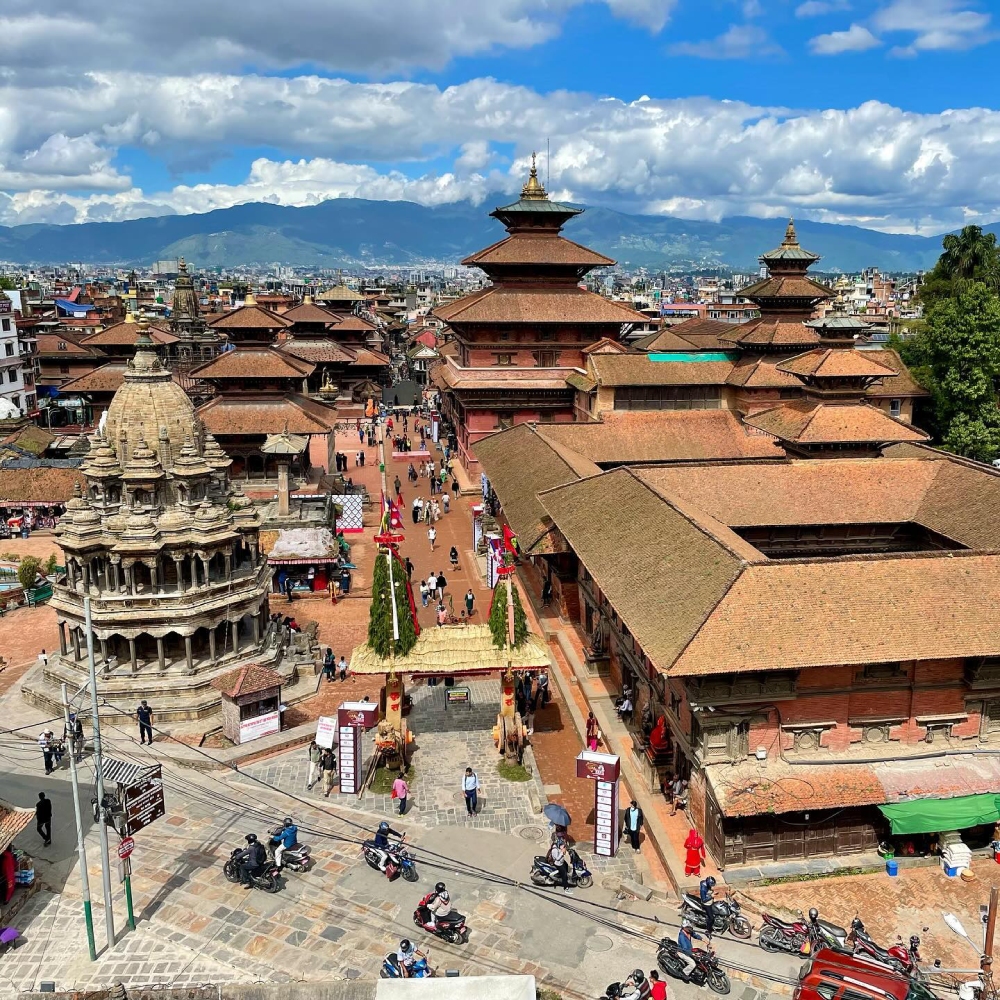
Patan — or Lalitpur, "the city of beauty" — sits just across the Bagmati River from Kathmandu, close enough to reach in twenty minutes, different enough to feel like another country.
Many art historians consider the Durbar Square here to be the finest collection of medieval courtyard architecture in Asia. I won't argue. But what I tell clients is: the square is the gallery, not the art. The art is still being made.
Patan has been a centre of metalwork and Thangka painting for over a thousand years. Workshops are operating in the courtyards behind the main square, where craftsmen are casting bronze religious statues using the same lost-wax process that was used in the 13th century. I arrange private visits — not the kind where you walk past and someone waves, but where you sit down with the craftsman, and he explains what he's making, who it's for, and what it means. These conversations are not on any public itinerary.
Spend a quiet afternoon on one of the rooftop restaurants overlooking the golden spires of Krishna Mandir. Order what's local, not what's on the tourist menu — ask for bara (lentil pancakes) and aila (local alcohol) if you want to understand how Newars eat. Walk back through the back lanes at dusk when the temple priests are doing evening puja. The incense and bells and fading light do something to the quality of the air.
Patan and Bhaktapur work as a two-day Kathmandu Valley combination. If you want to understand how I sequence these into a wider Nepal journey, see our luxury Nepal tours.
3. Bandipur: The Town That Refused to Change
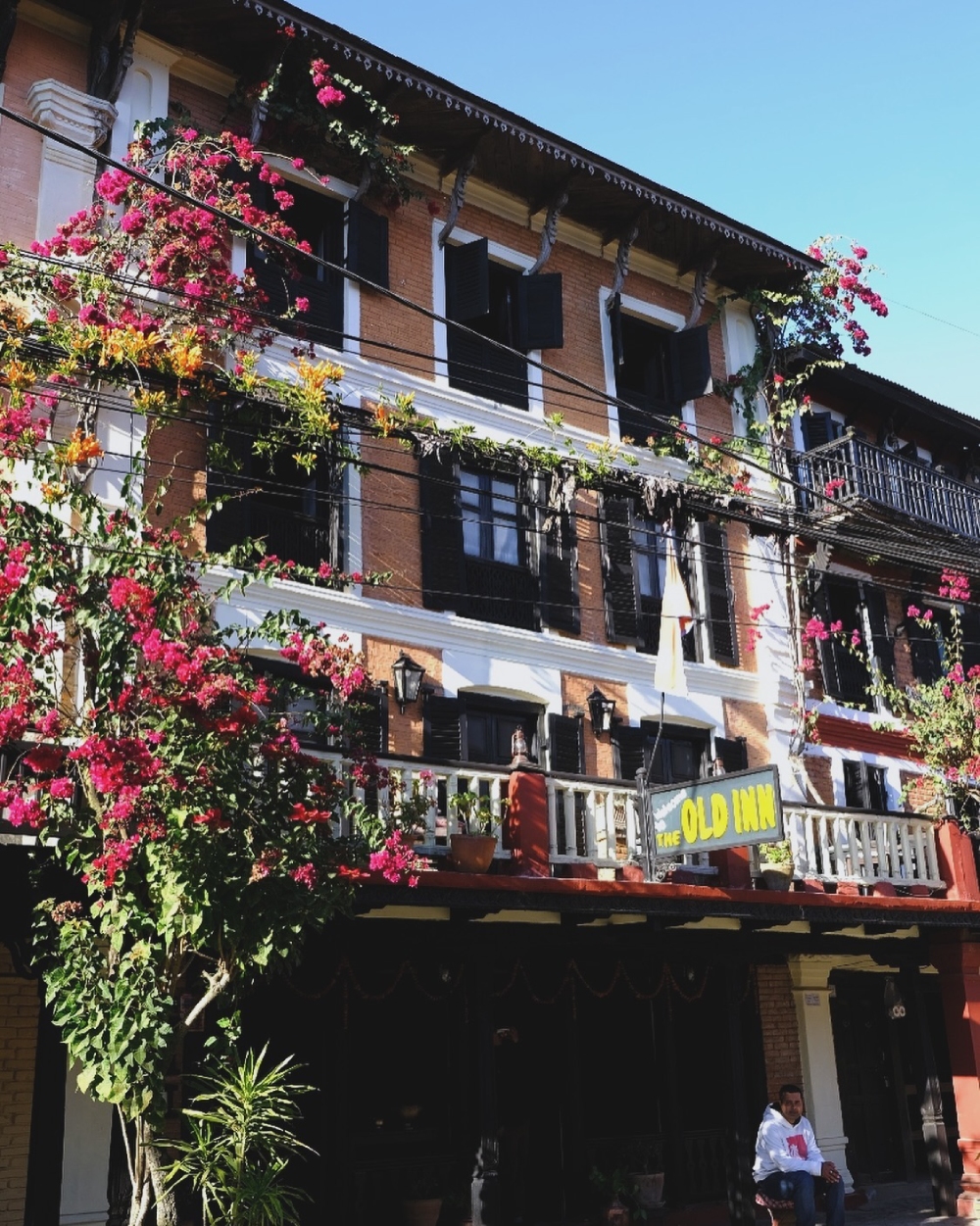
Bandipur sits on a ridgeline at 1,030 metres between Kathmandu and Pokhara, about 3 hours from each. When the Prithvi Highway was built in the 1970s, it bypassed the town entirely. At the time, the traders who'd built Bandipur into a prosperous Newari merchant town saw it as a disaster. In retrospect, it saved the place.
Because the highway didn't come through, Bandipur stayed exactly what it was: a pedestrianised hilltop town of beautifully carved wooden merchant houses, a main street that allows no vehicles, and a pace of life that is genuinely slow. It's not preserved for tourism. It's just preserved.
I use Bandipur as an overnight stop between Kathmandu and Pokhara. Almost every client who stays says they wish they'd booked a second night. The evening is the best of it — the day-trippers go back down the hill, the town goes quiet, the shopkeepers bring out low stools and sit in the doorways, and you can have a conversation with someone who has no particular reason to talk to you except curiosity. At night, if the weather is clear, the Himalayan panorama visible from the ridge — Manaslu, Annapurna II, Lamjung Himal — is extraordinary.
The food at a good guesthouse here is homemade Newari cooking. Beaten rice, black lentil patties, pickled vegetables, and pork preparations that appear nowhere else in Nepal. Eat it.
Bandipur appears as a natural midpoint on our Signature Nepal Tour. It's also a useful add-on for clients coming from Chitwan to Pokhara who want to break the drive meaningfully.
4. Pokhara: The Gateway That Most People Mistake for the Destination
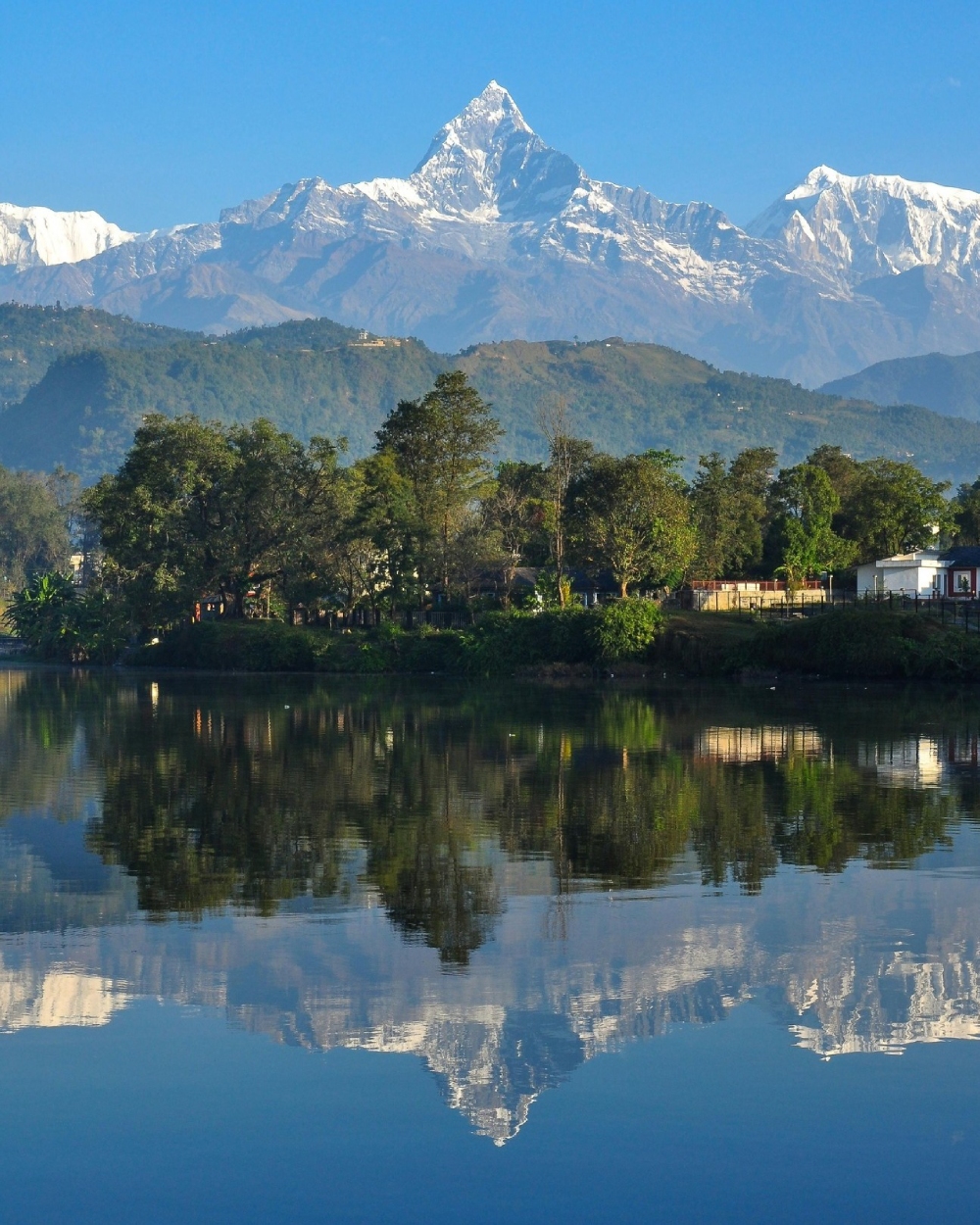
Pokhara is Nepal's second city, and most visitors treat it as the final stop: Phewa Lake, Sarangkot sunrise, Barahi Temple, lakeside restaurants. That version of Pokhara is fine. It's also approximately 10% of what's available.
The city sits at 820 metres in a natural basin, with the entire Annapurna Massif rising directly behind it, less than 30km away. On a clear day from the right vantage point, you can see Machapuchare (6,993m), Annapurna I (8,091m), Dhaulagiri (8,167m), and Manaslu (8,163m) simultaneously. That's four of the world's fourteen 8,000-metre peaks from one position. It doesn't stop being extraordinary.
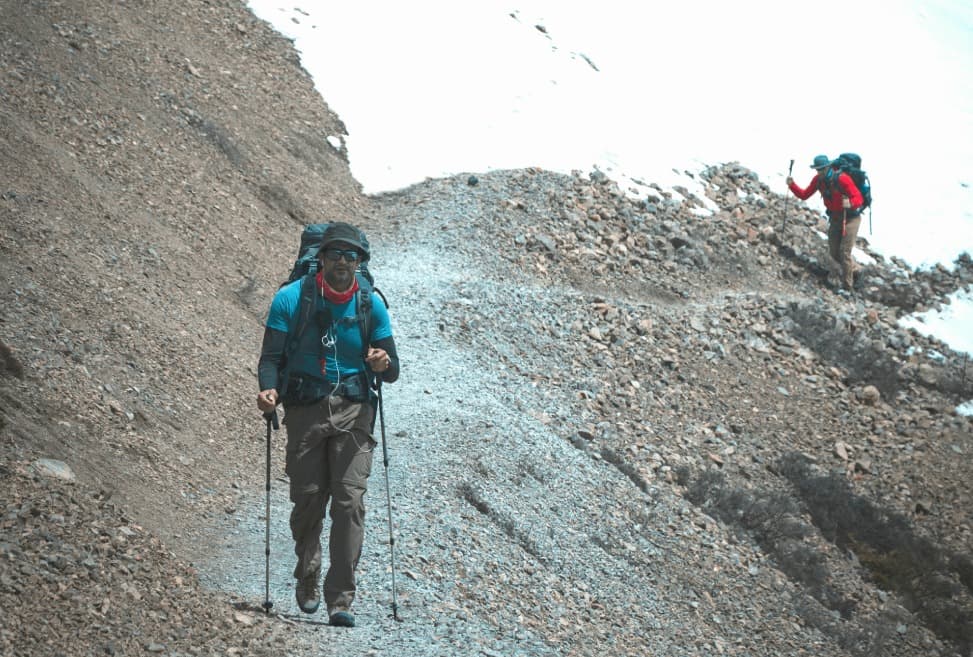
But what I value about Pokhara professionally is what it enables. The city is the gateway into the Annapurna Conservation Area — home to the Annapurna Circuit, the Annapurna Base Camp trek, and the less-travelled Khopra Ridge and Mardi Himal routes.
I use Pokhara as a calibration day before trekking: a sunrise meditation at the World Peace Pagoda (reached by boat and then a short walk, arriving before any crowds), a morning at the Gurkha Museum which tells the history of the Gurkha soldiers who have served in armies from Britain to India to Singapore, and an afternoon at one of the organic farms on the city's edge for a meal cooked by the people who grew it.
The Pavilions Himalayas: The Lake View is my preferred property here — lakeside villas with private canoes on Phewa Lake, views of the mountains directly from the room. Not the biggest or the most famous hotel in Pokhara, but the most considered. The staff-to-guest ratio tells you everything.
Pokhara is the starting point for our Annapurna Heritage Trail and the departure point for our Annapurna Base Camp Helicopter Tour. It's also where the Wellness in Annapurna journey begins. If you have a full Nepal itinerary in mind and aren't sure how Pokhara fits, get in touch, and I'll show you how I built it.
5. The Everest Region: More Than the Summit, More Than Base Camp
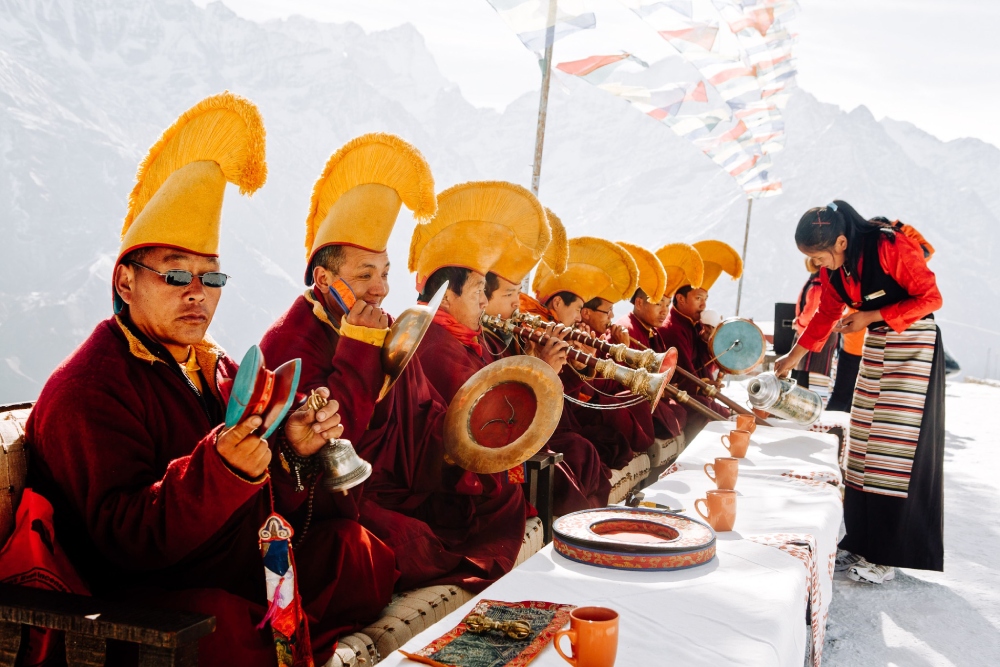
The Everest region — the Khumbu — is the most famous trekking destination on earth. It's also one of the most misunderstood.
Most people who go there go to the Everest Base Camp at 5,364 metres. That's a worthy goal. I've done it many times, and it still moves me. But the Khumbu is not just a corridor to a basecamp. It's a living Sherpa civilisation that has existed at altitude for centuries, and most trekkers walk straight through it.
Here's what I mean: Namche Bazaar (3,440m) is the hub of the Khumbu, and most groups spend one acclimatisation day there before pushing higher. I spend two. First, we walk to the Everest View Hotel at Syangboche (3,880m) — not to stay, but for breakfast, with Everest, Lhotse, Ama Dablam, and Thamserku visible from the terrace simultaneously. On the second day, we walk to Khumjung, the village above Namche, where Sir Edmund Hillary built a school in 1960. It's still functioning. The students still remember who built it and why. These walks have no altitude gain that stresses the body, but they have enormous depth.
The other detail I use: breakfast in Kongde village. Kongde sits at around 3,600m on a spur west of Namche, off the main trail. From Kongde, Everest rises in an unobstructed vertical face with nothing between you and it except sky. No other position on the approach trail gives you that specific view. Most trekkers never know it exists.
For clients who want the Everest experience without a 10-day trek, the Everest Helicopter Tour with an overnight at Hotel Everest View puts you at 3,880m with that panorama from your room window. Hotel Everest View holds the Guinness World Record as the highest-altitude hotel of its type — the view from the terrace at sunrise, with Everest directly in front of you and prayer flags in the foreground, is one of the few things in my experience that actually exceeds expectation.
For the full trek, the Everest Base Camp Luxury Lodge Trek with Helicopter Return uses the finest lodges on the trail — Yeti Mountain Home properties and equivalents — and returns by helicopter from Gorak Shep or Kala Patthar, so you get the descent view from the air rather than on foot.
Not sure whether the Khumbu is right for your fitness level or timeline? Talk to me directly — this is genuinely a decision that depends on specifics, and I'd rather give you the honest answer than a booking.
6. Ghandruk: The Gurung Village That Teaches You to Slow Down
Ghandruk is a Gurung village in the Annapurna foothills at 1,940 metres, about a four-hour walk from the Annapurna trail head or reachable by jeep to a point below the village. Most trekkers pass through it as a waypoint on the Annapurna Base Camp route. I treat it as a destination.
The Gurung people — the ethnic group who've historically inhabited this part of the Annapurna hills — are one of the primary communities from which Gurkha soldiers have been recruited for centuries. Ghandruk itself has sent an extraordinary number of men to serve in the British and Indian armies. There's a Gurung Museum in the village that tells this story honestly, without ceremony. It's small and low-key and completely absorbing.
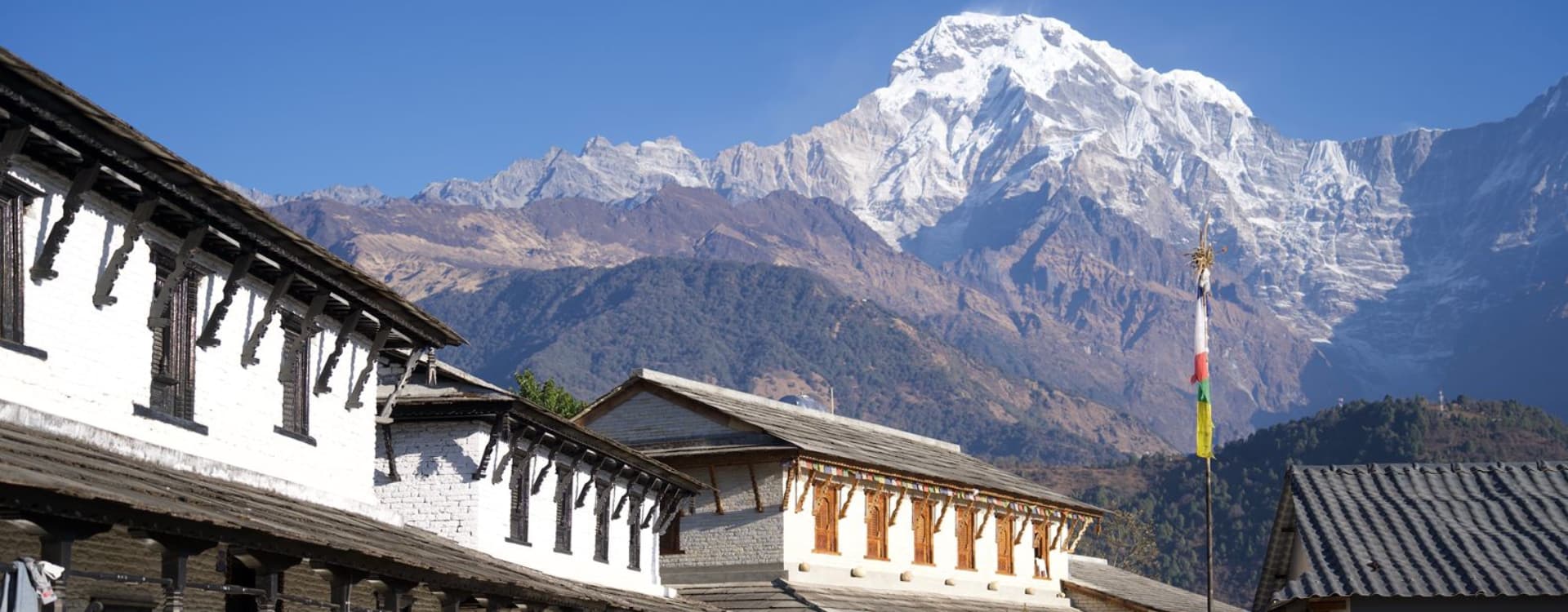
The village is stone-paved throughout. No vehicles. The houses are traditional — slate-roofed, with carved wooden windows and small kitchen gardens. The views from the upper part of the village, looking directly at the south face of Annapurna South (7,219m) and the distinctive fish-tail profile of Machapuchare (6,993m) — which is sacred and has never been summited — are among the most dramatic in Nepal at this altitude. You don't need to be a trekker to reach them.
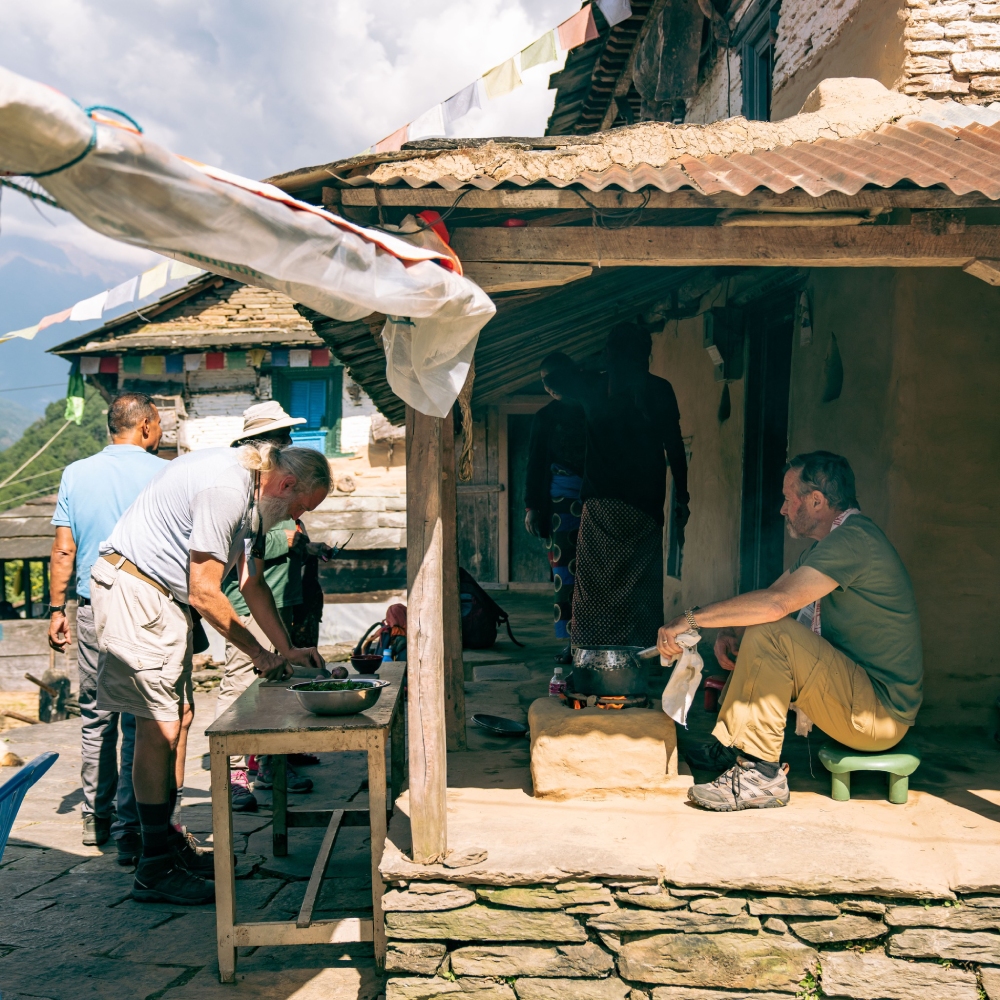
I run cooking sessions in Ghandruk with local families. Not a hotel demo kitchen — an actual family kitchen, with dal bhat being made for the family's own meal, and you participating in that rather than watching a performance of it. The difference is substantial. Nettle soup, local honey from mountain hives, gundruk (fermented leafy greens that have fed Nepali families through hard winters for centuries). These things don't appear on restaurant menus.
For those who want the higher Annapurna experience without the full trekking commitment, I arrange a helicopter flight directly to Annapurna Base Camp from Ghandruk — 15 minutes flight time, private landing at 4,130 metres inside the Annapurna Sanctuary. The scale of the amphitheatre — surrounded by Annapurna I, Annapurna South, Hiunchuli, Gangapurna, and Machapuchare — from ground level after you've spent two days in a quiet village is something I've watched stop people mid-sentence.
Ghandruk is the centrepiece of our Annapurna Heritage Trail — 9 days, which moves through Dhampus, Ghorepani, Ghandruk, and Landruk at a pace that allows the valley to register properly.
7. Upper Mustang: The Last Forbidden Kingdom
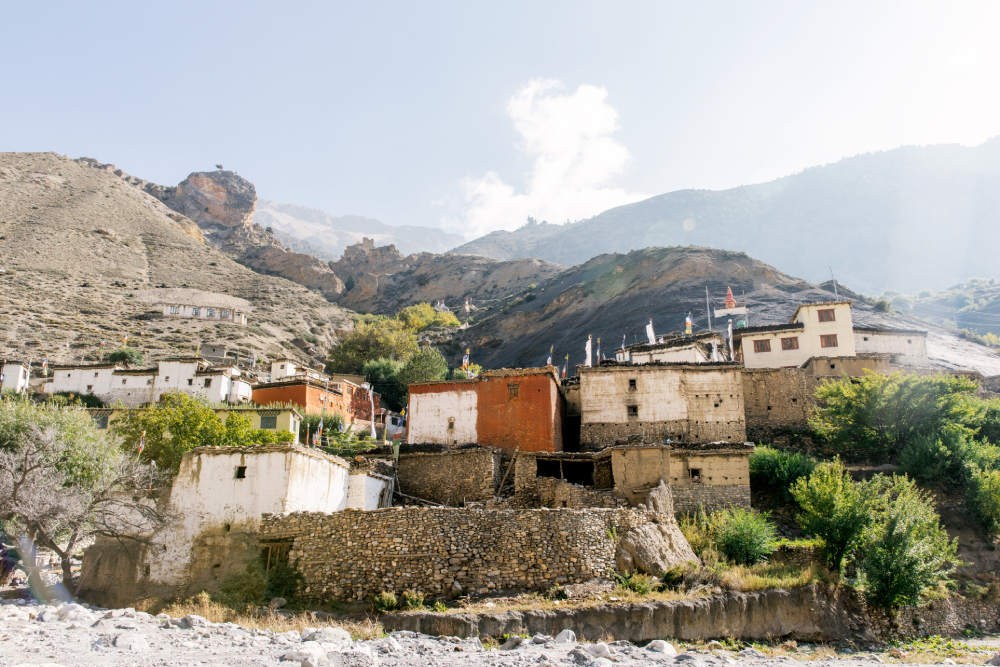
Upper Mustang was closed to all foreign visitors until 1992. Before that, it was the private domain of the King of Lo — Lo Gyalpo, whose lineage traces back to the 15th century, and a community of Tibetan Buddhists who had lived in one of the world's most remote high-altitude deserts for generations. Nepal opened it to tourism only reluctantly, and entry still requires a Restricted Area Permit of $50 per person per day, which controls numbers and funds local infrastructure.
The effect of all this is that Upper Mustang is probably the best-preserved Tibetan Buddhist culture in the world — better preserved, many scholars argue, than Tibet itself, where decades of cultural destruction have erased much of what existed. The monasteries here — Lo Gekar, Ghar Gompa, Thubchen — contain 15th-century murals in conditions that would be impossible to find north of the border.
The landscape is unlike anything else in Nepal. The Kali Gandaki — the world's deepest gorge by some measurements — has carved the valley into a dramatic canyon of red, ochre, and white cliffs. The plateau above Kagbeni is almost Martian: treeless, wind-blasted, dotted with ancient cave complexes that archaeologists are still excavating. The caves at Chungsi and Luri contain thousands of human remains and artefacts, some predating the kingdom itself.
Lo Manthang, the walled capital city, sits at 3,840 metres. It has fewer than 1,000 permanent residents. The main entrance is a single gate in a whitewashed wall that has stood for six centuries. Inside: narrow lanes, the royal palace, and three major monasteries that still function with active monk communities. The Tiji Festival (held in May) is one of the most spectacular religious events in the Himalayan region — three days of masked dances performed by monks in the open courtyard of Jampa Gompa. Almost no one outside Nepal knows it exists.
I send clients to Mustang with Narayan, my specialist guide there, who has been working in that region for over 15 years. He knows the monastery caretakers personally. That means you get access to spaces and conversations that don't appear on any public itinerary. The difference between going with someone who knows the place and going without is the difference between Mustang as a landscape and Mustang as an experience.
For accommodation, I recommend Shinta Mani Mustang, Royal Mustang Resort or the Hotel Mandala, which blend local architectural language (flat-roofed, thick-walled Tibetan design built for cold-desert climate) with considered interiors and honest hospitality.
Full details of the 12-day journey in our Upper Mustang Luxury Jeep Tour. If you're considering Mustang and want to understand whether the timing and the permit costs make sense for your trip, reach out directly — it's a destination that requires some specific planning.
8. Chitwan: Where the Jungle Has Memory
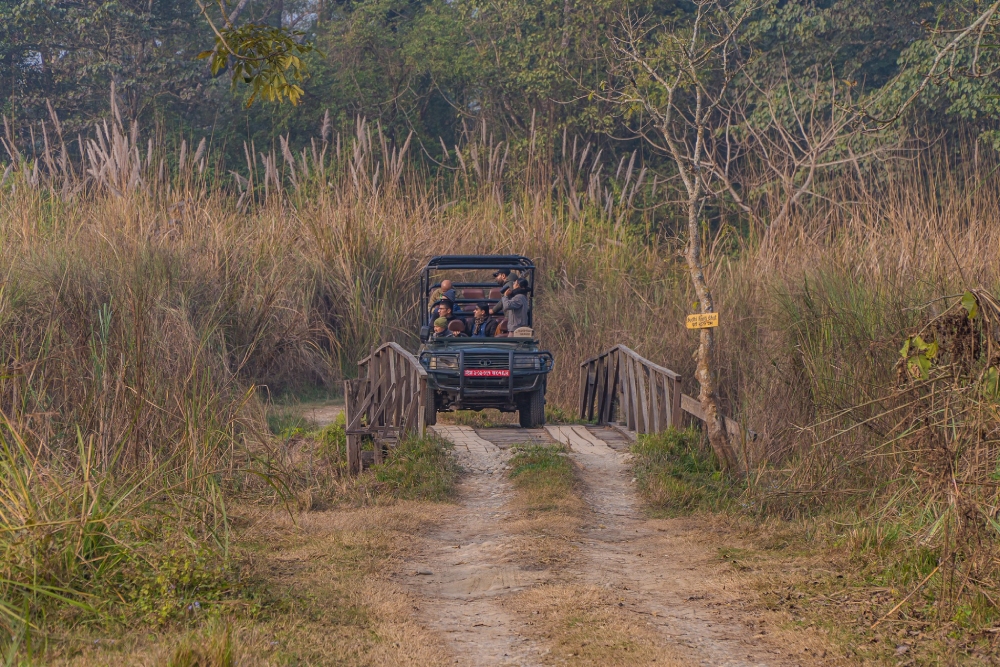
Chitwan National Park in the Terai lowlands is Nepal's most accessible wildlife destination and one of Asia's great conservation success stories. The one-horned rhinoceros, hunted almost to extinction in the 20th century, has recovered here to a population of over 700. Bengal tigers, gaur, gharial crocodile, four species of deer, and over 500 bird species. The biodiversity is extraordinary.
But what separates a Chitwan experience designed by someone who knows it from a standard wildlife package is not the animals. It's the guide.
My guide in Chitwan is Chhannu Dai. He's Tharu — the indigenous people of the Terai, who have lived in and around this forest for centuries, who developed a partial resistance to malaria that allowed them to inhabit land no one else could survive in, and who were displaced when the national park was established in 1973.
Chhannu knows this forest the way a person knows their own neighbourhood. He doesn't spot rhinos from a jeep. He reads the forest — the direction of pressed grass, the alarm calls of particular birds, the way the air smells in a section where something large has recently moved. He will stop you walking, put a hand on your arm, and point to a shape in the vegetation that resolves, slowly, into a rhino standing ten metres away looking back at you.
He also takes you into the parts of the jungle that aren't on game drive routes — the quiet interior trails where you walk in single file, where it gets genuinely dark under the canopy, where the forest is something you're inside rather than something you're watching.
I pair the jungle days with a visit to a Tharu village. Not a cultural show. An actual visit — the kind where you sit in someone's courtyard, and the children decide whether they're curious about you or not, and the grandmother ignores you completely because she has things to do. You learn how Tharu houses are built — mud walls mixed with cow dung and rice husks for insulation, oriented to catch the winter sun.
You see the ancestral fishing traps still in use on the river. The Tharu stick dance (Danda Nach) in the evening at a good lodge is a genuine cultural tradition, not a hotel performance — it matters who is dancing and in what context.
For accommodation, I use the forest-facing villas at Meghauli Serai (a Taj property), Barahi Jungle Lodge or Banbas Chitwan — all sit inside or on the boundary of the national park, which means wildlife walks across the lawn are not unusual.
Full itinerary details in our Luxury Chitwan National Park Safari. Chitwan pairs naturally with Lumbini (the birthplace of the Buddha, 2 hours west) for clients with a spiritual or heritage interest — ask me about combining the two.
9. Langtang Valley: Nepal's Most Powerful Trek
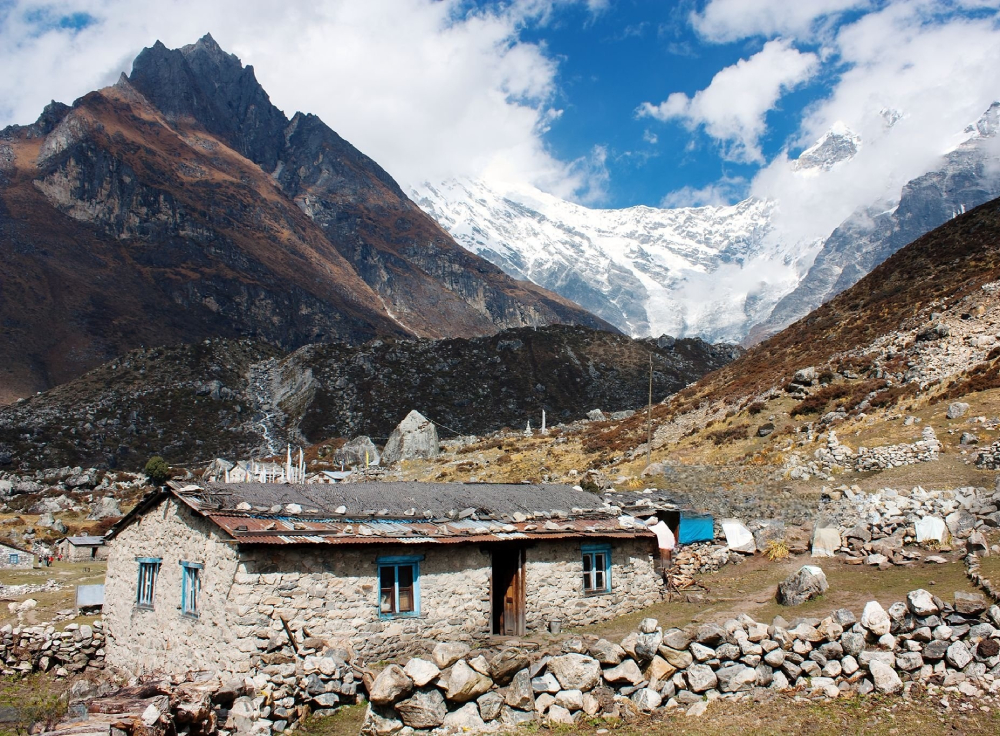
I almost always include Langtang on this list when I talk to the right client. It's not as famous as Everest or Annapurna. It sits 3–4 hours north of Kathmandu, closer to the capital than any major trekking region in Nepal. And it carries a weight that no other trek in this country carries right now.
On 25 April 2015, a 7.8 magnitude earthquake triggered an avalanche that destroyed Langtang village entirely. Of the approximately 200 people who were in and around the village that morning, over 170 were killed in minutes. The entire settlement — houses, fields, the teahouses where trekkers had been sleeping — was buried under rock and ice.
The community rebuilt. Not with outside money, largely with their own hands and their own determination. The new Langtang village now stands about 500 metres from where the old one was, on slightly higher ground, rebuilt in a similar architectural style to what existed before. The teahouses are open. The trails are clear. And walking through the valley with someone who was there — or whose family was there — changes what the landscape means.
Beyond the human story, Langtang is stunning in its own right. The valley sits in a transition zone between the Himalayan crest and the Tibetan Plateau, which means the ecology and the culture blend in ways you don't find elsewhere. Yak herders. Yomari bread. Sherpa and Tamang communities have coexisted in the same valley for generations. The Kyanjin Gompa monastery at 3,870m, with views of Langtang Lirung (7,234m) directly above, is one of the most dramatic high-altitude settings I've been in.
I tell clients: if you want beauty, go to Annapurna. If you want raw human experience alongside beauty, Langtang is yours.
The Langtang Valley Luxury Comfort Hike — 11 days is one of our most intimate small-group journeys. It uses the best lodges currently operating in the valley, contributes directly to the rebuilt communities, and includes the Kyanjin Ri ascent for those who want the high-altitude perspective.
Choosing Where to Go
Nepal is not a country that rewards rushing. The travellers who get the most from it — the ones who come back, who refer their friends, who tell me years later that something shifted on that trip — are the ones who chose depth over coverage.
My advice: pick two or three of these destinations and do them properly, rather than trying to tick all nine. A week in the Khumbu done right will give you more than a three-week circuit done on autopilot.
If you're not sure what the right combination is for your group, your timeline, or your travel history — that's exactly the conversation I want to have. I don't send quote forms. I talk to people first.
Or if you'd prefer to browse first, the full range of luxury Nepal tours and luxury trekking options is on the site. For where to stay at each of these destinations, I've also put together a separate guide to luxury resorts in Nepal with my honest property-by-property notes.