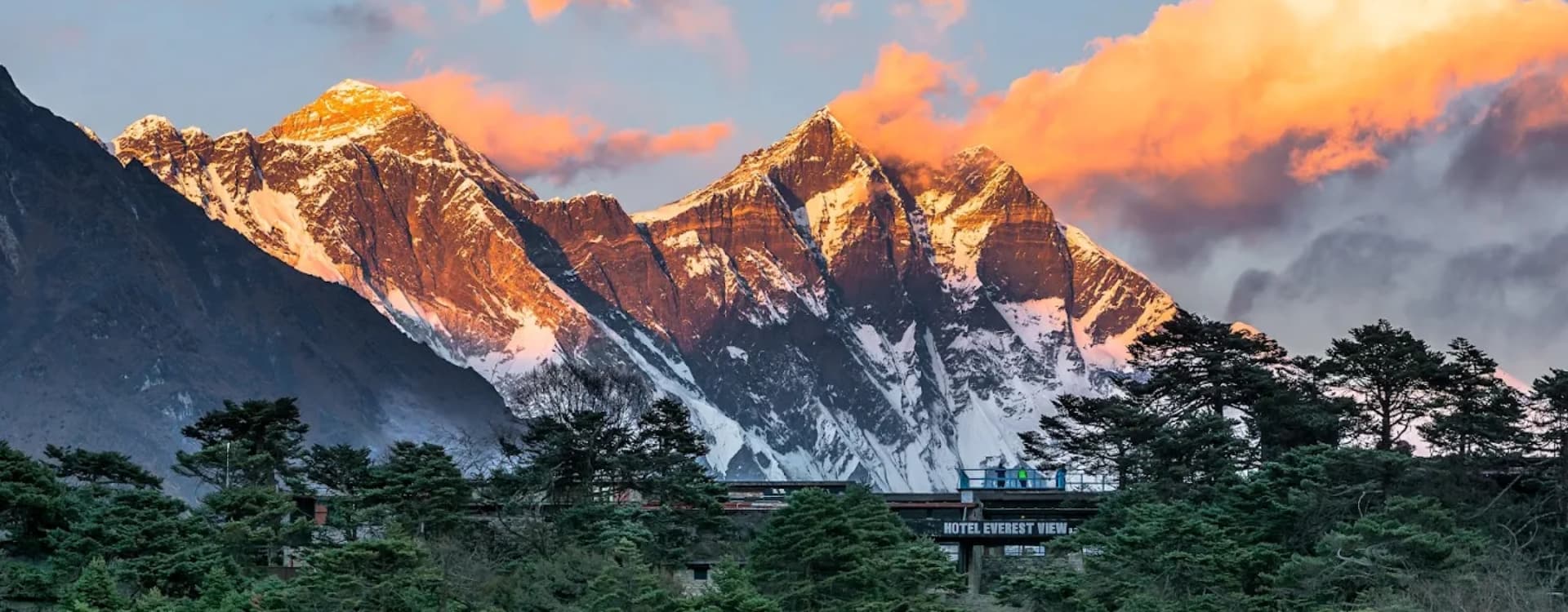
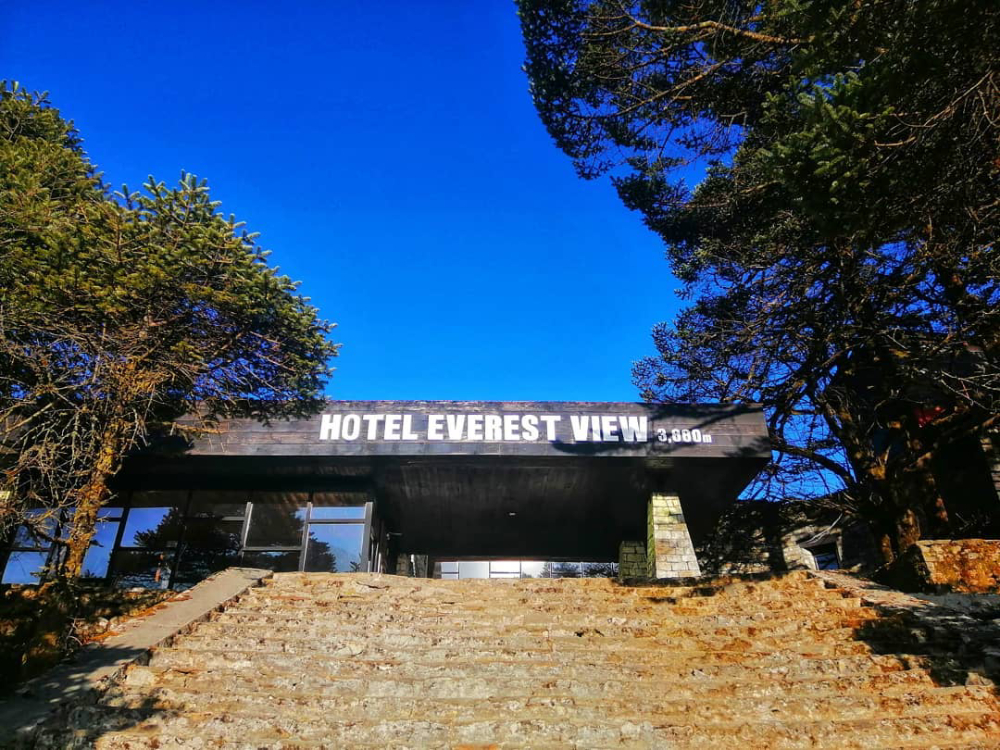
There are hotels, and then there are strategic turning points in your journey. Hotel Everest View is the latter.
At 3,880 meters above sea level in Nepal's Khumbu region, this 12-room property holds a Guinness World Record distinction: the highest-altitude hotel open to guests. But numbers miss the point. What matters is where it sits geographically and what that means for your body, your acclimatisation, and ultimately, how deeply you'll experience the Everest region when you return home.
I've placed hundreds of clients at HEV over two decades. The ones who understand its role—not as a destination, but as a calibration point—are the ones who return transformed. The ones who treat it like a traditional luxury hotel are the ones disappointed by the simplicity.
This guide explains exactly what Hotel Everest View is, why you need it on your Everest luxury trek, how to reach it properly, and how to structure the experience around what actually works physiologically at extreme altitude.
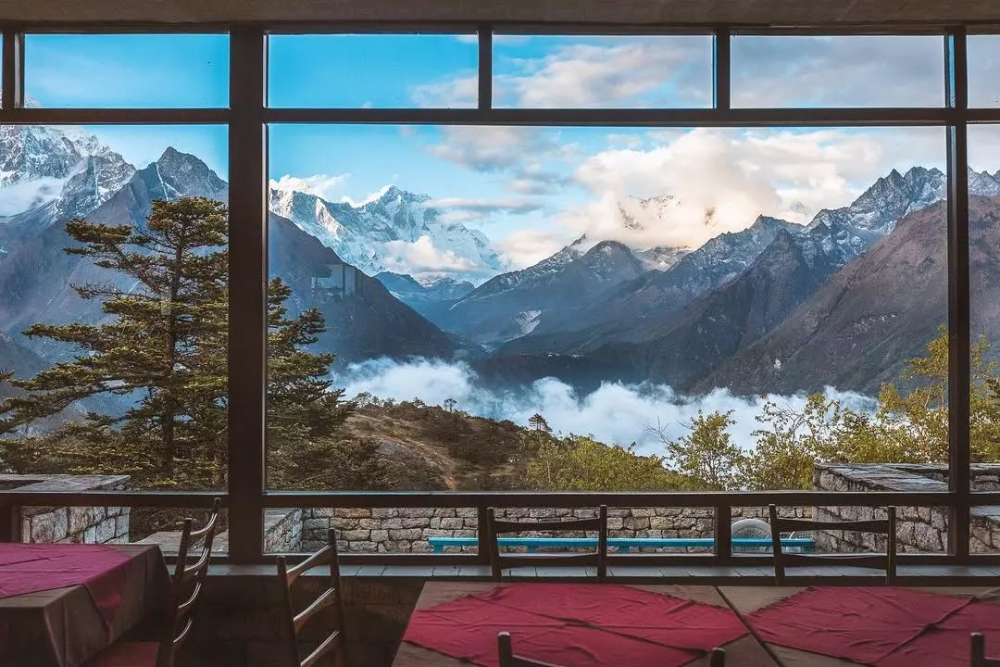
What Makes Hotel Everest View Different: Location, Altitude, and Physiological Strategy
Location: Syangboche Ridge, Sagarmatha National Park, Khumbu Region, Nepal
Elevation: 3,880 meters (12,730 feet) above sea level
Distance from Kathmandu: 2 days by helicopter; 3–4 days by foot from Kathmandu via Lukla
Significance: UNESCO World Heritage Site, within the Sagarmatha National Park boundary
Hotel Everest View isn't just high. It's positioned at a physiological inflexion point.
When you trek from Lukla to Namche Bazaar for 2 days, you're at 11,286 feet. Your body begins initial altitude adaptation. When you trek from Namche to Syangboche (another 3–4 hours uphill), you push to 12,730 feet. This gradient—not the absolute altitude—determines how well you sleep, how much oxygen your blood carries, and whether the next morning's view of Everest will be memorable or muddled by altitude fog.
Most trekkers skip this. They helicopter to HEV from Kathmandu and arrive at 12,730 feet the same day. Their bodies haven't adapted. They sleep five hours instead of eight. The view becomes abstract rather than integrated.
We do this differently, and it matters more than you'd think.
The Optimal Itinerary: How We Structure the Journey to Hotel Everest View
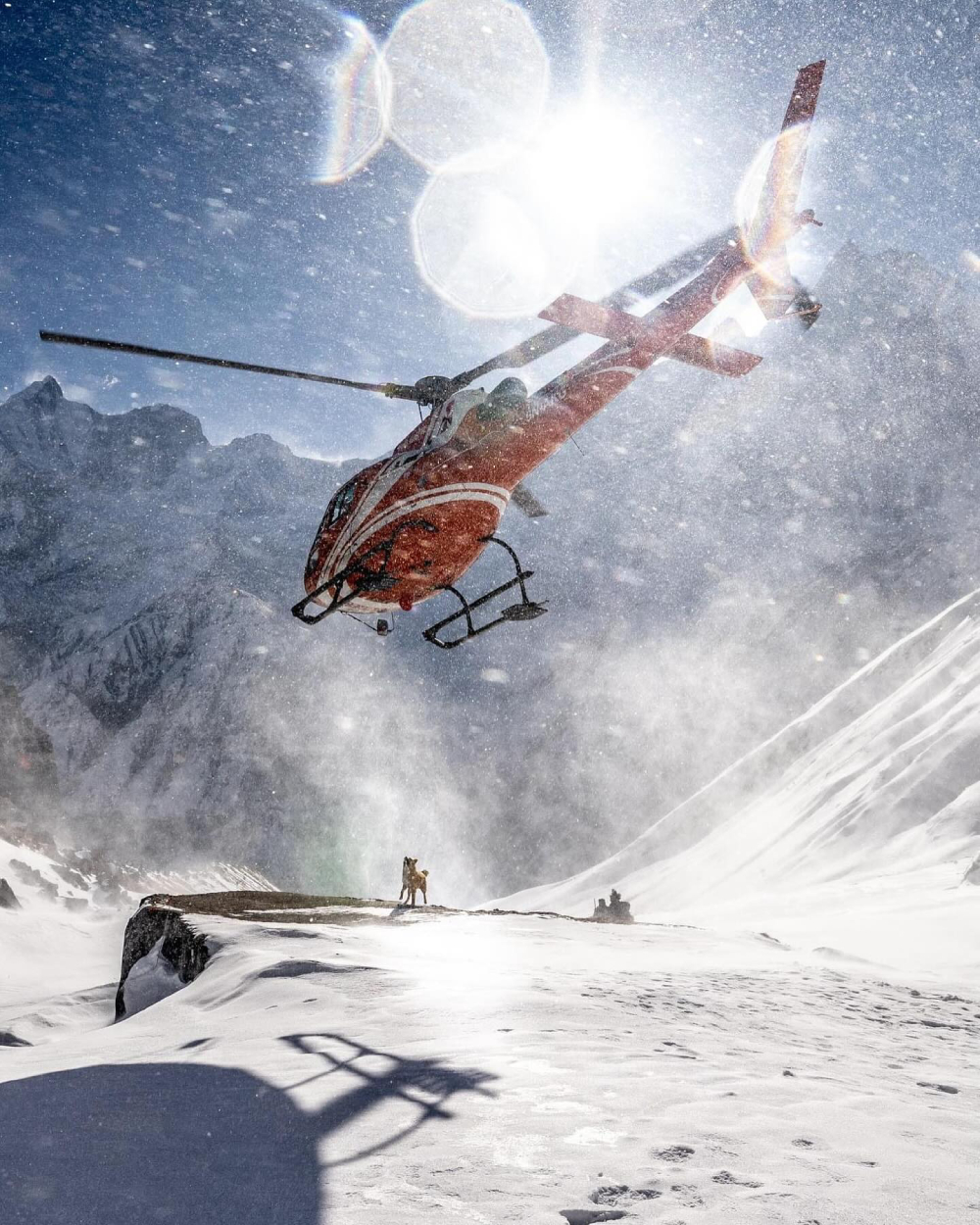
Let me walk you through the itinerary we recommend for clients arriving in Nepal for the first time or returning after years away.
Day 1: Kathmandu → Lukla (Flight + Exploration)
Morning flight: Depart Kathmandu Tribhuvan International Airport at 6:15 AM on a scheduled flight to Lukla Tenzing-Hillary Airport (9,380 feet). Flight duration: 45 minutes. The flight itself is stunning—you'll see the Himalayas rise in the distance as the plane climbs.
Arrival at Lukla: 7:30 AM local time. This is the gateway to the Khumbu region and the starting point for all Everest Base Camp treks and Everest region experiences. Most trekking guides rush clients through Lukla. We don't.
Lukla exploration (the overlooked part):
Lukla is a vibrant mountain town of 1,500 Sherpa residents. It's not a tourist theme park—it's genuinely alive with daily Sherpa life. After settling into your lodge, your guide will take you through:
- The Lukla Bazaar: Local vegetable markets, small shops selling goods ferried in from Kathmandu, yak cheese vendors, Sherpa textile shops
- Lukla Monastery: A small but significant spiritual centre for the local Sherpa community; often overlooked by trekkers in a hurry
- Local homestays and family interactions: Your guide (pre-briefed by us) will facilitate genuine conversations with Sherpa families—not staged cultural performances, but real conversations about daily life, farming, and the changes in the region over 30 years
- Hike to Phakding: Your guide (pre-briefed by us) will facilitate genuine conversations with Sherpa families—not staged cultural performances, but real conversations about daily life, farming, and the changes in the region over 30 years
- Sherpa cooking class (optional, highly recommended): Learn to prepare momos (Sherpa dumplings), dhindo (corn porridge), and butter tea with a local Sherpa family. This isn't theatre. It's an invitation into the kitchen where the family actually cooks.
Overnight: A comfortable lodge in central Lukla with hot water, electricity (solar-powered), and local meals.
Why this matters: You're grounding yourself in the Khumbu culture before you climb. When you later trek through Sherpa villages, you'll recognise the daily rhythms because you've already participated in them. This transforms observation into understanding.
Acclimatisation status: Day 1—your body is exposed to 9,380 feet for approximately 14 hours.
Day 2: Lukla → Namche Bazaar (The Main Acclimatisation Day)
The trek: Depart from Lukla at 7:30 AM. The trail descends 1,000 feet into the Dudh Koshi river valley, then climbs 2,000 feet to Namche Bazaar at 11,286 feet. Trek duration: 5–6 hours at a comfortable pace.
The route details:
- Suspension bridges across the Dudh Koshi river
- Passage through rhododendron forests (spectacular if trekking March–April)
- Multiple small Sherpa villages: Benkar, Monjo, Jorsalle
- Sagarmatha National Park entry (permit fee: approximately $30 USD; included in our package)
This isn't a difficult trek, but it's meaningful. You're watching the landscape shift. You're experiencing the rhythm of mountain trekking—the pace, the rest stops, the tea houses where locals gather.
Overnight in Namche Bazaar:
Namche is the heartbeat of the Khumbu—a Sherpa town of 3,000+ residents that serves as the supply hub and social centre for all Everest region activity. After settling into your lodge, your afternoon includes:
- Namche market walk: The main bazaar with shops, restaurants, banking, and genuine Sherpa commerce
- The Namche viewpoint trek (optional acclimatisation hike): A 45-minute ascent to 11,900 feet with views of Everest, Ama Dablam, and Lhotse
- Evening in Namche: Dinner at a local restaurant, interaction with other trekkers, observation of Sherpa evening life
Important: This is your primary acclimatisation day. Your guide will keep pace deliberately slow. You may feel mild altitude effects—slight headache, light sleep—this is normal and expected. We will brief you on this before departure. By the second night, your kidneys begin excreting bicarbonate. Your body is adapting.
Acclimatisation status: Day 2—you've climbed 1,906 feet from Lukla. Your blood oxygen saturation is approximately 92%. Your body is working but adapting.
Day 3: Namche → Syangboche & Hotel Everest View (The Acclimatisation Culmination)
The trek: Depart Namche Bazaar at 7:00 AM. The route climbs steadily uphill through rhododendron forests and prayer flag-lined ridges. The trail is steep but short: approximately 2–3 hours to reach Syangboche at 12,730 feet (the location of Hotel Everest View).
The path:
- Exit Namche via the main trek route toward Everest Base Camp
- Climb through the Sherpa villages of Kyangjuma and Sanasa
- Arrive at Syangboche ridge around 10:00 AM
Arrival at Hotel Everest View:
When you arrive, you're immediately placed in a room with a direct view of Mount Everest. A staff member brings tea. You rest for 2–3 hours. This matters more than you'd think—your body has now spent 48+ hours above 11,000 feet. Your respiratory rate has increased slightly. Your kidneys have begun adaptation. You're not a fresh arrival, disoriented. You're acclimatised to arrival calm.
First day activities at HEV:
- Light walk to Khumjung village (1 hour round trip from the hotel): Visit the Khumjung Monastery and interact with local Sherpa families
- Rest and hydration: Drink water throughout the afternoon (hydration is critical at altitude)
- Dinner overlooking the Khumbu: The dining room frames Namche Bazaar 3,000 feet below you
Sleep at HEV (Night 1):
Your first night at the world's highest-altitude hotel. Most clients sleep 6–7 hours here (compared to 5 hours if arriving by helicopter the same day). The difference is substantial. You wake somewhat rested instead of altitude-foggy.
Acclimatisation status: Day 3—you're now at 3,880m (12,730 feet). Your blood oxygen saturation is approximately 85–87%. This is high altitude, but you've reached it gradually. Your body is primed.
Day 4: Hotel Everest View – Rest & Exploration
Optional: This day is intentionally unstructured. You're at full altitude. Your body needs recovery, not additional climbing.
Option A (Recommended for first-time high-altitude visitors):
- Morning: Watch sunrise from your room (weather permitting). This is the core memory most clients report a decade later.
- Mid-morning: A gentle acclimatisation walk to Syangboche airstrip (15 minutes downhill) or to Khumjung monastery for a longer walk
- Afternoon: Rest at the hotel. Read. Hydrate. Observe the light change on the peaks
- Evening: Dinner and conversation with fellow travellers
This day is about integration, not achievement.
Option B (For experienced trekkers):
- Full-day trek to Tengboche Monastery (4–5 hours): One of the largest and most significant Sherpa Buddhist monasteries. Monks perform ceremonies multiple times daily. This is a genuine spiritual site, not a tourist stop.
- Return to HEV for evening rest
Acclimatisation status: Day 4—you're fully acclimatised to 3,880m. You sleep better. Your body is ready for the next phase.
Day 5: Hotel Everest View → Namche Bazaar (Descent & Return)
The descent:
Retrace your steps from Syangboche to Namche Bazaar (2–3 hours downhill). Descending is easier on the lungs, harder on the knees.
Return to Namche:
Spend your final evening in the Khumbu exploring Namche fully, dining at a favourite restaurant, or simply resting after the descent.
Overnight: Final night in the Khumbu.
Day 6: Namche Bazaar → Lukla (Return Trek)
The descent: Retrace the route back to Lukla. 5–6 hours downhill. You arrive in Lukla by afternoon with significantly more oxygen in your blood and a noticeably clearer head than on Day 1.
Overnight: Final night in Lukla, or depart on the evening flight (if available) to Kathmandu.
Day 7: Lukla → Kathmandu (Return to City)
Morning flight: 6:15 AM departure from Lukla, arrival in Kathmandu 7:30 AM.
Return to Kathmandu: Rest day. You'll likely experience mild jet lag-like effects as your body readjusts to a lower altitude. This is normal.
The Itinerary Summary: Why This Structure Works
| Day | Location | Elevation | Key Activity | Acclimatization Goal |
|---|---|---|---|---|
| 1 | Kathmandu → Lukla | 9,380 ft | Arrival + Lukla exploration, Sherpa cooking | Baseline exposure to altitude |
| 2 | Lukla → Namche Bazaar | 11,286 ft | Trek + Namche exploration | Primary adaptation (1,906 ft gain) |
| 3 | Namche → Syangboche (HEV) | 12,730 ft | Arrival at HEV + light walks | Final gradient to full altitude |
| 4 | Hotel Everest View | 12,730 ft | Rest day, acclimatisation walks, sunrise views | Integration at altitude |
| 5 | HEV → Namche | 11,286 ft | Descent + evening exploration | Recovery while maintaining altitude |
| 6 | Namche → Lukla | 9,380 ft | Return trek | Full descent |
| 7 | Lukla → Kathmandu | 4,600 ft | Flight return | Return to baseline |
Why this beats the helicopter alternative:
- Helicopter arrival: 14,000 feet same-day = poor sleep, altitude fog, muted experience
- Trek arrival: 12,730 feet over 3 days = good sleep, clear mind, integrated experience
The difference in memory and integration is profound.
Hotel Everest View: The Physical Space – Rooms, Facilities & Design
Architecture & Philosophy
Hotel Everest View was built in 1971 by a Japanese mountaineer. The design reflects Japanese alpine philosophy: simplicity, functionality, respect for the environment. It's not a luxury hotel that happens to be at a high altitude. It's a mountain hut designed with considerate amenities.
The 12-room property sits on the Syangboche ridge with unobstructed views of Everest, Lhotse, Ama Dablam, and the Khumbu peaks.
The 12 Guest Rooms
Each room features:
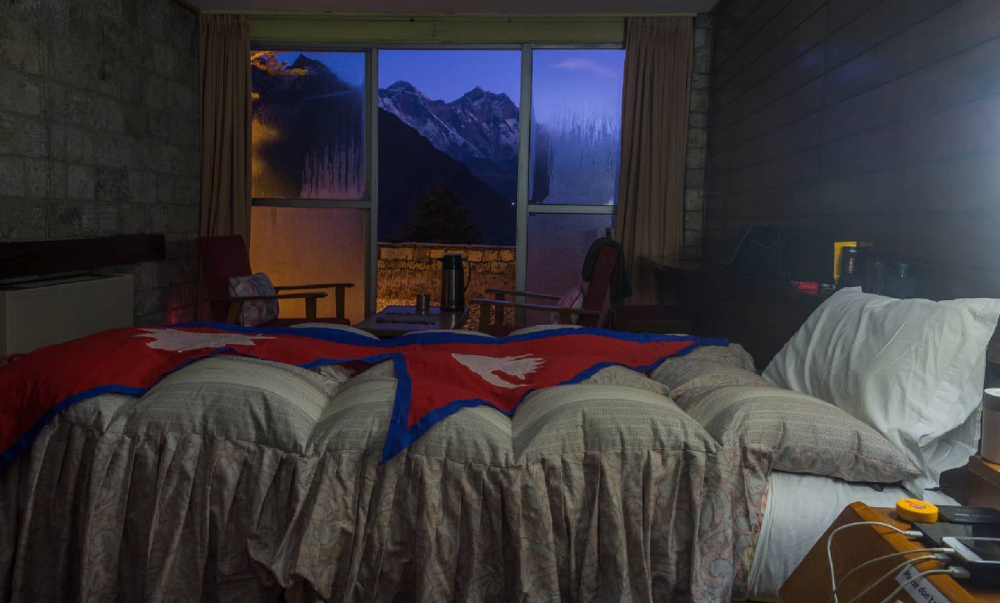
- Direct Mount Everest views from floor-to-ceiling windows (no obstructed-view rooms)
- Double or twin bedding with electric blankets and high-quality wool quilts
- Ensuite bathrooms with hot water (an engineering feat at 3,880m)
- Portable heaters and oxygen access on request
- Minimal, functional furniture: Writing desk, storage, clean lines
- Large picture windows designed for dawn viewing
Room types:
- Standard rooms: 2–3 with mountain views
- Corner rooms: Wraparound views, slightly larger (premium pricing)
What rooms are NOT: Five-star hotel rooms with plush furnishings. They're comfortable, purpose-built sleeping chambers. Clients who've stayed at Amankora or Six Senses Bhutan understand this trade-off immediately. The view is the luxury. The room is the vehicle to experience it.
Common Spaces at Hotel Everest View
Dining Room & Terrace
- Glass-walled interior (30 seats) with mountain-facing windows
- Outdoor terrace (50 seats) with views of Namche Bazaar 3,000 feet below
- Wood-burning stove for warmth and ambience
The Ancient Boulder Detail
Built into the back wall of the dining room is a naturally occurring boulder—untouched, not hand-carved like much of the stone interior. It bears Tibetan Buddhist inscriptions weathered by centuries of pilgrimage. Guests sit at breakfast with their hands meters from this stone, a physical connection to the spiritual continuity of the place. This detail matters more than thread count.
Lounge Area
- Small sitting area with views
- Books, games, and conversation space
- Oxygen delivery available
Dining at 3,880 Meters: Food Quality That Surprises
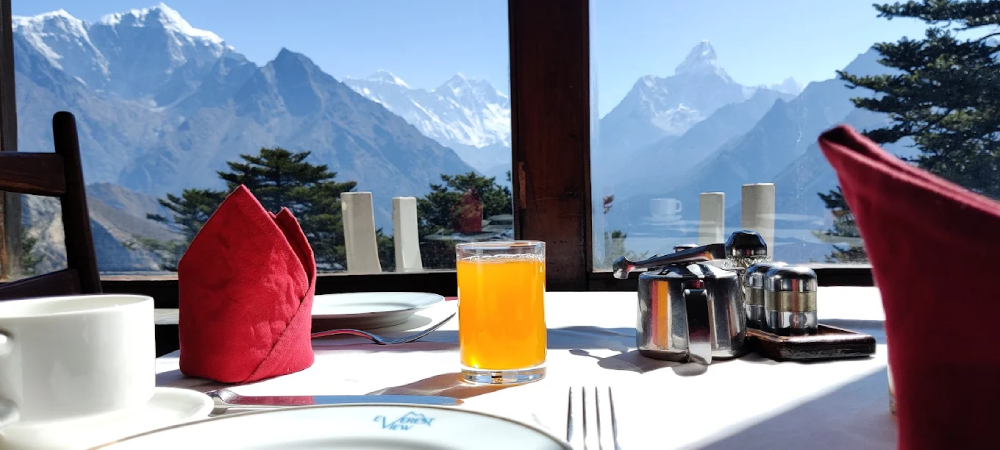
The restaurant at Hotel Everest View serves guests staying overnight, trekkers passing through, and day hikers from Namche. The head chef has been there for over a decade. The sourcing is local by necessity and by design.
The Sourcing Reality
At this altitude and remoteness, every ingredient tells a logistics story:
- Meat: Sourced from Sherpa suppliers in Namche (yak, local chicken)
- Vegetables: Trucked from lower-altitude farms to Lukla, then carried by porter to Syangboche
- Eggs: From Sherpa household chickens
- Butter & dairy: Local Sherpa dairies
- Flour & staples: Transported via porter from Namche
This isn't romantic inefficiency. It's practical sourcing within extreme geographic constraints. But it means the food has texture—it's not homogenised or industrially processed.
The Menu (Representative)
Breakfast (Included)
- Continental options: Eggs (scrambled, fried, omelette), toast, jam, cheese
- Japanese-style options: Gyoza (dumplings), rice, miso soup
- Fresh fruit when available (apples, oranges, bananas)
- Coffee and tea
Lunch (À la carte, if staying)
- Club sandwiches with hand-cut meat
- Vegetable soups
- Tibetan momos
- Rice dishes with local vegetables
Dinner (Included)
- Fillet mignon with seasonal vegetables
- Japanese oyakodon (egg, chicken, rice)
- Vegetarian curries with local herbs
- Soups and appetizers
Quality expectation: Most high-altitude lodges serve functional food designed not to upset stomachs. HEV treats this as a destination restaurant. The surprise factor is real—guests consistently report better food quality than expected at 12,730 feet.
Best Seasons to Visit Hotel Everest View: Understanding Weather & Acclimatisation Windows
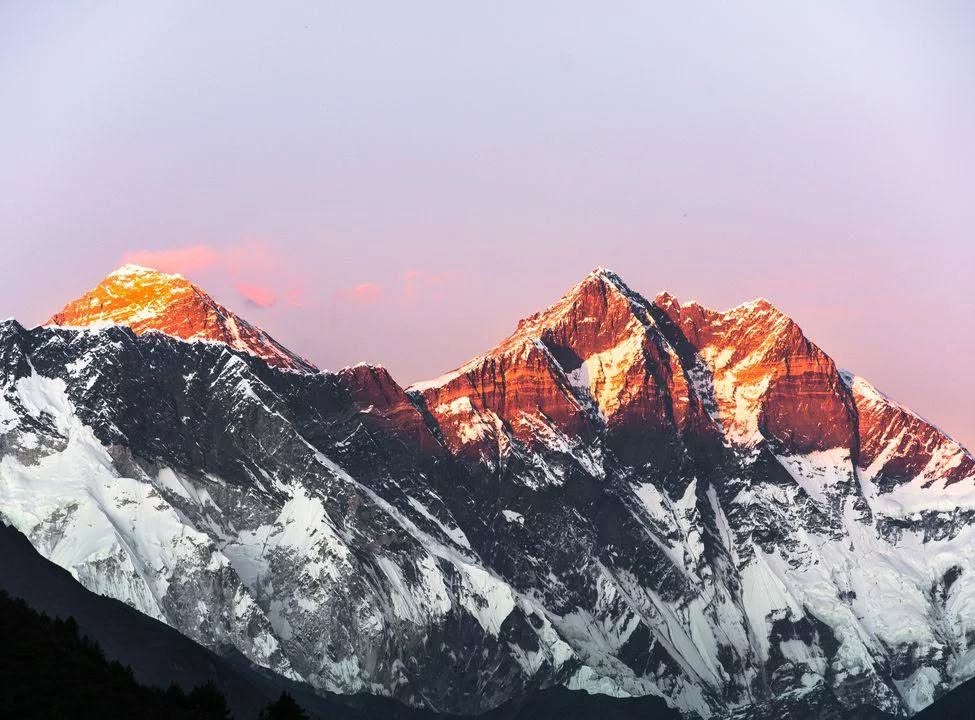
Spring (March to May): The Ideal Window
Weather characteristics:
- Daytime temperatures: 0–10°C (32–50°F)
- Nighttime temperatures: –8 to –2°C (18–28°F)
- Clear skies: 70–80% of mornings
- Post-winter clearing, pre-monsoon humidity
Trekking conditions:
- Rhododendron forests in bloom (late March–April)
- Trail conditions good (some snow possible early March)
- Lower winds
- Longer daylight hours
Why spring works best for HEV:
- Statistically, the highest chance of clear Everest views
- Acclimatisation easier (slightly warmer nights = better sleep)
- Sherpa cultural festivals (Losar in February–March, Sagarmatha Day in May)
Best for: First-time Everest region visitors, families, couples, photography-focused groups
Autumn (September to November): The Runner-Up
Weather characteristics:
- Daytime temperatures: –2 to 8°C (28–46°F)
- Nighttime temperatures: –10 to –15°C (14–5°F)
- Clear skies: 60–70% of mornings
- Post-monsoon clarity, pre-winter freeze
Trekking conditions:
- Drier, crisper air
- Exceptional visibility
- Lower tourist crowding (summer holiday season over)
- Trail conditions excellent
Why autumn is strong:
- Photography conditions superior to spring (crisper light)
- Fewer trekkers on the route (more peaceful experience)
- Stable weather mid-season (October is most reliable)
Best for: Experienced trekkers, solo travellers, photography enthusiasts, travel advisors scouting itineraries
Winter (December to February): For the Committed
Weather characteristics:
- Daytime temperatures: –8 to 0°C (18–32°F)
- Nighttime temperatures: –15°C and below (5°F and colder)
- Clear skies: 50–60% (higher wind, faster cloud clearance)
- Occasional heavy snowfall
Trekking conditions:
- Trail snow accumulation (especially January–February)
- Shorter daylight hours (sunrise 7:00 AM, sunset 4:30 PM)
- Fewer tourists (significantly quieter)
- Reduced services at some lodges
Challenges:
- Sleep quality difficult (very cold nights)
- Helipad access may be restricted by snow
- Sherpa guide availability is lower (many work in the Nepal tourism off-season)
Best for: Experienced cold-weather mountaineers, solitude seekers, winter photography specialists
Summer/Monsoon (June to August): NOT Recommended
Why to avoid:
- Daily afternoon thunderstorms and rain
- Cloud cover obscures views (60–70% of days)
- Trail mud and visibility issues
- Increased altitude sickness risk (less stable air pressure)
Exception: Specific cases where the solitude and lush landscape appeal override view certainty.
Our Recommendation
For Hotel Everest View specifically: Spring (March to May) or autumn (October). These offer the best balance of acclimatisation conditions, view probability, and general comfort.
For a multi-day stay: Minimum 2 nights. This increases your odds of at least one clear sunrise from 50% (single night) to 85% (two nights).
Hotel Everest View Pricing: What's Included, What Isn't
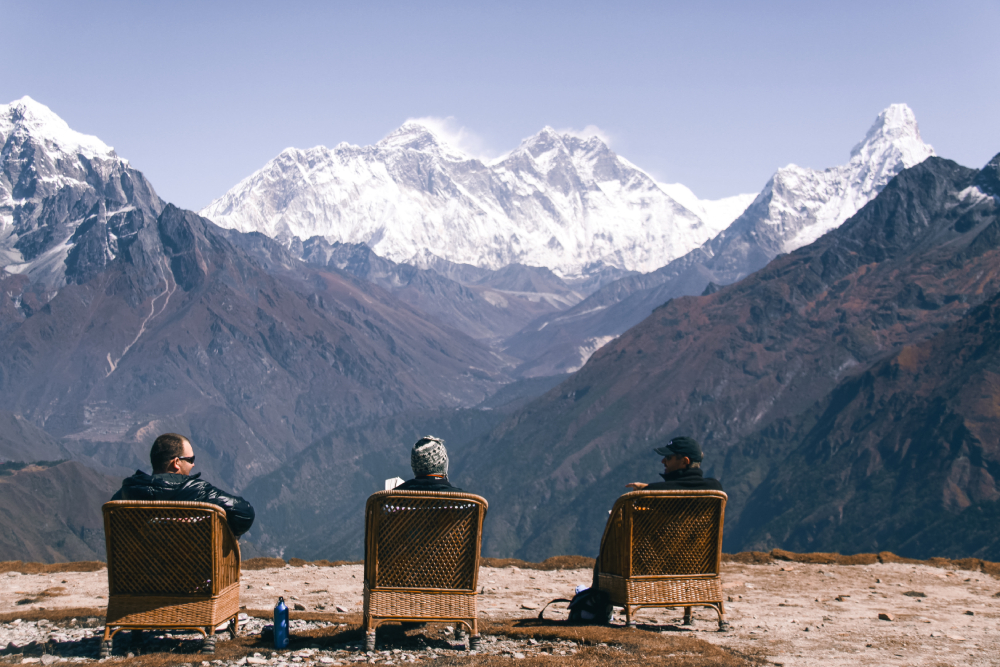
Room Rates (2026 Season)
| Room Type | Low Season (Winter) | High Season (Spring/Fall) |
|---|---|---|
| Standard room | $380–420 per night | $480–550 per night |
| Corner room (wraparound views) | $420–460 per night | $550–620 per night |
Rate variations:
- Early March & late November: Mid-season pricing
- January–February & June–August: Lowest rates
- April & October: Peak pricing
What's Included (All-Inclusive Rate)
- Breakfast (full)
- Dinner (three-course)
- Tea & snacks throughout the day
- Oxygen access (on request)
- Electricity and heating
- Hot water for showers
What's NOT Included
- Lukla flight (domestic airfare from Kathmandu: ~$180–220 per person)
- Sagarmatha National Park permit ($30 per person)
- Trekking guide fees (highly recommended, $50–70 per day)
- Sherpa porter fees (recommended, $35–50 per day)
- Helicopter transfers (if arriving by air: $700–900 per person round-trip)
- Lunch during the trek (you can order at tea houses: $5–10 per meal)
- Gratuities for staff, guides, and porters
Total Cost Estimation for 7-Day HEV Experience
Budget Breakdown (per person, twin sharing):
| Component | Cost USD |
|---|---|
| Lukla flights (round-trip) | $220 |
| Sagarmatha Park permit | $30 |
| Trekking guide (6 days @ $60/day) | $360 |
| Sherpa porter (6 days @ $45/day) | $270 |
| Hotel Everest View (2 nights @ $520 avg) | $1,040 |
| Namche & Lukla lodges (4 nights @ $60 avg) | $240 |
| Meals during trek (5 lunch stops @ $8) | $40 |
| Misc. (tea house beverages, tips) | $100 |
| TOTAL per person | ~$2,300 USD |
(Note: Prices vary by operator and booking method. This represents a fair-value range for quality service.)
Why book through Everest Luxury Holidays?
When you book directly with the hotel, you save the operator margin (~$200–300). When you book through us, you get:
- Pre-arranged guide briefing on your preferences
- Room assignment optimisation (we coordinate with management)
- Oxygen pre-positioned if needed
- Logistical oversight (we've personally worked with the staff for 15+ years)
- Acclimatisation strategy customisation based on your prior altitude experience
- Post-trip support (if you have altitude-related questions)
That adds value beyond the room cost.
Altitude Physiology at Hotel Everest View: What to Expect
This matters more than comfort amenities.
Blood Oxygen Saturation by Altitude
| Elevation | Location | O2 Saturation | Physiological Effect |
|---|---|---|---|
| Sea level | Kathmandu (4,600 ft) | 98% | Baseline |
| 11,286 ft | Namche Bazaar | 92% | Mild adaptation begins |
| 12,730 ft | Hotel Everest View | 85–87% | Significant adaptation needed |
At 3,880 meters, your blood carries roughly 13–15% less oxygen than sea level. Your body compensates through:
1. Increased respiratory rate (breathing faster)
2. Increased heart rate (heart pumping harder)
3. Renal adaptation (kidneys excreting bicarbonate over 48–72 hours)
Common Altitude Effects (NOT Dangerous)
Mild to moderate symptoms at HEV:
- Headache (usually mild)
- Light sleep (5–6 hours instead of 8)
- Nausea (infrequent; usually digestive)
- Shortness of breath with exertion (walking uphill)
- Dry mouth and throat (altitude air is extremely dry)
What these mean: Your body is adapting. This is normal. These resolve within 24–48 hours at altitude.
Severe Altitude Sickness (RARE at HEV)
Hotel Everest View sits at an elevation where Acute Mountain Sickness (AMS) is uncommon if you've acclimatised properly (which our itinerary ensures). Severe altitude sickness indicators:
- Severe headache unresponsive to ibuprofen
- Vomiting (not just nausea)
- Difficulty walking in a straight line (ataxia)
- Confusion or disorientation
If any of these occur, Immediate descent to Namche and medical evaluation (there's a clinic in Namche).
Prevention: This is why our itinerary works. Gradual ascent + 2 nights at HEV + proper hydration reduces risk dramatically.
Practical Altitude Management at HEV
What we recommend:
- Hydration: Drink 3–4 litres of water daily (you'll pee constantly; this is correct)
- Food: Eat even if not hungry (fuel your body's adaptation)
- Oxygen: Available on request, use if sleep-deprived (not a crutch, a tool)
- Activity level: Day 1 at HEV = rest. Day 2 = light walks. Day 3 = descent begins.
- Acetazolamide (Diamox): Optional, prescribed by physicians. We don't mandate it; discuss with your doctor before travel.
Nearby Experiences: Beyond Hotel Everest View
Khumjung Village (1 hour downhill from HEV)
A traditional Sherpa village of approximately 1,000 residents, Khumjung is the cultural heart of the lower Khumbu.
What to see:
- Khumjung Monastery: Founded in the 1600s, this is where the famous "yeti scalp" is housed (a mummified artifact that's genuinely fascinating regardless of its origins)
- Sherpa farmland: Terraced potato and barley fields
- Local households: Many families welcome respectful visitors; your guide will facilitate introductions
Trek time: 1–2 hours round-trip from HEV. Easy pace, downhill descent.
Why this matters: You're not observing Sherpa culture as a tourist attraction. You're walking through daily life—children going to school, farmers working fields, monks chanting prayers. This integration is what stays with you.
Tengboche Monastery (4–5 hours trek from HEV)
The largest and most significant Sherpa Buddhist monastery in the Khumbu. It sits at 12,700 feet (nearly the same elevation as HEV) on a ridge commanding views of Everest, Ama Dablam, and Lhotse.
What to experience:
- Monks' daily ceremonies (morning and evening chanting)
- The monastery courtyard with 360-degree Himalayan views
- The prayer rooms with centuries-old thangka paintings
- Respectful interaction with monks (who often speak English)
Trek time: 4–5 hours from HEV to Tengboche, 3–4 hours return. Moderate difficulty (descends then climbs).
When to go: If you're physically strong on your second day at HEV, this is viable. Otherwise, save it for future trips.
Important: This is a functioning monastery, not a museum. Dress respectfully (cover shoulders and knees). Silence during ceremonies. Photography is only permitted where permitted.
Sagarmatha National Park UNESCO World Heritage Site
The entire region is protected. Hotel Everest View sits within its boundaries. The park encompasses Mount Everest and the surrounding peaks.
Why it matters for your experience:
- Protected landscape = fewer commercial structures
- Managed tourism = cultural preservation
- International significance = rigorous environmental standards
Understanding you're trekking within a UNESCO World Heritage Site adds context to why the experience feels authentic.
Comprehensive FAQ: Questions We Hear Regularly
Pre-Trip Planning
Q: I've never been above 8,000 feet. Is Hotel Everest View safe for me?
A: Yes, if you follow the acclimatisation itinerary. The itinerary we outline—Lukla (Day 1) → Namche (Day 2) → HEV (Day 3)—spaces altitude gain appropriately. Your body has 72 hours to adapt. The alternative (helicopter directly to HEV the same day) is riskier but still manageable with oxygen on-call.
Never skip the Lukla-Namche-HEV sequence. Helicopter straight to HEV is viable only for experienced trekkers or those with prior altitude exposure.
Q: What's the difference between staying at Hotel Everest View vs. other Everest region lodges?
A: Hotel Everest View is the acclimatisation checkpoint. Its strategic location at 3,880m (the threshold of serious altitude) makes it essential for multi-day Everest Base Camp treks. Other lodges (Sheraton's Eagle Nest resort in nearby areas, or lower-altitude options) don't provide the same physiological calibration.
If you're doing the Everest Base Camp trek, HEV is the logical 2-night stop. If you're doing a casual Lukla-Namche day trip, HEV is unnecessary.
Q: Can I book directly with the hotel, or should I go through an operator?
A: You can book directly:
- Direct booking: Save $200–300 in operator margin. Handle your own logistics.
- Operator booking (like Everest Luxury Holidays): Pay the margin. Get room optimisation, guide briefing, logistical oversight, and someone to call if problems arise.
For first-time visitors, operator booking (especially for the full itinerary: Kathmandu → Lukla → Phakding → Namche → HEV → return) is substantially less stressful. You're paying for coordination, not just a room.
Q: How early should I book Hotel Everest View?
A: For spring (March–May) and autumn (September–October), book 6–8 weeks in advance. The 12 rooms fill quickly. For winter or summer, 2–3 weeks is sufficient.
During Your Stay
Q: Will I definitely see Mount Everest from my room?
A: The view quality depends on the weather. On clear days (70–80% in spring/autumn), the view is unobstructed and spectacular. On cloudy days (20–30%), clouds sit at your elevation, and you're essentially inside a cloud. You see 50 meters in any direction.
View probability by season:
- Spring: ~75% clear mornings
- Autumn: ~70% clear mornings
- Winter: ~60% clear mornings (windy, faster cloud movement)
- Summer: ~30% clear mornings
Why 2 nights matter: Single night = 50% chance of clear sunrise. Two nights = 85% chance of at least one clear view.
Q: What's the altitude sickness risk at 3,880m?
A: Very low if acclimatised gradually. Our itinerary (Lukla Day 1 → Namche Day 2 → HEV Day 3) means most guests experience mild symptoms (slight headache, light sleep) but nothing serious.
Severe altitude sickness (vomiting, confusion) is rare here because the altitude, while high, isn't extreme. Everest Base Camp at 5,380m carries higher risk. HEV is the protective mid-point.
Q: How is the food at Hotel Everest View? Will I feel sick?
A: The food quality is genuinely surprising. It's not fine dining, but it's well-prepared and thoughtfully sourced. Most guests eat normally at HEV—no nausea or digestive issues.
Some guests experience mild appetite suppression (normal at altitude). The solution: eat small portions, frequently. By Day 2 at HEV, appetite usually returns.
Q: Is there WiFi and cell service?
A: Limited WiFi in the dining area and some rooms (satellite-based, intermittent). No reliable cell signal (you're 12,730 feet in a remote mountain valley).
Why this matters: Plan to be mostly offline. This isn't a flaw—it's intentional. The Himalayas don't need cell reception.
Q: Can I charge my phone, camera, and devices?
A: Yes. The hotel has electricity (solar power + battery backup). Outlets are available in rooms. Bring a universal power adapter (Nepal uses Type A/C plugs, 220V).
Q: What if I need medical help at Hotel Everest View?
A: The hotel has oxygen and basic first aid supplies. For anything serious, you'd descend to Namche (2–3 hours), where there's a clinic with an English-speaking doctor.
Prevention is better than rescue: This is why the acclimatisation itinerary matters. Proper acclimatisation dramatically reduces medical incidents.
Practical Details
Q: What should I pack for Hotel Everest View?
A: Essentials:
- Down jacket or insulated parka (temperatures drop to –10°C at night)
- Warm base layers (wool or synthetic; NOT cotton)
- Hat and gloves
- Sunscreen and sunglasses (sun intensity at altitude is severe)
- Moisturiser and lip balm (air is extremely dry)
- Medications (any prescriptions you take, plus ibuprofen and antacids)
- Toiletries (basic hotel supplies available, but bring favourites)
- Sleeping bag (not required at HEV—heating is adequate—but useful for lower-altitude nights in Lukla/Namche)
Q: How do I get to Hotel Everest View if I'm already in Nepal?
A: Standard itinerary:
1. Fly Kathmandu → Lukla (domestic, 45 min, $180–220 round-trip)
2. Trek Lukla → Namche (1 day)
3. Trek Namche → Syangboche/HEV (1 day)
Total: 3 days from Kathmandu to arrival at HEV.
Helicopter alternative:
1. Helicopter Kathmandu → HEV (45 min, $700–900 per person, same-day arrival)
Faster, but with a trade-off: poor acclimatisation. We don't typically recommend helicopter arrival for new visitors.
Q: Can I extend my stay at Hotel Everest View and trek to Everest Base Camp?
A: Yes. Absolutely. The optimal sequence is:
Day 1: Kathmandu → Lukla-Phakding
Day 2: Lukla-Phakding → Namche
Day 3: Namche → HEV
Day 4: Rest day at HEV
Days 5–9: HEV → Everest Base Camp (4 days) + return to lower altitude
Day 10: Descent to Lukla
Day 11: Lukla → Kathmandu
This is a full 10-day Everest Base Camp luxury lodge trek. See our Everest Base Camp Luxury Lodge Trek article for full details.
Q: What's the weather like during my stay?
A: Check 10-day forecasts before travel. Weather changes rapidly at altitude.
April (late spring): Daytime 5–12°C, nights –5°C. Generally stable.
October (autumn): Daytime –2 to 8°C, nights –12°C. Crisp, clear.
Operational & Booking of Hotel Everest View
Q: Do I need a visa for Nepal to stay at Hotel Everest View?
A: Yes. Most nationalities can obtain a 60-day tourist visa on arrival at Kathmandu International Airport or acquire one pre-travel through a Nepali embassy. Cost: ~$40–100 depending on nationality.
Q: What's the best way to book Hotel Everest View through Everest Luxury Holidays?
A: Contact us (here). We will:
1. Confirm your dates and acclimatisation preference
2. Check HEV availability
3. Arrange Lukla flights, guide selection, and porter assignment
4. Brief you on the acclimatisation strategy
5. Confirm the full itinerary (Kathmandu → Lukla → Namche → HEV → return)
6. Handle payment (typically 30% deposit, remainder 2 weeks before travel)
Q: What's your refund policy if I can't travel?
A: Contact us directly. Policies vary by booking date and airline flexibility. Typically:
- 60+ days before: Full refund (minus airline non-refund fees)
- 30–60 days: 50% refund
- Less than 30 days: Non-refundable (unless we can re-book the room)
Q: Can I customise my itinerary around Hotel Everest View?
A: Yes. Our Customise Your Trip page walks you through options. Want an extra day at HEV? More time in Lukla exploring? A longer EBC extension? We adjust accordingly.
Related Everest Region Experiences You Might Consider
If you're planning a trip to the Everest region, Hotel Everest View fits into larger itineraries. Consider these complements:
1. Everest Base Camp Luxury Lodge Trek – 10 Days – HEV is the acclimatisation checkpoint for this trek
2. Everest Sherpa Heritage Trail – 9 Days – Deeper cultural immersion with guide-led monastery visits and village stays
3. Everest Off-The-Beaten With Sir Edmund Hillary – 7 Days – Alternative route avoiding main trails
4. Everest Helicopter Tour with Overnight at Hotel Everest View – 2 Days – For travellers with limited time
5. Luxury Nepal Tours – Multi-destination Nepal journeys that include the Everest region