I've watched the luxury Everest market fracture into two camps over the last decade.
One camp sells comfort: better lodges, helicopter flights, private rooms, wine with dinner. They market the reduction of hardship. "Everest without suffering," they promise. These treks cost $6,000–$10,000 and deliver what they promise—a more comfortable route to Base Camp. Nothing wrong with that.
The other camp—the one we operate—sells something else entirely: access to the Khumbu as it actually exists.
This is a crucial difference. Most luxury operators treat the Khumbu like a backdrop for comfort. They insulate you from it while showing it to you. They manage the experience so nothing unexpected breaks the narrative.
We do the opposite.
Luxury, at ELH, means you're placed inside the Khumbu with competence and safety—not shielded from it with amenities. You meet actual Sherpa families. You sit with monks outside peak visiting hours. You eat food prepared by people who live here, designed for altitude adaptation, not tourist expectations. You walk paths where locals walk, not curated tourist trails.
This requires something most operators don't have: real relationships in these villages. Real trust. Years of on-ground presence.
I'm saying this after nearly 20 years living in Budhanilkantha, trekking these routes across every season, and building actual relationships—not partnerships, relationships—with Sherpa families, monastery leaders, and local lodge owners. We don't contract lodges. We work with people we know. We don't arrange "cultural experiences." We facilitate genuine encounters because we're embedded in these communities.
This kind of luxury costs more than a helicopter return and a 5-star lodge in Kathmandu. But what you get is something money usually can't buy: authenticity in a place that's drowning in performance.
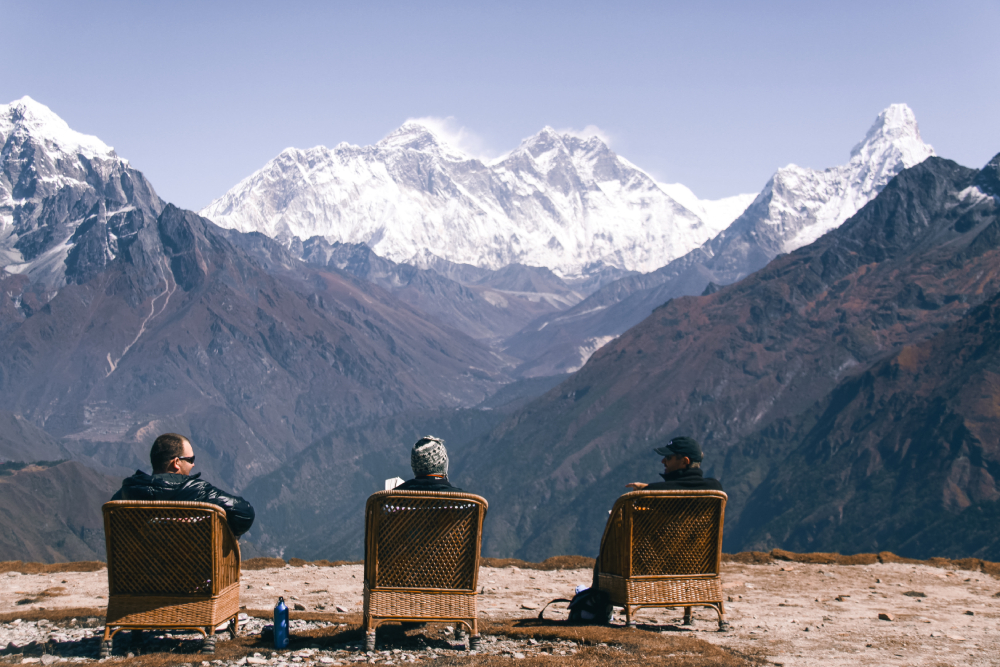
What "Luxury" Actually Means at Altitude
Most luxury definitions break at 13,000 feet.
You can't have heated spa suites at Gorakshep. You can't serve imported wine consistently above Deboche (logistics collapse). You can't guarantee private hot showers at every stop. The altitude doesn't care about luxury amenities. It cares about adaptation.
So when operators promise "luxury" above 12,000 feet, they're lying about something fundamental.
What actually changes the experience at altitude isn't amenities. It's:
- Pacing: Whether you're forced to move faster than your body wants, or whether the itinerary respects acclimatisation
- Attention: Whether your guide knows your health history and watches for early altitude stress, or whether they're managing eight other people
- Authenticity: Whether you're experiencing villages as places where people live, or as checkpoints in a tourist itinerary
- Safety margins: Whether medical support, evacuation, and contingencies are pre-arranged, or whether you're hoping for the best
None of this requires fancy lodges. All of it requires operational depth.
At ELH, we invest in depth, not decor.
This means:
- Slower pacing (sometimes as slow as 4 hours/day), designed around acclimatisation science, not lodge locations
- Dedicated guides who know your name and history before you arrive
- Direct relationships with village families, monks, and lodge owners (not booking platforms)
- Pre-arranged medical protocols and evacuation insurance
- Flexibility to adjust based on how your body is responding
This is what luxury actually looks like at altitude.
The Luxury Trap—What Other Operators Miss
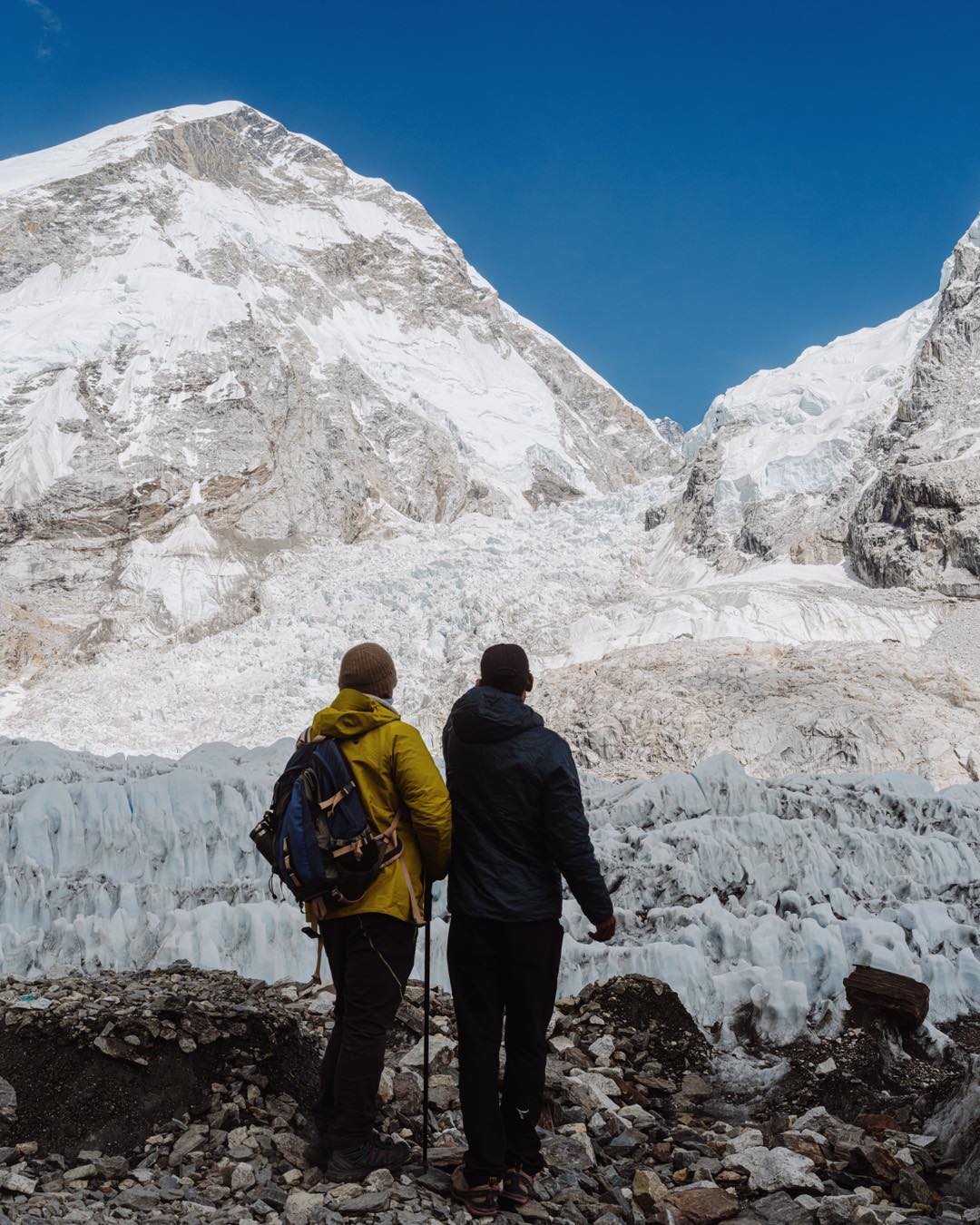
Most luxury operators make a critical mistake: They compete on visible amenities.
Better lodge in Namche? Check. Private helicopter? Check. Chef-prepared meals? Check. Wine list? Check. They add layers of comfort and raise the price proportionally.
But here's what they're not doing:
They're not questioning whether comfort is the right metric at altitude.
A trekker at 14,000 feet doesn't care if their tea is organic. They care if they slept. They care if they can breathe. They care if they feel safe. They care if they're being seen—if someone notices they're struggling and adjusts the pace, not their attitude.
Most luxury operators haven't figured this out. They think "luxury" means "less discomfort."
It doesn't.
Luxury at altitude means comfort designed around your body's actual needs, not the operator's logistics.
This is why trekkers who've done both budget Everest and luxury Everest often say the same thing: "The expensive trek wasn't always better. It was just different." Different itinerary, different people, different pace. Sometimes better. Sometimes just more expensive.
We don't measure luxury by how much comfort we can force at altitude. We measure it by how well-designed the experience is for what the altitude actually demands.
Authenticity is a Competence, Not a Selling Point
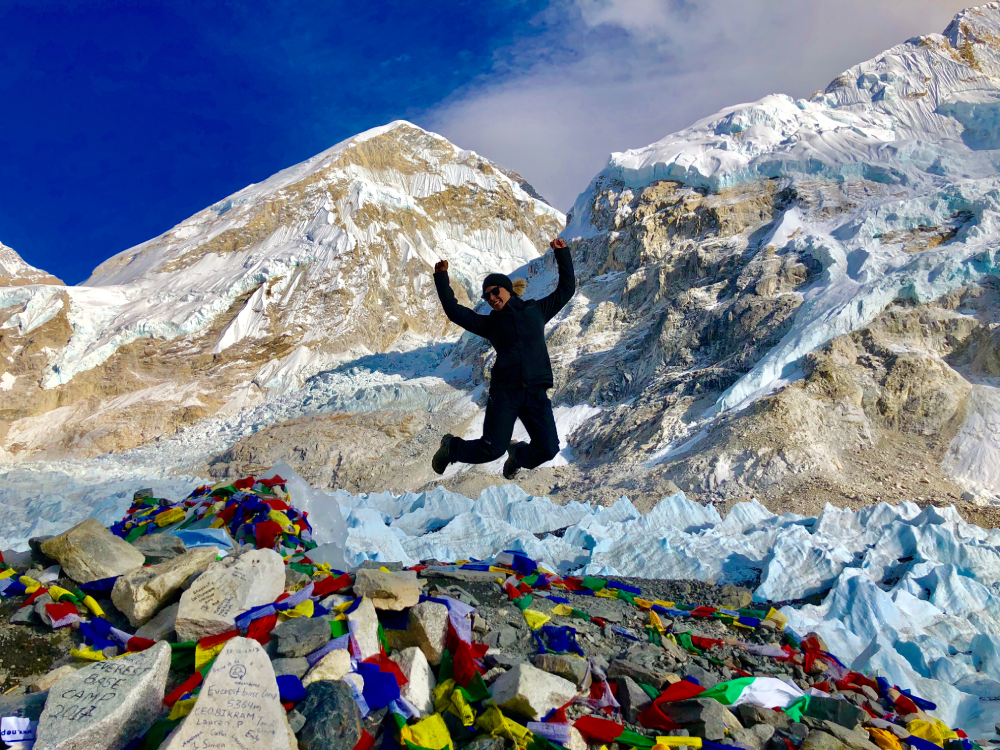
Here's what separates ELH from other "authentic" operators:
We're not trying to be authentic. We are embedded.
I live in Budhanilkantha. I've walked the Khumbu across 7 seasons. I know lodge owners by name—not business names, personal names. I know which monastery welcomes visitors and which prefers privacy. I know which villages are overtouristed and which still have genuine community life. I know which guides have character and which are just moving bodies through itineraries.
This is information you can't buy. You have to live it.
Most operators operate in Nepal. We operate in Nepal. That's not marketing. That's operational reality.
What this means for your trek:
In Namche, you don't visit the monastery at the crowded tourist hour (2–4 PM, when it's chaos). Instead, your guide arranges a private session with a senior monk—early morning, maybe five of you, conversation rather than touring. This happens because our guide has a relationship with that monastery built over the years, not booked through a tourism broker.
In Sherpa villages, you meet families who invited us for tea—not because they're paid to host tourists, but because they know us. They show you their homes, their daily life, and their children. There's no performance. There's just hospitality between people who have a relationship.
For meals, you eat food designed by lodge cooks who understand altitude, not international chefs trained in comfort food. Dal bhat with ingredients that actually nourish at altitude. Fresh bread from local ovens. Vegetables from nearby fields. Food tastes different when it's prepared with an understanding of where you are and what your body needs.
On the trail, you walk through villages as part of the landscape, not as a tourist seeing attractions. Your guide knows people. There are conversations. There are moments of being included in daily life rather than observing it.
None of this is scalable. None of it works if you're managing 50 clients per season. It requires small groups, stable guides, and real relationships.
That's the trade-off. You can have volume or authenticity. We chose authenticity.
The Problem With "Experience Design"
Most luxury operators design experiences.
They identify what makes Everest "special," then systematise it: monastery visit, cultural dinner, village walk, homestay experience. It all gets scheduled, packaged, and delivered like a curated gallery tour.
The problem is obvious if you think about it: Designed experiences are performed, not lived.
When an experience is pre-planned and executed for you, something real gets lost. You're not encountering people and places. You're encountering someone's idea of what you should encounter.
Real cultural exchange is messier. Sometimes the monk is busy. Sometimes a family's day changes. Sometimes the most meaningful moment is unscheduled—a conversation that happens because you're standing around, not because it was agenda item #3.
At ELH, we design the conditions for experience, not the experiences themselves.
This means:
- We slow the pace enough that organic moments can happen
- We position you in villages at times when local life is happening, not when the tourism peak hits
- We guide with people who have real relationships, so encounters feel like introductions, not performances
- We leave space in the itinerary for what emerges, not just what's planned
This is harder to sell. You can't tell someone, "you might have a meaningful conversation with a monk", in the same way you can say "private monastery session." But it's more honest. And it's infinitely richer.
Why Small Groups Aren't Just Comfort—They're Essential
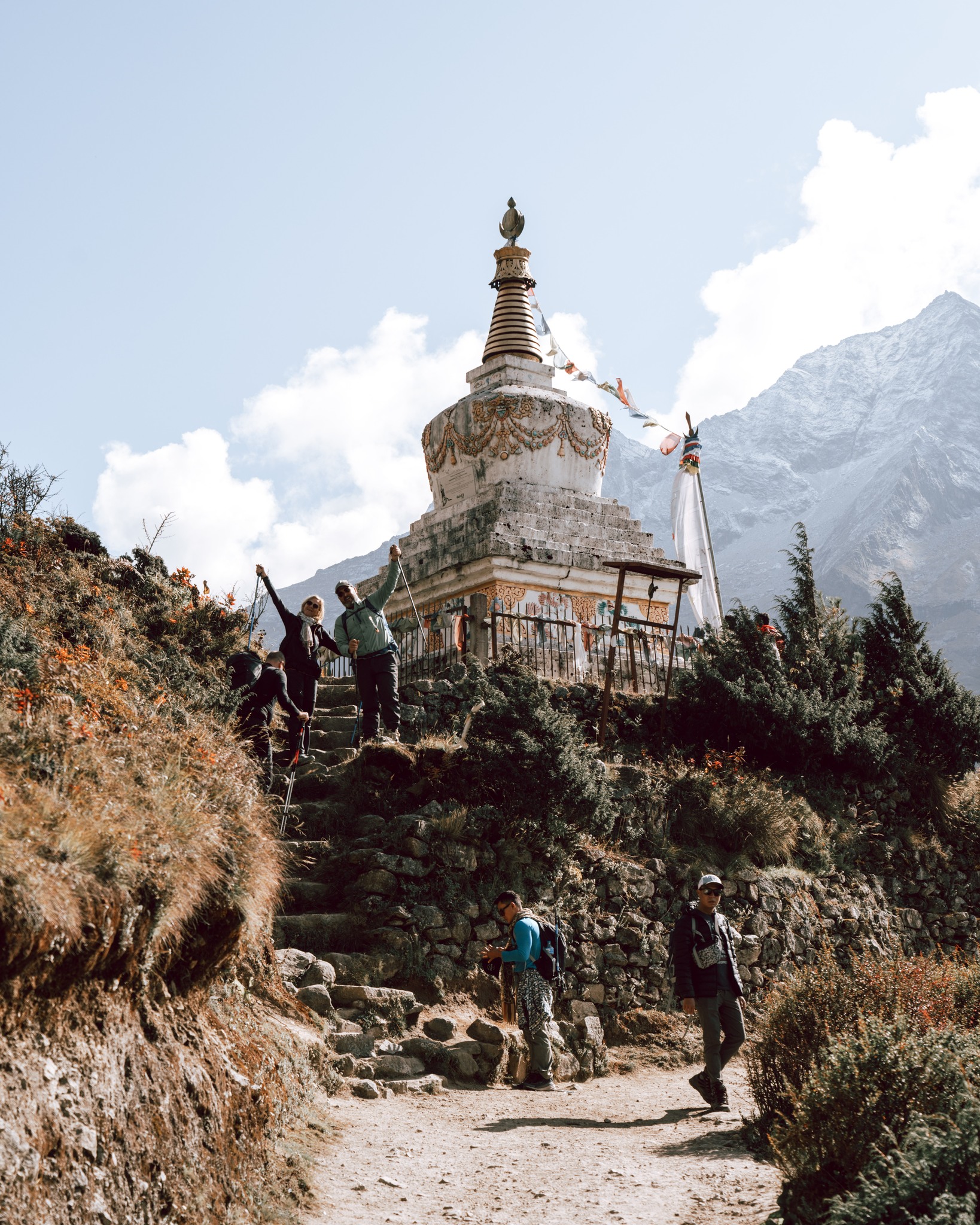
Other luxury operators sometimes position small groups as a comfort feature: "Enjoy personalised attention with only 4–6 people per trek."
That's backwards.
Small groups are essential for authenticity. Here's why:
A monastery can accommodate 5 unexpected visitors. It can't accommodate 15. A Sherpa family's home has a kitchen that can serve 3–4 people tea. A larger group turns it into a staged experience. A village maintains its character when visitors are occasional and in small numbers. Constant flows of 10–15 person groups change the village's identity—people start viewing visitors as revenue rather than guests.
Most luxury operators who say they value authenticity then book groups of 8–12 into "exclusive" village homestays. That's not exclusivity. That's just volume repackaging.
We keep groups to 2–4 people per trek for one reason: That's the size that allows genuine relationships to exist.
With 3 of you, a Sherpa family can include you in their evening. With 12, you're a tour. With 3, a monk can have a real conversation. With 12, it's a performance.
This limits how many treks we can run and how much revenue we generate. It also guarantees that every interaction you have is real, not performed.
Guides as Translators, Not Tour Leaders
Here's a concrete difference in how we staff treks:
Most operators hire guides to lead groups and manage logistics. They're the authority figure. You follow their pace, their itinerary, their interpretation.
At ELH, guides are translators.
They translate the landscape for you. They translate relationships—introducing you to people because they know both parties, not because they're executing a booking. They translate what you're experiencing—explaining the culture, the ecology, the geography, not as facts but as context for understanding.
This requires guides who are embedded in the culture, not just trained in guiding. Suman, our senior guide, speaks Spanish fluently and has spent years with ELH, so he understands both the trekker's perspective and the Khumbu's reality. He doesn't just show you Namche. He shows you why Namche is the way it is—the economic pressures, the generational shifts, the way tourism is changing village life. He's bilingual not just in language but in worldview.
This kind of guide is expensive. Most operators can't afford it because they prioritise volume.
We prioritise guides who can actually translate culture rather than just move people through checkpoints.
What Luxury Lodges Get Wrong
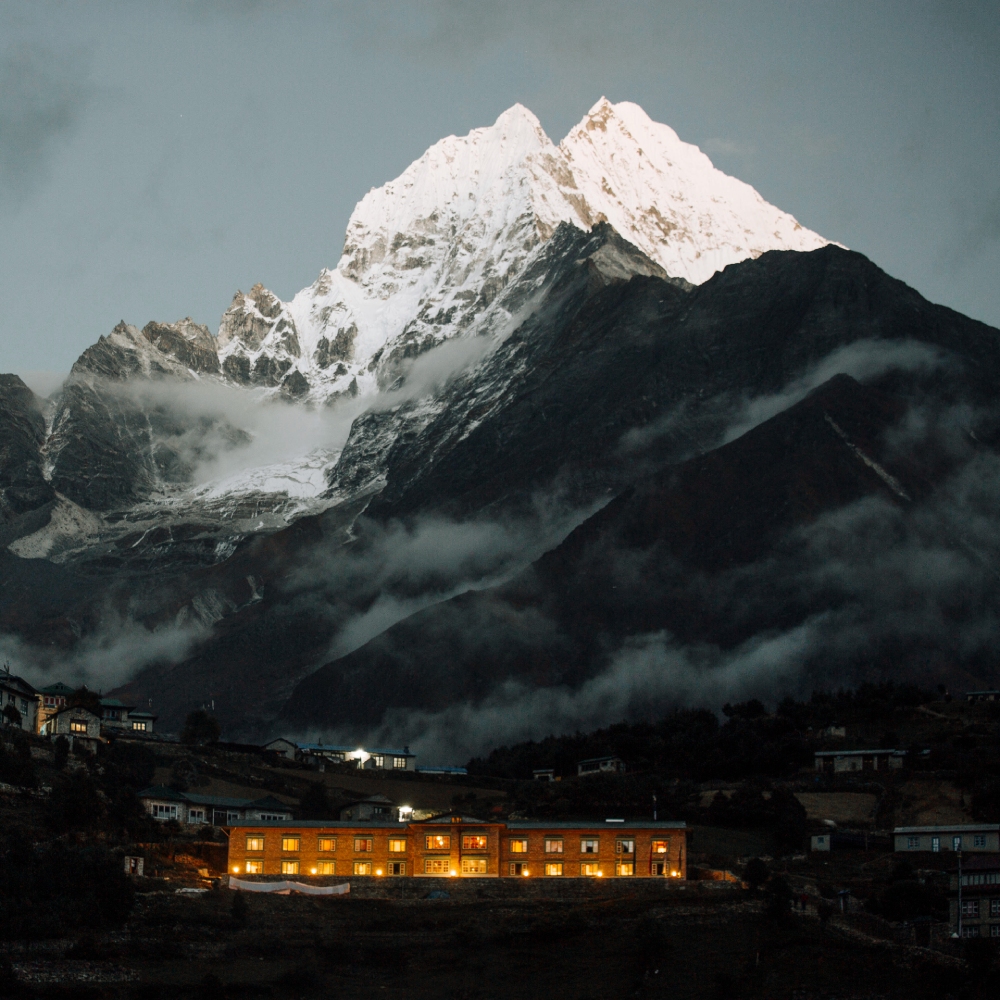
Mountain Lodges of Nepal and Everest Summit Lodges are genuinely nice places. They're warm. The beds are comfortable. The food is good.
But they're also the problem.
Here's what happens when you stay in premium lodges throughout the Khumbu:
You experience the mountain through a hospitality interface. The lodge mediates your relationship to the place. You wake up in a warm room, you eat in a common room with other trekkers, and you chat with lodge staff who are paid to be hospitable. You're comfortable, but you're also buffered.
The villages outside the lodge continue their actual lives, unmediated by tourism. But you're experiencing them from a position of comfort-backed separation.
The luxury isn't in the lodge. The luxury is in the relationship to the place.
For this reason, ELH uses premium lodges only where they make sense: Lukla through Deboche, where infrastructure exists, and comfort genuinely helps. Beyond Deboche, we transition to the best available teahouses—because at that altitude, "luxury lodge" is an oxymoron, and chasing it creates distance from the actual experience.
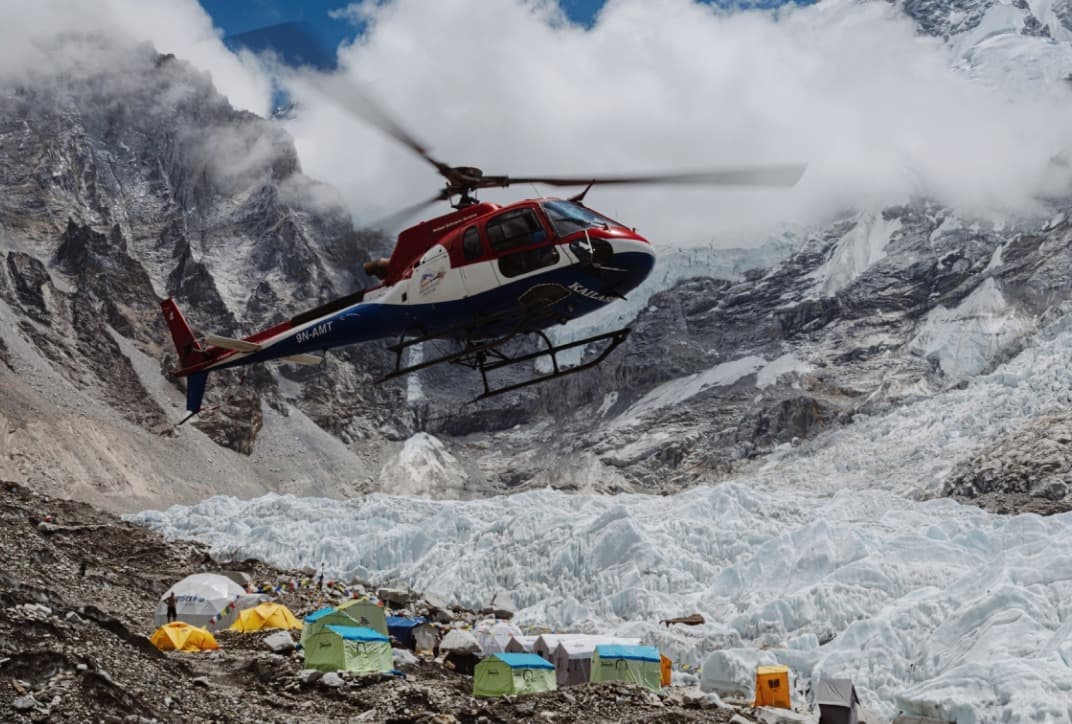
We include helicopter transport from Deboche to Gorakshep/EBC, which skips the section where lodges are basic, and walking is relentless. This lets you trek the section where trekking is meaningful, and lodge quality doesn't actually matter.
However, this is completely optional. Learn more about the Luxury Helicopter Tour to Everest
So we're not anti-comfort. We're just clear-eyed about where comfort serves the experience and where it actually interferes with it.
The Everest Heritage Trail Alternative
Here's something most luxury operators don't offer: alternatives that are equally good, just different.
The standard luxury Everest Base Camp trek follows the same route everyone else follows. Better lodges, slower pace, more attention—but the same villages, the same paths, the same 15,000 people per season.
We also offer the Everest Heritage Trail—a 9-day route that covers similar elevation gains but routes through Phakding, Thame, Tashinga, and lower Gokyo villages. Same mountains, dramatically fewer people, deeper cultural immersion, equally challenging acclimatisation profile.
Why aren't more operators offering this?
Because it's less marketable. "Everest Base Camp" is an iconic brand. "Everest Heritage Trail" sounds secondary. But operationally and experientially, it's superior for trekkers who actually want to experience the Khumbu rather than tick off Base Camp.
The luxury here is choice informed by honest positioning, not pushing everyone toward the most-marketed route.
Explore the Everest Heritage Trail as an alternative that's equally rewarding but less crowded.
Acclimatisation as Philosophy, Not Logistics
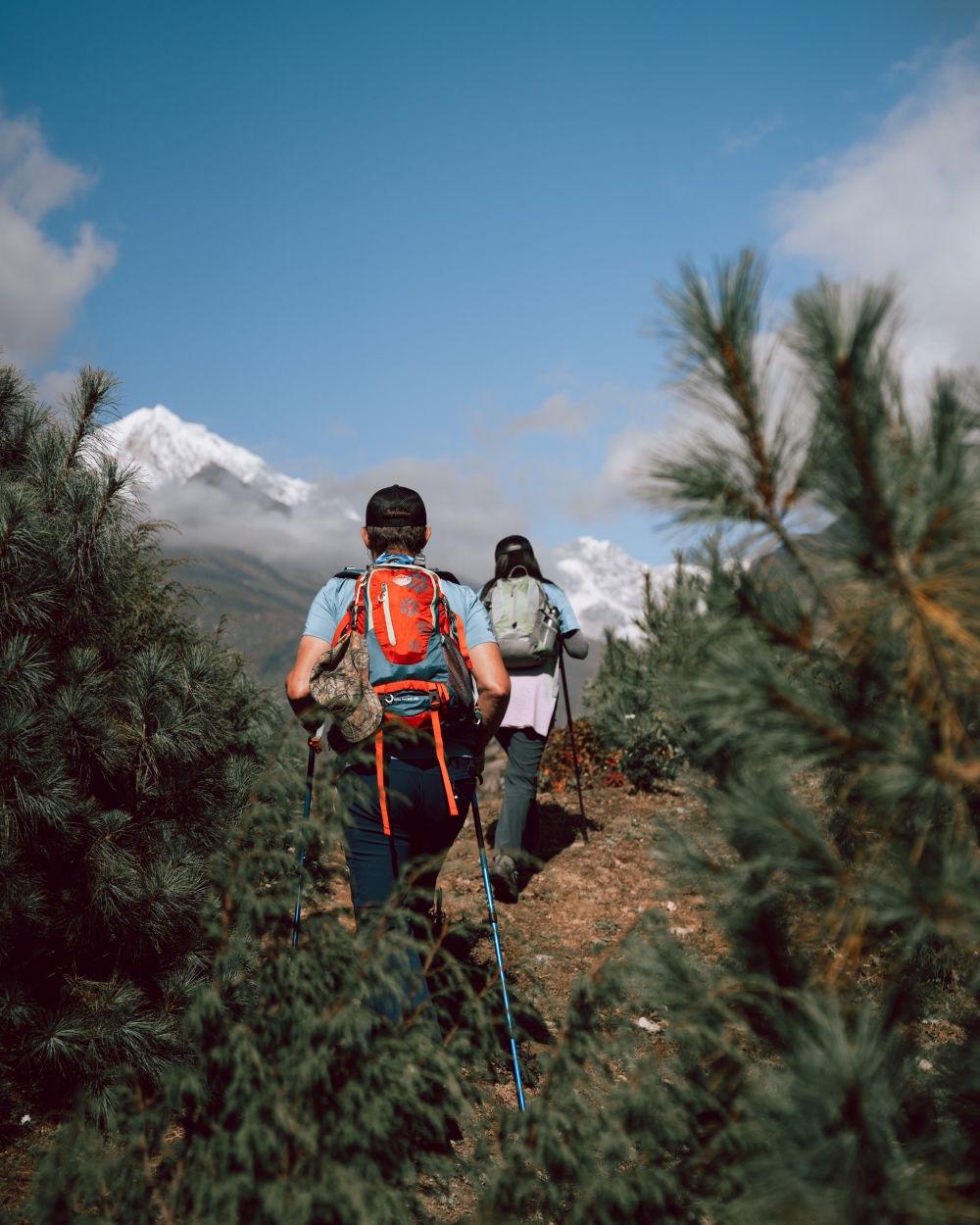
Other operators include acclimatisation days because the itinerary requires them or altitude science demands them.
At ELH, acclimatisation is the organising principle of the entire trek.
This changes everything.
Instead of: "We planned two acclimatisation days" (check the box, move on), we ask: "What does your body actually need to adapt safely?"
Your guide watches your breathing, your energy, and your sleep quality. If you're adapting perfectly, we might move slightly faster. If you're struggling, we add a rest day. The itinerary is a framework, not a prescription.
This requires:
- Guides trained in altitude physiology and individual variation
- Flexibility in planning (no fixed "this lodge on this date")
- Trust that slower is better
- Communication, so you understand why the pace is what it is
Most operators are constrained by booking logistics—they've booked you into Namche on Day 5, and that's fixed. We build padding into itineraries specifically so adjustments are possible without disrupting other bookings.
It's a more expensive operationally. It's also why trekkers report ELH treks feeling sustainable rather than desperate.
The Economics of Authenticity

Let's be direct about cost.
A luxury Everest Base Camp trek with ELH costs $8,500–$10,000+.
You can do luxury Everest elsewhere for $5,000–$7,000. Those operators have figured out how to reduce costs: larger groups, less pre-trek preparation, more distant guide relationships, basic lodge infrastructure, and shared helicopter services.
We don't compete on price because we don't compete on volume.
Here's where that money goes:
- Small group dedication (2–4 people max): Requires higher per-person costs for guide and logistical support
- Pre-trek briefing: 3–4 hours of guide time before you arrive, unpaid if we amortise it across bookings. We just absorb it.
- Guide quality: Experienced guides trained in altitude medicine earn $120–180/day. Budget guides cost $40–60/day.
- Real relationships: Maintaining village relationships, monastery connections, local network—this isn't scalable; it's expensive relationship maintenance.
- Flexibility buffers: Extra nights available for adjustment, backup guides in Namche, contingency planning—all add cost with no guaranteed use.
- Safety redundancy: Medical oxygen at every lodge, pre-arranged evacuation, insurance, and medical training—it all costs.
The operators undercutting this pricing are cutting corners on these exact items.
This isn't judgment. It's just math. You can't have all of this for $5,000. If someone is offering it, they're not delivering it.
See the full cost breakdown of what drives luxury Everest pricing
Wellness Integration—Why We're Different
ELH positions itself around "Himalayan Transformative Wellness."
This is completely different from "wellness retreats" that offer meditation at altitude (which doesn't work—your brain is oxygen-deprived, not receptive).
Our wellness positioning is: Altitude forces clarity.
When you're climbing slowly, you can't distract yourself. When you're breathing hard, you can't ignore your body. When you're surrounded by mountains and silence, you can't avoid your thoughts. This isn't comfortable. It's illuminating.
Luxury, in this frame, is designing the conditions where that clarity can emerge:
- Slow enough pacing that you notice what's happening in your body and mind
- Guides trained to recognise when emotional processing is happening and to hold space for it
- Lodges positioned to facilitate reflection (quiet mornings in Namche, evening views)
- Meals designed to support physical and mental clarity
- Activities (monastery visits, village walks) chosen for their contemplative quality, not their photo-worthiness
This is why our wellness-focused treks attract people seeking transformation, not just trekking achievement.
Other operators offer wellness experiences. We design treks where wellness emerges naturally because the conditions support it.
What You Actually Get—Real Itinerary Breakdown
Days 1–2: Kathmandu (Acclimatisation + Cultural Immersion)
Not a quick stopover. Actual time to settle. Dinner at a curated restaurant (our choice, based on food quality and story). A private Kathmandu tour focused on what's actually important—not temples as checkpoints but as spaces with living practice. Evening conversation with your guide about their background, your expectations, and what success looks like.
Day 3: Lukla to Phakding (4-hour trek, 1,770m)
Gentle introduction. You're testing your body's response to altitude. Mountain lodge of Nepal—actually comfortable, actually warm. Early dinner, early rest. Your guide watches how you sleep, how you breathe.
Day 4: Phakding to Monjo (2-hour trek, 2,080m)
This is where we diverge from standard operators. Most skip Monjo and push Phakding→Namche in one brutal day (7–8 hours). We break it. Two hours of walking, afternoon rest. Your body gets a second day to adjust. This small decision changes your entire trek's trajectory.
Day 5–6: Monjo to Namche (2 hours) + Rest Day
Arrive Namche fresh, not exhausted. Day 6 is deliberate: private chef experience (learn Sherpa cooking in Namche, prepare lunch together), village walk (meet families we know) or Namche monastery session (real conversation, not tourist performance). Your guide checks in about how you're adapting. Adjustments happen now if needed.
Day 7: Namche to Deboche (3.5 hours, 3,880m)
Moderate day. You're above 3,500m now—acclimatisation is real. Yeti Mountain Home again. Rest deeply.
Day 8: Flexibility
Depending on your acclimatisation, we either do a gentle acclimatisation walk (Pangboche + monastery) or rest fully in Deboche. Your guide's call is based on your body.
Day 9: Helicopter to Everest Base Camp or Gorakshep
This is where the design becomes clear. We skip the section (Pangboche→Lobuche→Gorakshep) that's crowded, physically brutal, and has terrible lodges. Private helicopter (Airbus H125, safest in Nepal). 45 minutes of aerial Khumbu. Land at Gorakshep or Base Camp, depending on the weather and your preference. One night at altitude, if your body is ready, or helicopter return the same day.
Day 10: Return to Kathmandu
Helicopter return or drive back (weather-dependent). Debrief with your guide. Time to integrate.
This itinerary prioritises what your body needs, not what lodges or logistics dictate.
View our complete Everest Base Camp package and customisation options.
FAQs (Luxury-Focused)
Q: Is the luxury Everest worth the cost difference?
A: Depends on your definition. If luxury means amenities, you can get 70% of the comfort for 50% of the cost elsewhere. If luxury means sustainability, authenticity, and not feeling desperate at altitude—yes, the difference is profound. Most of our clients say this is the best money they've spent on travel.
Q: Will I feel "comfortable" at altitude?
A: No. You'll feel challenged and alive. Comfort comes from knowing you're safe, supported, and not being forced beyond your body's limits. That's different from soft beds and hot showers (though you get those early on).
Q: How is this different from other premium operators?
A: They optimise for visible amenities and efficiency. We optimise for authenticity and individual adaptation. Fewer clients, slower pace, real relationships with villages. It's operationally harder and more expensive, which is why fewer operators do it.
Q: What if I'm not an experienced trekker?
A: This trek is specifically designed for people without major trekking experience. The slow pace and acclimatisation focus mean first-timers often have better experiences than veterans who've trekked at higher speeds elsewhere.
Q: Can I customise the itinerary?
A: Within reason. The core (acclimatisation pacing, safety protocols) is fixed. The experiences (which monastery, which village, how much time in Namche) are customizable based on your interests.
Q: What if I want to trek independently?
A: Solo trekking on the Everest Base Camp route is now required to be with a licensed guide (changed in April 2023). We offer private guide treks, which is the solo-trekking equivalent—same as independent, but with actual expertise and safety.
Q: What happens if I get altitude sick?
A: Your guide monitors for this daily. Oxygen is available at every lodge (no charge). We adjust the itinerary immediately. In the unlikely event of serious illness, helicopter evacuation is insured and pre-arranged. You're never hoping; we've planned.
Q: Is the helicopter included or extra?
A: Included in all our packages. It's not a luxury add-on; it's part of the experience design. Skipping the brutal high-altitude teahouse section and flying instead is a feature of how we structure luxury.
Q: How far in advance should I book?
A: 3–6 months minimum. We limit clients per season, and popular dates fill. This constraint is intentional—it's how we maintain small groups and relationship depth.
Q: What's the physical difficulty?
A: Moderate to challenging. You're trekking at altitude (17,598 ft at Base Camp), so there's unavoidable discomfort. But the slow pace, acclimatisation focus, and small group mean most first-timers manage well.
Q: Will I feel rushed?
A: No. This is one of the key design differences. Most operators optimise for speed within a 14-day timeframe. We optimise for your body, which might mean slower days or extra rest. You set the pace; the itinerary adjusts.
Here's what I need you to understand before you book anything
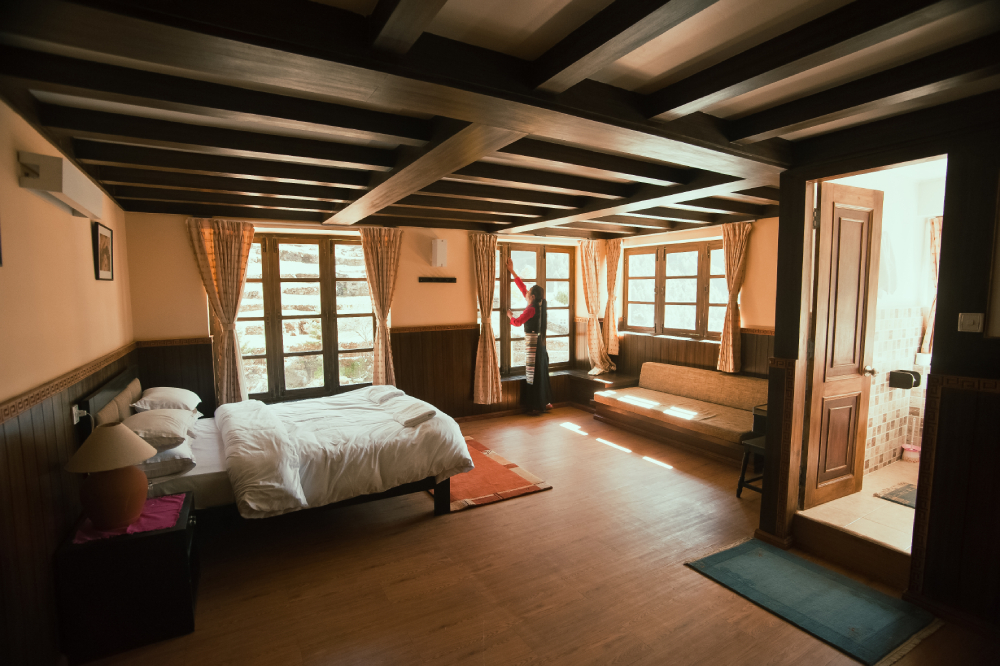
The $5,000 luxury trek will give you better beds than budget options. It will feed you well. It might even include a helicopter.
But it will not give you what we give you—because what we give you can't be scaled. It can't be systematised. It requires a guide who speaks the language of both cultures, a team small enough that villages welcome you as guests (not revenue), and an operator who lives here year-round, not just seasonally.
That's the difference between visiting Nepal and being in Nepal.
Conclusion: The Choice Isn't Luxury vs. Budget—It's What You Actually Want to Feel
Here's what I've learned after nearly two decades in the Khumbu, watching trekkers arrive exhausted, disappointed, or transformed:
The luxury industry has sold you a lie.
Not intentionally, mostly. They've just confused comfort with quality. They've mistaken amenities for care. They've built beautiful lodges with hot showers and memory-foam mattresses, then charged $7,000 for the privilege of never actually touching the place you came to experience.
And here's the harder truth: Most trekkers don't know the difference until they're already here—at 14,000 feet, lonely in a premium lodge, wondering why Everest feels like a theme park instead of a mountain.
That's not why you came.
You came because something in you wants to feel the Khumbu—not just see it. You want to walk where people have walked for centuries, not where a tourism board paved last year. You want to sit with a monk who isn't performing, eat food that isn't designed for Instagram, and sleep knowing your guide actually knows your name, your history, and how your body responds to thinning air.
That's the luxury we built ELH to deliver.
Not five-star. Five-sense.
Not packaged. Present.
Not performed. Real.