The Question You're Really Asking:
You've seen the prices. $4,500. $6,500. $10,000. Sometimes higher.
Same mountain. Same route. Same 13 days.
So what's actually different?
And more importantly, which one won't let you down at 4,500 meters when you're struggling to breathe and your decision-making has already started to slip?
That's the question this article answers.
What Luxury Actually Means at Altitude (And Why It Has Nothing to Do With Thread Count)
I grew up in London. I've been coming to Nepal since I was 13. I've lived here for over a decade now, working in this business.
And after 3+ years in the trekking industry, I can tell you this: luxury at altitude is the opposite of luxury in a hotel.
In a five-star hotel in Kathmandu, luxury means you're protected from reality. Beautiful rooms. Insulation. Distance from the street.
On the Everest Base Camp trek, luxury means you're placed inside reality—but intelligently.
It means:
-
You walk through real villages, but you're not scrambling to find accommodation at 7 PM
-
You eat local food, but your guide knows which bhatti has reliable water and hasn't caused problems
-
You experience altitude, but someone notices the early signs that you're not adapting well
-
You're challenged, but you're not abandoned
That's the difference between a $4,500 trek and a $10,000 trek. It's not the lodge. It's the invisibility of good planning.
The Real Cost Drivers (And Why Other Operators Won't Tell You This)
Most operators talk about lodges. Better rooms. Heated beds. Ensuite bathrooms.
That's not wrong. But it's not what costs the money.
Here's what actually does:
1. Staffing Ratios—The Thing That Changes Everything at Altitude
A standard trek uses one guide for 6–8 people. Maybe a few shared porters.
At $4,500, that's what you get.
At altitude, here's what happens with one guide and 8 people:
-
Someone needs water at 3 AM. The guide is managing seven other sleep-deprived trekkers. It takes 30 minutes to get help.
-
Someone's breathing is changing in a way that worries them. But the guide is 30 minutes behind the group, pacing slower trekkers. They don't notice.
-
Someone asks a question about the village you're walking through. The guide is focused on logistics—counting heads, checking time, moving the group forward. There's no real conversation.
I've watched this happen. I've also seen the opposite.
At ELH, we use a 1:5 guide-to-client ratio minimum. That means when you need something at 3 AM, someone responds in 5 minutes. When a guide notices your oxygen saturation is dropping, they have the mental space to catch it early, not late.
This staffing ratio is the single biggest cost driver. It's also the thing that most directly prevents problems.
Cost impact: This alone adds $150–200 per person to the trek cost. But it's also the reason your safety margins improve dramatically.
2. Acclimatisation Strategy—The Thing Cheaper Operators Rush
A standard Everest Base Camp itinerary is 13 days. That sounds like a lot of time.
It's not.
Here's what a $4,500 operator does:
-
Day 1–2: Fly to Lukla, trek to Phakding
-
Day 3: Namche (acclimatisation day, but group stays in lodge)
-
Day 4: Continue upward
-
Day 5–6: Higher altitude days
-
Day 7: Acclimatisation day (if time allows)
-
Day 8–9: Summit push to Base Camp
This is sequential. It assumes your body will adapt on schedule. But bodies don't work that way.
At ELH, acclimatisation is personalised and built into the plan:
-
We arrive in Namche on Day 3, and we stay an extra night beyond the standard itinerary
-
That acclimatisation day isn't passive (sitting in your lodge). We have a specific walk: the Everest View Hotel trail, which gives you height gain without summit pressure
-
We monitor how you're adapting. If someone's struggling, we adjust. We might spend an extra night at a lower altitude, or we might push the summit day earlier if conditions favour it
-
We have flexibility built into every stage—not because we're generous, but because altitude is unpredictable
Real example: A client from Mexico City came with us last year. Strong, athletic, thought altitude was just about fitness. By Lobuche, his oxygen saturation was 82%. Not dangerous yet, but heading that direction. Our guide caught it. We spent an extra night at Lobuche instead of pushing to Gorakshep. He recovered fully. He summited. He later told me, "Another operator would have pushed me. I would have turned back or gotten sick."
This kind of flexibility costs money. We pre-secure extra lodge nights in advance (at premium rates). We build staff capacity to adjust on the fly. But it's what separates treks where people summit safely from treks where people summit after suffering or don't summit at all.
Cost impact: This adds $200–300 per person. It's the single best investment in the actual experience.
3. Equipment and Logistics—What Happens When You Plan From Home vs. On the Ground
A cheaper operator plans a trek from Kathmandu or their home country.
They allocate equipment. They assign porters. Everything runs on schedule—or it doesn't.
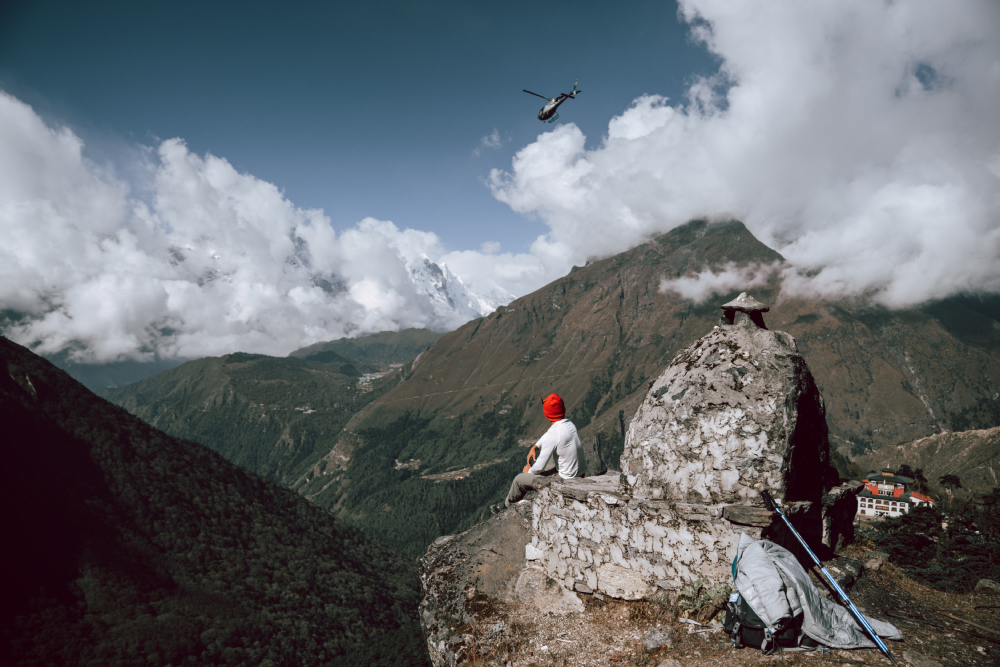
At ELH, we have someone on the ground in Lukla and Namche before the season starts. We pre-position equipment. We know which lodges are reliable this season and which have had problems. We know which porters are reliable. We test backup systems.
When a porter gets sick, we don't scramble to find a replacement. We have someone on standby.
When a lodge loses power, we don't wait and hope. We have alternative routes planned.
This kind of redundancy is invisible when everything works. But it's everything when something goes wrong.
Cost impact: Pre-positioning equipment and maintaining on-ground logistics adds $100–150 per person.
4. Safety and Evacuation Readiness—The Thing Nobody Wants to Talk About
Every operator says they have evacuation plans.
Few actually test them.
At ELH, we:
-
Have pre-secured helicopter operators with confirmed availability (not just "in an emergency")
-
Brief guides on the exact decision criteria for evacuation (not leaving it to judgment at 4,500m)
-
Train guides on basic medical assessment (recognising HACE vs. regular altitude headache, for example)
-
Have communication systems in place (satellite messengers, not just hoping for cell service)
This costs money. It also means that if something goes wrong, the response isn't chaos.
Cost impact: Helicopter standby agreements and guide medical training add $150–250 per person.
5. All-Inclusive Pricing—The Thing That Removes Decision-Making at Altitude
At altitude, your brain works differently. Decisions that seem easy at sea level feel monumental.
A cheaper trek says "all-inclusive" but then presents you with choices:
-
Do you want to eat at this restaurant or that one?
-
Do you want to pay extra for a hot shower?
-
Do you want a porter to carry that extra bag?
These are tiny decisions. But at 3,500m, they drain your mental energy.
At ELH, everything is genuinely all-inclusive. Meals are planned. Logistics are handled. Your only decisions are about the experience itself: the pace, the stops, the moments you want to sit and rest.
Cost impact: True all-inclusive pricing (not just lodging + meals, but every service) adds $100–200 per person.
What $4,500 Actually Gets You (And When It Works Well)
Let me be honest about the $4,500 tier. It's not bad. And for certain travellers, it's exactly right.
What's Included:
-
Upgraded lodges along the main route (Yeti Mountain Home or similar)
-
Private rooms with ensuite bathrooms
-
Breakfast and dinner in lodges
-
One guide for your group (typically 6–8 people)
-
Basic porter support
-
Ground transfers in Kathmandu
What's NOT Included:
-
Lunch (you buy this in villages along the way)
-
Snacks, drinks, hot showers (extra cost at most lodges)
-
Personal porter (shared with other groups)
-
Flexibility if things change (weather, acclimatisation issues, unexpected delays)
-
Helicopter (if you want it, that's an added cost)
When This Works:
-
You're fit and confident at altitude
-
You have a flexible schedule and don't mind delays
-
You're comfortable making small decisions throughout the trek
-
You're okay with limited personal attention
-
You don't need extra acclimatisation days
When This Falls Apart:
-
Weather delays happen, and you're scrambling to rebook lodge rooms with limited notice
-
Someone shows early altitude sickness signs, and there's no guide capacity to adjust the itinerary
-
You arrive in Lukla, and the lodge you were supposed to stay in is overbooked (this happens)
-
You reach Gorakshep and realise you're struggling more than you expected, but there's no flexibility to slow down
-
A porter gets sick or doesn't show up, and your belongings are scattered among multiple people
I've seen all of these. They're not catastrophes. But they're stressful. And at altitude, stress impacts your ability to adapt physiologically.
What $10,000 Actually Changes (And Why ELH Operates This Way)
At ELH, our treks run $8,500–11,000, depending on group size and season. Here's what that actually means structurally.
Staffing:
-
Dedicated guide (just for your group—not shared)
-
Assistant guide (one per group, focuses on health monitoring and pacing)
-
Porter ratio of 1:2 (one porter per two trekkers, max—not shared with other groups)
-
Backup logistics coordinator in Namche (if anything goes wrong, someone is managing it in real time)
Acclimatization:
-
Extra night in Namche built into the itinerary (not added as an option, but planned from the start)
-
Personalised pacing (we adjust based on how you're adapting, not a fixed schedule)
-
Health monitoring at each stage (basic pulse oximetry, not just asking "how do you feel?")
-
Flexible route options (if you're struggling, we have lower-altitude alternatives; if you're strong, we can push)
Lodging:
-
Pre-secured rooms at key lodges (Namche, Deboche) before the season
-
Guaranteed room standard (we use only three lodge chains: Mountain Lodges of Nepal (Yeti Mountain Home), The Himalayan, and Everest Summit Lodges—no compromises mid-trek), and in basics at Dingboche and onwards, we pre-book them, too.
-
Flexibility to adjust (if a lodge loses power or has issues, we move without disrupting your day)
Meals:
-
Fully catered (not just lodging meals—every meal, every snack, every drink is included and planned)
-
Personalised options (allergies, preferences, dietary needs are communicated to lodges in advance)
-
Quality control (our guides inspect meal preparation and food sources)
Cultural Access:
-
Time at Tengboche Monastery (outside peak visiting hours—not a tour, but genuine time)
-
Village walks that aren't performative (you're not "observing culture"; you're walking through real communities at a real pace)
-
Guide knowledge that goes beyond facts (our guides don't just tell you about Sherpa culture; they can actually converse about it because they're trained to do so)
Flexibility and Contingency:
-
Weather delays absorbed internally (if we can't fly out of Lukla on Day 1, we don't charge extra; it's planned into our margins)
-
Helicopter access confirmed in advance (not just "if needed"—we have standby agreements)
-
Backup accommodation (if a lodge is full, we have pre-arranged alternatives)
-
Decision authority for guides (guides can make calls about pacing, acclimatisation days, route changes—they don't need to call Kathmandu first)
Real Example of Why This Matters:
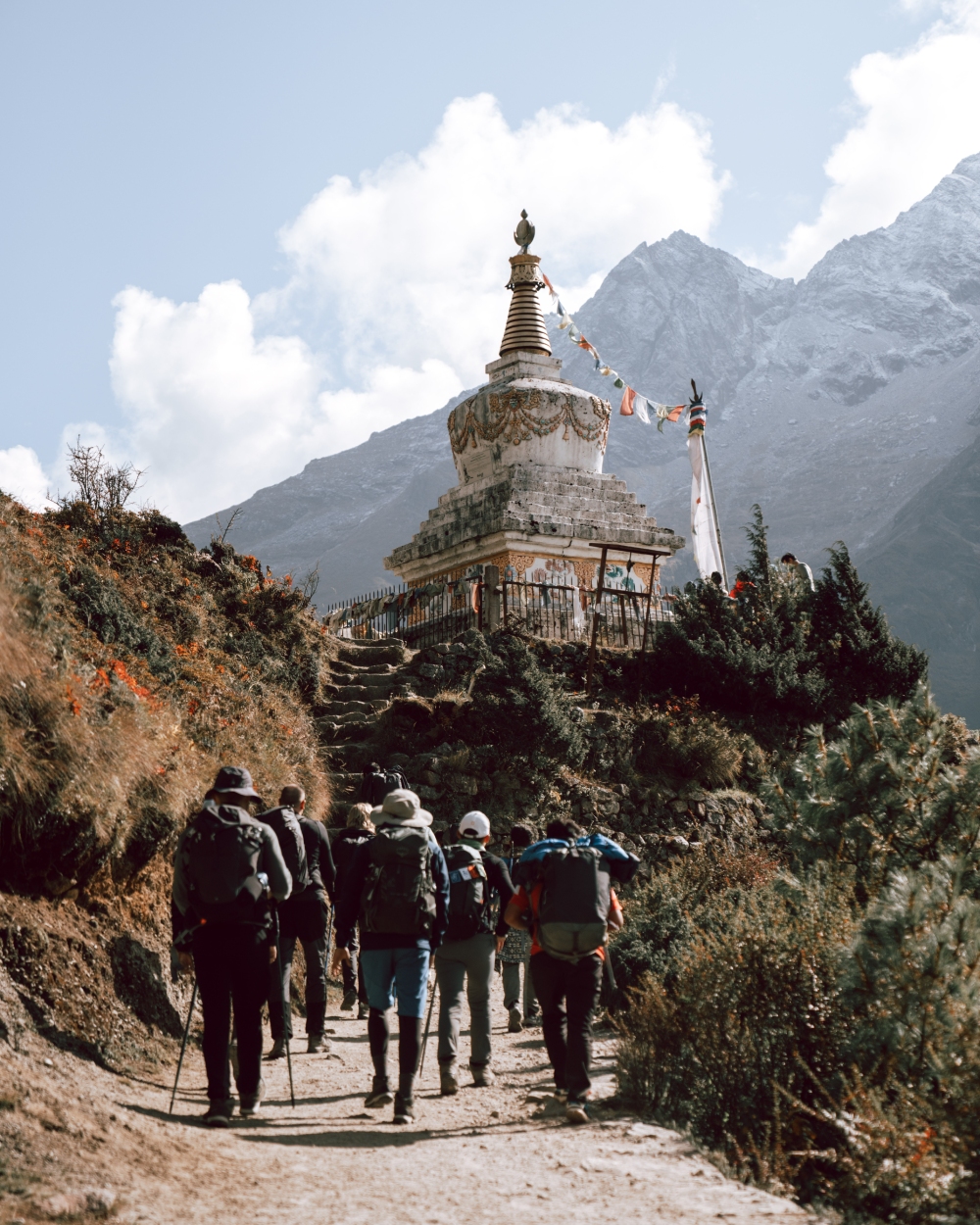
Mexico City group, two years ago. Five leaders, all fit, all experienced travelers. They came expecting to push hard and summit early.
Day 3 in Namche: One person's oxygen saturation was 85%. Borderline. Not an emergency, but watching.
With a cheaper operator, the guide would have said: "You're okay. Let's continue." And probably nothing would have happened.
But our guide said, "We built an extra night here into the plan. Let's use it. You stay in Namche tomorrow, do a light acclimatisation walk, and we'll see how you feel the next morning."
The person recovered fully. Summited. And afterwards, he told me: "I would have pushed. I would have gotten sick or turned back. That extra night changed everything."
That's what the $10k is paying for. Not the extra night itself. The system that allows that decision to happen without disrupting the whole plan.
Where the Money Actually Goes: A Transparent Breakdown
Per-person cost structure for a 10-person group at ELH:
|
Component |
Cost |
Notes |
|
Staffing |
$1,400 |
Guide ($400), assistant guide ($300), porter supervision ($200), Kathmandu coordination ($500) |
|
Lodging |
$1,200 |
11 nights at premium lodges, pre-secured rates |
|
Food & Logistics |
$800 |
All meals, all transport, all permits |
|
Equipment & Porter Support |
$900 |
Porters, equipment pre-positioning, backup supplies |
|
Safety & Contingency |
$500 |
Evacuation readiness, guide training, medical supplies, and communication systems |
|
Weather/Delay Buffer |
$400 |
Built-in absorption of delays and changes |
|
Margin & Operations |
$1,300 |
Kathmandu office, insurance, guide salaries between seasons, booking system, customer support |
|
TOTAL PER PERSON |
~$8,500–9,500 |
(Actual pricing varies by season and group size) |
Why does this not work at lower prices:
-
If an operator charges $5,000, something is being cut. Usually: staffing ratios, acclimatisation flexibility, contingency planning, or lodge quality.
-
If they're making money at $5,000, they're either: (a) using cheaper guides, (b) using larger groups, (c) sharing logistics across multiple groups, or (d) absorbing losses.
-
None of these is sustainable or safe.
Why Cheaper Operators Struggle (And What You Should Actually Watch For)
This isn't a hit piece on other operators. Many are perfectly ethical and deliver decent treks.
But there are real structural limits when you price at $4.5k:
1. Guide Quality
-
An experienced, trained guide earning decent money is making $60–80/day
-
At $4.5k for a 13-day trek with 8 people, the operator has $350/day to spend on guide costs
-
That's $43–50 per guide per day
-
This means they're either hiring less experienced guides or rotating guides (which means no continuity with your group)
-
ELH pays guides $80–100/day because we use smaller groups and need consistency
2. Acclimatisation Flexibility
-
Building extra nights into the plan and being willing to use them requires margin
-
If you're operating at tight margins, you push through. Because your only buffer is time, and time isn't flexible when you're pre-booked two weeks in advance
-
I've heard stories of guides pushing clients at altitude because the itinerary was fixed. Not from malice—from pressure
3. On-Ground Logistics
-
Having someone in Lukla and Namche before the season costs money
-
Maintaining backup systems costs money
-
Testing evacuation protocols costs money
-
Cheaper operators centralise operations in Kathmandu and manage remotely
-
This works until it doesn't
4. All-Inclusive Honesty
-
Many operators say "all-inclusive" but actually mean "lodging and some meals"
-
Lunch isn't included (you figure it out in villages)
-
Snacks aren't included (you buy them at lodges)
-
Hot showers aren't included ($3–5 each)
-
This isn't dishonest advertising—it's just the limit of low-cost operations
But it means you're still making decisions and managing costs at altitude.
Which Trek Cost Is Actually Right for You
Not everyone needs a $10k trek. And I'm not saying that to be diplomatic.
Choose $4.5k if:
-
You're fit and confident at altitude (or have summited before)
-
You have a flexible schedule and don't mind delays
-
You're comfortable with shared resources and making decisions on the trail
-
You prioritise getting to EBC over the experience of getting there
-
You're okay with limited personalisation
Choose $8.5–10k (ELH) if:
-
You want the experience, not just the summit
-
You value flexibility and personalised pacing
-
You're a first-time at altitude and want strong medical monitoring
-
You don't want to make logistical decisions while exhausted
-
You're travelling with people of different fitness levels
-
You want to remember the trek fondly 10 years from now, not just be glad it's over
Choose something in between ($6–7.5k) if:
-
You want better than standard, but you're budget-conscious
-
You're taking this on with a travel agency that's managing logistics
-
You trust the operator's name and reputation over detailed transparency
How We Actually Operate at ELH
I'm biased, obviously. But here's how we work:
1. We plan from experience, not from templates.
-
I've trekked this route a dozen times. So have our guides.
-
When we build an itinerary, it's not based on "standard pacing." It's based on where problems actually happen and where we can add slack.
2. We absorb operational complexity so you don't have to.
-
You never have to think about: lodge availability, porter coordination, meal planning, equipment logistics, helicopter standby, weather pivots
-
These happen. We manage them. You experience the mountain.
3. We train guides for depth, not just safety.
-
Anyone can point at mountains. Our guides can tell you about the people, the history, the ecology, the changes they've seen
-
They're also trained to recognise altitude problems early and make real decisions, not just report symptoms
4. We measure success by what you remember, not just if you summited.
-
Every trek has a summit. Not every trek has a moment where you felt genuinely welcomed by a community or had a quiet conversation with a guide that sticks with you
-
We design for both
5. We're transparent about what you're paying for.
-
This article exists because we believe you should know exactly where the money goes
-
We're not hiding complexity behind marketing
The Bottom Line
Everest Base Camp is the same mountain whether you pay $4.5k or $10k.
But the trek is completely different.
At $4.5k, you're getting good value: upgraded lodges, a qualified guide, and porter support. You'll probably make it to Base Camp. You'll have stories.
At $8.5–10k with ELH, you're getting a system that's been optimised for safety, flexibility, and genuine as well as authentic experience. You're getting guides who have the capacity to notice you. You're getting margins that allow for real acclimatisation. You're getting the mountain without the logistics stress.
The difference isn't amenities. It's the invisibility of good planning.
If you summit with us, you won't think about the contingency plan that kept things smooth. You'll just remember the clarity of the air, the detail in the guide's story about Sherpa culture, the conversation you had with a porter at a bhatti, the moment you reached Base Camp and felt genuinely present instead of exhausted.
That's what costs the extra $4.5k.
Next Steps
If this resonates, let's talk.
Book a 15-minute conversation with someone on our team who can understand what you actually want from this trek—and whether our approach is the right fit.
We'll ask you questions like:
-
What are you actually hoping to experience (not just summit)?
-
How important is flexibility to you?
-
Are you going solo, with a partner, or with a group?
-
What past treks or climbs have shaped how you travel?
Then we'll tell you honestly: do you need the full ELH model, or would a different structure serve you better?
No pressure. Just clarity.
Explore the Full Experience
Ready to see how the trek actually flows?
View Our Everest Base Camp Luxury Trek Itinerary
Looking for a completely different Everest experience?
Everest Heritage Trail: The Road Less Travelled ← Same region, fewer crowds, deeper cultural immersion
Thinking about Bhutan instead?