Most people who ask me about Bhutan start with the same question: "Is it worth it?"
I understand why they ask. The $100 Sustainable Development Fee per day. The mandatory guide. The flight into Paro is one of the most technically demanding airport approaches in the world. It adds up. It requires commitment before you've seen a single monastery.
But here's what I tell them: Bhutan is the only destination I've worked with where the access cost is also the experience. The SDF funds hospitals, schools, and conservation. The guide isn't a bureaucratic requirement — he's your translator, your host, your way in. The difficulty of getting there is part of why it's still intact when you arrive.
The question isn't whether Bhutan is worth it. The question is, which Bhutan is yours?
That depends entirely on what you're looking for. I've placed couples who wanted to disappear into valleys for two weeks. I've placed executives who needed five days of genuine stillness. I've placed travellers who wanted to fish rivers that almost no one has fished, alongside conservationists protecting species most people have never heard of.
Below are the three luxury Bhutan tours I recommend most. Each one serves a different kind of traveller. Each one is designed around Bhutan's logic — slow, deliberate, and rooted in meaning.
The Signature Bhutan Escape — 6 to 7 Days
Best for: First-time visitors who want depth without sacrificing pace
This is where I start most clients. Not because it's the easiest version of Bhutan, but because it's the most honest one.
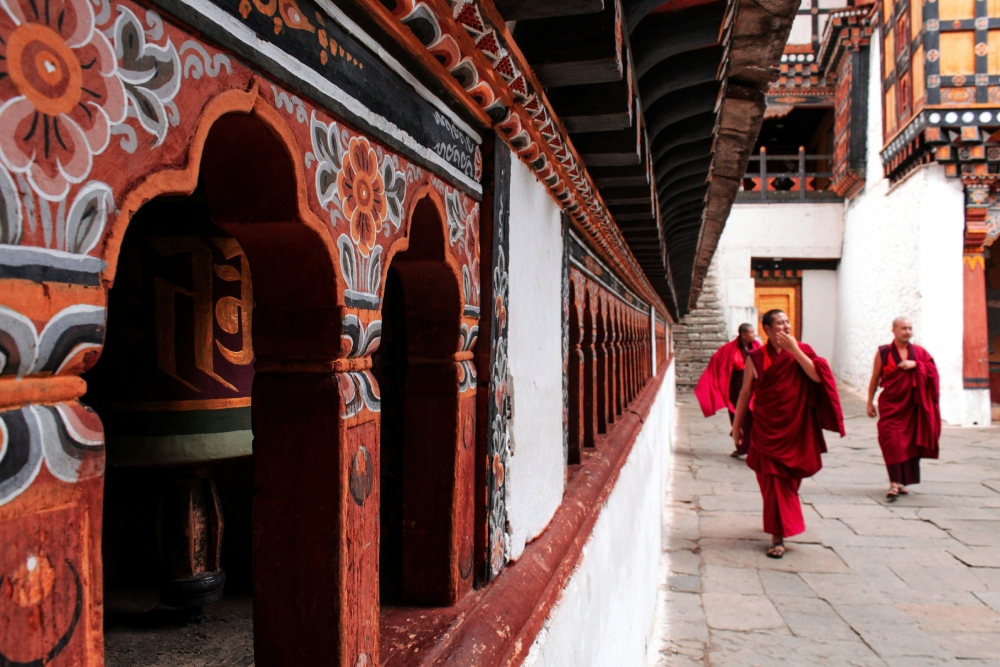
The route moves through Paro, Thimphu, and Punakha. These three valleys hold the cultural and spiritual core of the country. You don't need to go further east to understand what Bhutan is — you need to go slowly through these three places and actually pay attention.
Accommodation is selected based on the day's location and the client's disposition. Six Senses Punakha for those who want stillness and river views. Amankora, if the architecture and sense of removal matter. COMO Uma Paro for travellers who want a base that feels more like a private estate than a hotel. Bhutan Spirit Sanctuary for anyone for whom wellness is the actual point of the trip.
The itinerary includes a private blessing at Pangri Zampa — a 16th-century monastery just outside Thimphu that most tours drive past. It includes the Tiger's Nest hike, which I won't romanticise: it's a genuine climb to a monastery that sits 900 metres above the valley floor, and it earns its reputation. It includes time in Punakha Dzong during morning prayers if timing allows — something that has nothing to do with tourism and everything to do with being present when something real is happening.
The wellness session at Bhutan Spirit Sanctuary includes a traditional hot stone bath using river-heated stones. It's not a spa treatment in the way most travellers understand that phrase. It's older than that.
Starts from: USD $4,999 per person (2 adults, 6 days)
Best time to go: March to May and September to November. These windows give you clear mountain views, stable weather, and the possibility of catching a tsechu — a masked festival that happens at dzongs across the country and is never staged for visitors.
Extensions worth considering: A helicopter flight to Jomolhari Base Camp adds a completely different dimension — high altitude, raw terrain, and a view that resets how you think about scale. One extra night in Haa Valley with a local cooking session is the quietest thing I can offer anyone in Bhutan. Almost no one goes there.
View the Signature Bhutan Escape →
The Amankora Journey — 12 to 14 Days
Best for: Travellers who have already seen highlights elsewhere and want the full landscape of a country
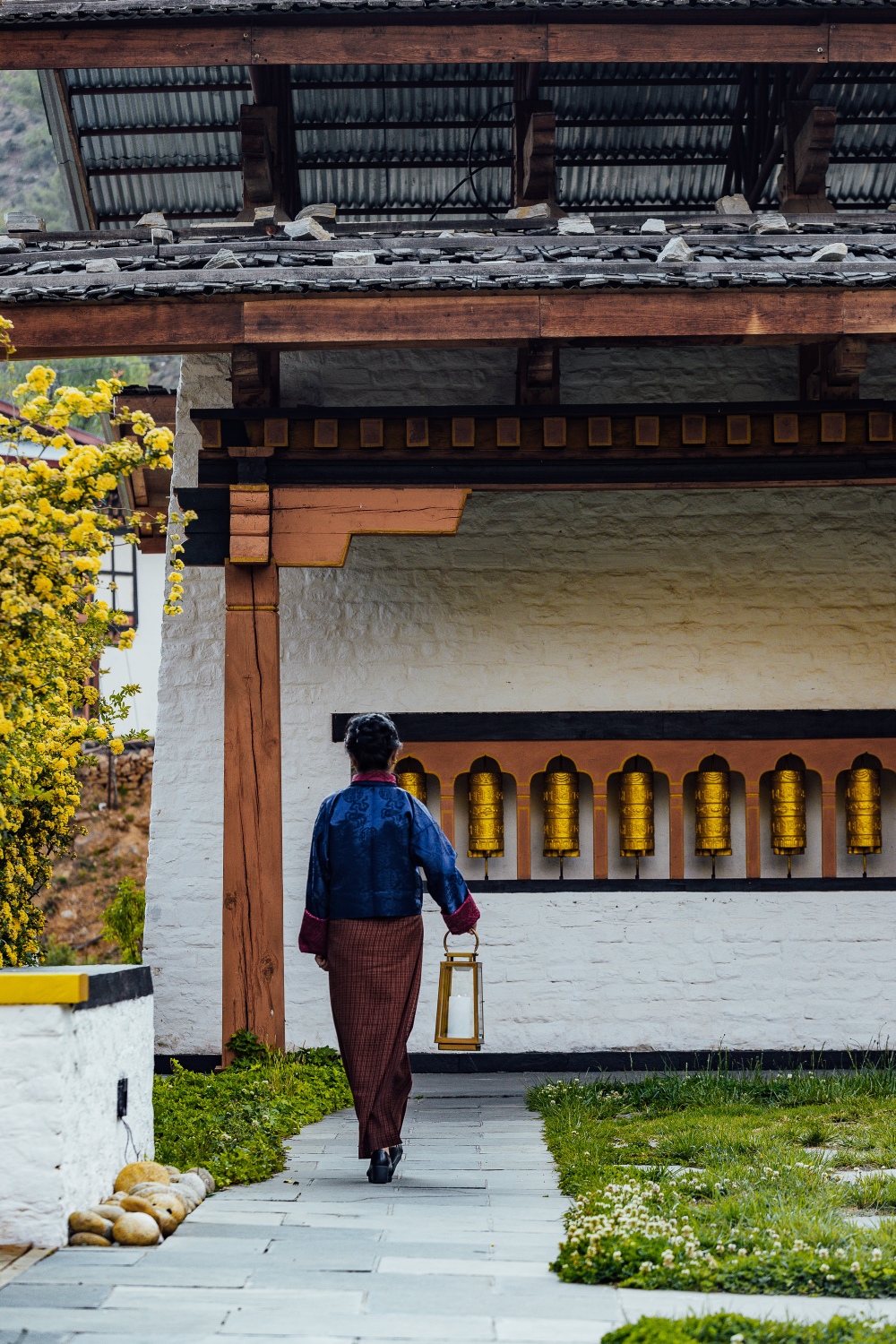
Amankora built five lodges in Bhutan. Each one sits in a different valley. Moving between them over 12 to 14 days is the closest thing I know to reading a country rather than visiting it.
Paro. Thimphu. Punakha. Gangtey. Bumthang. The route moves east with the country's own logic. Each valley has a different altitude, a different character, and different things growing in the fields.
Gangtey is where I would send anyone who doubts that Bhutan is genuinely different from other destinations. It's a glacially wide valley — unusually open for a country this mountainous — and from October to December it fills with black-necked cranes that migrate from the Tibetan plateau. There are around 600 of them. They arrive on their own schedule. No operator arranges this.
Bumthang is the spiritual heartland. The temples here predate Buddhism's formal arrival in Bhutan. Guests receive blessings from monks who have lived in these valleys their entire lives. The quality of stillness there is different from Paro or Thimphu. It takes a day to settle into it.
Each Amankora lodge reflects its valley. The design is consistent — whitewashed walls, timber beams, Bhutanese textiles — but the atmosphere changes with the landscape. The Punakha lodge sits above the Mo Chhu River. On cold mornings, the mist comes off the water, and the surrounding rice terraces are still. This is the kind of moment that doesn't translate in photographs but stays with people for years.
Starts from: USD $2,355 per night (2 adults, 14-night circuit)
Best time to go: October to December for Gangtey and the crane migration. March to May for the valleys in bloom. The circuit works year-round, but these windows are when Bhutan is most itself.
Extensions worth considering: A stop in Haa Valley before Paro adds one of the least-visited corners of western Bhutan. A private picnic on the Pho Chhu riverbank in Punakha is a small thing that becomes a strong memory.
Enquire about the Amankora Journey →
The Royal Manas Fly-Fishing Expedition — 10 Days
Best for: Travellers who need something genuinely rare, and who care about what their travel does
This is the most unusual trip I offer in Bhutan, and in some ways the most interesting.
The journey moves through Paro and Punakha — cultural grounding first — then down into southern Bhutan, to Panbang village near Royal Manas National Park. Most travellers never go south. The terrain shifts completely: subtropical forests, river systems, and a different biodiversity. The landscape feels remote in a way that even the high valleys don't.
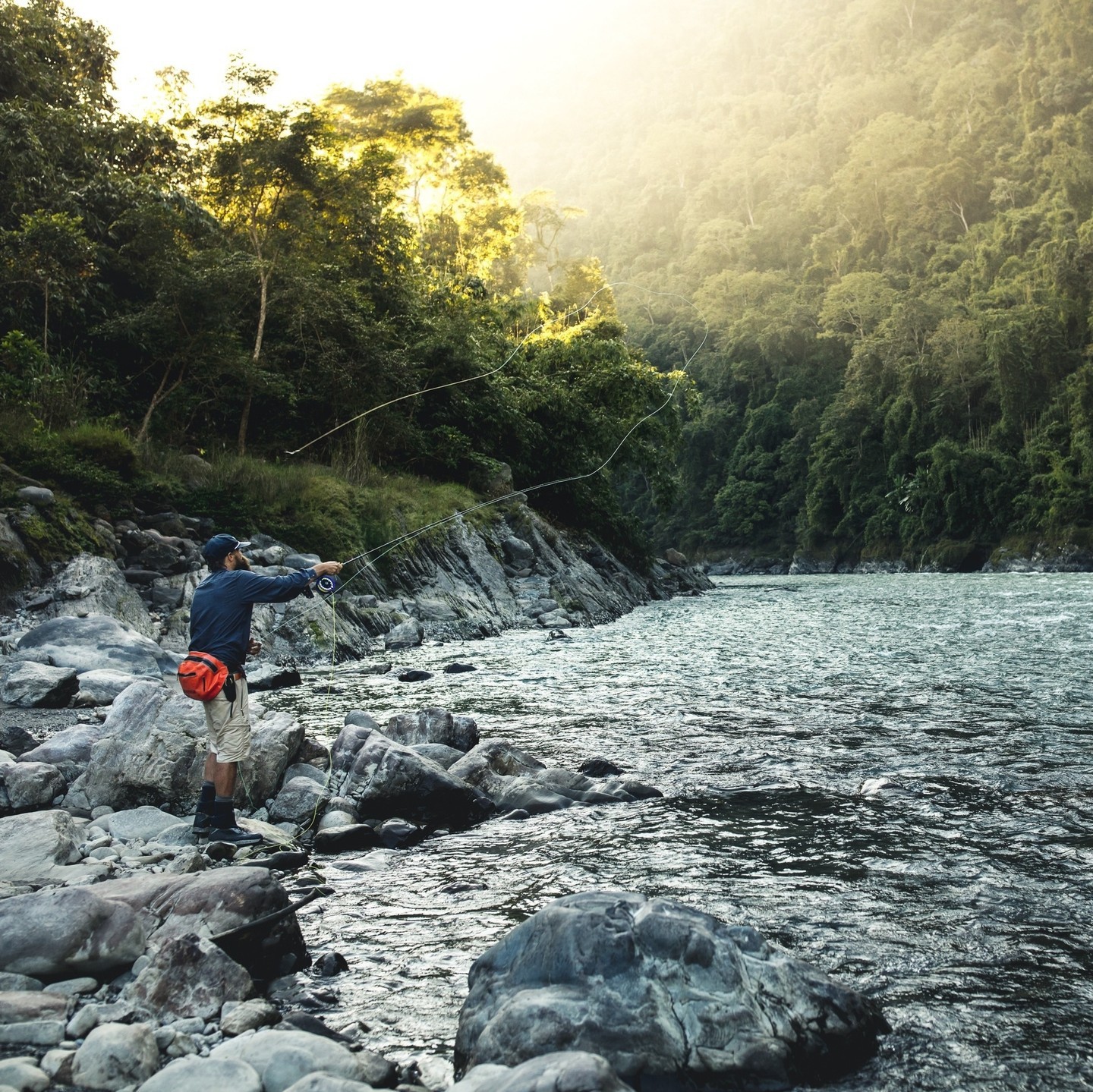
The fishing is catch-and-release, guided by local conservationists working with WWF Bhutan. The target species are rare. The rivers are healthy because Bhutan's forest coverage — over 70% of the country — means the watersheds are intact. You are fishing in a river that hasn't been degraded. That's rarer than it sounds.
Alongside the fishing, the itinerary includes time with Panbang village families. Weaving, farming, and traditional herbal medicine. These are not demonstrations. The families live here. The activities are part of their daily life, and guests join rather than observe.
The trip also includes white water rafting on the Manas River and wildlife tracking near the forest edge. Bhutan's wildlife is real and present in a way it isn't in many other places — partly because hunting has been prohibited for decades, partly because development pressure in the south is low.
Accommodation includes Bhutan Spirit Sanctuary in Paro, Beyond's Punakha River Lodge, and Panbang Eco Lodge at the Manas site. Helicopter access connects the sections.
Starts from: USD $21,065 per person (4 adults, 10 days)
Best time to go: April to June and late September to November. River levels are fishable, and wildlife movement is most active.
Extensions worth considering: Gangtey in crane season is a natural add-on if timing works. Eastern Bhutan — Mongar, Trashigang — is a completely different country again, and pairing it with the south creates a Bhutan most operators have never attempted to design.
Explore the Fly-Fishing Expedition →
Which Tour Is Right for You?
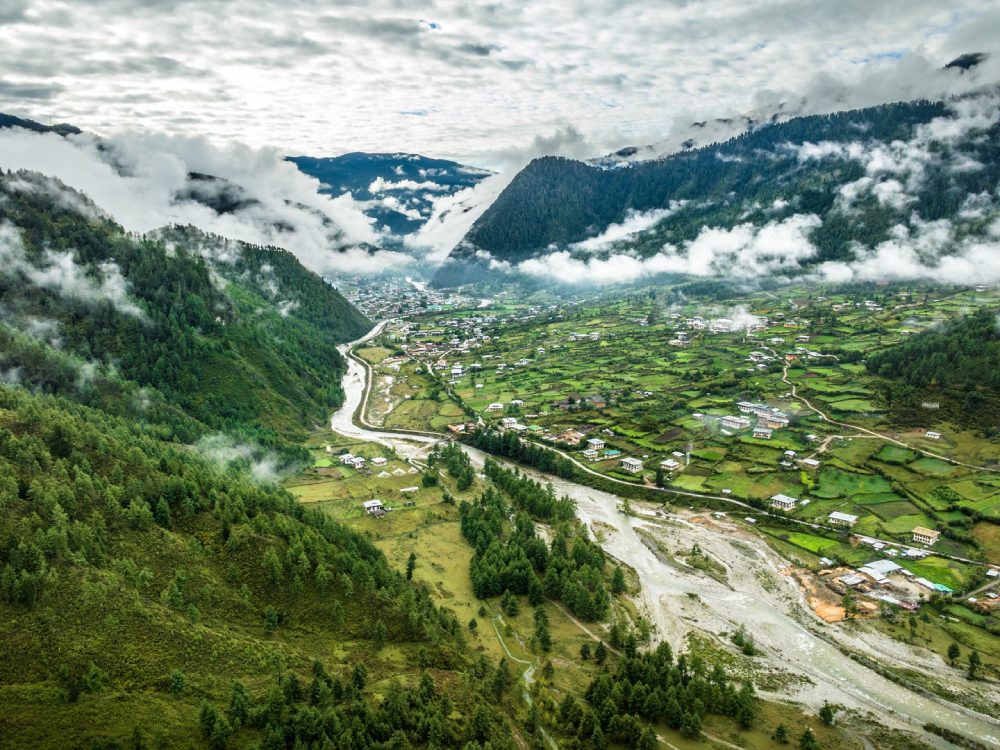
I don't answer that question on behalf of clients until I understand what they're carrying into the trip. Bhutan works differently depending on where you are in your life. I've seen people arrive looking for adventure and leave having found something quieter. I've seen travellers who planned for culture and spent most of their time sitting by a river.
The country has a way of giving you what you need rather than what you planned for.
None of these tours is designed to protect you from Bhutan. They're designed to place you inside it — with the right guide, the right pace, and enough space for the country to do what it does.
If you're ready to start a conversation, I'm here.
Frequently Asked Questions
How much does a luxury Bhutan tour cost?
The Signature Bhutan Escape starts at $4,499 per person for the Silver tier, $5,999 for Gold, and $9,999 for the Platinum heritage package — all based on 2 adults for 6 days. The $100 SDF per person per day is included in all three. The Amankora Journey and Fly-Fishing Expedition are priced on enquiry, based on dates and group size.
What is the SDF fee in Bhutan, and what does it cover?
The Sustainable Development Fee is $100 per person per day. It funds Bhutan's public services — healthcare, education, and conservation. It is not a fee that goes to operators or hotels. It is direct participation in the country you're visiting. The Tourism Council of Bhutan administers it.
Is Bhutan worth visiting for experienced travellers?
Bhutan is specifically suited to experienced travellers. If you've seen the obvious destinations and want somewhere that hasn't been flattened by mass tourism, Bhutan is it. The country has been deliberate about who visits and how. That restraint is visible in everything.
Do I need a guide in Bhutan?
Yes. A licensed Bhutanese guide is required for all international visitors. This isn't a restriction — it's one of the reasons Bhutan works the way it does. Guide quality matters enormously. We select ours carefully. Read why guides define the Bhutan experience →
When is the best time to visit Bhutan?
March to May and September to November are the clearest windows. October to December is ideal for the black-necked crane migration in Gangtey. Spring brings rhododendrons across the high passes. There is no bad time — only different versions of the country.
Conclusion
I've been placing clients in Bhutan for years. The question I get most isn't about price or itinerary. It's: "Will it actually feel different?"
It will.
Not because Bhutan is remote. Not because the monasteries are old. But because the country hasn't been optimised for visitors. The dzongs are still used as administrative centres. The monks in Bumthang aren't there for the tour. The cranes in Gangtey arrive because the valley is intact enough to receive them.
What we do at ELH is make sure you're positioned to receive all of that. The right guide. The right pace. The right property for where you are in the journey. Enough space in the itinerary for Bhutan to do what it does when you stop rushing through it.
The three tours above cover different versions of that experience. A focused first immersion. A slow reading of the whole country. A rare encounter with its southern rivers and the people who have lived beside them for generations.
None of them is off-the-shelf. All of them start with a conversation.