A client came back from Gangtey last autumn. We had a debrief call — the kind where I ask what stayed with them. She was quiet for a moment, then said: "I sat watching the valley for over an hour and didn't think about anything. I haven't thought about anything in eleven years."
She paid just over USD 2,600 per person per night for that journey. I've never heard her question whether it was worth it.
I tell this not to sell Six Senses — you've already found it — but because it frames what this page is actually about. Not what does it cost, but what does it cost you to do this wrong? The wrong lodge order. The wrong pace. Two nights when you needed three. A guide who points rather than listens.
That's what this guide is for. I'm going to answer the real questions directly: what it costs, which lodge is right for you, what's actually included, and how it compares to Amankora — honestly, as someone who has sent clients to both.
The Five Six Senses Bhutan Lodges — Location First, Price Second
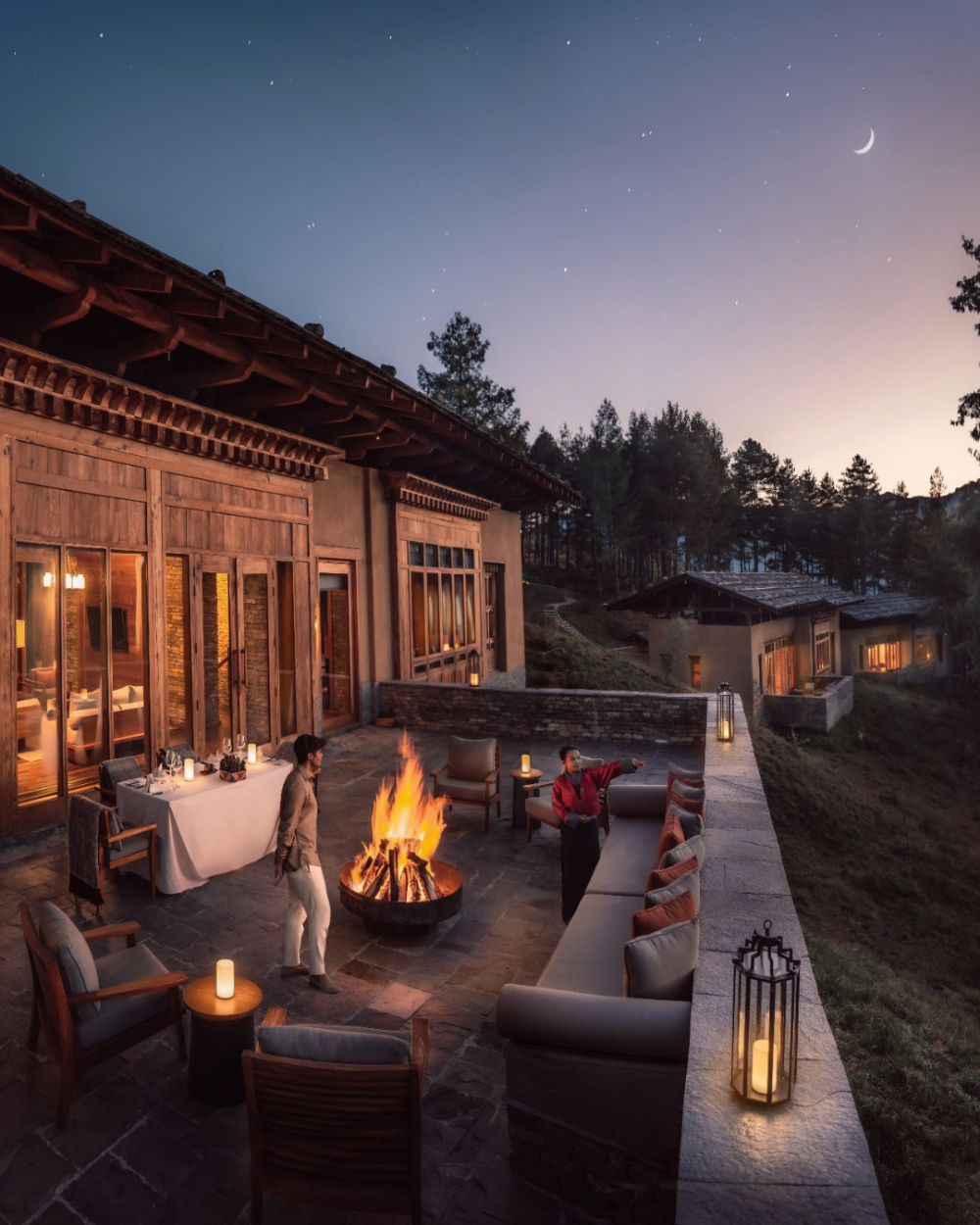
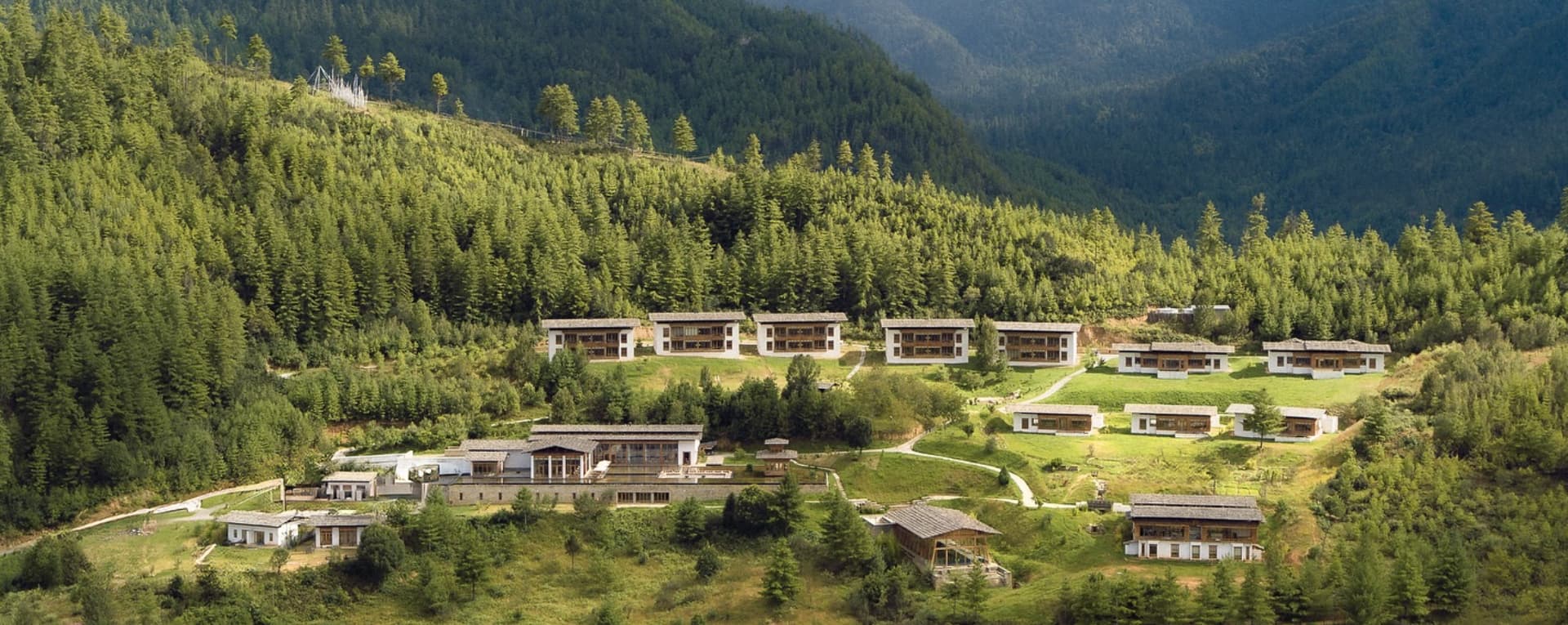
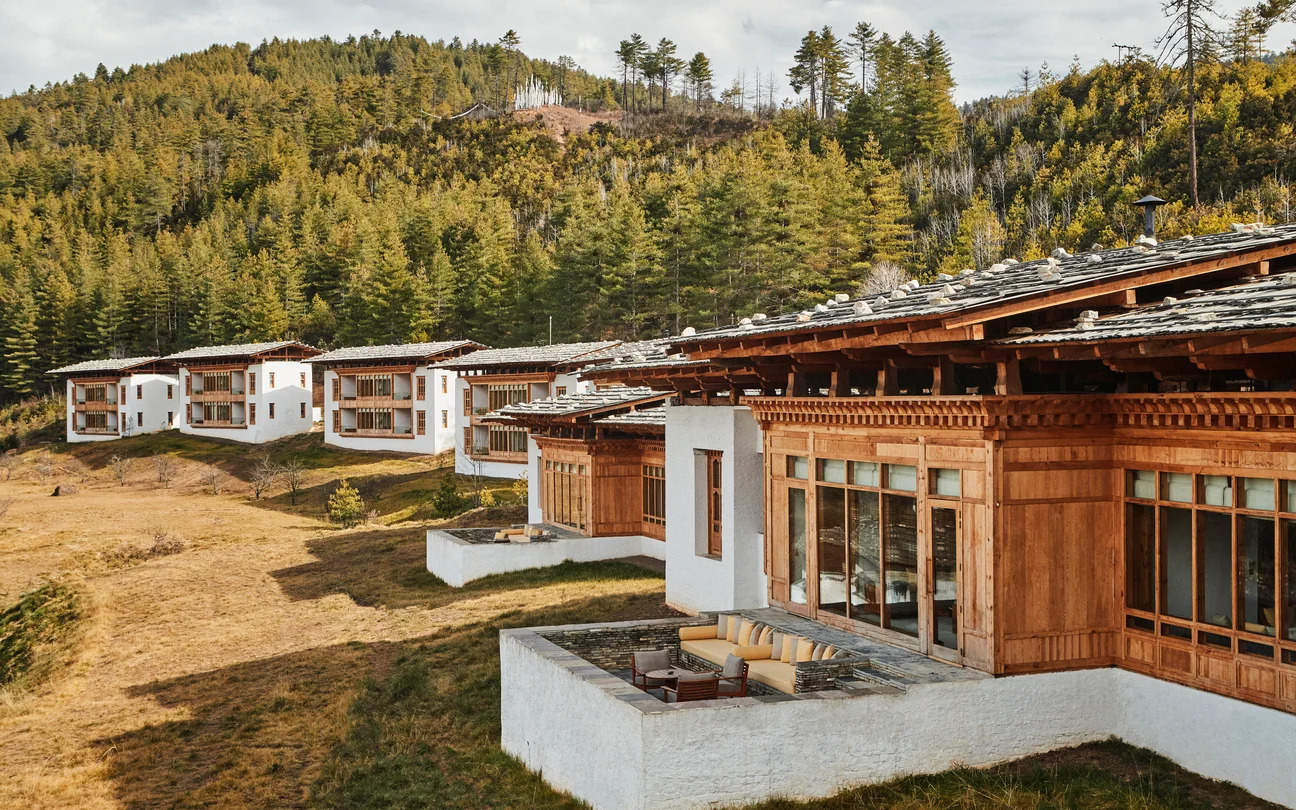
Six Senses Bhutan is not one property. It's five lodges spread across the west and central valleys of the kingdom — each with its own design identity, its own rhythm, and its own specific purpose in a journey. The architecture of every lodge was drawn from a distinct aspect of Bhutanese history, tradition, and lifestyle. That's not marketing language — you feel it when you move between them.
The sequence matters as much as the lodges themselves. Before you look at prices, understand what each one actually is.
Six Senses Thimphu — The Palace in the Sky
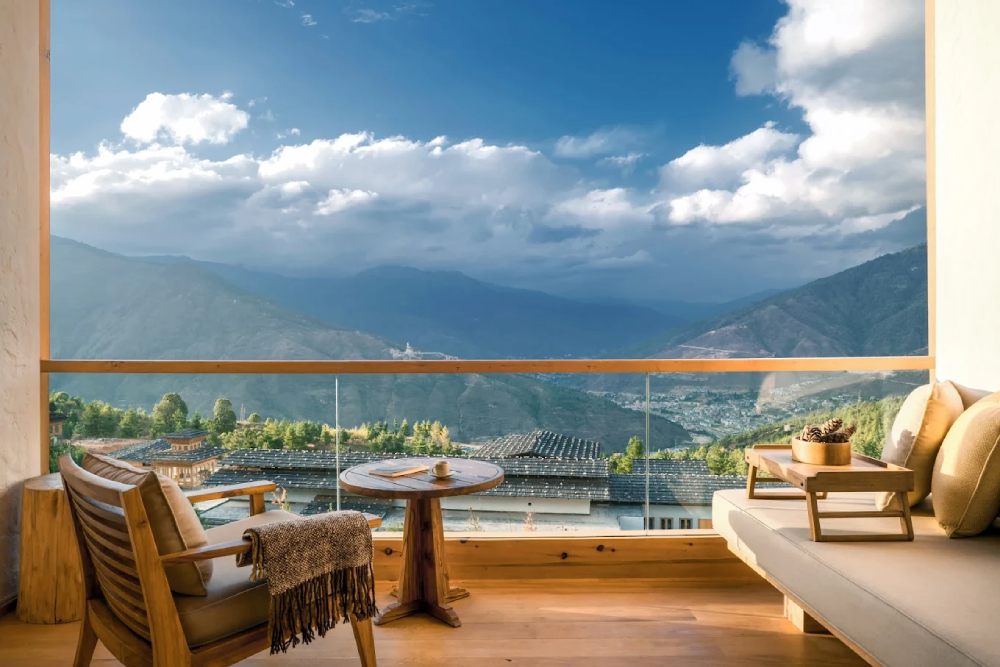
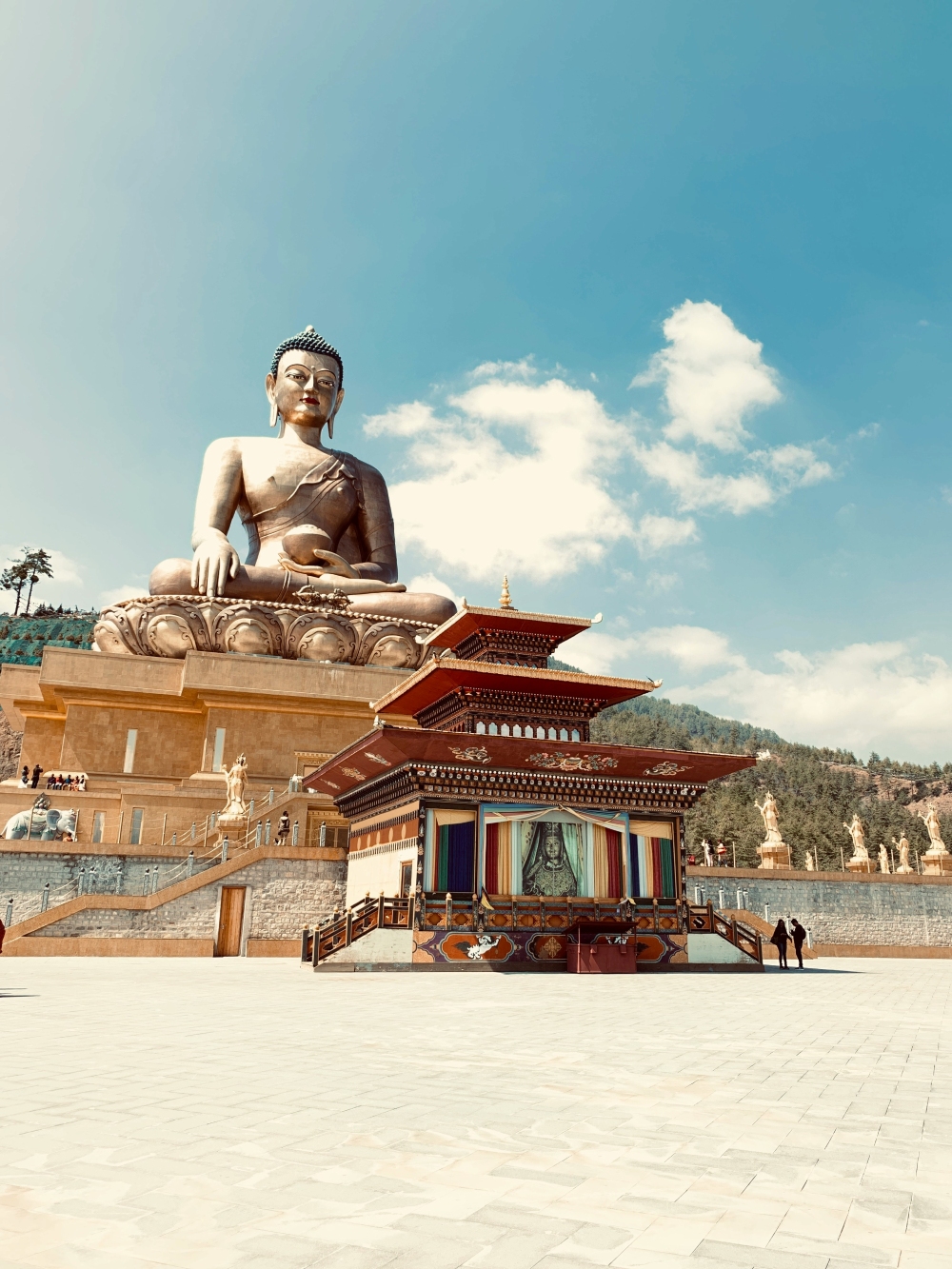
Perched on a hillside within apple orchards and pine forests, yet within reach of the capital's streets and monasteries. The design is grand for Six Senses standards — reflecting ponds mirror the sky, a prayer pavilion overlooks the valley, and the Buddha Dordenma is visible from the grounds. This is the lodge Six Senses itself calls the Palace in the Sky, and when I stayed in September 2025, I understood why immediately: you're close enough to feel Thimphu's energy, elevated enough to see it clearly.
Facilities include a pool, banquet space, and a sunken outdoor performance deck. Mornings here often begin with meditation at the prayer pavilion before heading down into the capital. It's the right entry point for travellers who want cultural grounding before the valleys deepen around them.
Best for: First-time visitors wanting a refined, culturally rich opening to the journey. Those who need altitude adjustment time before going higher.
Six Senses Punakha — The Flying Farmhouse
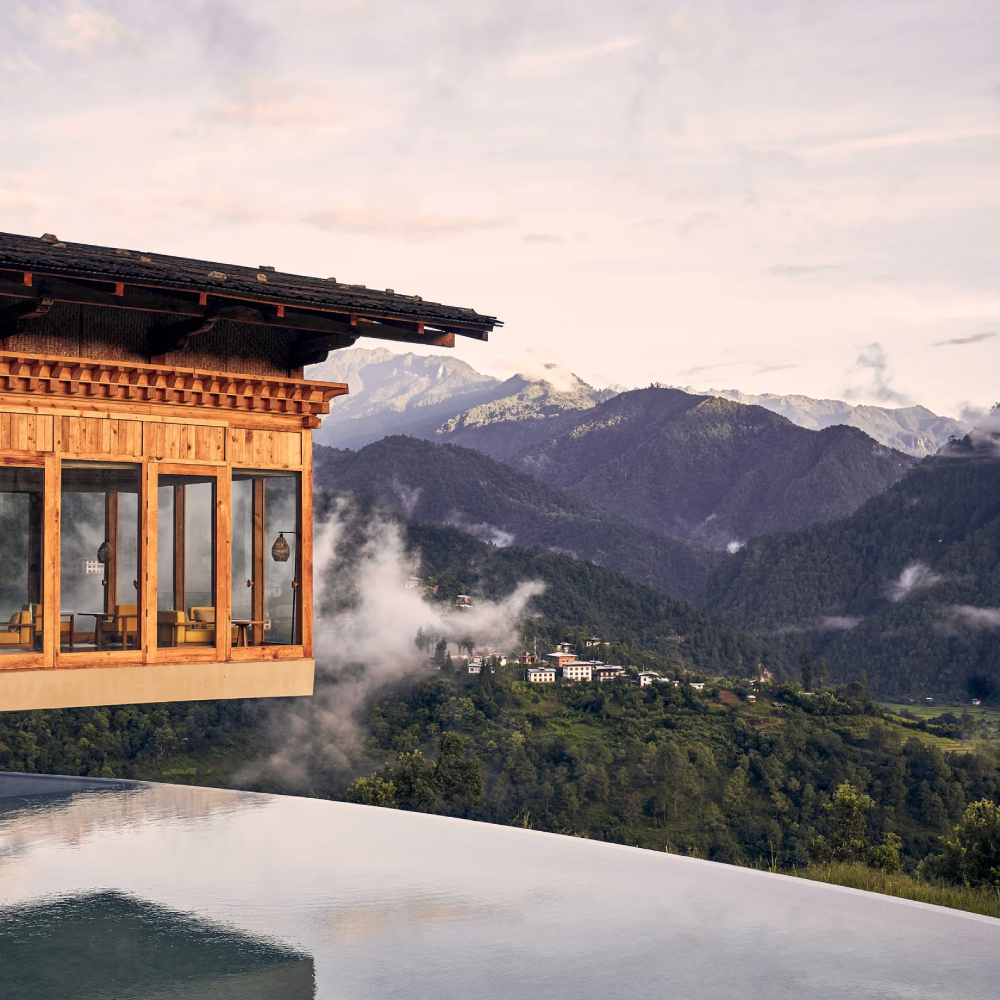
Drop in elevation and everything changes. Punakha is warmer, lower, and agricultural in a way that Thimphu isn't. The lodge sits above rice fields — the design deliberately references the farmhouses below, which is why Six Senses named it the Flying Farmhouse. Suites and villas, a pool, yoga and meditation huts, and a library. The feel is rustic in the truest sense: grounded, unhurried, surrounded by working land.
From here, you visit the Punakha Dzong — a fortress-monastery sitting at the confluence of the Pho Chhu and Mo Chhu rivers. I've been in dzongs across Bhutan. This one is different. The light at different times of day finds different things in it. It's among the most beautiful buildings I've seen across 17 countries — not as a superlative, as an observation.
Best for: Travellers who want to feel Bhutan's agricultural soul. Those who come alive in warmth and open valley settings. A strong choice for the middle night of a 7-night circuit.
Six Senses Paro — The Stone Ruins
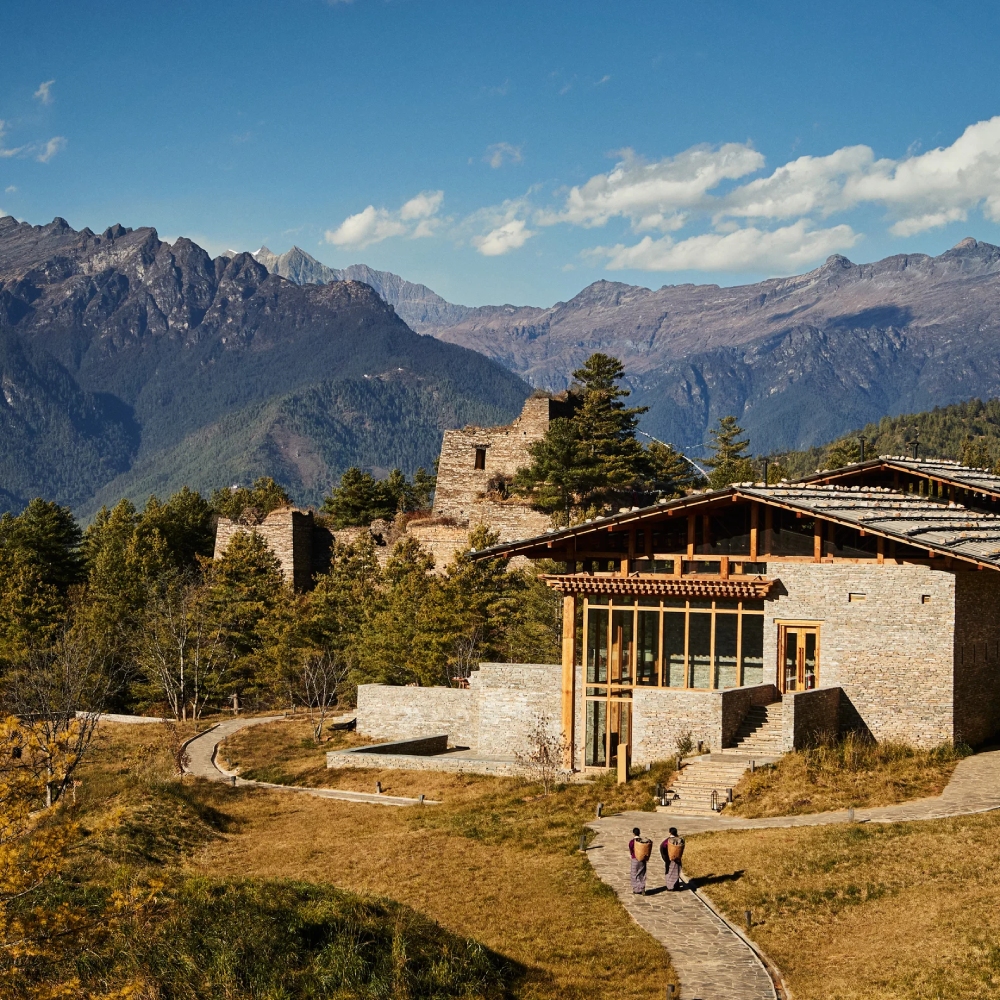
Six Senses calls this lodge Stone Ruins — you understand why the moment you dine there, surrounded by the ancient stonework the lodge was built to honour. The setting maximises one of the most dramatic valley views in the entire circuit, and the architectural language echoes the dzongs and fortress walls that define Paro's landscape.
This is the base for the Tiger's Nest hike — Taktsang Lhakhang — which Six Senses calls out as the reason for an early start. The hike runs two to four hours up, gaining around 610 metres to reach a monastery built into a cliff face above the valley. Something about doing that physically, at that altitude, in a place that has held that much weight for centuries, changes how the rest of the journey lands. Paro also offers dinner in the stone ruins under mountain stars — one of the most memorable meals possible in Bhutan.
Best for: Travellers who want physical challenge and historical depth in the same 24 hours. Strong as a first or final lodge — I prefer it at the start.
Six Senses Gangtey — The Traditional Birdwatching Bridge
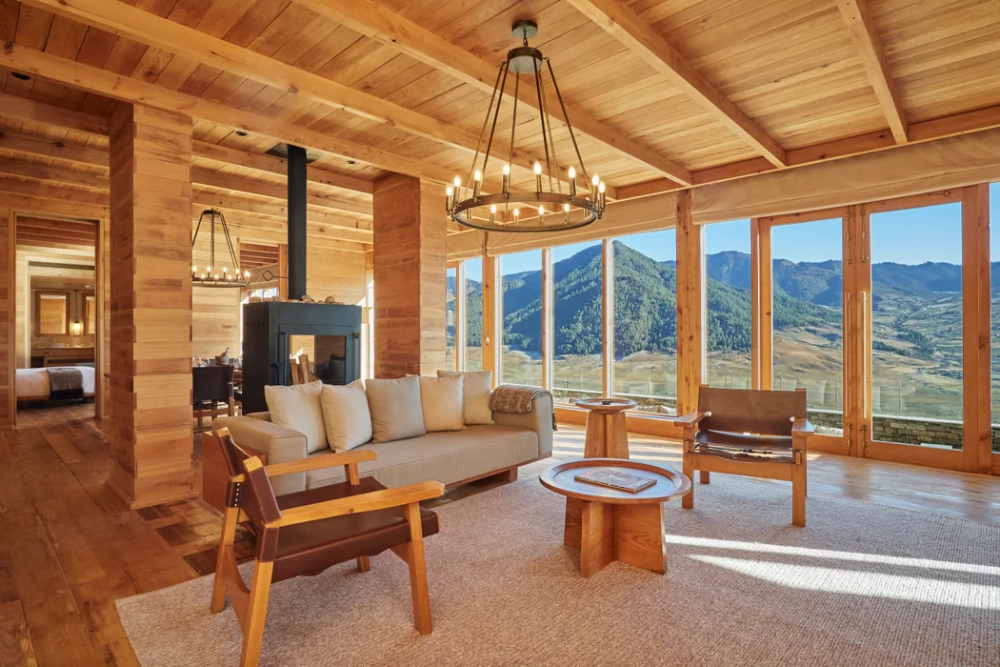
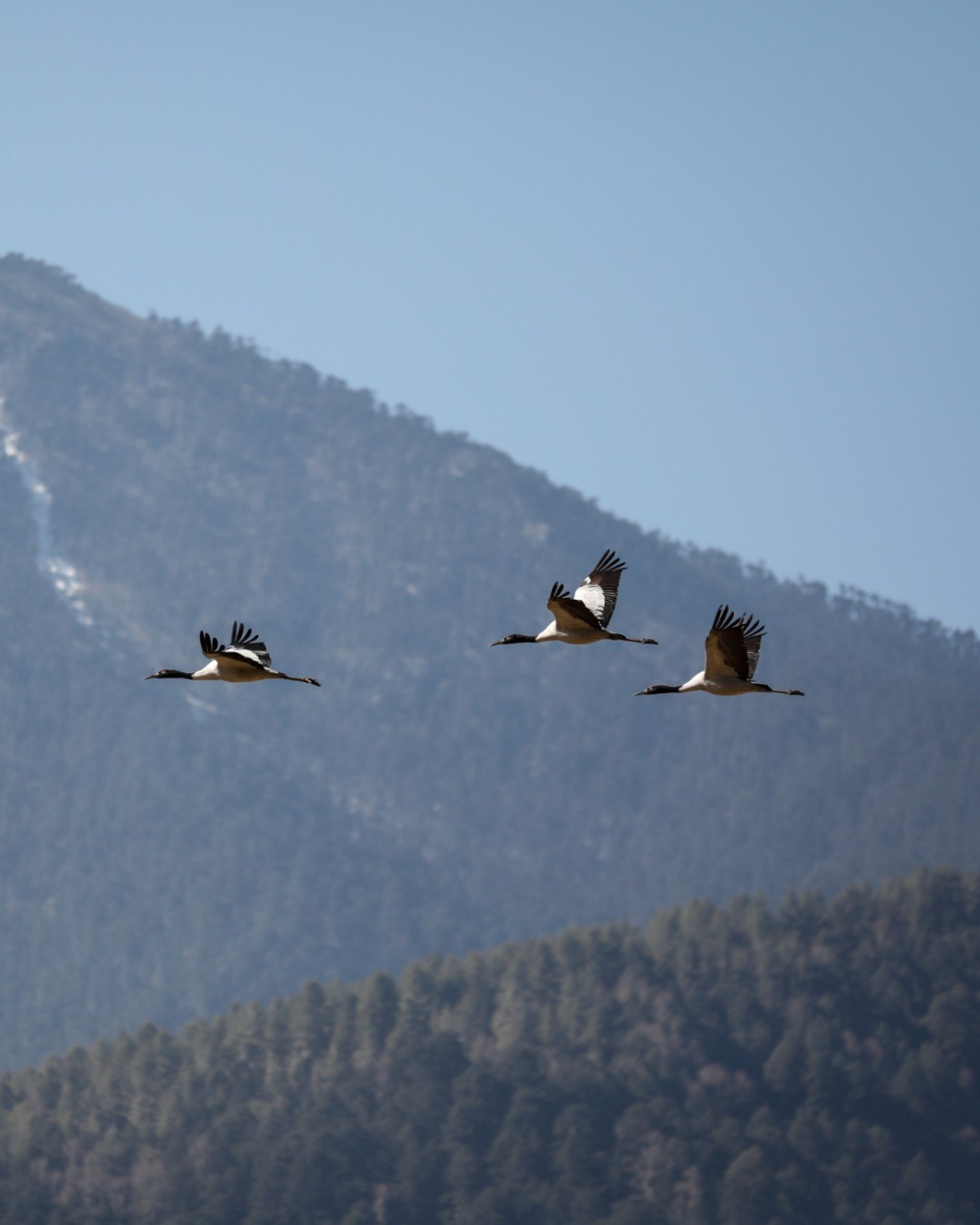
The Phobjikha Valley at around 3,000 metres in elevation. A wide, open glacial plain in central Bhutan that sees very few visitors relative to the western circuit. Six Senses named this lodge the Traditional Birdwatching Bridge — because it was built specifically to frame the 180-degree view across the valley, and because this is where Bhutan's rare black-necked cranes arrive from Tibet each October, wintering here until February.
This lodge is smaller and more intentional than the others. The entire experience is oriented around observation: the valley, the cranes, the quality of light across an open plain at altitude. The Sundana herbal steam treatment here — overlooking the valley — is where a client of mine spent an hour in silence and rang me afterwards to report back. I don't share that story as atmosphere. It's what this place does to people when they stay long enough.
Best for: Travellers who have been moving fast for too long. Those who value nature as the main character. October to February for the cranes; any time for the valley itself.
Six Senses Bumthang — Forest Within a Forest
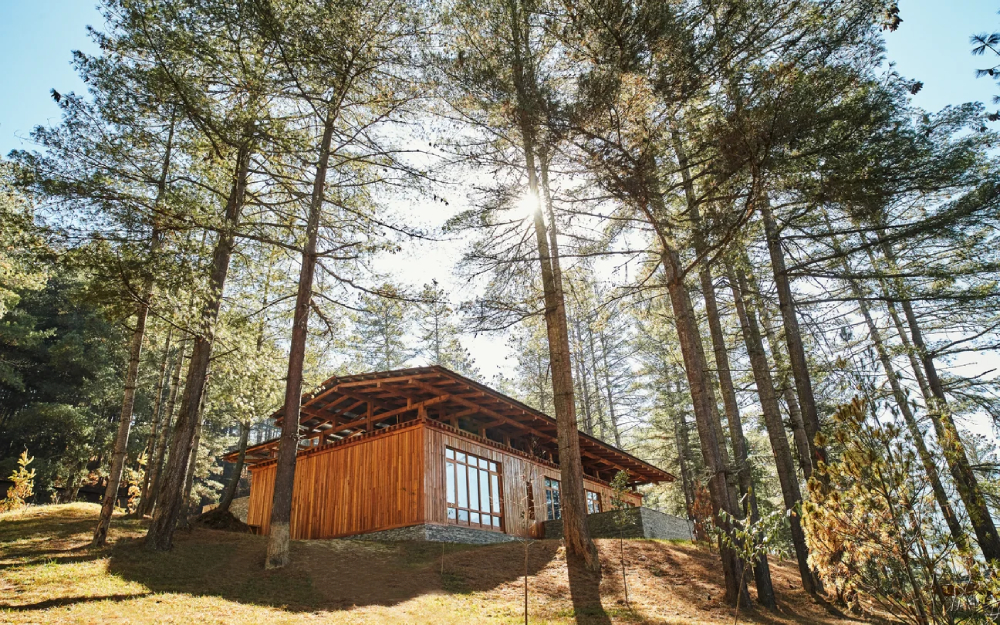
The drive from Gangtey to Bumthang is itself part of the experience — through terraced farmland, deep river valleys, and passes where farmhouses cling to slopes at angles that shouldn't be possible. The lodge sits in Bhutan's most easterly valley on this circuit, near the Chamkar Chhu river, built into the forest so deliberately that Six Senses calls it Forest within a Forest. The boundary between lodge and landscape dissolves.
Bumthang is Bhutan's spiritual centre. The temples and monasteries here are not preserved heritage sites — they're in daily active use, filled with monks, incense, and the kind of continuity that most of the world stopped having access to. Burning Lake — where the 15th-century saint Pema Lingpa dove with a lit butter lamp and emerged with it still burning — is nearby. Winter festivals bring mask dances and rituals that date back centuries.
I've watched a certain kind of traveller — accomplished, slightly defended, not easily moved — loosen in Bumthang. Not because anything dramatic happens. Because nothing dramatic happens, that's the point.
Best for: Spiritual depth. Return visitors. Anyone who wants to understand what Bhutan actually is, beneath the landscapes.
If a guest is worth it for you, the Gangtey lodge is the one to build a trip around — talk to us before you lock dates, since the good rooms go first in crane season.
Six Senses Bhutan Price Per Night — 2026–27
All rates are per suite or villa, before 10% service charge and 5% GST. Rates shift by lodge, season, and room category.
| Room Type | Low Season (Jun–Aug, Dec–Feb) | High Season (Mar–May, Sep–Nov) |
|---|---|---|
| Lodge Suite | USD 1,575–1,820 | USD 1,885–2,130 |
| 1-Bedroom Villa | USD 2,050–2,235 | USD 2,390–2,585 |
| 3-Bedroom Villa | USD 4,900–5,560 | USD 6,900–8,030 |
Indicative ranges for 2026–27. Rates vary by specific lodge and availability. Contact us for confirmed pricing for your dates.
The total across five lodges is 82 suites and villas — starting from 645 sq ft indoors for lodge suites, up to 3,681 sq ft for three-bedroom villas. The entry-level lodge suite is not a compromise. Design consistency across Six Senses Bhutan is one of the things that distinguishes this product from almost everything else in the region.
What's Included — and What Isn't
Included in every lodge rate:
- All meals: breakfast, lunch, dinner
- Non-alcoholic beverages and teas throughout the day
- Arrival spa welcome ritual
- In-lodge guided activities, walks, and cultural experiences
- Private guide and driver coordination between lodges (when booked as a circuit)
Not included — and this is where budgets consistently go wrong:
- Bhutan Sustainable Development Fee: USD 100 per person per day
- Visa
- Monument and temple entry fees
- International flights to Paro
- Domestic flight to Bumthang (optional — many clients drive; some fly)
Once everything is factored in, the realistic all-in daily cost per person runs USD 2,250–3,020, depending on season, room type, and group size.
For a 7-night journey for two people: approximately USD 16,000–21,000 fully inclusive. No surprises in-country when everything is built into the package from the start.
A note on the USD 100/day fee. Most people treat this as an inconvenience. I'd reframe it. Bhutan's tourism model was built to protect the country, its pace, its culture, and its refusal to be consumed at scale. When you pay that fee, you're not paying a tax. You're participating in a system that keeps Bhutan worth visiting. That distinction matters when you're standing in the Phobjikha Valley at dawn, and the plain is still yours.
Six Senses vs Amankora — A Practitioner's View
Anyone seriously researching Six Senses Bhutan is also looking at Amankora. That's the right question to ask, and I'll answer it honestly — having sent clients to both.
| Six Senses Bhutan | Amankora | |
|---|---|---|
| Price range (per night, pre-tax) | USD 1,575–8,030 | USD 2,050-2,850 |
| Number of properties | 5 lodges | 5 camps |
| Total rooms | 82 suites and villas | 8–24 suites per camp |
| Design language | Wellness-forward, each lodge is distinct | Minimalist, consistent Bhutanese vernacular |
| Wellness integration | Central — built into the daily rhythm | Available, not the primary architecture |
| All meals included | Yes | Yes |
| Typical client | Experiential, wellness-oriented | Design and architecture-focused |
Both operators use excellent guides. Both cover Bhutan's five key valleys. Both manage guest numbers in ways that protect the experience. Neither is obviously better — they're different tools for different travellers, and any operator who tells you otherwise is making a commercial choice.
The practical difference: Six Senses builds wellness into the structure of your day. The pacing of activities, the meal design, the specific therapies at each lodge — these are the rhythm, not the optional extras. Amankora's design is the experience. The spare, beautiful architecture and its relationship to the landscape — that's what you come for.
If you want the deeper version of this — Six Senses vs Amankora, side by side, lodge by lodge — I've laid it out in full.
Naresh's Take — Which Lodge, Which Season, and Why
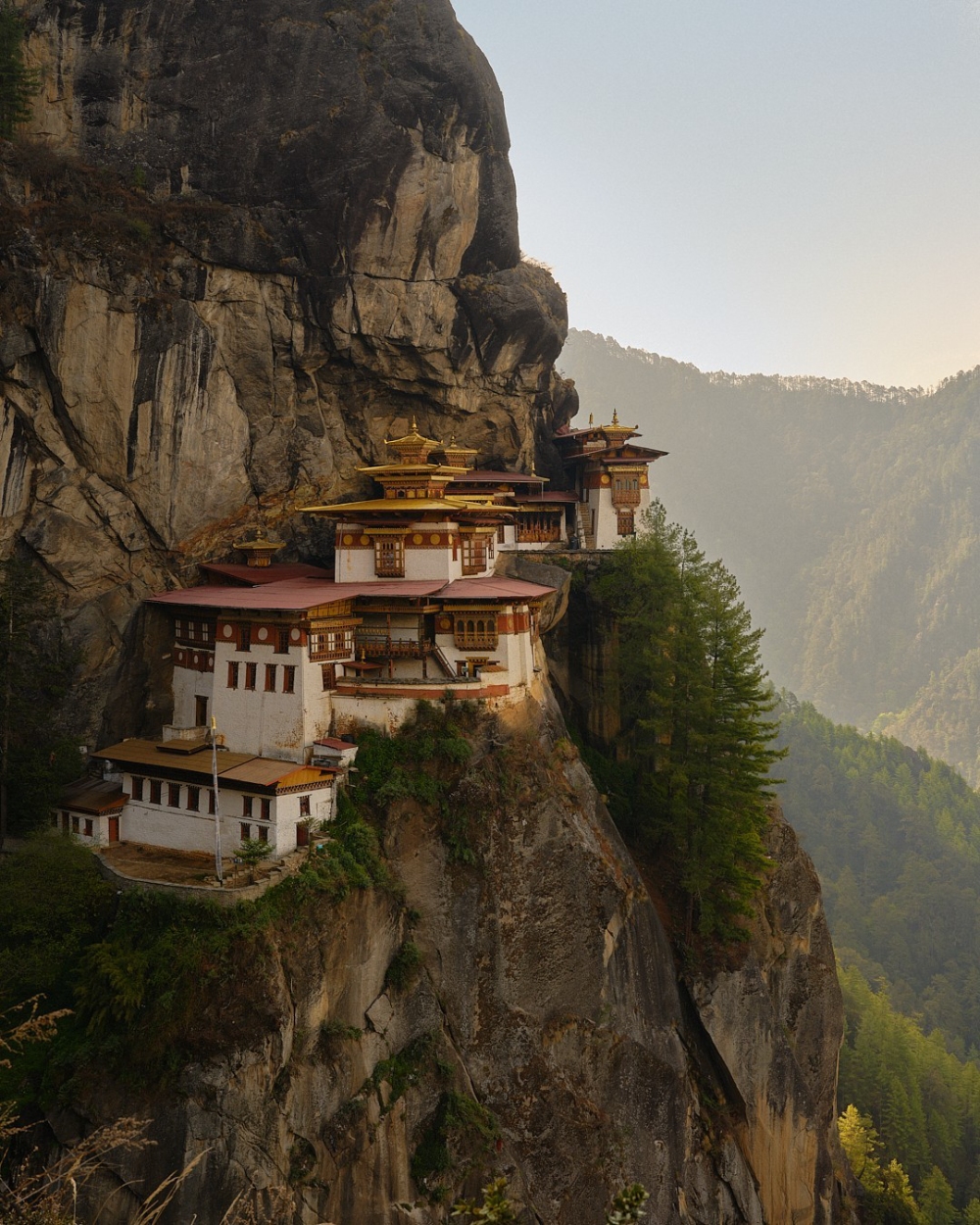
If someone asks me where to start, I say Paro. The Tiger's Nest hike is a genuine threshold — physical effort at altitude, at a site that holds centuries of weight. Beginning with that means the rest of the journey feels earned rather than given.
But if someone asks me where something actually shifts — where the experience stops being a journey and becomes something else — I say Bumthang, every time. I've watched enough people come through that forest slowly to trust that observation without needing to explain it further.
For the season, Spring (March–May) and Autumn (September–November) are the most reliable. My personal preference is late October. The light in Paro in late October is the best light I've encountered anywhere — and I mean that with full awareness of what I'm comparing it against.
For a first journey: Paro, Thimphu, and Punakha. Seven nights minimum. Five is possible, but three of those nights are an adjustment. Seven is where the journey actually opens. Our Bhutan luxury tours are built around this sequence.
For a return journey: Gangtey and Bumthang. Most travellers who've done the western circuit haven't properly sat in these two. The cranes in Gangtey in November. The monastery life in Bumthang at any time of year. These are the lodges that change people most consistently.
If you want the full planning logic — how to structure the sequence, when to go, what to combine — our luxury Bhutan tour guide covers it in depth.
See how this fits into a combined Nepal–Bhutan itinerary.
Frequently Asked Questions
What is the Six Senses Bhutan price per night?
For 2026–27, lodge suites range from USD 1,575 per night in low season to USD 2,130 per night in high season, before the 15% combined service charge and GST. With taxes, a high-season lodge suite runs approximately USD 2,100–2,450 per night. One-bedroom villas go higher; three-bedroom villas significantly so. Contact us for confirmed pricing for your dates and preferred lodges.
What does Six Senses Bhutan cost for a week?
A 7-night journey for two people — fully inclusive of accommodation, private guide, transfers, Sustainable Development Fee, meals, and entry permits — typically runs USD 16,000–21,000. Per person, that's roughly USD 2,300–3,000 per night all-in.
What is the Six Senses Bhutan package price, including the SDF?
The USD 100/day Sustainable Development Fee adds USD 1,400 for a 7-night stay for two people. When we build your package, this is included from the start alongside guide fees, transfers, and monument entries — no costs discovered mid-journey.
How does Six Senses Bhutan compare to Amankora in price?
Entry-level rates are similar — both start around USD 1,500–1,600 per night in low season. Six Senses' upper range (3-bedroom villas in peak season) goes higher than Amankora's ceiling. The meaningful difference isn't price — it's design philosophy. Six Senses is wellness-centred; Amankora is architecture-centred. The full comparison is in the table above.
Which Six Senses Bhutan lodge is worth the premium?
All five earn their rate. If pressed: Gangtey, for what it reliably does to people. A small lodge on a glacial plain designed entirely for stillness. I've observed more genuine internal shift there, per visit, than anywhere else on the circuit. That's a pattern, not a ranking.
What is the cheapest time to visit Six Senses Bhutan?
June through August and December through February are the low season, with rates 15–20% below peak. Monsoon brings rain but vivid green valleys and near-empty lodges. Winter is cold — particularly at Gangtey (3,000m) and Bumthang — but the light is exceptional, and the lodges are at their quietest. If budget matters, winter is underrated. If experience quality is the priority, autumn is worth the premium.
Can I book Six Senses Bhutan without an operator?
You can book the lodge directly. But Bhutanese law requires a licensed guide and operator for all international visitors, regardless, so you'll need to arrange that separately. What you lose by booking direct: guide briefing, itinerary intelligence, and flexibility when something needs to change on the ground. What you gain: a marginally simpler transaction. Most experienced travellers choose the integrated approach.
Is Six Senses Bhutan worth the price?
Most clients stop asking the question once they return. What they paid for wasn't the room — it was a country that chose to protect itself, valleys that remain genuinely intact, and guides trained to read people rather than just manage itineraries. Whether that's worth USD 2,500 per person per day is a question only you can answer. Very few people who go come back uncertain.
Enquire for Current Pricing
Rates shift by lodge, season, and room category. The accurate number for your specific journey comes from a direct conversation.
Tell us three things: how much time you have, what draws you to Bhutan, and what you hope comes back changed. We'll respond within 24 hours with a specific recommendation — lodges, sequence, and total cost.
Explore our Bhutan luxury tours · Contact us for a personalised quote