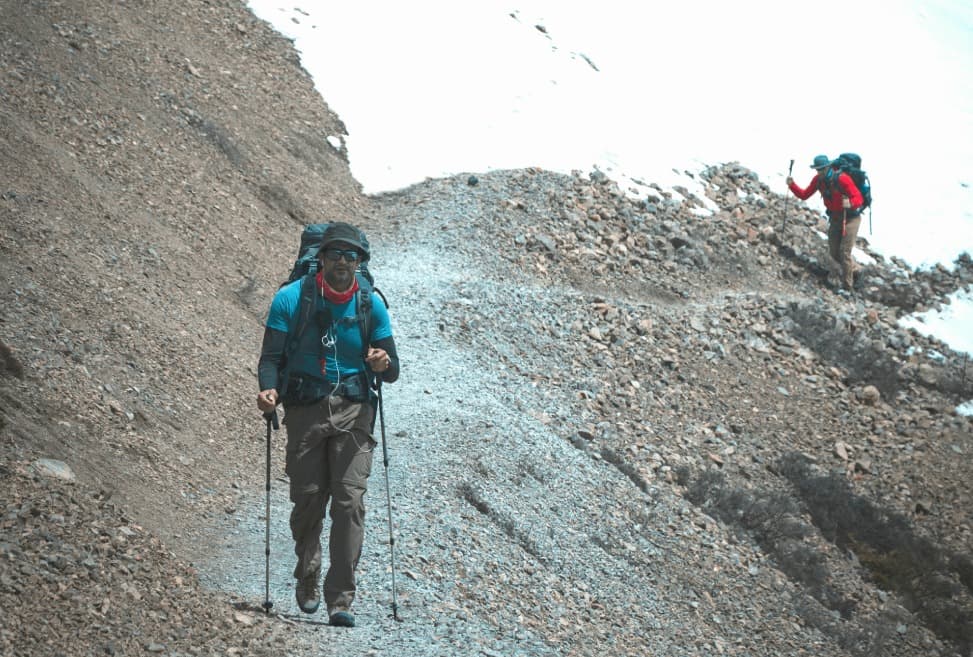
One of our guides, Gopal, spent twelve days leading an Austrian client through Annapurna Base Camp. Every night after dinner, without being asked, he put together a small plate of fruit and dessert for her. When she wrote to us afterwards, she didn't mention the altitude. She wrote about the fruit.
That's the whole answer to what luxury means in Nepal — and it holds whether you're twelve days into a trek or being driven between temples in Kathmandu. Everything below is the mechanics of how you get there, either way.
Most travellers arrive with a definition built for somewhere else — thread count, a stocked minibar, a marble lobby. That's not wrong. It's just not built for Nepal. There's no minibar at 5,000 metres, and there's no five-star chain lobby in most of the country either. Luxury here runs on different logic: staffing, logistics, and pacing — whether you're walking the trail yourself or being driven to the next valley.
I've spent the last 3+ years building trips across Nepal, Bhutan, and Tibet, on top of 15+ years travelling. I've watched what actually separates a trip that goes well from one that becomes memorable — and it's rarely the hotel.
What Luxury Actually Buys You
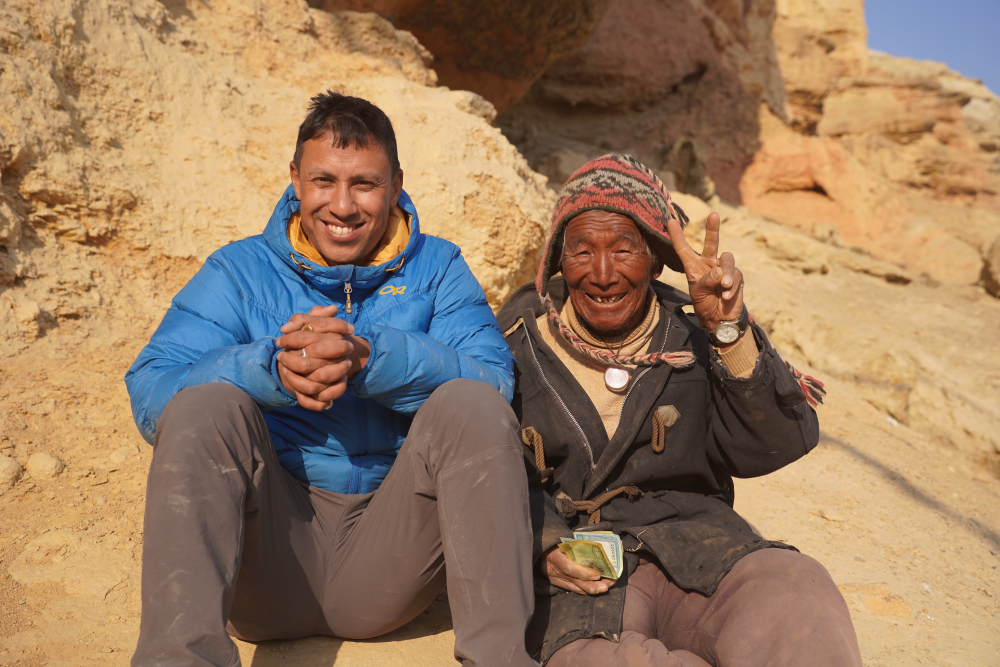
Team continuity. On a trek, we run one guide for every two clients, with a porter weight limit of 30–35 kg per person. A guide who's spent five days with you knows your pace, knows when you've gone quiet because you're tired versus because you're taking something in. On a private tour, the same principle holds in a different way — the same driver and guide for the full itinerary, not a rotating roster handed off city to city. Either way, continuity is what turns a service provider into someone who's actually reading you.
Logistics you're not supposed to notice. For treks, that means permits sequenced correctly — standard permits filed one to two weeks out, restricted-area permits for Upper Mustang filed only after arrival, once the visa number exists. For touring, it means the same invisible planning applied differently: private access timed around the crowds at Boudhanath or Pashupatinath, monastery visits arranged through relationships instead of a ticket counter. I need to be straight about one thing here — we don't run a single fixed evacuation partner across every route. What we build instead is contingency by design: weather buffers before departure, not improvisation after a flight gets cancelled. Less reassuring as a sentence. More reliable in practice.
Pacing over speed. A trek paced around acclimatisation instead of a fixed day count is a different trip entirely. A private tour paced the same way means a driver who stops wherever something's worth stopping for, not one running a fixed checklist of sites before sunset. Rushed is rushed, whether you're on foot or in a vehicle.
Trekking and Touring — Two Different Products, Same Standard
| Luxury Trekking | Luxury Touring | |
|---|---|---|
| What you're paying for | Multi-day exertion made sustainable | Depth of place with very little walking |
| Team | 1 guide: 2 clients, same team start to finish | Same driver and guide for the full itinerary |
| Pacing built around | Acclimatisation | Curiosity, not altitude |
| Physical demand | Low-Medium | High |
| Right for | Someone who wants to earn the view | Someone who's earned it before, or never needed to |
| Where we'd start you | Annapurna Heritage Trail | Chitwan–Kathmandu combination |
Neither is a lesser version of the other. A client who's trekked Everest three times and now wants Nepal by private vehicle isn't settling — they're asking a different question with the same standard behind it. Our signature Nepal tour is built around exactly that question.
What Premium Accommodation in Nepal Actually Looks Like
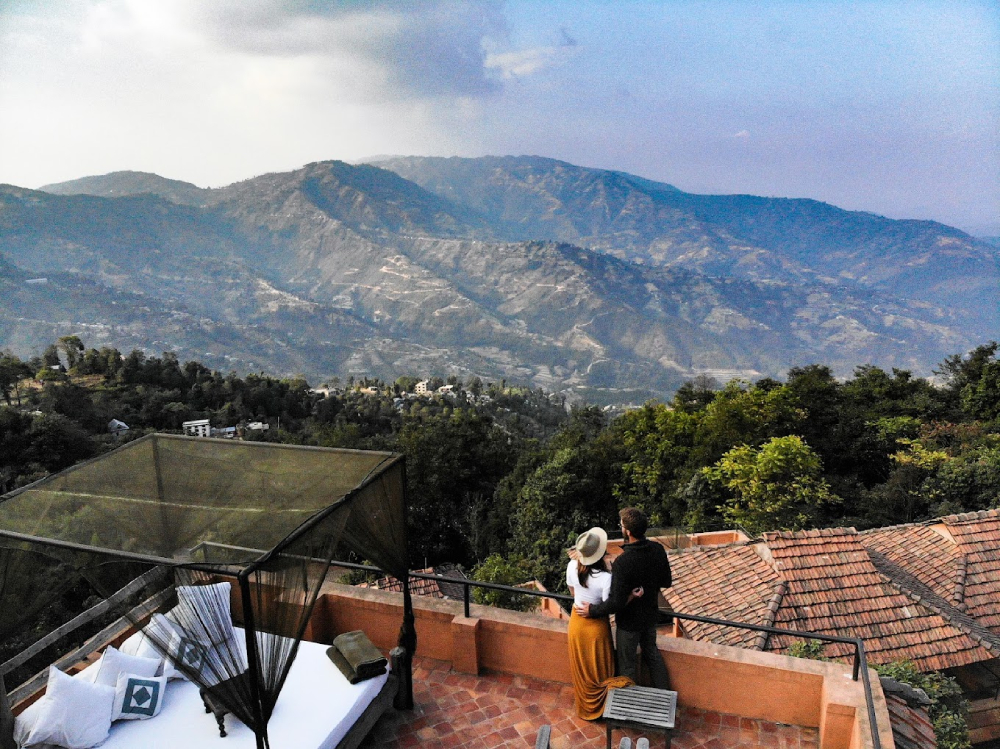
Not every luxury property in Nepal earns the word. These are the ones we choose deliberately, and why.
In Kathmandu, it's Dwarika's. The hotel was built over decades from salvaged Newari woodcarvings the founder rescued before they were lost to demolition — the courtyard isn't a design theme; it's reconstructed heritage. It's where we put clients who want their first or last night in Nepal to feel like the country, not like a stopover before it.
For the hills outside the valley, Dwarika's Resort Dhulikhel. Same family, different register — slower, terraced, views out toward the Himalaya instead of into a courtyard. We use it as a decompression stop, either easing someone into Nepal before a trek or easing them out of one before a flight home.
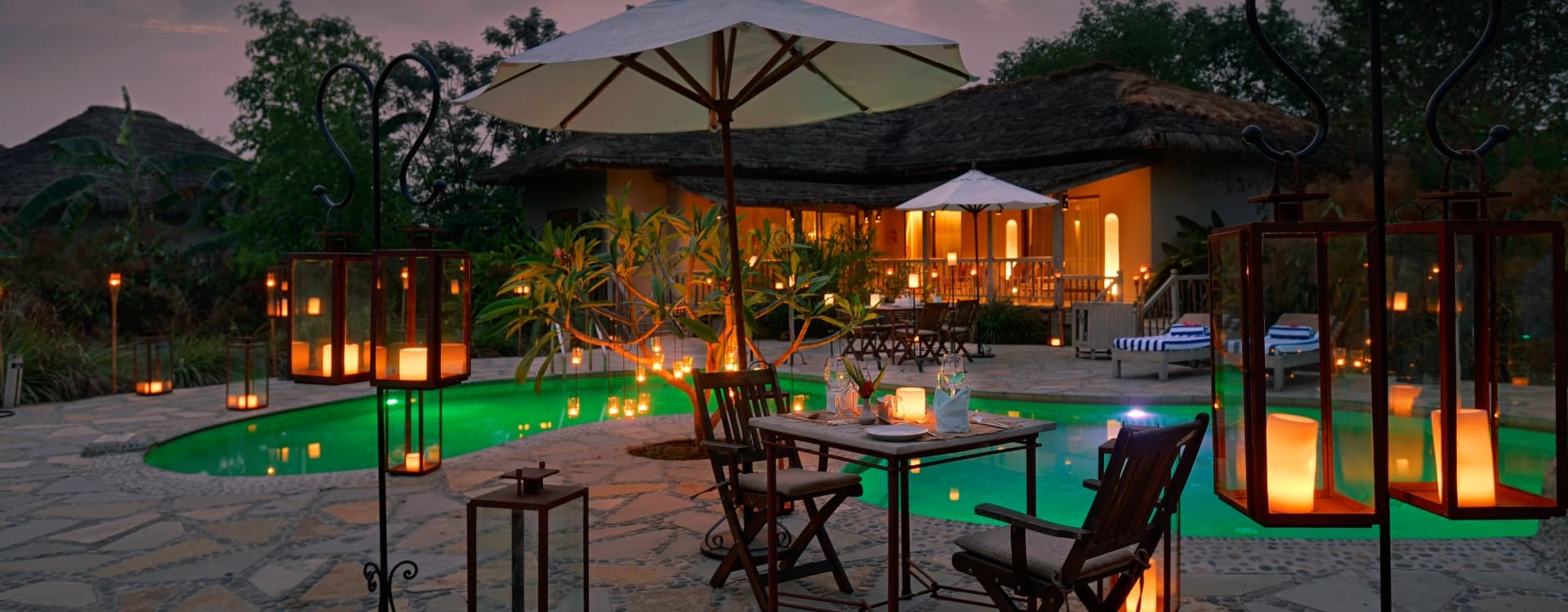
In Chitwan, it's Meghauli or Banbas, depending on what the trip needs. Meghauli sits inside the national park boundary itself, which changes the wildlife access — you're tracking from where the animals actually are, not driving in each morning. Banbas is the choice when the trip is about the lodge experience as much as the safari — quieter, more intimate, built for travellers who want the jungle to be the whole point rather than one stop on a longer itinerary.
In Mustang, it's Shinta Mani. This matters more than it sounds like it should — Mustang has almost no genuine luxury infrastructure, so a property built with real design intent, in a place that remote, tells you something about who's actually invested there long-term versus who's renting a nicer-than-average teahouse and calling it luxury.
Learn more on ELH's handpicked property here.
Helicopter Access — Where Trekking and Touring Overlap
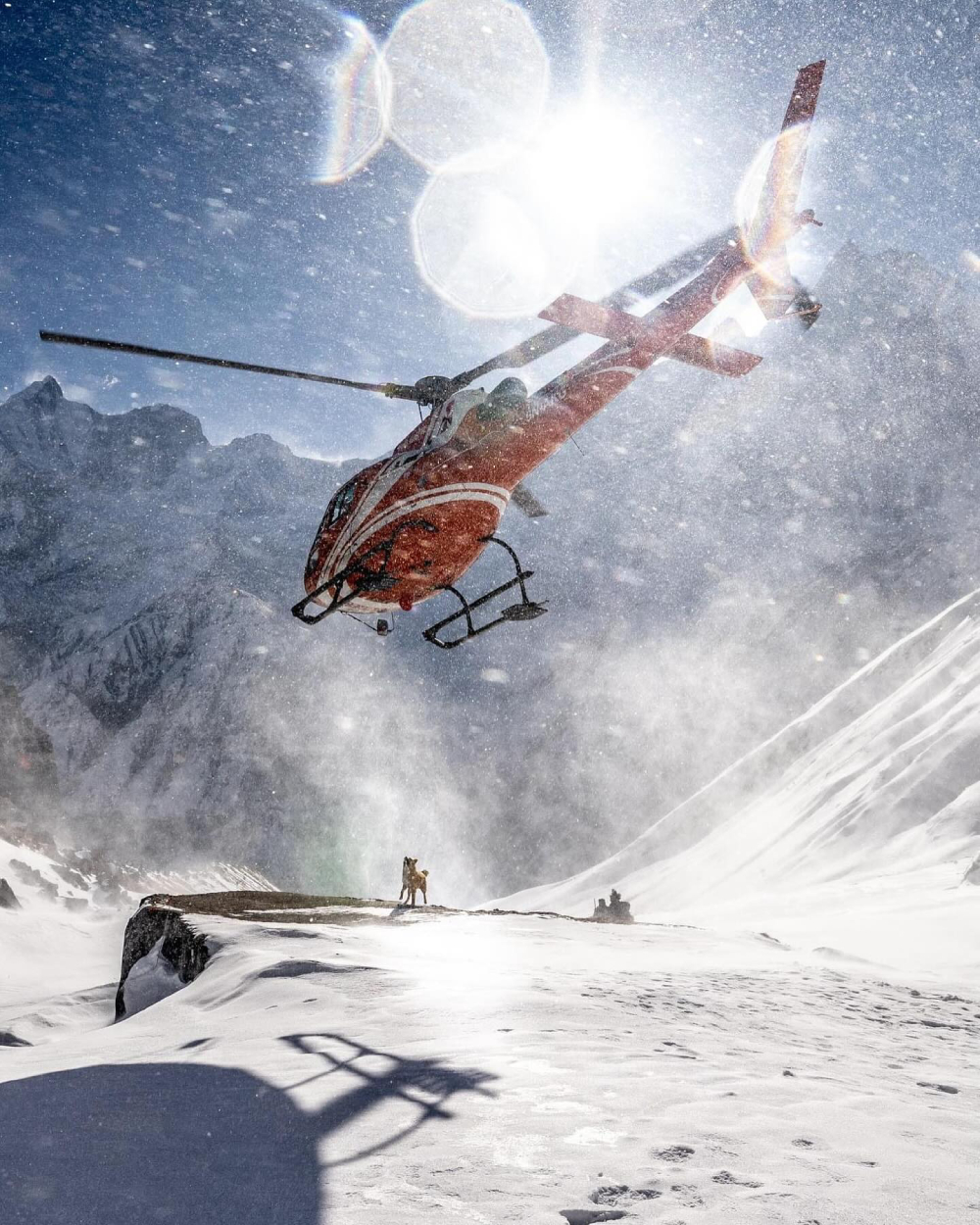
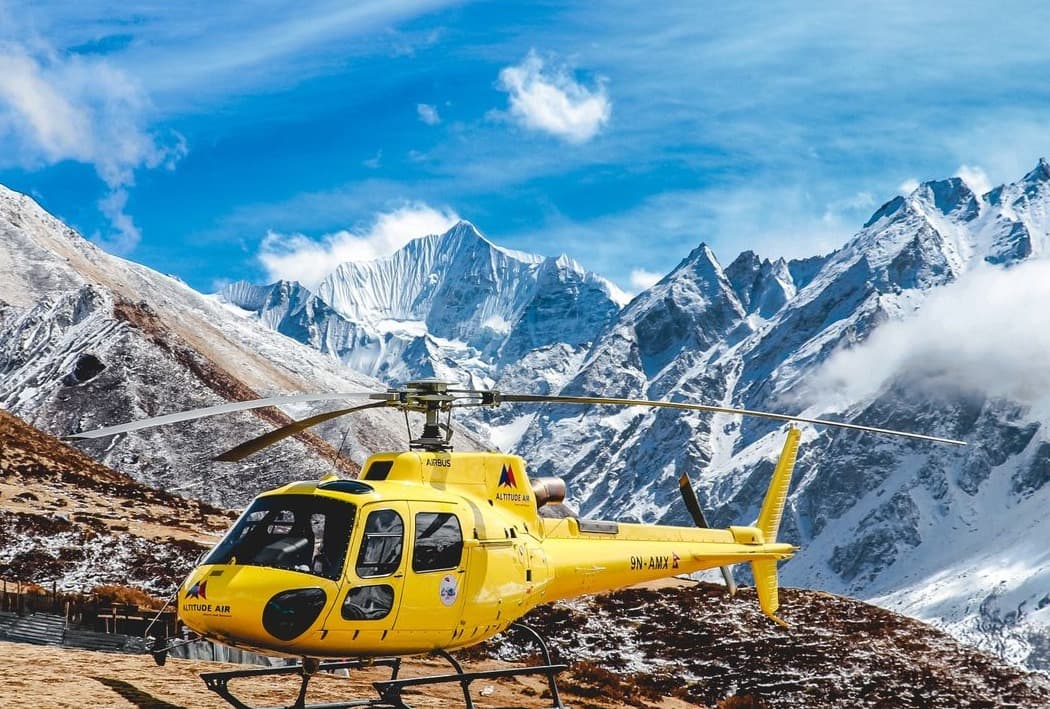
For travellers who want the Everest or Annapurna region without the multi-day physical commitment, helicopter access has become one of the more popular luxury products we run — a landing at Everest Base Camp or an overnight at Hotel Everest View, or the Annapurna equivalent. Our Everest helicopter tour and Annapurna Base Camp helicopter tour are the two we run most. It's genuinely its own category — not a shortcut version of trekking, and not standard touring either.
Naresh's Take
For trekking, my go-to recommendation for most first-timers is the Annapurna Heritage Trail. That's where the fundamentals — staffing, pacing, guide continuity — are easiest to actually feel, without the altitude or logistics of Everest complicating the picture.
For touring, my honest answer is the Chitwan–Kathmandu combination, but I'll say upfront that it's flexible by design. What changes it is you: how much time you have, what you're trying to get out of the trip, what you've already done in Nepal if this isn't your first visit. That's not a dodge; it's the actual answer. Contact us directly, and we'll build the touring side around what you tell us, rather than me guessing at it here.
What Luxury Is Not
It's not hotel-grade comfort transplanted to altitude, and it's not insulation from the country you came to see — on a trek or in a car. A trip that shields you from weather delays, from village rhythm, from the effort or unpredictability Nepal genuinely involves has quietly swapped Nepal out for a more comfortable substitute.
Frequently Asked Questions
What defines an upscale travel experience in Nepal?
Consistent staffing, logistics planned far enough ahead to be invisible, and pacing built around the traveller rather than a fixed schedule — not hotel amenities, which are limited outside Kathmandu and largely absent at altitude.
How much does a luxury Nepal travel experience typically cost?
It depends heavily on whether you're trekking or touring, the season, and group size — a private Kathmandu-based tour and a staffed Everest trek have almost nothing in common cost-wise. Contact us with your dates and interests, and we'll give you a real number, not a range that means nothing.
What is the typical cost for a high-end Everest region trekking package?
Cost is driven mainly by guide ratio, lodge quality, and whether a helicopter return is included. We can walk you through this against our Everest Base Camp luxury lodge trek specifically.
Which companies offer luxury trekking and touring packages in Nepal?
There are a handful of operators genuinely built for this — most Nepal operators run budget-volume trekking and bolt "luxury" onto the marketing without changing the guide ratio or lodge selection behind it. Ask any operator directly what their guide-to-client ratio is and where they source accommodation; the answer tells you which category they're actually in.
How do I find a specialised operator for a personalised Nepal itinerary?
Ask for a custom itinerary built around your interests and pace, not a fixed package with the dates swapped. We build these directly rather than adapting a template.
What high-end accommodation options exist in Kathmandu?
Heritage boutique hotels in restored Newari courtyards are the standard for genuine luxury in the city — small, personal, and usually the first thing booked out in high season.
What amenities are included in luxury resorts and travel packages in Nepal?
This varies enormously by property and region, which is exactly why we don't quote a generic amenities list — what matters more is whether meals, staffing, and airport-to-lodge transfers are actually included versus billed separately once you're there.
What amenities are common in luxury jungle safari lodges in Nepal?
Open-air dining, guided tracking on foot and by jeep, and rooms built to face the forest rather than shut it out. Our Chitwan jungle safari covers what's actually included.
Are there exclusive helicopter tours for luxury travellers in Nepal?
Yes — Everest and Annapurna Base Camp helicopter tours are two of our most-booked luxury products, for travellers who want the region without the multi-day trek.
How can I book a luxury trekking package in Nepal from abroad (UK, US, or elsewhere)?
Same process regardless of where you're booking from — contact us directly with your dates and interests. We coordinate visas, permits, and logistics from our end; you don't need to be in Nepal, or even in the region, to start planning.
Where can I find reviews of luxury travel services in Nepal?
Ask any operator for direct client references, not just testimonials on their own site — a real operator will connect you with a past client if you ask.
Are there exclusive cultural tours and bespoke itineraries available in Nepal?
Yes, and this is where touring luxury shows up most clearly — private access to temples and monasteries timed around the crowds, arranged through relationships rather than a ticket counter, built entirely around what you want to see rather than a fixed group schedule.
Conclusion
Luxury in Nepal was never going to be about thread count. It's about whether the people around you know what they're doing, whether the days are paced so you can actually be present in them, and whether the country stays real instead of getting smoothed over for your comfort — on a trail or in a car, at altitude or in a courtyard hotel in Kathmandu. That's what I build every itinerary around, trekking or touring, because it's the only version of luxury that holds up once a trip is actually underway.
Plan Your Trip
Tell us three things: how much time you have, whether you're picturing a trek or a private tour, and what kind of trip you're trying to avoid repeating. We'll come back with a specific recommendation, not a template.
Start Planning Your Nepal Journey →
Or explore by trip type: