Most people arrive at this decision believing it's about comfort. Trekking is the raw version, touring is the cushioned one, and somewhere in that framing sits the quiet suggestion that one is more legitimate than the other. It isn't a comfort question. What actually separates luxury trekking vs. touring in Nepal is how much of your limited time gets spent on effort that adds nothing new, and how much gets spent somewhere it actually matters.
That's a different problem than most people are solving for. A twelve-day Annapurna Base Camp trek and a fifteen-day Everest Base Camp trek both spend roughly half their days walking back out along the exact trail you just walked in on. Same suspension bridges, same teahouses, same views, now behind you instead of ahead. It isn't dangerous. It isn't even unpleasant. It's just repetition dressed up as itinerary, and it's the single biggest reason both of these treks eat more time than the experience itself actually requires.
The Real Difference Isn't Comfort, It's What You Do With the Days You Have
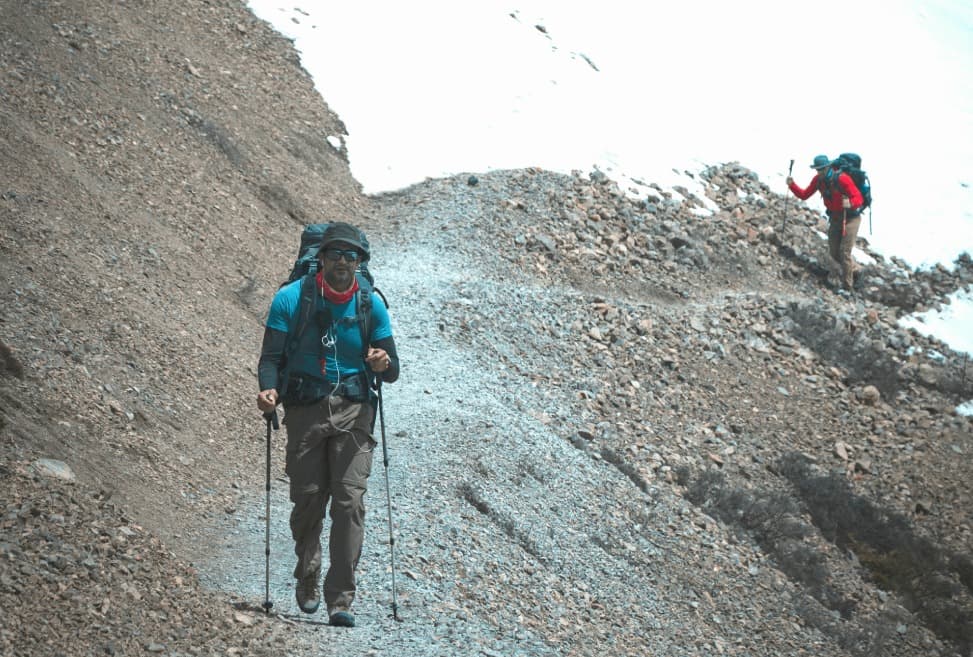
A trek's physical demand isn't really the climb. It's the climb twice, once up and once back down the same path, on legs with less recovery each day. A tour asks for the same landscape in shorter, less repetitive bursts: a walk to a viewpoint, a village crossed on foot, the rest covered by private vehicle.
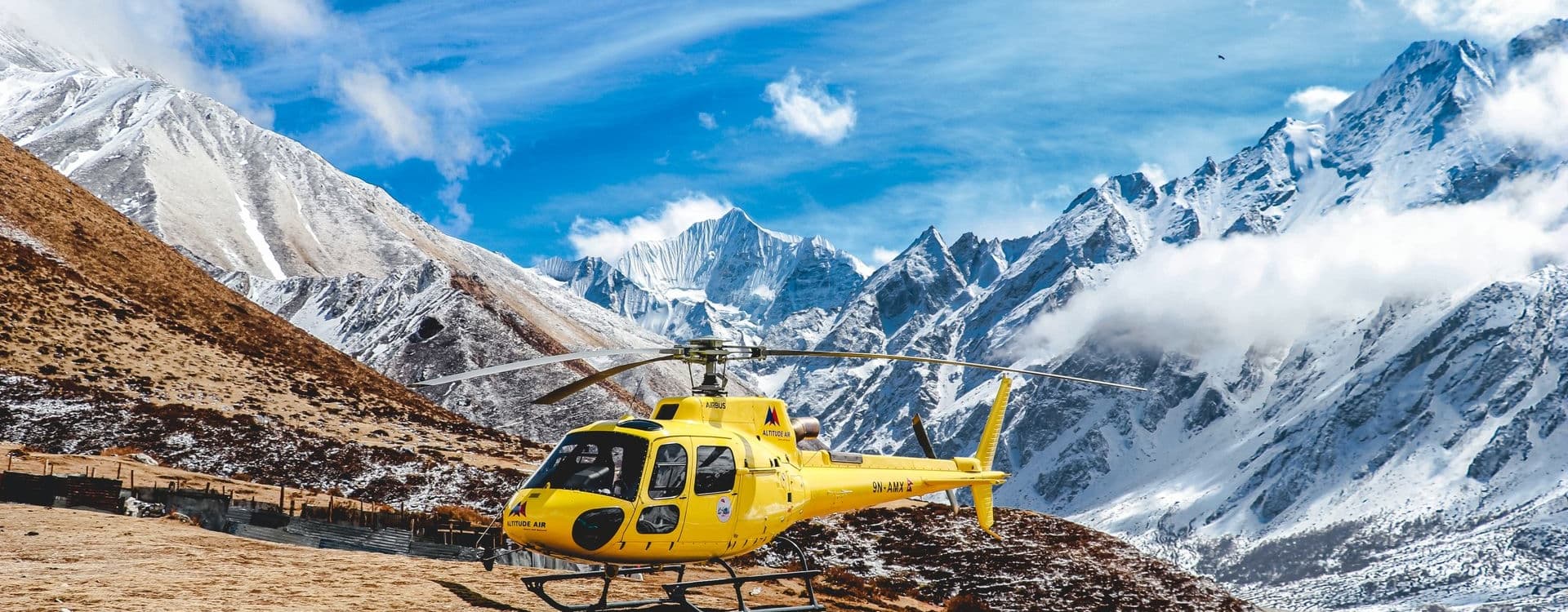
But there's a third option most travellers never get offered, because most operators sell treks in fixed, round-trip blocks rather than asking what the traveller actually wants those days for. You don't have to choose between the full walk and no walk at all. You can walk in, reach Base Camp on your own legs, earning every part of that arrival, and fly out by helicopter instead of retracing six or seven days of trail you've already seen. It's more time-efficient. It's genuinely more interesting: an aerial descent over the Annapurna Sanctuary or the Khumbu Icefall shows you the range from an angle walking never will. And it means the days you save don't vanish; they get spent somewhere with far more texture than a walk-out ever offered.
Who Luxury Trekking Actually Fits
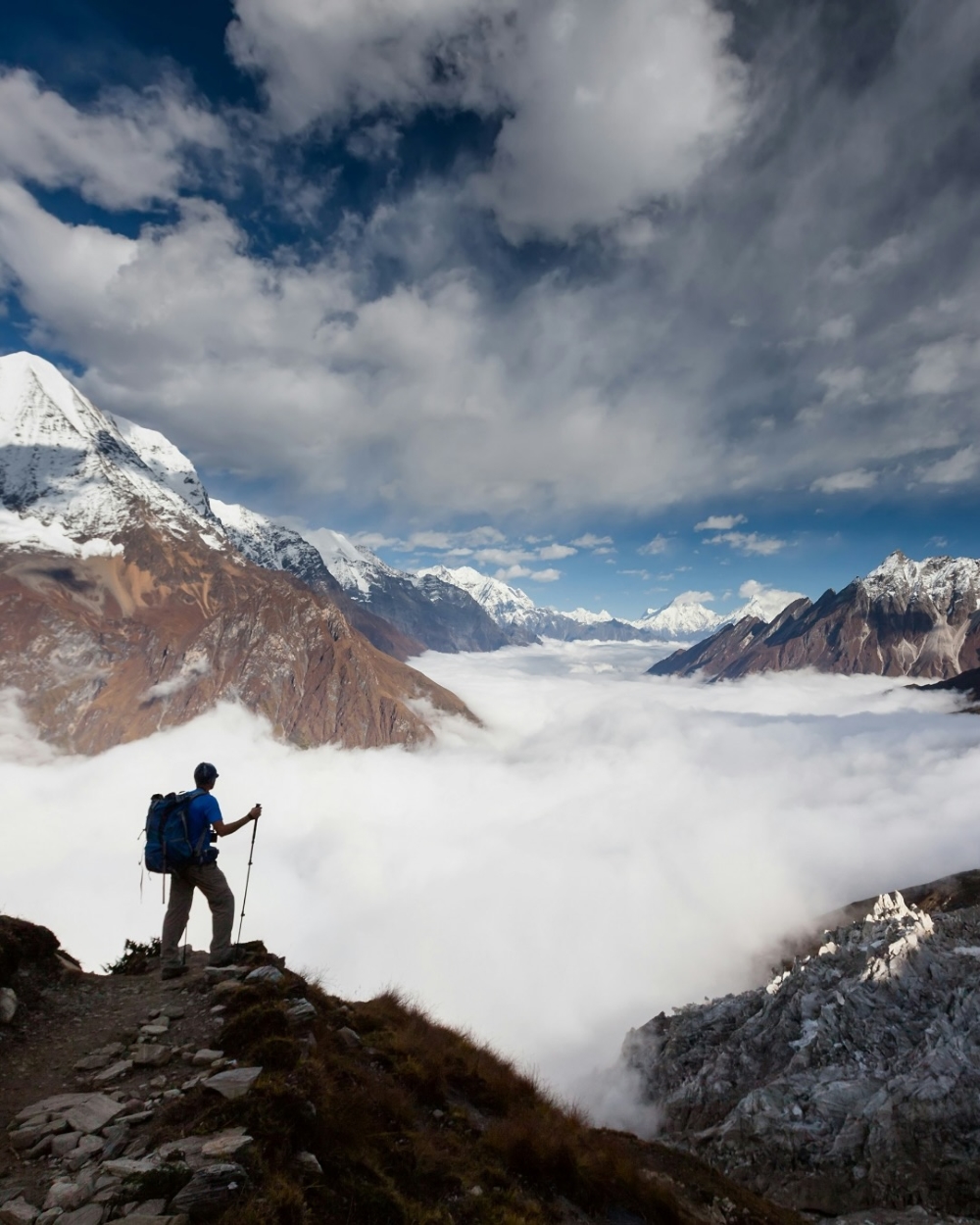
How fit do you need to be to trek Nepal, at a level worth calling luxury? Enough to sustain 5 to 6 hours of moderate exertion across consecutive days above 3,500m. That part doesn't change, whether you're walking out or flying out. The climb is still the climb.
What changes is what I'd actually recommend once you're fit enough to be having this conversation at all. Instead of a full standard Annapurna Base Camp trek, walk in over 5 to 6 days, reach 4,130m under your own effort, and fly out from Base Camp rather than spending the back half of the trip retracing Chhomrong and Deurali on tired legs. It's built into the itinerary as a 20-minute helicopter transfer to Pokhara. Instead of the standard Everest Base Camp itinerary, walk in through Namche and Deboche, then take a helicopter to Gorak Shep or directly to Base Camp once you're acclimatised, rather than spending several more days walking the same trail back down to Lukla.
This isn't cutting the trip short. It's cutting the part of the trip that was never adding anything. What it gives back is several days, and that's where the real decision starts: what you do with them. I don't believe in rushing anyone through Nepal, or through Bhutan for that matter. Slow travel isn't a marketing phrase to me;
it's how this business is built, and it means those recovered days go toward something with depth: an extra few nights in Mustang, time in Kathmandu that isn't a rushed layover, rather than being handed back to the airline as an early flight home.
It doesn't fit you, walk-in or otherwise, if a joint or cardiac condition limits sustained exertion, if this would be your first experience of multi-day effort above 3,500m, or if what you actually want is to have seen Everest rather than to have walked toward it.
Who Luxury Touring Actually Fits
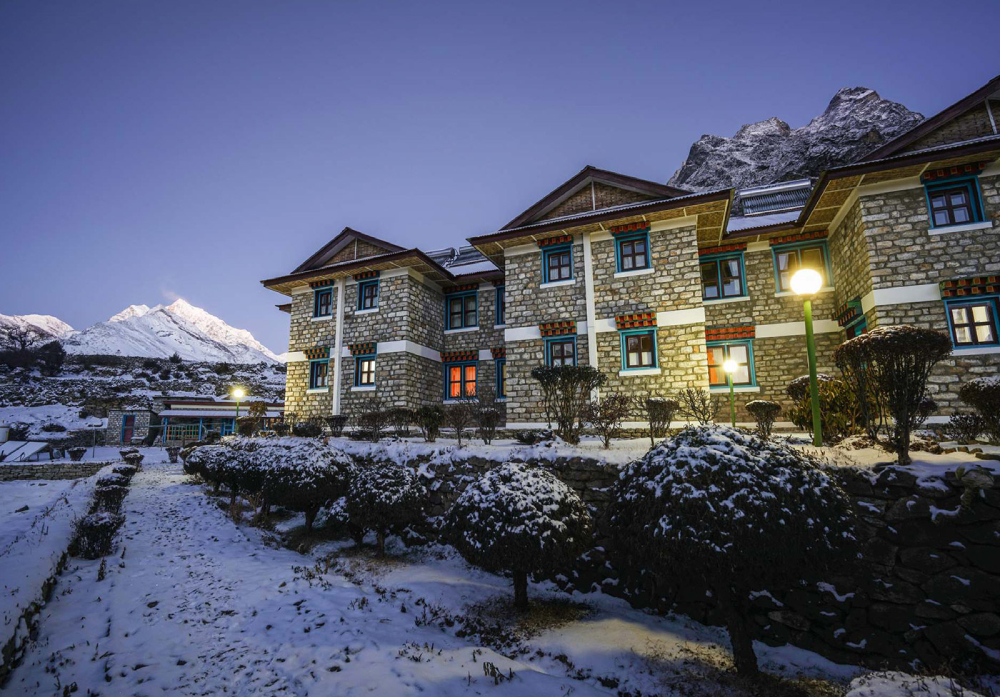
A luxury tour of Nepal without trekking is not a smaller version of the country, and this is where the same philosophy applies without any walking in at all. For a traveler drawn to the culture, the temples, the food, the Himalaya as presence rather than physical test, touring is the more complete answer, provided the itinerary isn't rushed either.
It's also the honest reply to something I hear constantly: is trekking required to see Everest? No. I've written about this in more depth in how to see Mount Everest without climbing it, but the short version is that there's more than one way to answer that without setting foot on the trail. A 50-minute mountain flight from Kathmandu puts Everest, Lhotse, and the rest of the Khumbu range past your window without leaving the plane. Our own Everest Helicopter Tour goes further: a 2-day, 1-night trip with an overnight stay at Hotel Everest View at 3,880m, with an optional landing at Kala Patthar (5,545m) and an optional Everest Base Camp add-on along the way. And for travellers who want a night in the region without the multi-day walk, that overnight at Hotel Everest View still delivers Everest, Lhotse, and Ama Dablam in person, from your room. All of it is a genuine Everest trip without hiking. The days none of them spends on trail should go toward staying longer in fewer places, not toward seeing more places faster.
Touring fits you if depth matters more than daily exertion, if your group's fitness varies too widely for a shared trek, or if your time is a few days rather than the two weeks a proper trek demands. The mistake isn't choosing touring. It's cramming a touring itinerary the same way people over-pack a trek, treating saved time as more sightseeing instead of more stillness. It's the same reasoning behind why we run Upper Mustang by jeep rather than on foot: the walking isn't the point there either; the place is.
The Smarter Way to Combine Both
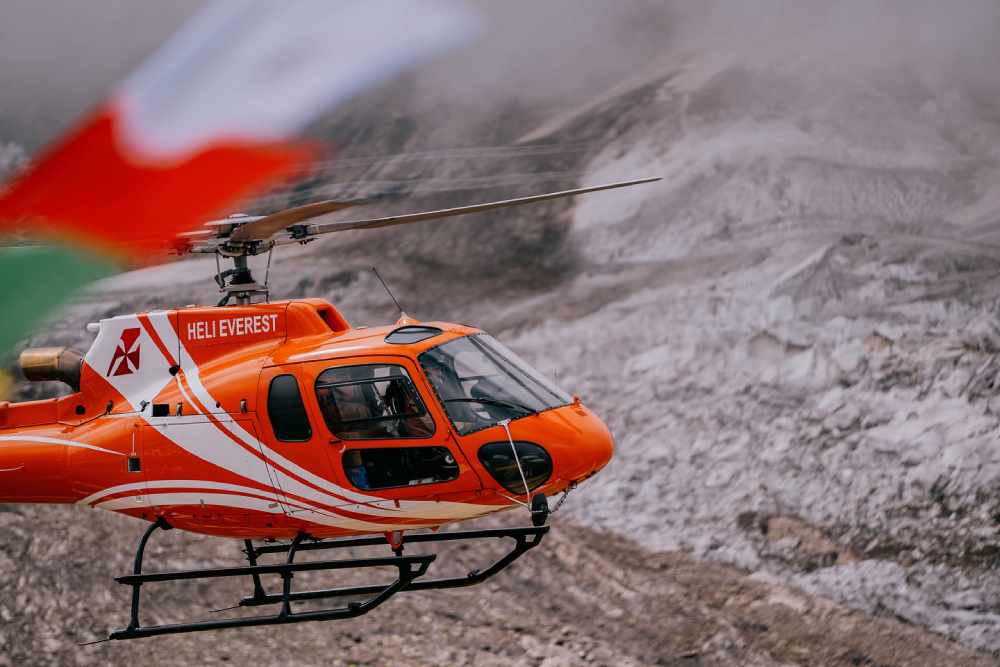
This is where the walk-in, fly-out model earns its place, because it isn't really a third category. It's what happens when you stop treating a trek as a fixed roundtrip and start treating it as one part of a longer, slower itinerary. Walk into Annapurna Base Camp over 5 to 6 days. Fly out. Use the days that decision hands back for genuine touring: Kathmandu without a rushed schedule, a few unhurried days in Pokhara or Upper Mustang, real time rather than a red-eye home.
Our own Signature Nepal Tour is built around exactly this logic: a walked approach to the parts of the Himalaya that deserve to be earned, a helicopter departure where the descent would otherwise just be repetition, and the recovered time spent slowly rather than handed back. It's the itinerary I recommend most often once someone understands that the choice was never trek-or-tour to begin with. It was always about what you do with the time either one gives you.
FAQs
Is trekking required to see Everest?
No. A 50-minute mountain flight from Kathmandu gives you aerial views of Everest and the Khumbu range without landing. Our Everest Helicopter Tour includes an overnight stay at Hotel Everest View (3,880m), with optional landings at Kala Patthar and Everest Base Camp along the way. Different physical commitment in each case. Not a lesser view in any of them. See our full breakdown in how to see Mount Everest without climbing it.
What's the difference between a Nepal jeep tour and a trek?
A jeep tour covers ground by private vehicle, with walking reserved for villages, viewpoints, and shorter day hikes. A trek covers similar terrain almost entirely on foot over twelve to fifteen days. A walk-in, helicopter-out itinerary sits between the two, real trekking on the way in, none of the redundant walking on the way out.
Can you helicopter out of Everest Base Camp or Annapurna Base Camp instead of walking back down?
Yes. Our Annapurna Base Camp and Everest Base Camp luxury treks are both built this way: trekking in to reach Base Camp on foot, then flying out afterwards, rather than walking back down the same trail. It removes the descent, which largely retraces the ascent, and returns those days to the rest of your itinerary.
How fit do you need to be for a luxury trek in Nepal?
The ability to sustain 5 to 6 hours of moderate exertion across consecutive days at altitudes above 3,500m. That requirement doesn't change whether you're walking out afterwards or flying out. The climb is still the climb.
Does touring still involve altitude and physical effort?
Yes. Vehicle days that climb well above 2,700m in the Mustang region, real elevation at Kagbeni and above Namche, and genuine walking are all part of an honest touring itinerary. Less demanding than a trek. Not physically neutral.
Which One Is Actually Yours
Strip the marketing away, and this was never really trek versus tour. It's a question of how you want to spend the finite number of days you have in Nepal, or in Bhutan, or anywhere this kind of travel takes you. Walking out a trail you've already walked in on isn't earning anything twice. It's just using up days that could go toward staying somewhere longer, or somewhere quieter, instead.
That's the operating principle behind every itinerary we build: don't rush a trip just because the standard version is fixed at twelve days or fifteen. Walk what deserves to be walked. Fly past what doesn't. And spend whatever time that frees up slowly, because slow is what actually gets remembered five years later, not how many days the itinerary technically filled. It's the same thing I've tried to put into words in what luxury travel actually means in Nepal: it was never about how much ground you cover.
Naresh's Take: If you're deciding between these two, I'd rather you tell me what you actually want the trip to hold before you tell me trek or tour. Most people default to whichever one sounds more impressive, and end up either exhausted on a walk-out they didn't need or rushed through a tour that never slows down. Neither is the point. Tell us your fitness, your timeline, and what you actually want those days to hold, and we'll build the itinerary around that instead.