Most countries opened their borders and called it progress.
Bhutan did the opposite — and it's worth understanding why.
While the rest of the world spent the last five decades scaling tourism as fast as possible, Bhutan made a quieter, more deliberate decision. Tourism would serve the country. Not the other way around. Every policy that followed — the Sustainable Development Fee, the mandatory licensed guide requirement, the high value low volume philosophy — flows from that single founding principle.
Most travel blogs treat these rules as obstacles to explain away. This one won't. Because after spending real time in Bhutan, watching this system work from the inside, I've come to believe that what Bhutan built is one of the most intelligent tourism models on the planet.
Here's why.
What Bhutan Actually Decided in 1974
When Bhutan opened to tourism in 1974, it had a choice every developing nation faces. Open wide, compete on price, move volume, chase the revenue. It's the obvious play. Almost every country took it.
Bhutan didn't.
Instead, it anchored its entire national development philosophy to something called Gross National Happiness. This framework treats psychological well-being, cultural preservation, environmental sustainability, and good governance as equal measures of progress alongside economic growth. Tourism policy wasn't designed separately from this. It was designed within it.
The result is a system built on three interlocking pillars:
- A Sustainable Development Fee that turns every visitor into a contributor
- A mandatory licensed guide requirement that preserves cultural integrity and creates dignified employment
- A high-value, low-volume approach that protects the destination from the damage that scale inevitably causes
These aren't three separate rules. They're one coherent philosophy. Remove any pillar and the whole thing changes.
The Sustainable Development Fee — What It Actually Pays For
The SDF is the policy most misunderstood by travellers researching Bhutan. It's currently set at $100 per person per day, and the instinctive reaction from most people is to read it as an entry price — a premium charged for exclusivity.
That framing misses what's actually happening.
The SDF isn't a visa fee. It isn't a government revenue mechanism. It's a participation structure. When you pay the SDF, you are directly funding:
- Funds the Tourism sector
- Free healthcare for every Bhutanese citizen
- Free education from primary school through university
- Infrastructure in rural communities that would otherwise be inaccessible to development
- Environmental and Cultural conservation across one of the world's most biodiverse Himalayan ecosystems
Bhutan is the only carbon-negative country on earth. Its constitution legally mandates that a minimum of 60% of land remain forested in perpetuity. The SDF is part of what makes that financially viable while the country develops.
So when a traveller asks whether Bhutan is expensive, the honest answer is: you're not paying a premium for a nicer hotel. You're paying to participate in a national model that has kept a Himalayan kingdom genuinely intact while everything around it changed rapidly.
That's a different conversation entirely.
For a full breakdown of costs, our Bhutan luxury tour packages include the SDF within a transparent pricing structure so you understand exactly where every dollar goes.
Why Mandatory Guides Aren't What You Think
When travellers hear "mandatory licensed guide," they hear mandatory expense. Or mandatory supervision. Neither is accurate.
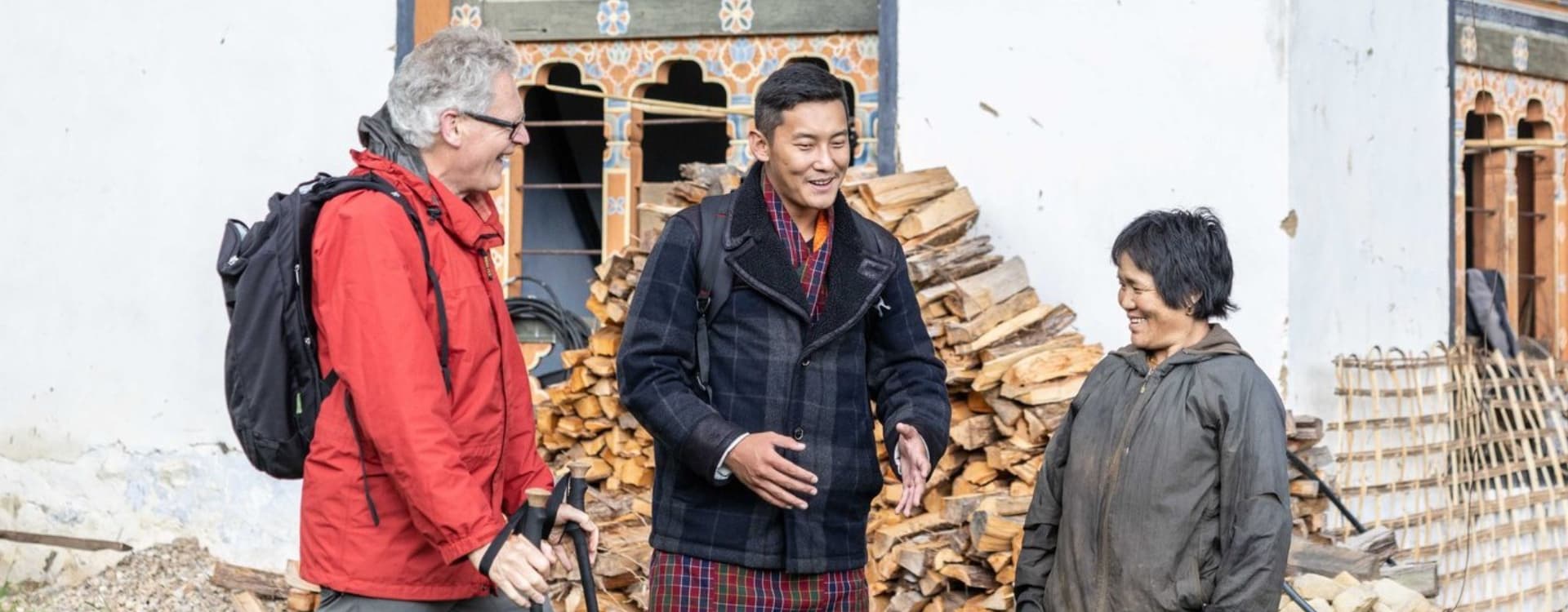
A licensed guide in Bhutan isn't someone who memorised a script. They are trained custodians of a living culture — fluent in Dzongkha, educated in Buddhist philosophy, trusted by the communities they work within. The monasteries, the dzongs, the farming families — they open differently for a licensed guide. Not because of rules. Because of relationships built over the years.
The guide system was designed to do two things: protect cultural transmission and create dignified employment rooted in knowledge rather than extraction. In other countries, cultural expertise quietly disappears as younger generations leave for cities. In Bhutan, it becomes a career. A livelihood. Something worth passing on.
Phub Tsering — The Guide Who Chose Bhutan
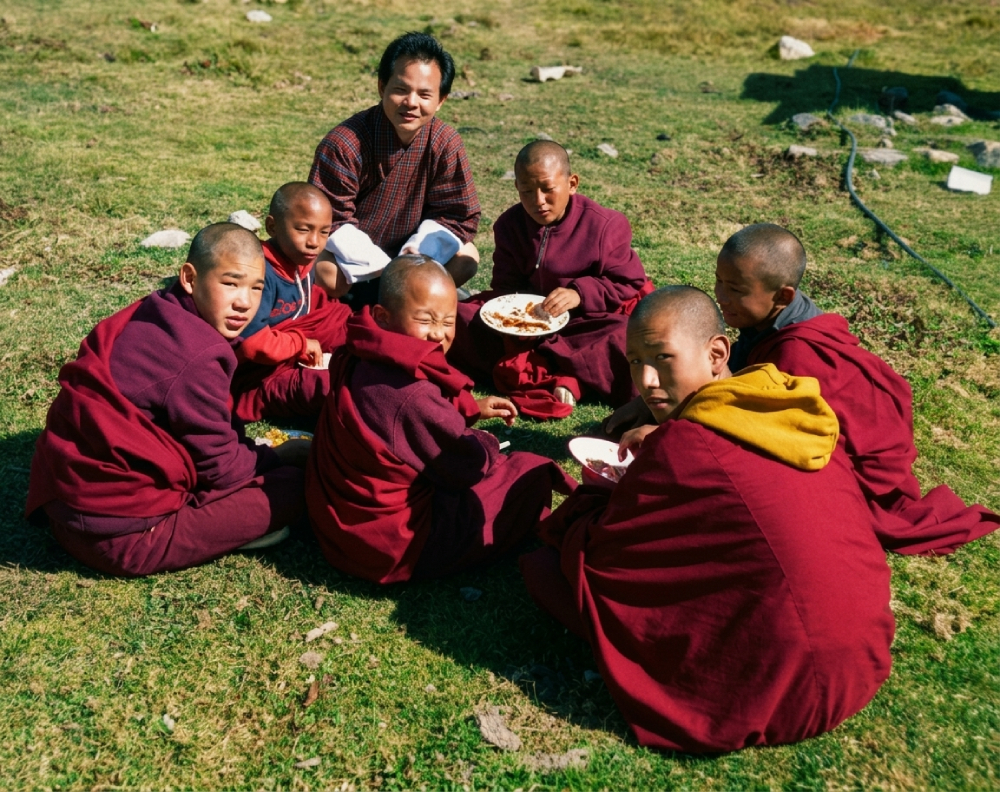
Phub is one of the best Bhutan guides at Everest Luxury Holidays.
He has the kind of unhurried intelligence that makes guests feel they are the only people in the country. He knows which monastery opens early for butter lamp offerings before the crowds arrive. He knows which village elder will sit with you over suja — butter tea — and actually talk. Not perform. Talk.
What most people don't know about Phub is this: he had an offer from a university in Australia. A real offer. He turned it down.
He stayed in Bhutan. He became a guide. When I asked him why, his answer was quiet and completely direct — he felt it was what his country needed from him.
I've thought about that answer many times since. There was no drama in how he said it. No pride, no sacrifice narrative. Just a man who looked at what was in front of him and made a clear decision. That kind of clarity is rare. It is also, I think, exactly what makes him so good at what he does. Phub isn't guiding tourists through Bhutan. He is sharing something he chose to protect.
Karma — The Festival Belongs to Everyone
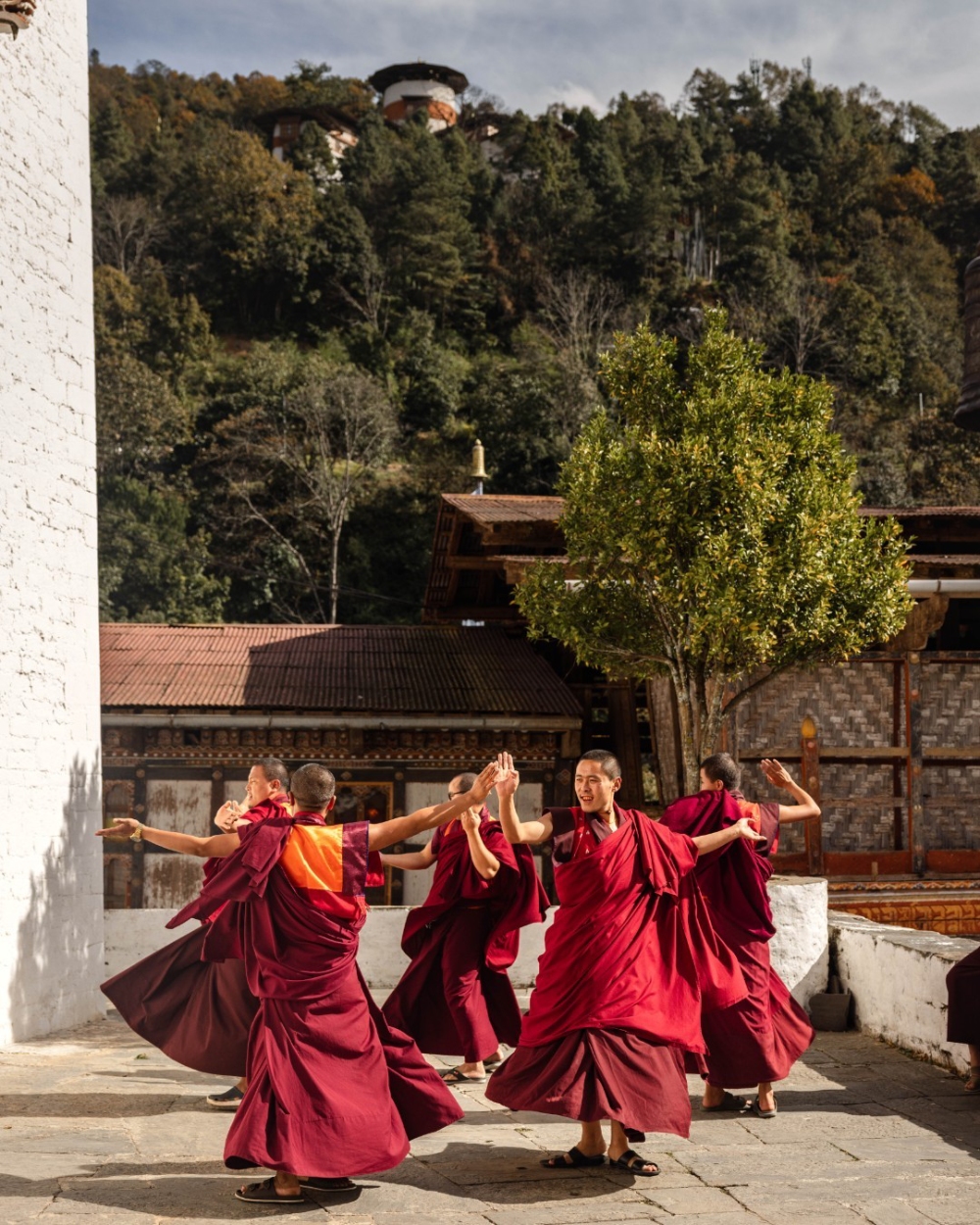
The Punakha Drubchen festival happens every February at Punakha Dzong — one of the most spectacular dzongs in Bhutan, sitting at the confluence of two rivers. Thousands of people attend. Monks in ancient costumes perform ritual dances that have been rehearsed and passed down for centuries. It is genuinely extraordinary to watch.
Most visitors watch it from the outer courtyard. They see everything. They understand almost nothing.
I was there one year, standing near Karma, when a guest turned to him during one of the dances and asked, almost as an aside, what the black hat represented. Karma didn't give a short answer. He sat down on the courtyard steps, gestured for the guest to sit beside him, and spent the next twenty minutes unpacking the entire spiritual architecture of what they were watching — the demon being subdued, the protection being invoked, the reason this particular ritual has been performed at this dzong since the 17th century.
The dance continued. The guest watched it completely differently for the rest of the afternoon.
That is what a guide does. Not a point. Not narrate. Reframe what you're seeing so it lands somewhere deeper than your eyes.
Kinley — The Door That Was Already Open
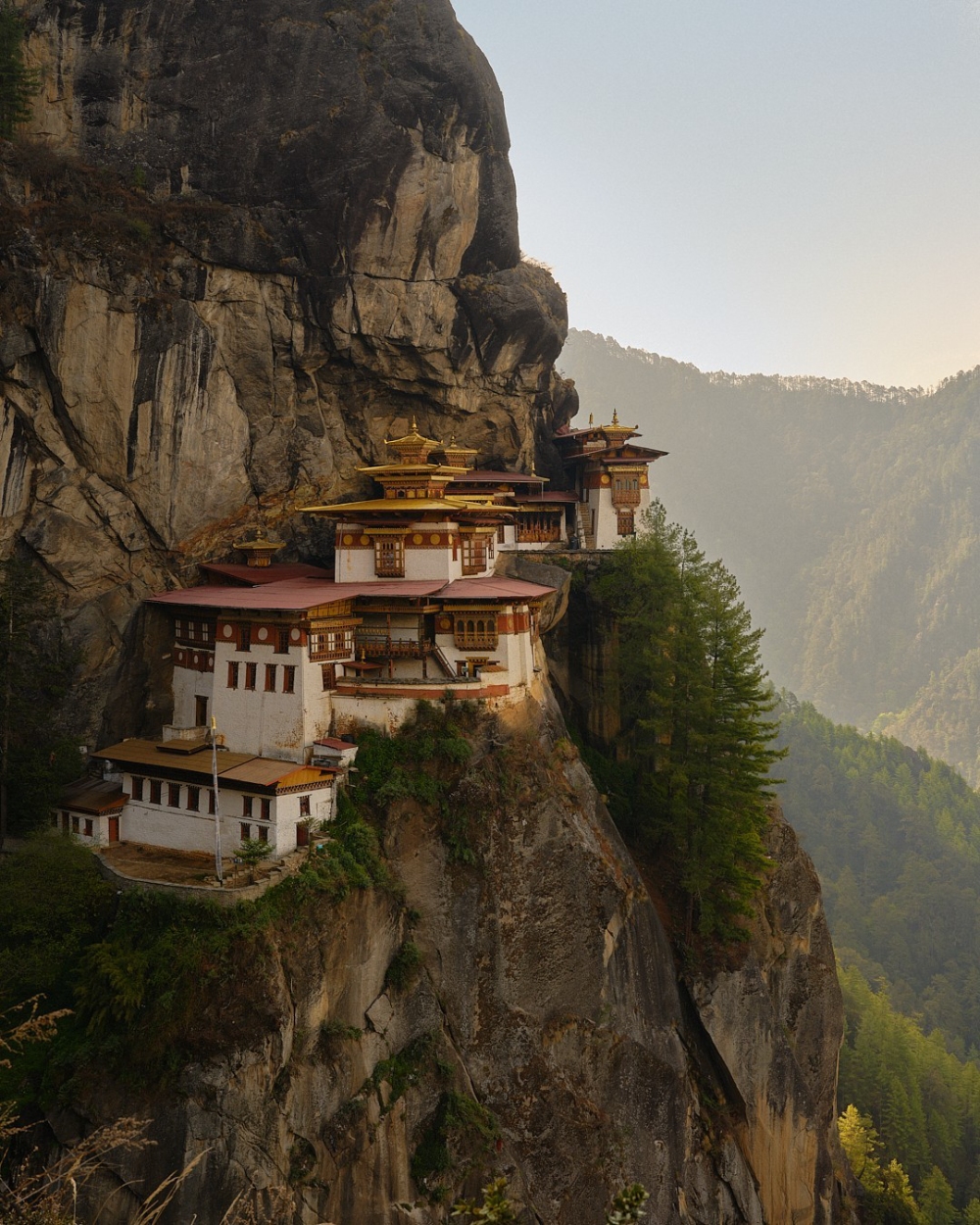
Most people who visit Taktshang — Tiger's Nest — arrive with a photograph in their head. The monastery on the cliff. The prayer flags. The mist, if they're lucky. They hike up, they take the photograph, they hike down. They leave having seen one of the most dramatic buildings on earth and felt, somehow, slightly less than they expected.
Kinley has been going to Taktshang for seven years.
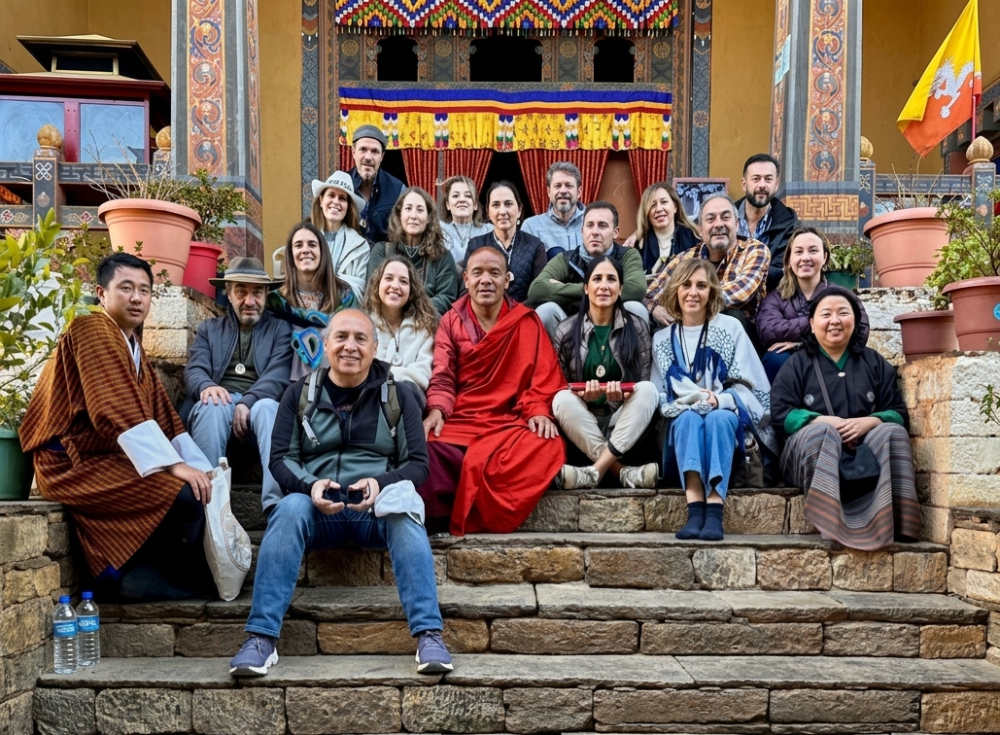
On one visit with a small group, she stopped the guests before they entered the main temple and spoke quietly with one of the older monks for a few minutes. I watched the monk's face shift from polite to genuinely interested. Kinley had mentioned that one of the guests was a practising Buddhist from Singapore. The monk invited her in separately. They sat together for nearly an hour.
She didn't speak Dzongkha. The monk didn't speak English. Kinley sat between them and translated — not just words, but context, meaning, the things that get lost when language moves too fast.
She told me afterwards she hadn't expected to cry. She hadn't expected any of it.
That conversation happened because Kinley had been coming to that monastery long enough that the monks knew her face, trusted her judgment, and believed that the people she brought deserved the full version of the place. Not the tourist version. The real one.
That trust is not available at any price. It is only available through time — and through a system that gave someone like Kinley the conditions to build it.
The Guide Is the Relationship
You cannot replicate that access as an independent traveller. Not because you're unwelcome. But because the relationship hasn't been built yet, the relationship is the experience.
This is what most people miss when they read "mandatory guide requirement" and feel restricted. The guide isn't a condition of entry. The guide is the reason the door was open in the first place.
What Happens to Countries That Skip This Model
There's a version of Bhutan that could have existed — and didn't.
It's the version where 1974 goes differently. Where the borders open wide. Where guesthouses multiply faster than infrastructure. Where the monasteries start charging hefty entry fees, which is out of the question. Where the monks learn to pose for photographs. Where the festivals become performances timed for tour group schedules. Where the farmhouses become homestay businesses optimised for reviews rather than connection.
That version of Bhutan exists everywhere else. You've been to some of those places. So have I.
The tragedy isn't that those destinations are bad. It's that most of them were genuinely extraordinary before scale changed them — and now they're spending enormous effort trying to recover something they can't quite name and can't quite get back.
Bhutan skipped that entire phase. Deliberately. At a real economic cost in the short term. With enormous long-term cultural benefits.
The dzongs are not performances. The monks are not posing. The farmers are not selling. The festivals are not timed for your arrival. When you witness a mask dance at Paro Tsechu, you are watching something that would be happening whether you were there or not. That is rarer than it sounds. In 2026, it is genuinely rare.
Frequently Asked Questions
Is a guide mandatory in Bhutan?
Yes. All international tourists visiting Bhutan are required to book through a licensed tour operator and travel with a licensed guide. This applies regardless of travel style or budget. The requirement exists to protect cultural integrity, support local employment, and ensure visitors have meaningful, contextually informed access to the country.
What is the Bhutan Sustainable Development Fee?
The SDF is currently $100 per person per day for most international visitors. It is not a visa fee — it is a contribution that directly funds Bhutan's free healthcare system, free national education, rural infrastructure, and environmental & cultural conservation. It is included in tour packages rather than charged separately.
Why does Bhutan limit tourism?
Bhutan follows a high-value, low-volume tourism philosophy rooted in its national Gross National Happiness framework. The country prioritises cultural preservation, environmental sustainability, and visitor quality over raw tourist numbers. This keeps the destination authentic and protects communities from the negative effects of mass tourism.
Can I travel independently in Bhutan?
Independent travel without a licensed guide is not permitted for international tourists. However, this doesn't mean your experience is rigidly structured. At Everest Luxury Holidays, our Bhutan tours are designed to feel fluid, personal, and genuinely exploratory — guided by people like Phub Tsering who have spent their careers building the access that makes Bhutan meaningful.
How do I choose a guide in Bhutan?
Your guide is your single most important decision in Bhutan. Look for operators who name their guides, describe their backgrounds, and demonstrate long-term working relationships with them. At Everest Luxury Holidays, our guides are matched to each client based on travel style, interests, and the kind of experience being designed. Contact us to learn more about who would be right for your trip.
Is Bhutan worth the cost?
For the right traveller — someone who values depth, authenticity, and cultural access over volume — Bhutan consistently delivers experiences that are difficult to find anywhere else on earth. The question isn't whether it's expensive. The question is what you're comparing it to.
The Result — Bhutan Still Feels Like Bhutan
I've travelled to parts of the world where authenticity is now a product — packaged, priced, and delivered on schedule. Bhutan is not that. Walking through Thimphu, sitting in a farmhouse in the Phobjikha Valley, crossing a cantilever bridge into a village that hasn't changed its pace in generations — the continuity is palpable. Life here is not curated for your visit. You are entering something ongoing.
That is the outcome of fifty years of intentional policy. The SDF, the guide system, the volume controls — they aren't separate administrative decisions. They are the architecture of a country that decided, very deliberately, not to lose itself.
The world doesn't have many examples of that decision being made and held. Bhutan is one.
If you're considering Bhutan, read about how we design Bhutan itineraries at Everest Luxury Holidays — built around exactly the kind of access that Phub, Karma, and Kinley make possible.
Or if you're ready to talk through dates and experience design, reach out directly here. Bhutan rewards those who plan it properly.