Most wellness travel doesn't work.
Not because the lodges are bad. Not because the programmes are poorly designed. It doesn't work because the person who arrives is still moving at the same speed they left home at — and nobody in the itinerary asked them to stop.
I've watched it happen. A couple flies into Kathmandu, transfers to a beautiful property, gets handed a robe and a spa schedule, and spends the first two days mentally composing emails they can't send. The lodge did everything right. The itinerary did everything wrong.
At Everest Luxury Holidays, we design differently. We don't add wellness to a trip. We remove everything that prevents it.
The Problem With "Wellness Travel" as a Category
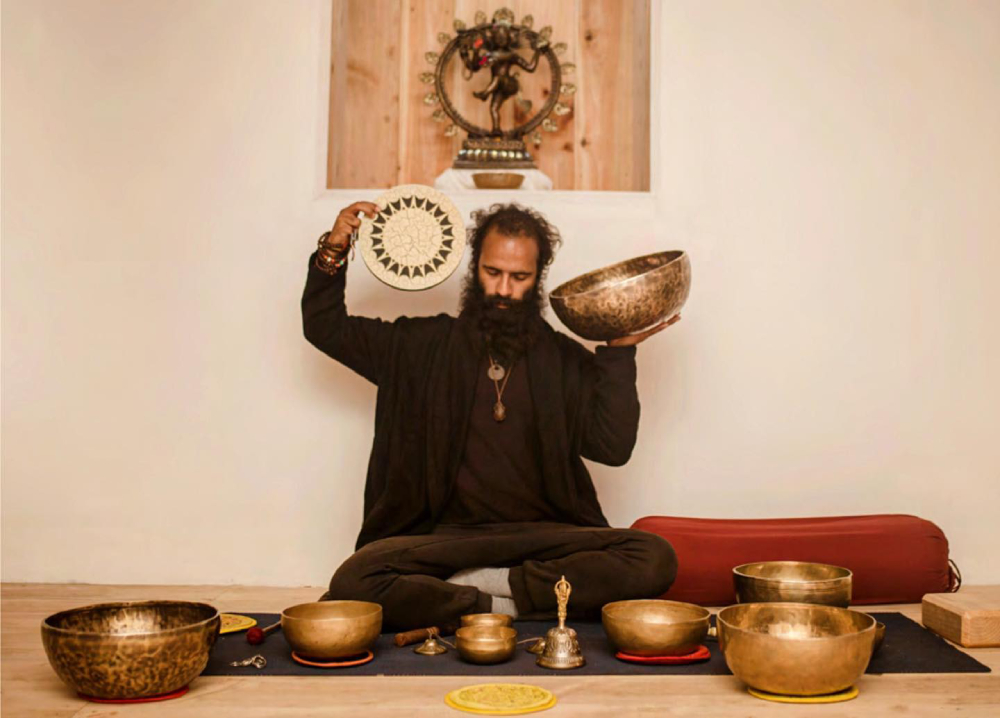
Wellness has become a label. Slap it on a property with a treatment menu and a yoga deck, and it qualifies. The lodge markets it. The traveller books it. And three days in, they're sitting on that yoga deck, wondering why they still feel like themselves.
The issue is architectural. Most wellness itineraries are still full itineraries — morning activity, afternoon activity, evening programme, transfer, repeat. The wellness content sits inside a busy structure. It doesn't replace the busyness. It decorates it.
What actually produces a reset is different. It's slower. It's emptier. It requires the environment to carry some of the weight — and that means choosing destinations and lodges where the environment is strong enough to do that.
That's the first question we ask when building a wellness journey: where does the landscape itself do the work?
Why the Lodge Has to Earn Its Place
We don't choose lodges based on star ratings or spa menus. We choose them based on where they sit.
A lodge at altitude, surrounded by silence, inside a landscape that has been the same for five hundred years — that lodge has something a five-star city property can never manufacture. The air is different. The light is different. The absence of noise is not peaceful because someone designed it to be. It's peaceful because there is genuinely nothing making a sound.
That's not a wellness amenity. That's a condition of the place.
So when we recommend a property, the question we're asking is: does this lodge place you inside the destination, or does it insulate you from it? A lodge that insulates you might be comfortable. But comfort that shields you from where you are isn't a luxury. It's just an expensive distance.
The lodges we pair with wellness programming are chosen because the location, altitude, and surrounding environment are themselves the primary intervention. Everything else — the rooms, the food, the treatment options — supports that. It doesn't replace it.
This is the foundation of every luxury Nepal tour we design. The lodge is not the experience. The location is.
Nepal: Shinta Mani Mustang and the Silence of Lower Mustang
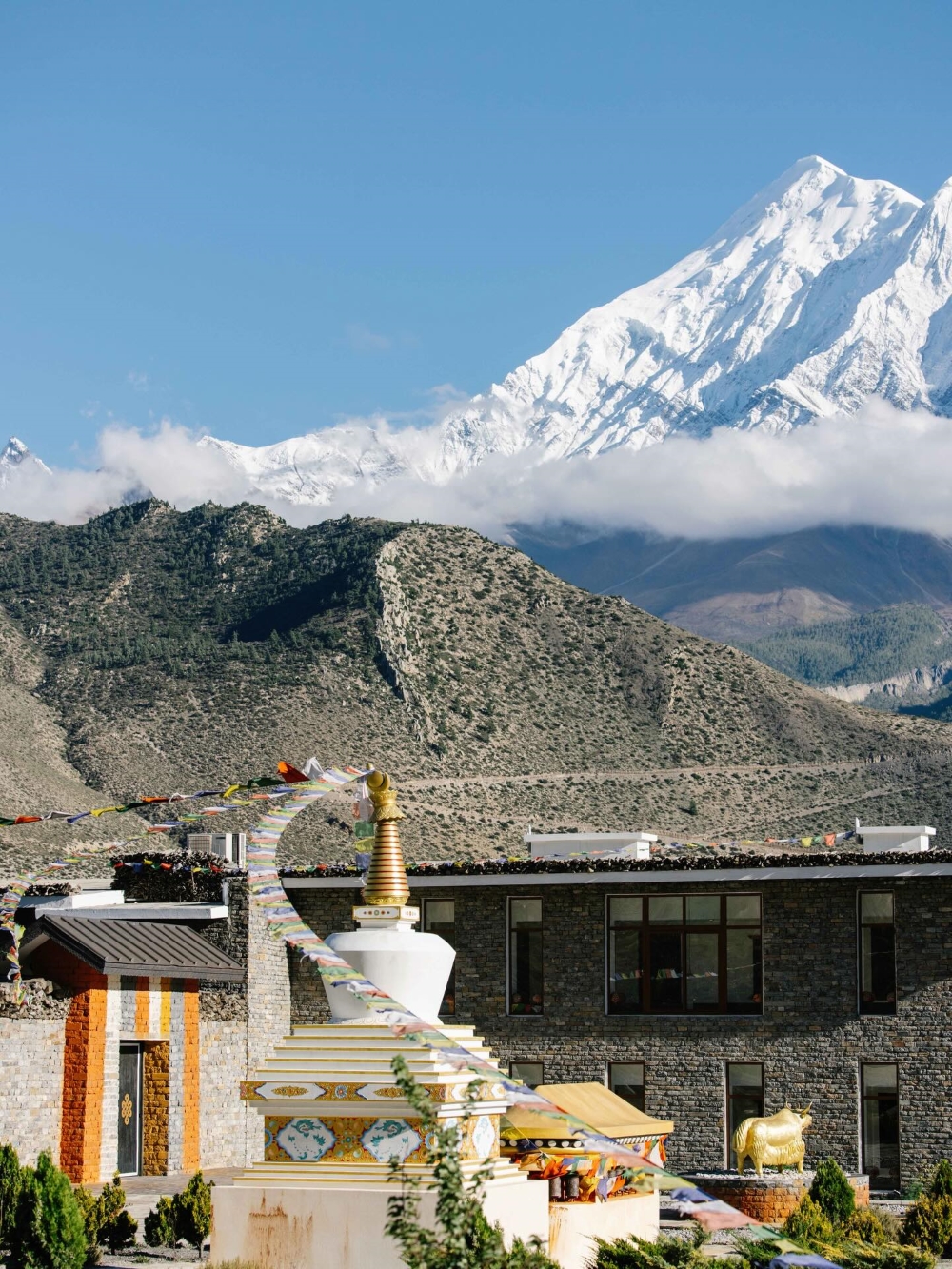
Shinta Mani Mustang is not Nepal's most famous lodge. It doesn't need to be.
It sits below Kagbeni, in Lower Mustang — a wind-carved, ochre-coloured landscape that looks like it belongs on a different planet. The Kali Gandaki River runs through it. The Himalayas frame the horizon. There are no crowds here. There is no noise. There is wind, light, and a stillness so complete that most guests spend the first twenty-four hours simply adjusting to it.
That adjustment is the beginning of the reset.
When we build a wellness itinerary around Shinta Mani Mustang, we don't fill the days. We protect the emptiness. Mornings might involve a slow walk toward Kagbeni with no fixed destination — our guide Narayan walking beside you, not narrating, just present. Afternoons are left unscheduled. Not as a gap between activities. As the point.
What happens in those unscheduled hours is different for everyone. Some guests read for the first time in years. Some sit outside and watch the light move across the canyon walls. Some sleep in a way they haven't slept since they were children. The landscape asks nothing of them — and that, for people who are asked things constantly, is the rarest experience we can offer.
The most direct way to reach this part of Nepal is by jeep through the Kali Gandaki gorge. We cover the full logistics in our Upper Mustang Jeep Tour itinerary — including how we design the drive itself as part of the experience, not just a transfer.
The Side Quests That Change Everything
The best moments on a Mustang wellness journey aren't on the itinerary. They're the ones we make possible by slowing down enough for them to happen.
There are ancient cave monasteries cut into the cliffs above the valley — some still active, some silent. If you're moving slowly, if you're not rushing toward the next checkpoint, Narayan might suggest a detour. You climb. You enter a space that hasn't changed in centuries. There's a monk inside, not performing a ceremony for tourists, simply present in his daily practice. He might offer you butter tea. He might say nothing. Either way, something about sitting in that space, at that altitude, in that silence, recalibrates something.
I've had clients tell me that half an hour in a cave monastery did more for them than three weeks at a retreat centre. I believe them. The difference is context. The monastery is real. The monk's presence is real. Nothing is staged. And you only get there if the itinerary has enough space to say yes.
Other unscheduled possibilities in this region:
- A conversation with a salt trader whose family has walked the same route between Tibet and the lowlands for four generations
- Watching a village archery game in a courtyard on a Sunday afternoon — Mustang's version of doing nothing
- Sitting at the confluence of the Kali Gandaki and Mustang Khola at dusk, with nothing required of you
None of these is in a brochure. All of them stay with you longer than any treatment.
The Everest Region: Altitude as Active Ingredient
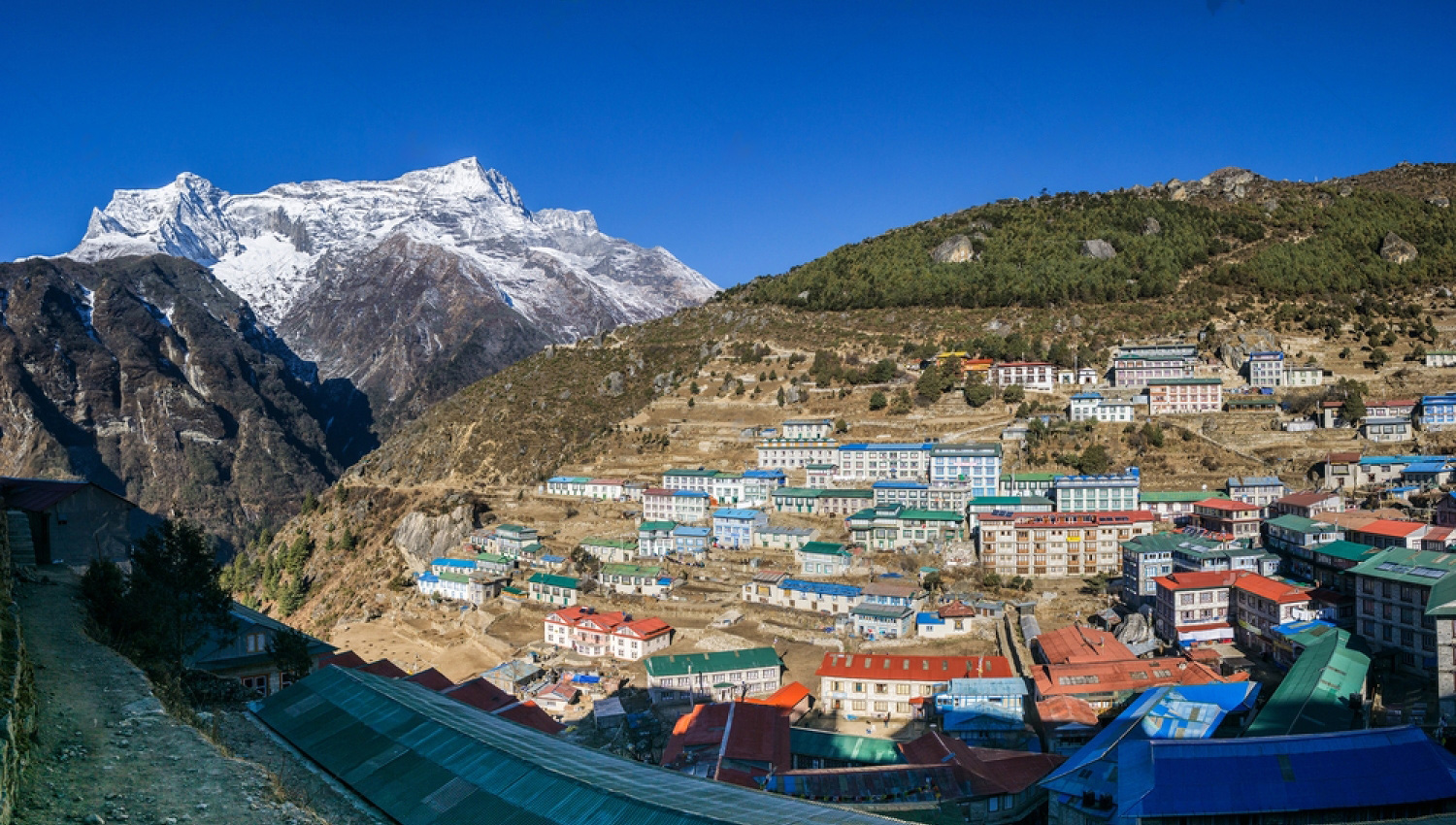
Mustang isn't the only place in Nepal where the landscape does the work.
The Everest region offers a different kind of stillness — higher, thinner, more demanding. Hotel Everest View sits at 3,880 metres, making it one of the highest hotels in the world. We cover it in detail on the blog, but the short version is this: you arrive not by spectacle but by a half-day walk from Namche Bazaar — and that walk is part of the design.
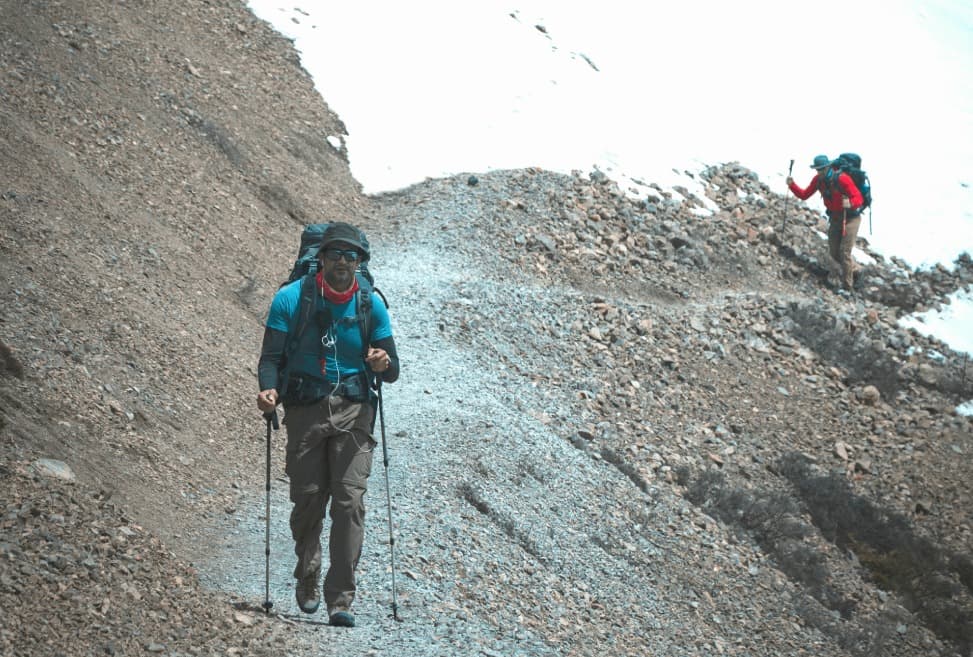
At that altitude, your body makes the first decision for you. You slow down because you have to. Breathing becomes deliberate. Movement becomes conscious. The mountain doesn't care about your schedule, and something about that enforced humility is itself restorative.
We pair Everest region stays with genuinely unhurried acclimatisation days — Sherpa cooking sessions in Namche, monastery visits in Tengboche, afternoons with no itinerary and a view of Ama Dablam that makes every previous view feel slightly insufficient.
For those who want the Everest experience without the full trek commitment, our Everest Helicopter Tour with overnight stay at Hotel Everest View is designed around exactly this philosophy — arrival by air, everything else by foot and silence.
The Everest Sherpa Heritage Trail takes this further — nine days walking through the Khumbu with cultural depth built into every stage, not bolted on at the end.
Annapurna: Where Wellness Has a Trail
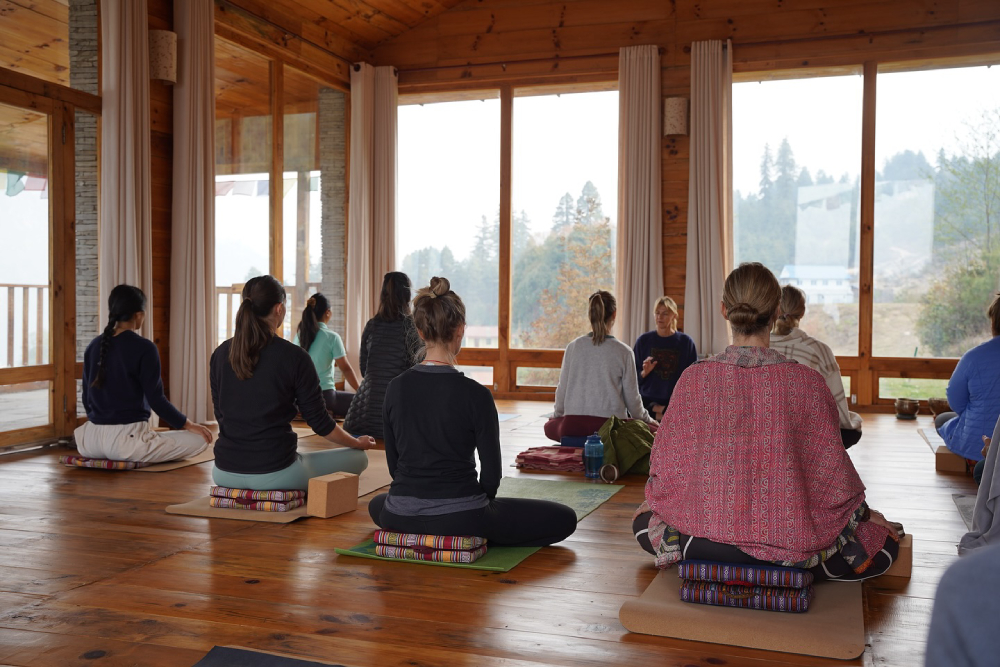
For those who want wellness woven into the walking itself, the Annapurna region offers something neither Mustang nor Everest can replicate — a landscape that shifts dramatically over short distances, from subtropical forest to alpine meadow, from rice paddies to rhododendron forest in a single morning.
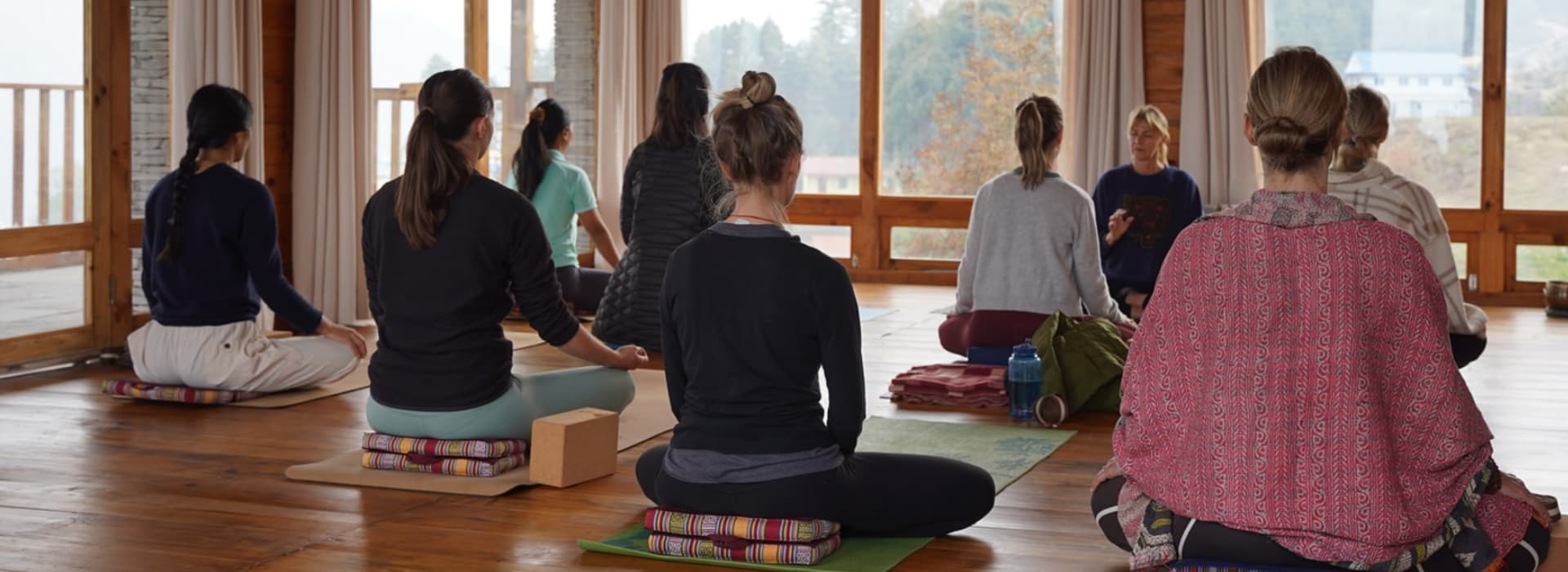
Our Timeless Way of Wellness in Annapurna itinerary is the most direct expression of everything described in this blog. Ten days. Small group. Lodges chosen for position, not profile. The guide briefed on the specific needs of the group, not a generic trekking script.
The Annapurna Heritage Trail is a related option for those who want the cultural dimension foregrounded — village stays, local family interactions, the kind of access that only comes through years of relationship-building with the communities along the route.
Both sit within the broader framework of our luxury trekking in Nepal offering, which covers the full range of routes we operate across the country.
Bhutan: The Country Is the Programme
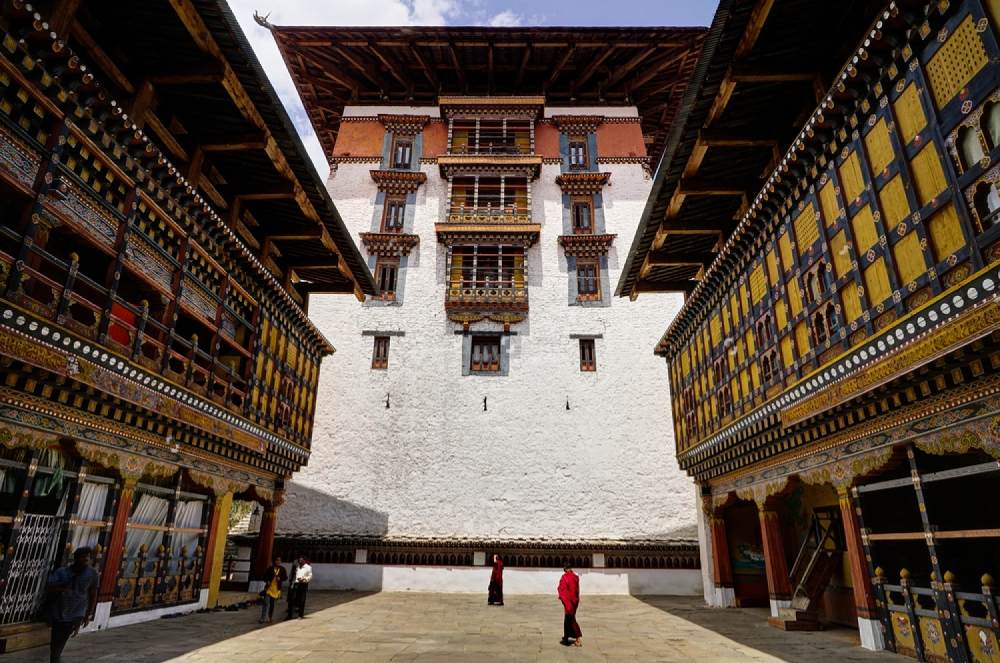
Bhutan doesn't need a wellness itinerary because Bhutan is the wellness itinerary.
I don't say that to be poetic. I say it because I've watched people step off the plane in Paro and visibly decompress before they've even reached the car. There are no advertising hoardings. No chaos. The air smells of pine and incense. The architecture follows rules that prioritise beauty over efficiency. The pace of the country is calibrated toward something other than productivity — and you feel it immediately, whether you expected to or not.
The $100 Sustainable Development Fee that every visitor pays isn't a tourism tax. It funds hospitals, schools, and the infrastructure of a country that has chosen happiness as a policy objective. You feel the effect of that in ways that are hard to quantify. Bhutan doesn't feel hollowed out. It doesn't feel like a place that has sold itself. It feels intact — and that intactness is the rarest thing a well-travelled person can encounter.
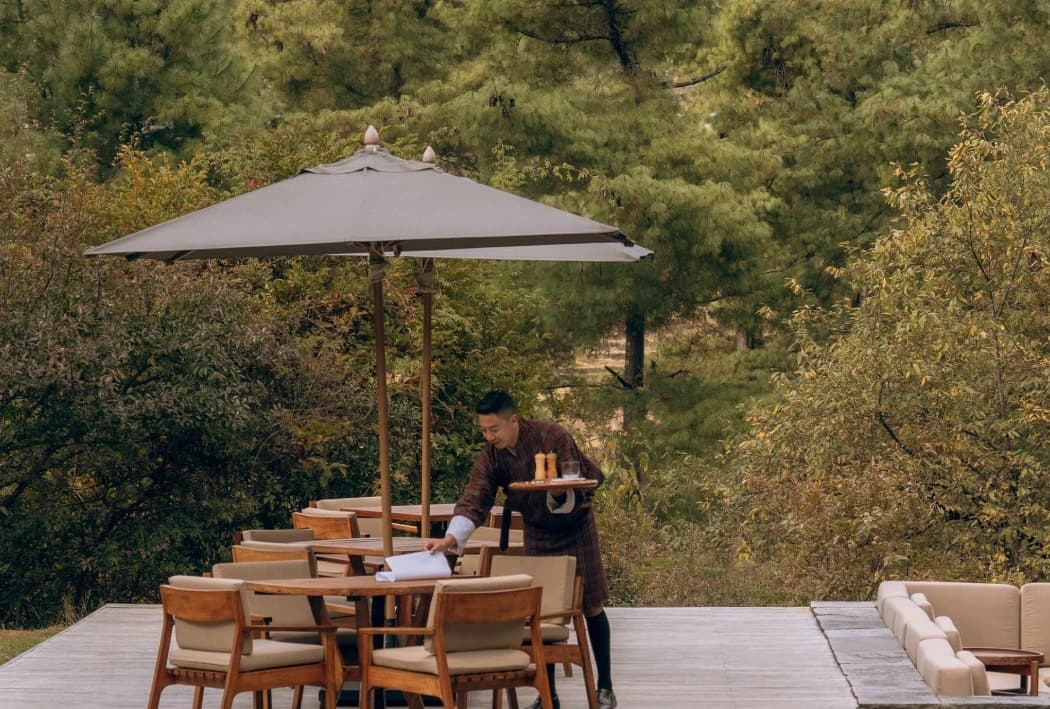
We choose lodges in Bhutan that sit inside this atmosphere. Small properties where the host knows your name by day two. Places where the building materials came from the surrounding valley, and the breakfast is made from what's growing nearby. Not because that's a trend. Because a lodge that belongs to its place reinforces the effect the country is already producing.
Our luxury Bhutan tours are built on this principle. Every itinerary we operate in Bhutan has intentional space written into it. That's not a gap in the planning. It's the planning.
For those interested in specific properties, our guide to Six Senses Bhutan and our Amankora Bhutan Journeys breakdown cover the two most significant luxury operators in the country — what they offer, what they cost, and how we integrate them into a wider journey rather than treating them as the destination itself.
The Monks, the Farmers, and the Conversations Nobody Scheduled
In Bhutan, the side quests aren't detours. They're the architecture.
A morning walk with your guide might end at a farmhouse where an elderly woman is winnowing grain in the same motion her grandmother used. She doesn't speak English. Your guide translates, gently, and then steps back. You sit with her for fifteen minutes, doing nothing except being present in her morning. You leave without buying anything or documenting anything. But you carry that for fifteen minutes for years.
Or a monastery visit — not the Tiger's Nest, though that matters too — a quieter gompa on a hillside where a young monk is studying. He speaks careful English. He asks you where you're from and then asks, genuinely, whether people in your country are happy. It's not a philosophical provocation. He wants to know. The conversation that follows is the kind you don't have anywhere else because nowhere else creates the conditions for it.
Or an afternoon with an Ara distiller — Ara being Bhutan's traditional grain spirit — not as a tasting experience but as a conversation about how fermentation fits into a Buddhist household. About what you offer guests. About what hospitality means when your country has decided not to chase growth.
These moments don't appear on an itinerary. They appear when the guide is briefed to create space for them, when the days aren't double-booked, and when the traveller has slowed down enough to be available for them.
Which Luxury Wellness Experience in Nepal Is Right for You? (Comparison)
Not every wellness journey looks the same. The right lodge and itinerary depend on what you're actually carrying — and what kind of environment will do the most work on it. Here's how the three main options compare.
| Shinta Mani Mustang | Hotel Everest View | Timeless Way of Wellness in Annapurna | |
|---|---|---|---|
| Location | Below Kagbeni, Lower Mustang | Syangboche, Khumbu — 3,880m | Annapurna foothills and highland villages |
| Altitude | ~2,800m | 3,880m | 1,000m–3,200m (variable) |
| Landscape feel | Desert canyon, wind, ochre cliffs, deep silence | Alpine, exposed, Everest directly in view | Lush, layered — forest, terraces, ridgelines |
| Physical demand | Low–moderate (jeep access available) | Moderate (half-day walk from Namche) | Moderate (daily walking, no technical terrain) |
| Primary wellness mechanism | Landscape silence + intentional emptiness | Altitude enforces slowness — body decides pace | Walking as moving meditation + cultural immersion |
| Side quest potential | Cave monasteries, salt traders, village archery | Tengboche monastery, Sherpa kitchen sessions | Farmhouse stays, local healers, village festivals |
| Duration | 5–7 days minimum to feel the effect | 2–4 days within a wider Everest itinerary | 10 days (purpose-built wellness itinerary) |
| Best for | Someone who needs complete disconnection | Someone drawn to the mountain as a presence | Someone who wants wellness woven into movement |
| Not right for | Anyone who needs stimulation to relax | Those sensitive to altitude | Anyone wanting a fixed base location |
| ELH itinerary | Upper Mustang Jeep Tour | Everest Helicopter Tour | Timeless Way of Wellness in Annapurna |
How to read this table
If you need total silence and zero stimulation — Mustang. The landscape is so stark and so complete that there is genuinely nothing competing for your attention. It works on people who have tried everything else.
Suppose you want the mountain as a presence — something larger than yourself, physically visible every morning — Everest View. The altitude does something involuntary. You cannot rush at 3,880m. Your body enforces the pace the itinerary suggests.
Suppose you want wellness to feel like living rather than retreating — Annapurna. You're walking through real villages, eating food grown on the slopes you're crossing, stopping when something catches you. The reset happens through immersion, not isolation.
How We Brief Our Guides
This is the part most operators don't talk about.
Before every departure, we have a conversation with the guide. Not a briefing document. A conversation. We talk about who's coming, what they do, and what they probably carry. We talk about what this particular group needs — not what they've asked for, because most people can't articulate what they need from a wellness journey. They just know they haven't found it yet.
The guide is asked to hold space, not fill it. To walk beside the guest, not ahead. To notice when someone needs quiet and when they need engagement. To make the side quest available without pushing it. To let the farmhouse encounter happen without narrating it into a cultural lesson.
We wrote about this in detail in our post on how we select and brief our Sherpas and guides — it's one of the most honest things we've published, and it explains better than any itinerary page why ELH journeys feel different.
That briefing is where the wellness integration actually lives. Not in the treatment menu. Not in the lodge facilities. In the quality of attention the guide brings to every unscheduled hour.
What ELH Actually Does Differently
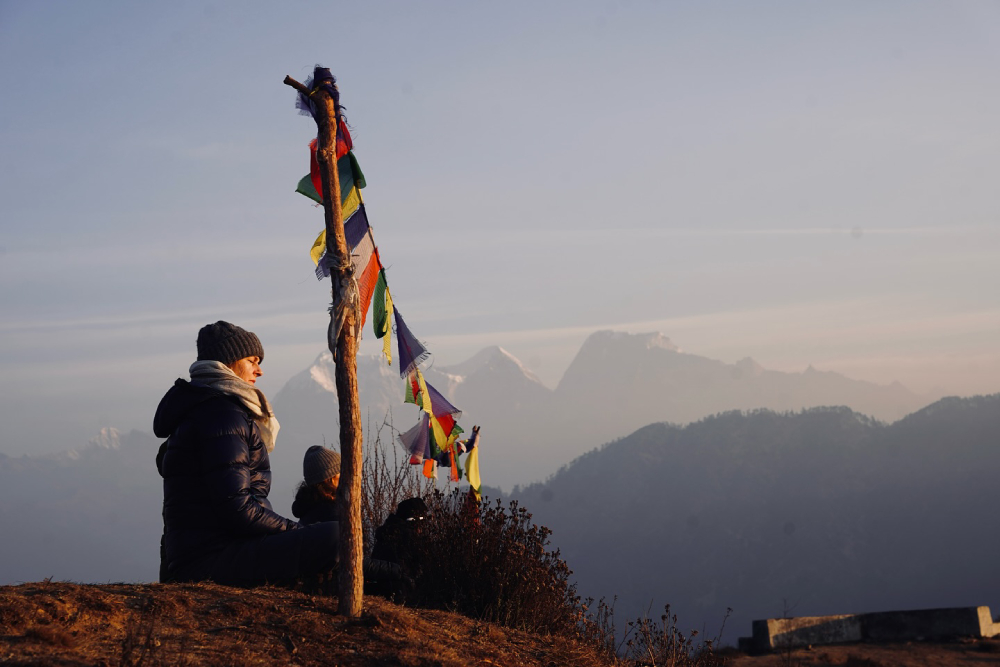
Here's the honest version of our approach.
We set the itinerary around the silence, not alongside it. That means deliberately empty afternoons — not as recovery time between activities, but as the primary offering. It means lodge transitions that feel like deepening rather than moving on. It means guides are briefed not to perform and not to fill space.
It means choosing Shinta Mani Mustang because of what surrounds it, not because of its treatment menu. It means choosing Bhutan lodges that belong to their landscape. It means building in the possibility of the cave monastery, the farmhouse, the conversation with the monk — not as scheduled items, but as things that become available when the pace is slow enough.
The wellness integration is the architecture of the day. How much is planned? How much is left open? What the guide is asked to do and what they're asked not to do.
We don't add wellness to the itinerary. We remove everything that prevents it — and then we choose lodges that make the remaining space as powerful as possible.
If you want both countries in a single journey, our Nepal and Bhutan Combined Journey is the most complete expression of this philosophy — Nepal for the physical and landscape dimension, Bhutan for the cultural and philosophical one. Together, they create something that works on multiple levels simultaneously.
FAQs Luxury Wellness Travel in Nepal and Bhutan
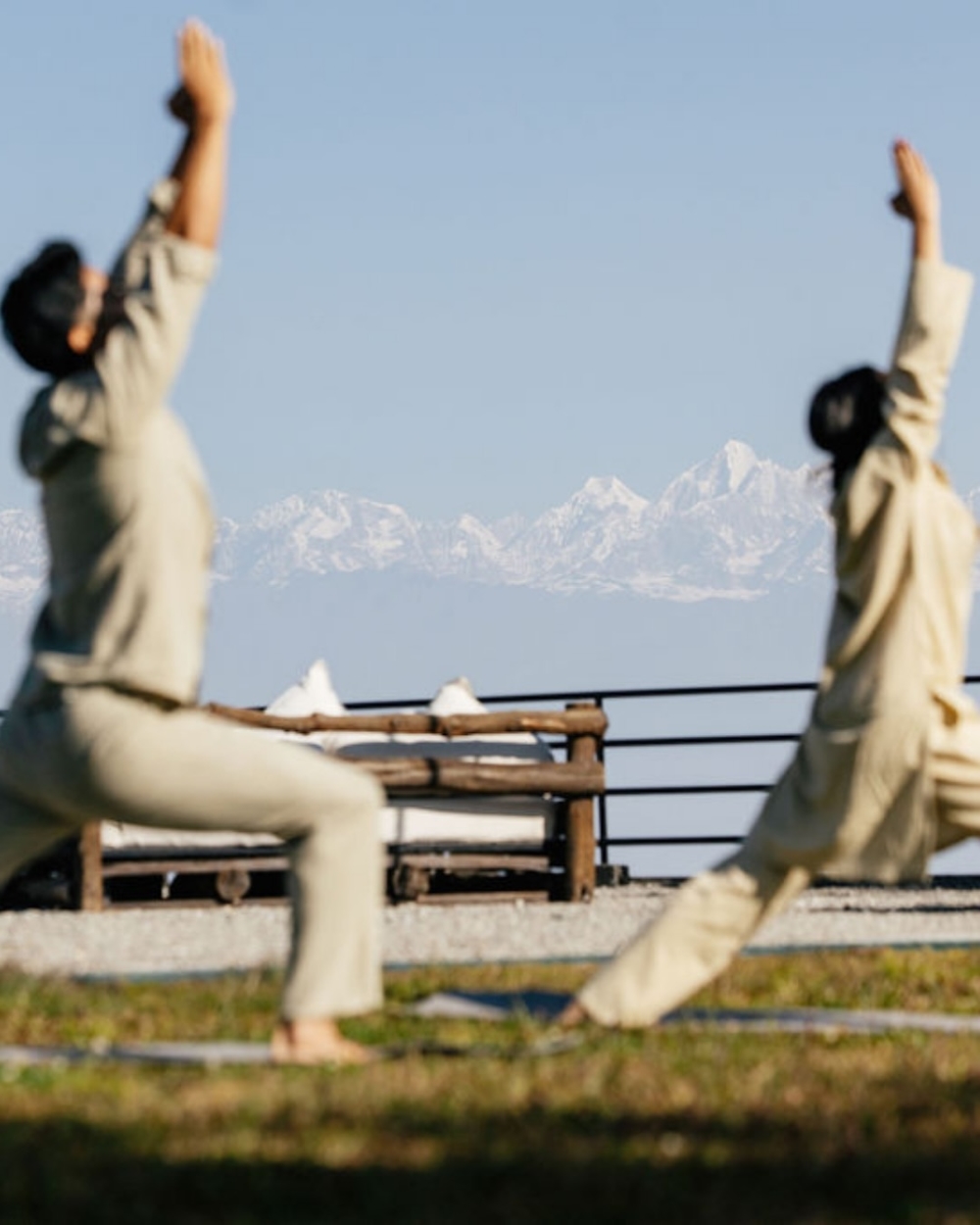
What makes a lodge "wellness-focused" in Nepal or Bhutan?
For us, it's not the spa menu. It's the location. A wellness-focused lodge sits inside a landscape powerful enough to do real work on a person — high altitude, deep silence, authentic surroundings. Shinta Mani Mustang qualifies not because of its facilities but because of where it stands. The same logic applies to every property we recommend. You can browse the full range of options across our luxury Nepal tours and luxury Bhutan tours.
Do I need to be physically fit for a luxury wellness journey in Nepal?
Not necessarily. We design journeys across a wide range of physical demands — from lodge-based stays in Mustang accessible by jeep, to gentle walking itineraries, to more active treks at altitude. The physical level is calibrated to the client, not the other way around. Our luxury trekking in Nepal section covers the full spectrum.
Is Bhutan really worth the Sustainable Development Fee?
In our experience, yes — and not just because the fee funds excellent public services. The fee shapes the kind of tourism Bhutan receives. You arrive in a country that hasn't been overrun, where the culture is intact, where your guide is genuinely present rather than managing crowds. That intactness is what you're paying for.
What's the difference between a luxury wellness retreat and a standard luxury trip in Nepal?
The itinerary architecture. A luxury trip might stay in the same lodges and visit the same places. A wellness journey has deliberate space built into every day — unscheduled afternoons, slow mornings, guides briefed to hold rather than fill silence.
Can you combine Nepal and Bhutan into one wellness journey?
Yes, and it works well. See our Nepal and Bhutan Combined Journey — 13 days that move between the two countries with the logic of deepening rather than collecting.
How far in advance should I plan a luxury wellness trip to Nepal or Bhutan?
For Bhutan, three to four months minimum — particularly for peak season (March–May and September–November). For Nepal, two to three months gives us time to arrange permits, guide briefings, and lodge availability at properties like Shinta Mani Mustang, which books up quickly.
What should I pack for a wellness-focused lodge stay in Nepal?
Less than you think. We send every client a detailed packing guide before departure. The general principle: pack for the walk between the jeep and the lodge door, not for a fortnight of self-sufficiency.
Who This Is For
If you've taken holidays before and come back tired, this is for you.
If you know you need to slow down but don't trust yourself to do it without structure, this is for you.
You don't need a different spa. You need an environment where fast stops are no longer an option — where the landscape is so complete, and the itinerary so deliberately unhurried, that the reset happens almost without your permission.
That's what Lower Mustang does. That's what Bhutan does. That's what we design for.
Get in touch directly. We'll start with a conversation, not a brochure.