Training matters. Character matters more. Here's how the right guide changes everything—especially when they can read both mountains and culture.
The Guide is the Trek
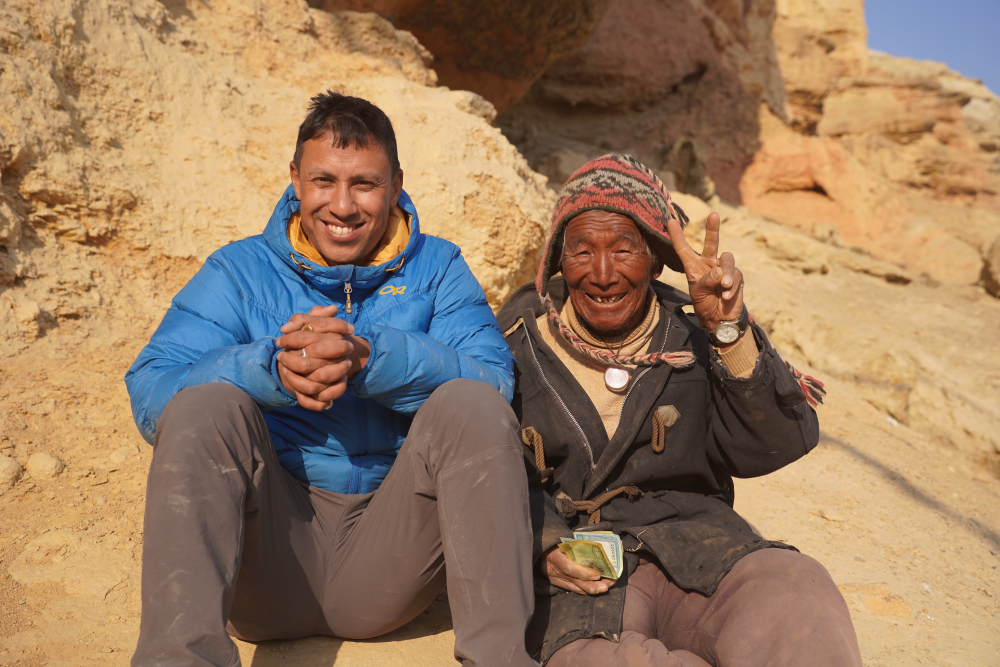
You can change the hotel, and the experience shifts slightly. You can upgrade the meals, and people feel more comfortable. You can add helicopter access, and some stress goes away.
But the guide—the guide is everything.
Most luxury Nepal tours don't understand this. They focus on lodges, meals, and activities. The guide is treated as logistics—hire someone with the right certifications, brief them on the itinerary, and send them out. The assumption is that experience and training are interchangeable. Any certified guide can lead any trek or tour.
This assumption is catastrophically wrong.
The difference between a guide who leads a trip and a guide who creates a memorable trip is character and knowledge. Not credentials alone. Character. Knowledge. The ability to read a person's state. The instinct to create space for quiet. The attention to notice when someone is struggling emotionally (not just physically). The presence makes a person feel held, even at 17,000 feet. The ability to explain why a Newari temple is built the way it is. The knowledge of which Tharu family you should meet. The spiritual understanding of what a monastery actually means.
This is what separates a good trekking experience from an experience that changes how someone sees themselves and understands the world.
And it's what we obsess over when we select guides.
What Most Operators Look For (And Why It's Not Enough) in a Guide
The standard criteria for hiring trekking guides:
Certifications: IFMGA (International Federation of Mountain Guides Associations) or equivalent. High-altitude medicine training. Rescue training. Basic first aid.
Experience: Years on the mountains. Number of summits or treks led. Route knowledge. Safety track record.
Language Skills: English fluency required. Mandarin a plus.
These credentials matter. You want guides who are trained, experienced, and safe. But here's the problem: every guide in Nepal has these credentials.
Dozens of operators hire certified guides every season. The guides get shuffled among operators. One season with Company A, next season with Company B. They're interchangeable. The route knowledge is the same. The safety training is the same.
So how is one guide different from another?
Character and knowledge.
A guide with credentials can keep you safe. A guide with credentials, character and Nepal literacy can change how you experience the country.
But there's more. We have two types of guides:
-
High-altitude specialists (mountain knowledge, safety, trekking expertise)
-
Cultural guides (community relationships, architectural knowledge, spiritual understanding, local connections)
Most operators only hire the first type. We hire both. And we train them to understand how trekking and culture are intertwined, not separate.
The Character Criteria We Actually Use
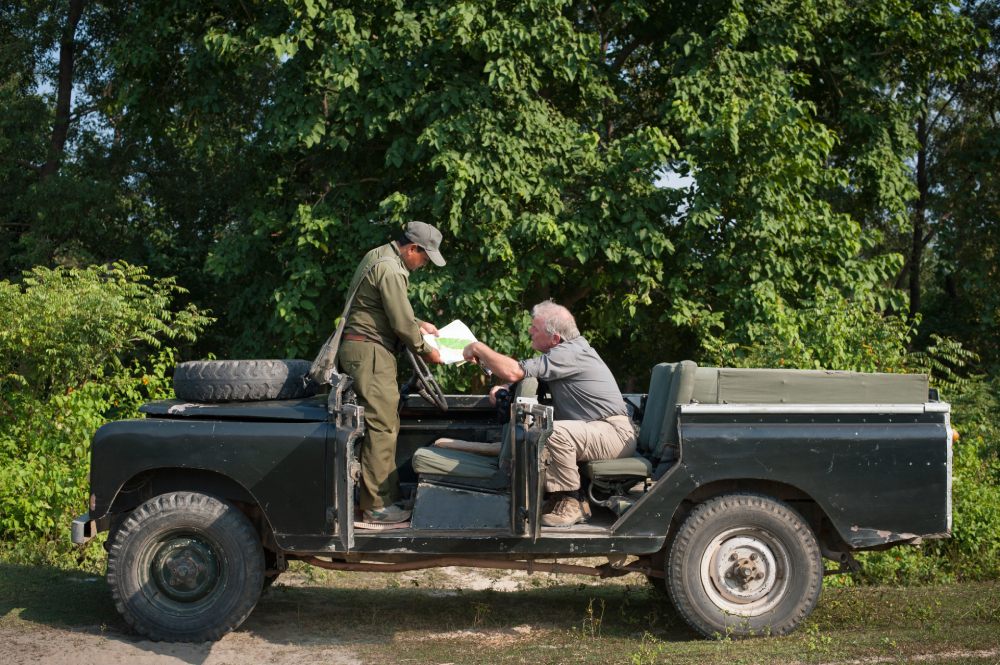
When we evaluate guides at Everest Luxury Holidays, we look for five things:
1. Self-Awareness in High-Altitude and Cultural Contexts
Does this person understand their own response to altitude and stress? Can they notice when they're tired or overwhelmed and adjust their behaviour? Do they understand their own relationship to culture and community?
This sounds abstract. But here's why it matters: guides who aren't self-aware will push groups too hard. Not out of malice. Out of their own adrenaline or cultural assumptions. A guide who's feeling strong at 16,000 feet might pace the group too fast. A guide who's anxious about bad weather might make rushed decisions. A guide who doesn't understand their own cultural biases might facilitate appropriative or performative cultural "experiences."
A guide with high self-awareness notices their own state and accounts for it. They know when fatigue is making them impatient. They know when anxiety is making them overly cautious. They know when their own cultural perspective is limiting what they're showing you. And they adjust their leadership accordingly.
We ask guides directly: "Tell me about a time altitude—or a cultural misunderstanding—affected your judgment. How did you handle it?" Good guides have specific stories. They've learned to watch themselves.
2. Emotional Attunement and Cultural Sensitivity
Can this guide read the room? Notice when someone's struggling emotionally? Adjust the experience based on unspoken needs? Can they facilitate authentic cultural connection without exploitation?
We ask: "Describe a client who was struggling. What did you notice? What did you do? Have you ever facilitated a community connection that felt real rather than performative?"
Great guides notice small things. A person is going quiet. Someone is slowing on the trail. A person staring at nothing at camp. A person is uncomfortable with a cultural interaction. They notice because they're paying attention, not because someone complained.
And more importantly, they know how to respond. Some people need to be talked through struggles. Some need space and silence. Some need encouragement. Some need to be told it's okay to slow down. Some people are uncomfortable with intense cultural immersion and need gentler access. Good guides have intuition about which person needs which response.
This can't be trained. It's personality-based. And it's essential.
3. Presence and Attention Without Dominance or Appropriation
Does this guide make itself the centre of the experience, or do they create space for the group to have their own experience? Do they respect cultural boundaries, or do they treat culture as their own to display?
Some guides are charismatic. They tell stories, make jokes, and dominate the trail conversation. This can be fun. But it can also prevent people from having quiet moments, listening to their own thoughts, and connecting with the landscape.
The best guides are present but quiet. They're paying attention. They step forward when needed. They fade back when you just need to walk and think. They create space for the mountain to work on you, rather than inserting themselves between you and the mountain.
Similarly, the best guides facilitate cultural connection rather than perform it. They don't make you feel like tourists watching a show. They place you in actual situations where a real connection can happen. But they respect boundaries—they don't force intimacy, and they're aware of power dynamics (guide as authority, community as subject).
This is about ego and awareness. Guides with small egos, who lead without needing credit for it, who understand their privilege in facilitating cultural access, create better experiences.
4. Genuine Relationships and Deep Community Knowledge
Does this guide have genuine relationships in the communities they work with? Can they facilitate authentic cultural connection, or are they trained only in "showing tourists around"?
This is where we see real differentiation. Some guides take travellers through villages and monasteries as if they're museum exhibits. "Here's how locals live. Here's a monastery. Now we go." It's performed, not experienced.
The best guides have genuine relationships. They know monks by name. They've shared tea with families before. They know the history and context. They can facilitate real moments—actual conversations, real laughter, genuine cultural exchange—rather than staged "authentic experiences."
We look for guides who've been trekking/working in the same regions for years. Those who have established relationships. Who cares about the communities, not just the tourism opportunities? Guides who understand:
-
Newari architecture, because they've learned it, not just memorised facts
-
The Tharu culture because they have relationships with Tharu families, not just wildlife knowledge
-
Sherpa spirituality because they've meditated in monasteries, not just visited them as tour stops
-
Mustang's Tibetan heritage because they understand the spiritual significance, not just the scenic value
5. Decisiveness and Clear Authority Without Authoritarianism
Can this guide make decisions with confidence? Do they take responsibility for outcomes? Do they respect group input while maintaining leadership clarity?
High-altitude situations require clear decision-making. Is the pace okay? Is the altitude response normal? Should we turn around? Should we wait for a porter? Should we adjust meals?
Bad guides defer these decisions. They're uncomfortable with authority. They consult with base operations on minor decisions. This creates anxiety. Travellers feel the uncertainty.
Good guides make decisions and explain the reasoning. "We're going to rest here for two hours because I want to watch your acclimatisation. Here's what I'm observing." That clarity, that confidence, settles the group.
But it has to be real confidence, not arrogance. The guide needs to explain decisions in a way that makes sense. They need to be open to new information if conditions change. They need to listen to group input. But they need to lead clearly.
How We Select Guides: The Process
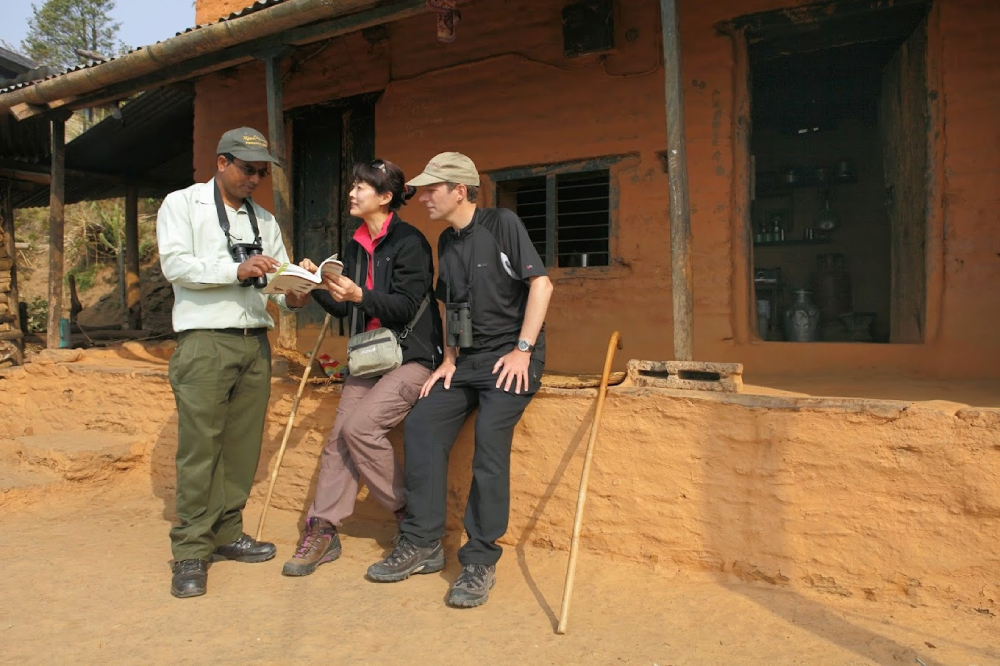
Our selection process has three phases, and it's deliberately rigorous because guides are the product:
Phase 1: Credential Verification (The Minimum Bar)
We verify:
-
Certifications (IFMGA or Nepal Tourism Board License)
-
High-altitude experience (minimum 3+ years regular trekking or leading tours)
-
English fluency (assessed by conversation, not just forms), and additionally, we also have language-based guides in Spanish and Portuguese
-
Safety training (first aid, rescue protocols, altitude medicine)
-
Background (Where are they from? How long in guiding? Why?)
This weeds out unqualified people. But many guides pass this bar.
Phase 2: Personal History, Relationships, and Character Assessment
We interview guides in depth about:
-
Their background (family, education, why mountains/guiding?)
-
Their relationship to specific regions (Which areas have they guided? What do they love about them?)
-
Their relationships with local communities (Do they have genuine friendships? Mentors? Community connections?)
-
Specific stories from treks they've led (What's a moment you remember from a trek? Why? What happened?)
-
Their philosophy (What does luxury mean? What does authentic cultural facilitation mean? How do you approach responsibility to communities?)
We also ask for references—not from companies, but from clients they've guided personally. We call these clients and ask open-ended questions about the guide's presence, decision-making, cultural sensitivity, and how they made the trip feel.
Most guides we speak with are honest and capable. But some stand out. They light up when talking about specific villages. They have stories of relationships with families. They talk about community initiatives beyond guiding. They demonstrate awareness of their role in cultural access. These are guides with a genuine connection to the place and people.
Phase 3: Active Integration and Ongoing Evaluation
Once hired, guides don't just start leading treks. They:
-
Co-lead treks with established senior guides (shadowing, observing, learning our philosophy)
-
Lead treks with senior feedback and check-ins
-
Participate in monthly briefings where we discuss scenarios, challenges, philosophy, and feedback
-
Train on altitude psychology, group dynamics, cultural sensitivity, and communication
After 3-4 months of this, we evaluate: Does this guide fit our philosophy? Are they growing? Are they building genuine relationships with our clients and our team? Do they embody both high-altitude competence and cultural literacy?
If yes, they become regular guides whom we assign to clients based on personality fit, regional expertise, language preferences, and the specific itinerary.
If the fit doesn't emerge, the relationship ends respectfully. No guide stays if they can't meet our standard.
Two Types of Guides, Working in Tandem
Here's something most operators miss: we have both high-altitude specialists AND cultural specialists, and they work together.
The Mountain Specialist Guide
-
Expert in the Everest region, Annapurna, and Langtang logistics
-
Deep altitude knowledge, acclimatisation expertise, and physical conditioning understanding
-
Trained in mountain safety, rescue, and emergency medical response
-
Works on high-altitude treks (Everest Base Camp, Annapurna Base Camp, Manaslu)
The Cultural Guide
-
Expert in Kathmandu Valley, Chitwan ecosystems, Bhaktapur architecture, Lumbini spirituality
-
Deep community relationships, cultural knowledge, spiritual understanding
-
Trained in facilitating authentic cultural connection without exploitation
-
Works on valley tours, community-immersion experiences, city/village explorations
The Integrated Guide (The Rare Find)
-
Trained in both mountain logistics AND cultural facilitation
-
Can lead you to Everest Base Camp while explaining Sherpa spirituality
-
Can navigate a Kathmandu temple tour while discussing architectural engineering
-
Understands how trekking through villages and mountains is ONE integrated experience, not separate things
The Signature Nepal Tour uses a mix: a cultural guide for Kathmandu and Chitwan, a mountain/trekking guide for Annapurna, and sometimes an integrated guide if available.
The Difference This Makes: A Real Example
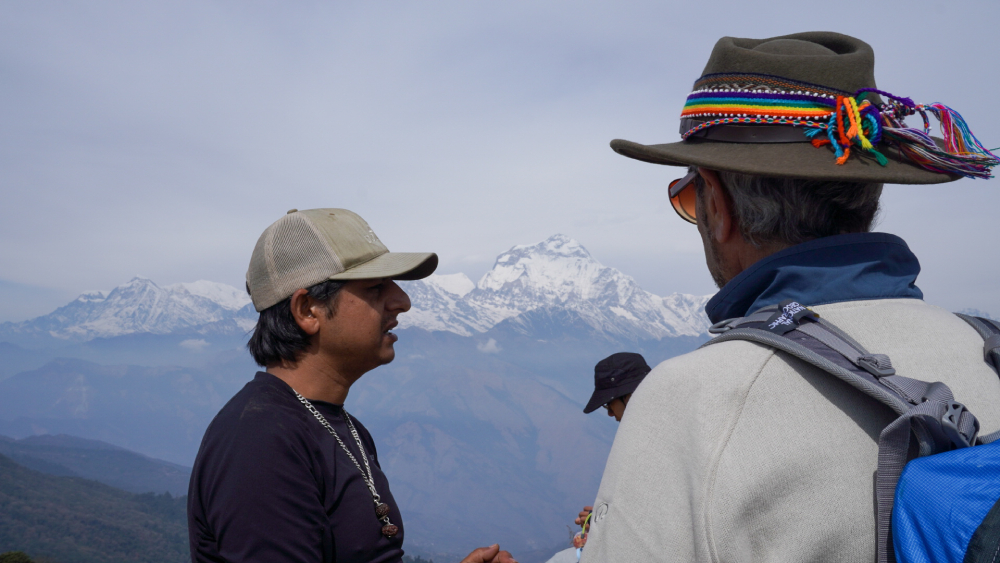
Here's a concrete example of how guide quality changes an experience:
Same Trek, Two Guides
The route: Annapurna Heritage Trail, 9 days, trekking through inhabited villages, ending at a lodge with Annapurna views.
The group: Four people, all first-time trekkers at altitude.
Guide A (Standard Qualifications, Limited Character Fit)
-
Certified guide, 8 years of experience
-
Leads the group by itinerary
-
Good at explaining routes and pointing out mountains
-
Professional but somewhat distant
-
Pace is set by the itinerary, not the group
-
On day 3, one person is struggling with altitude and feeling anxious
-
Guide A reassures her: "You're fine. Everyone feels this way. Keep walking."
-
Person continues, worry growing
-
By day 5, the person is seriously struggling and considering descent
-
Guide is frustrated—they've been keeping a good pace, so the issue "shouldn't" be happening
-
Trek becomes stressful, and the person feels unsupported
Guide B (Character-Integrated Selection)
-
Also certified, 7 years of experience
-
On day 1, notices the same person is quieter than others, watching the ground
-
Slows the group slightly without drawing attention
-
That evening, sits near the person during dinner (not forcing conversation, just present)
-
Day 2, person opens up: "I'm worried I'm too old/weak for this."
-
Guide B shares a specific story about another client who felt the same way at the same point
-
Explains the acclimatisation process honestly
-
Adjusts the next day's pace preventatively, not reactively
-
Also takes time to explain Annapurna's spiritual significance to the community they're passing through
-
Introduces the person to a local family, facilitating a genuine conversation (not a performance)
-
By day 5, the person is acclimated and describes the trek as "hard but doable."
-
She feels the mountains AND the culture AND the people
-
The group dynamic remains positive because the guide caught the tension early and held cultural attention throughout
Same route. Same altitude. Same mountain.
The difference is presence, attunement, AND cultural literacy. Guide B noticed emotional struggle before it became a crisis. Guide B adjusted the experience to support the person. Guide B also wove cultural understanding into the physical journey. Guide A managed the itinerary well but missed the person and the place.
Guide B's approach costs more because:
-
They have to be hired year-round (not seasonal)
-
They need specialised training (altitude psychology + cultural facilitation)
-
They have to be selected carefully (you can't hire these guides in bulk)
The Training We Do (Beyond Certifications)
Once guides are integrated, we run monthly briefings and ongoing training on:
Altitude Psychology: Understanding not just the physiology of altitude, but the psychological response. How does altitude affect mood, decision-making, and anxiety? How do we watch for it in others? How do we respond individually?
Group Dynamics: How to notice conflict before it escalates. How to create psychological safety. How to handle the different personality types in a group (the anxious one, the competitive one, the quiet one, the joker).
Cultural Context and Facilitation: Deep dives into the regions we trek. The history. The spiritual significance. How to facilitate authentic cultural connection without exploitation. How to explain Buddhist and Hindu practices in a way that's respectful and meaningful. How to respect community boundaries.
Communication: How to explain altitude, pacing, and decisions in a way that settles anxiety rather than creates it. How to be clear without being authoritarian. How to say no without making someone feel rejected. How to give feedback to clients.
Personal Development: Guides share challenges they've faced. Other guides offer solutions. We create a culture of learning, not judgment. A guide who makes a mistake gets feedback and support, not punishment. This keeps guides engaged and growing.
What This Costs (And Why It's Worth It)
The model we've built costs more than standard operator models:
Standard Model (Industry Average):
-
Hire seasonal guides
-
Minimal training beyond certifications
-
Guides available for any operator who needs them
-
High turnover
Cost per guide per season: $3,000-$5,000
Our Model:
-
Year-round guide employment
-
Monthly training and development
-
Guides assigned exclusively to our treks (not bouncing between operators)
-
Continuity and relationship-building
-
Both altitude AND cultural specialists
-
Lower turnover
Cost per guide per season: $8,000-$15,000 (salary + training + benefits)
This adds $100-200 per person per trek to our base cost. But it changes the entire experience.
A guide who's been with us for three years knows our philosophy. Knows how to facilitate authentic experiences without exploitation. Knows how to read our clients. Knows the regions deeply. Is invested in doing good work because they're treated well.
This is why our trips cost more and feel different.
Signs You're Getting a Quality Guide
When you're booking a luxury Nepal tour, here's how to assess guide quality before you go:
Ask these questions:
-
"How long have your guides been with you?"
-
Quality operators: 2-5+ years with the same guides
-
Weak operators: Guides are seasonal and shift between companies
-
"How are guides selected?"
-
Quality operators: Detailed character and relationship assessment
-
Weak operators: "We hire certified guides"
-
"What training do guides do?"
-
Quality operators: Monthly briefings, cultural training, altitude psychology, ongoing development
-
Weak operators: "Guides do annual refresher training"
-
"Can I speak with a guide before the trek?"
-
Quality operators: Offer pre-trek calls with your assigned guide
-
Weak operators: "You'll meet your guide at the hotel in Kathmandu"
-
"What's your guide-to-guest ratio?"
-
Quality operators: 1 guide per 3-4 people or better
-
Weak operators: 1 guide per 8-10 people
-
"Can I request a specific guide or guide type?"
-
Quality operators: Yes, and they'll match you thoughtfully based on personality, language, and regional expertise
-
Weak operators: "We have available guides"
-
"Do you have cultural guides as well as mountain guides?"
-
Quality operators: Yes, both, sometimes integrated
-
Weak operators: "Our guides do it all"
-
"How do you facilitate authentic cultural connection?"
-
Quality operators: Specific stories about community relationships, cultural integration, boundary-respecting practices
-
Weak operators: Generic "cultural tours" and "village visits"
If an operator can answer these questions with specific examples and genuine knowledge—not marketing speak—you've found someone who actually understands what guide quality means.
Everest Luxury Holidays Guide Philosophy
We operate on three principles:
1. Guides are the Core Product, not the lodge. Not the itinerary. The guide. Everything else supports the guide's ability to create a quality experience.
2. Guide Well-Being Enables Guest Well-Being Guides who are well-paid, well-trained, and well-treated are guides who show up fully present. This creates the best experiences.
3. Character is Selected, Not Trained. We can train technical skills. We can't train character. So we select for character (self-awareness, attunement, presence, genuine relationships, clear authority) and then train the rest.
This approach costs more. It creates better experiences. And it builds something beyond a transaction—it builds community and relationship among guides, staff, clients, and the communities we visit.
Meet Our Guides
We're proud of our guide team. Meet them here—Senior Trekking Leaders, Trekking Leaders, Cultural Guides, and Sherpa Guides. These are people who chose to work with us because they believe in how we approach guiding.
Each guide has a story, a region they specialise in, a way of leading that's distinctly theirs. And each one embodies the qualities we look for: skill, presence, cultural sensitivity, and genuine care for the experience they're creating.
Some are high-altitude specialists. Some are cultural guides. Some are both. Each is matched to the right itinerary and client personality.
The Bottom Line
You can find cheaper luxury Nepal tours. You can find operators with better-known lodges or more helicopter experiences.
But if you want guides who are trained, present, attentive, and genuinely invested in creating a meaningful experience—guides who understand both mountains and culture, who facilitate authentic connection, who make you feel safe and supported at altitude—that comes from a different kind of operating philosophy.
It comes from treating guides as the core product, not as logistics.
It comes from selecting for character, training for skill, and supporting guides so they can show up fully.
And it creates trips that people remember for decades.
Ready to Meet Your Guide?
Choosing a trek isn't just choosing a mountain. It's choosing a guide. See who might lead your trek—and then reach out to match with the right person for you.