Two days in a treehouse. That was the advice I gave Emily and her group when they told me they wanted to see a tiger in Chitwan — not just visit the park where tigers happen to live.
Most people don't take that advice, because most itineraries don't leave room for it. They land in Chitwan on the way from Kathmandu to Pokhara, spend a single afternoon on a jeep safari, and leave with photos of deer, maybe a rhino if they're lucky, and a quiet sense that the tiger was always going to be someone else's sighting.
Emily's group sat still instead. Two days, mostly quiet, in a treehouse above the forest floor. On the second day, a Bengal tigress walked past with four cubs behind her. She'd later say my advice made the sighting happen. I'd put it differently — the advice was just to stop moving.
A genuine luxury Chitwan wildlife safari isn't about the resort you sleep in. It's about whether your itinerary gives the forest enough time to show you something. This piece is about what changes when Chitwan stops being a two-day add-on tacked onto a longer Nepal trip.
Why a Luxury Chitwan Wildlife Safari Rewards Patience, Not Pace
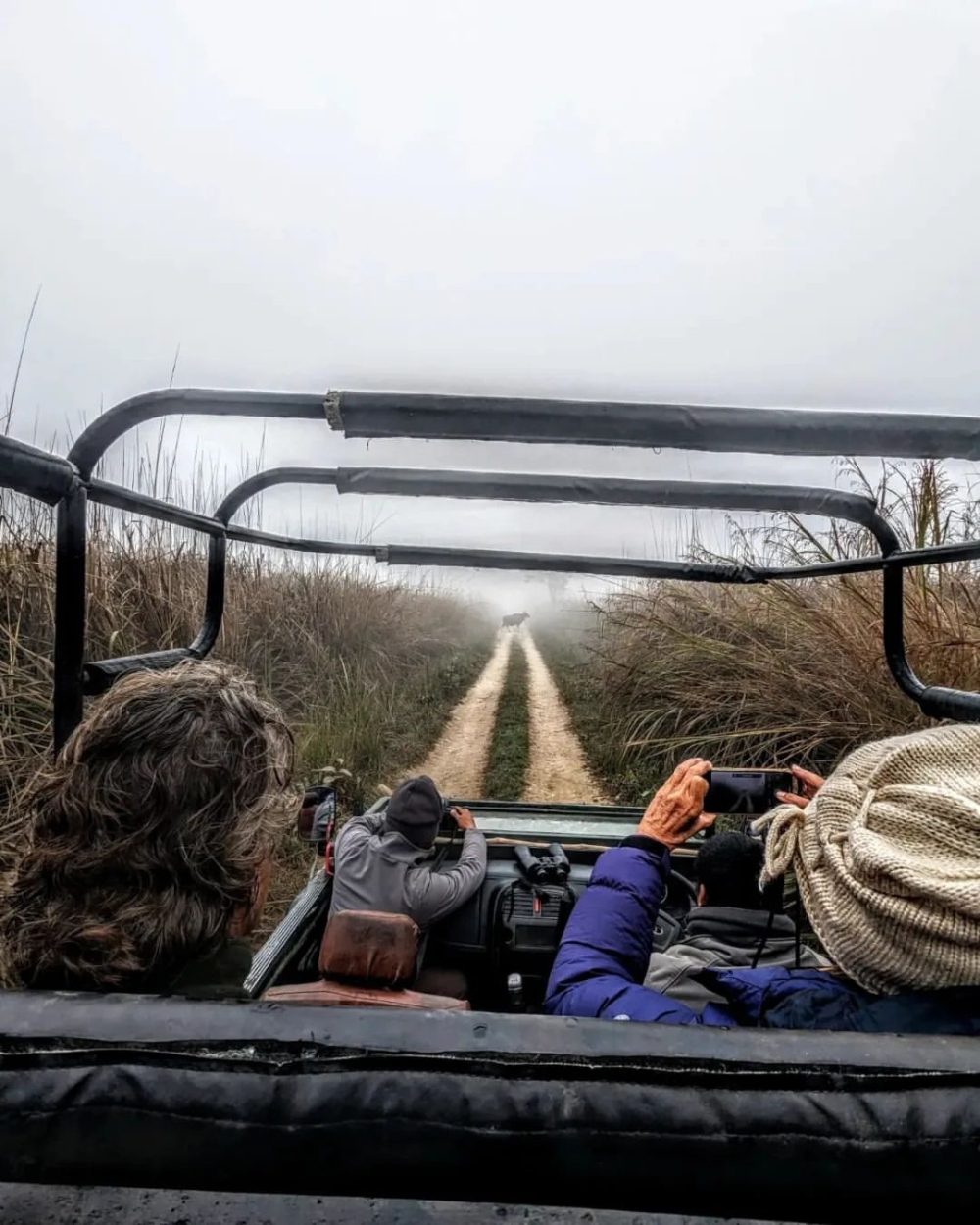
Chitwan gets treated as a waypoint. It sits conveniently between the two places everyone already wants to go, so it becomes a half-day or a single overnight bolted onto a longer itinerary, almost as an afterthought.
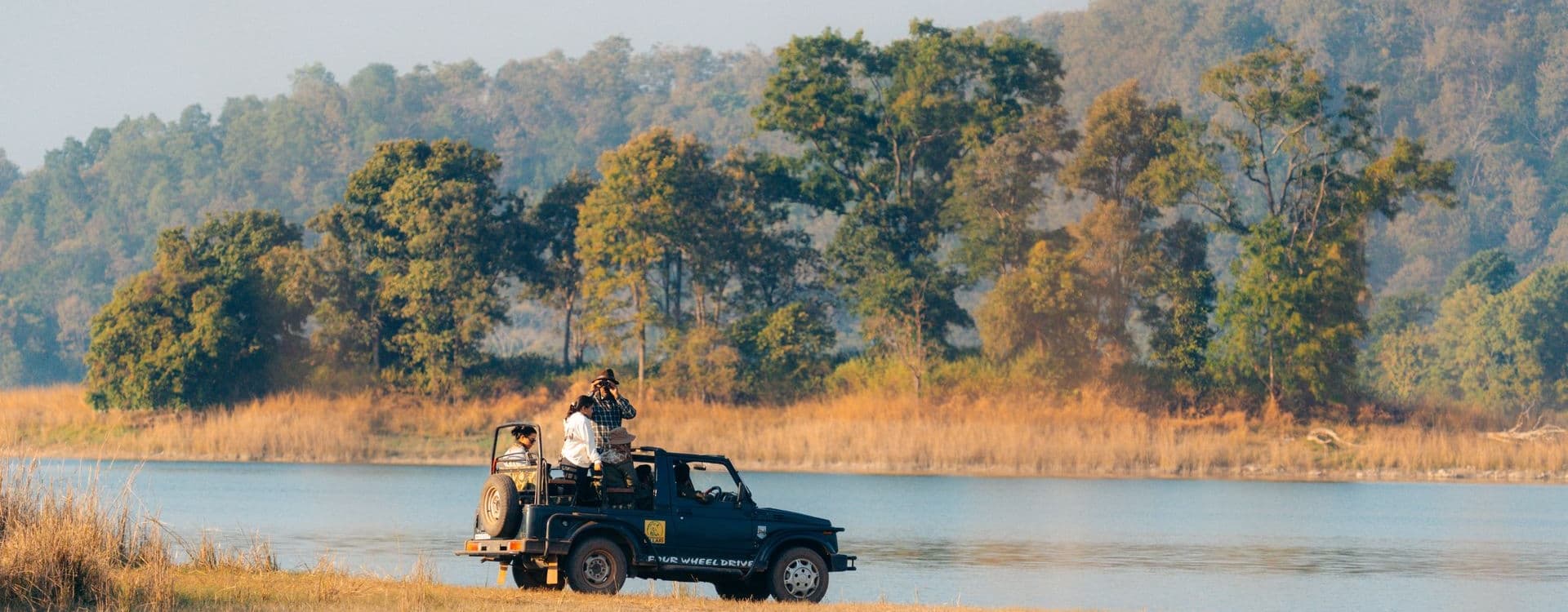
The park doesn't reward that kind of visit. A jeep safari covers ground quickly and shows you the forest — but the forest isn't the same as the animals in it, and Bengal tigers in particular don't schedule their movements around a three-hour window.
What actually works is pacing, not luck. The guides who know Chitwan well aren't reading the landscape faster than everyone else — they're reading it for longer. A track in the mud tells you where an animal walked, not where it is now. Alarm calls from spotted deer or langurs tell you a predator is somewhere nearby, but only if you're quiet enough, and present long enough, to hear them and then wait for what comes next. That's not a skill you compress into an afternoon. It's a function of time.
The Guide Is the Instrument
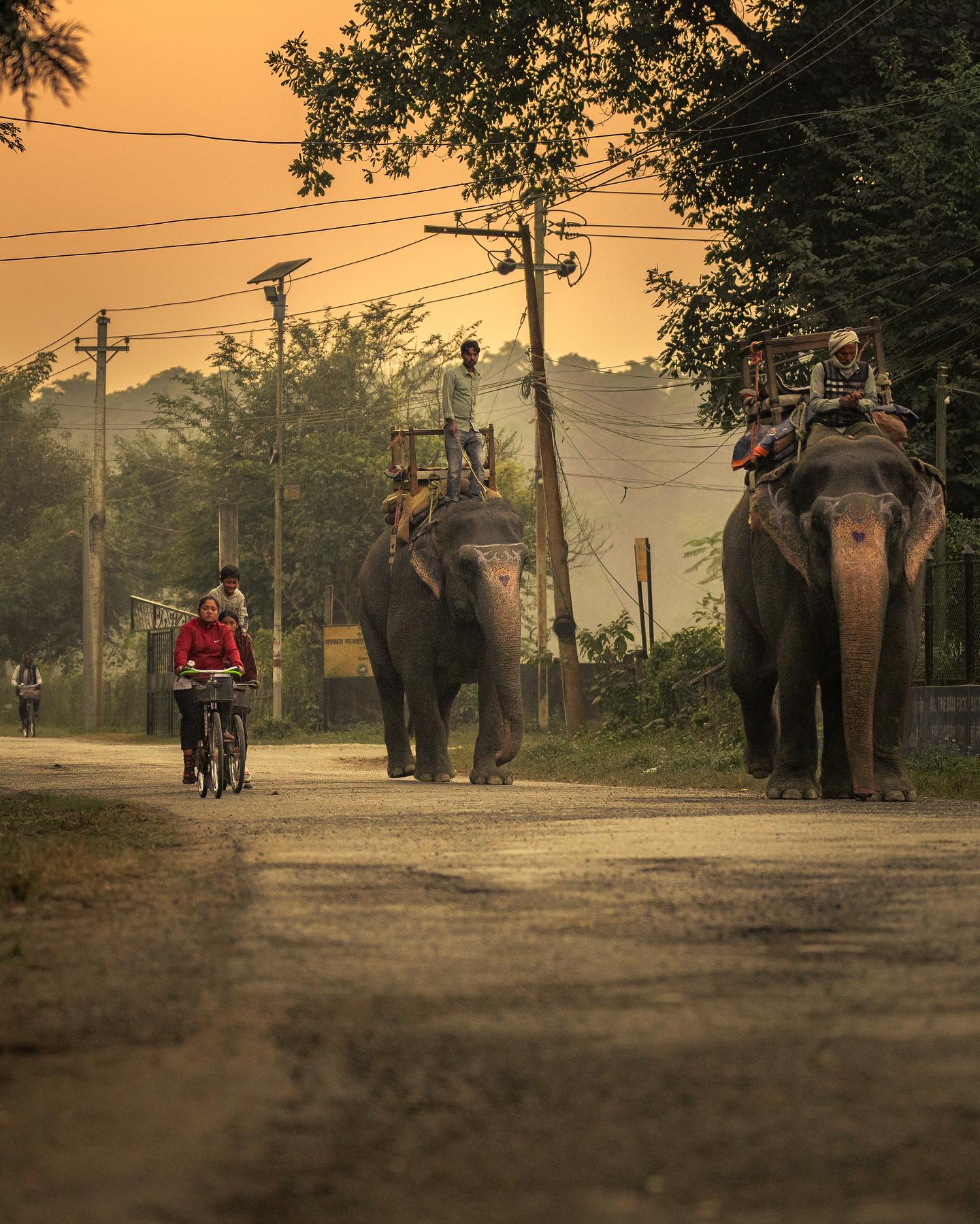
Anyone can drive a jeep through the park. Reading it is different work.
A good Chitwan naturalist is watching three things at once that most visitors never notice: the alarm calls moving through the canopy, which tell you where something is walking even when you can't see it; the freshness of a print in the mud, which tells you whether it's worth waiting or moving on; and the wind, because tigers and rhinos alike will smell a group before they see it — a guide ignoring wind direction is guessing, not tracking.
What separates the guides worth building a two-day wait around isn't just that knowledge. It's whether they can sit in a hide for six hours without getting restless, without narrating every ten minutes to fill the silence, without treating stillness as wasted time. Skill gets a guide into the field. Character is what makes an eight-hour wait bearable — and the sighting, when it comes, feels earned rather than lucky.
What a Day in the Field Actually Looks Like
Mornings start before the light does. A 5:30 am jeep ride or a walk to the hide, while mist still sits low over the grassland — this is when rhinos are grazing in the open and tigers, if they're moving at all, are heading back toward cover before the heat sets in. Late afternoon offers a second window as temperatures drop and animals come back out to feed.
The hours in between are the part most itineraries skip, and the part that actually matters. If you're tracking rather than touring, that middle stretch is spent in a hide or a treehouse, deliberately not moving, letting the forest forget you're there. Most of it is watching light change on grass and listening. It doesn't photograph well for a brochure. It's exactly what produced Emily's sighting.
Evenings tend to close the same way regardless of how the day's tracking went: a Tharu cultural evening, dinner built around the day's conversation rather than a fixed menu, and an early night — because 5:30 am comes fast.
The Chitwan Tiger Population in 2026
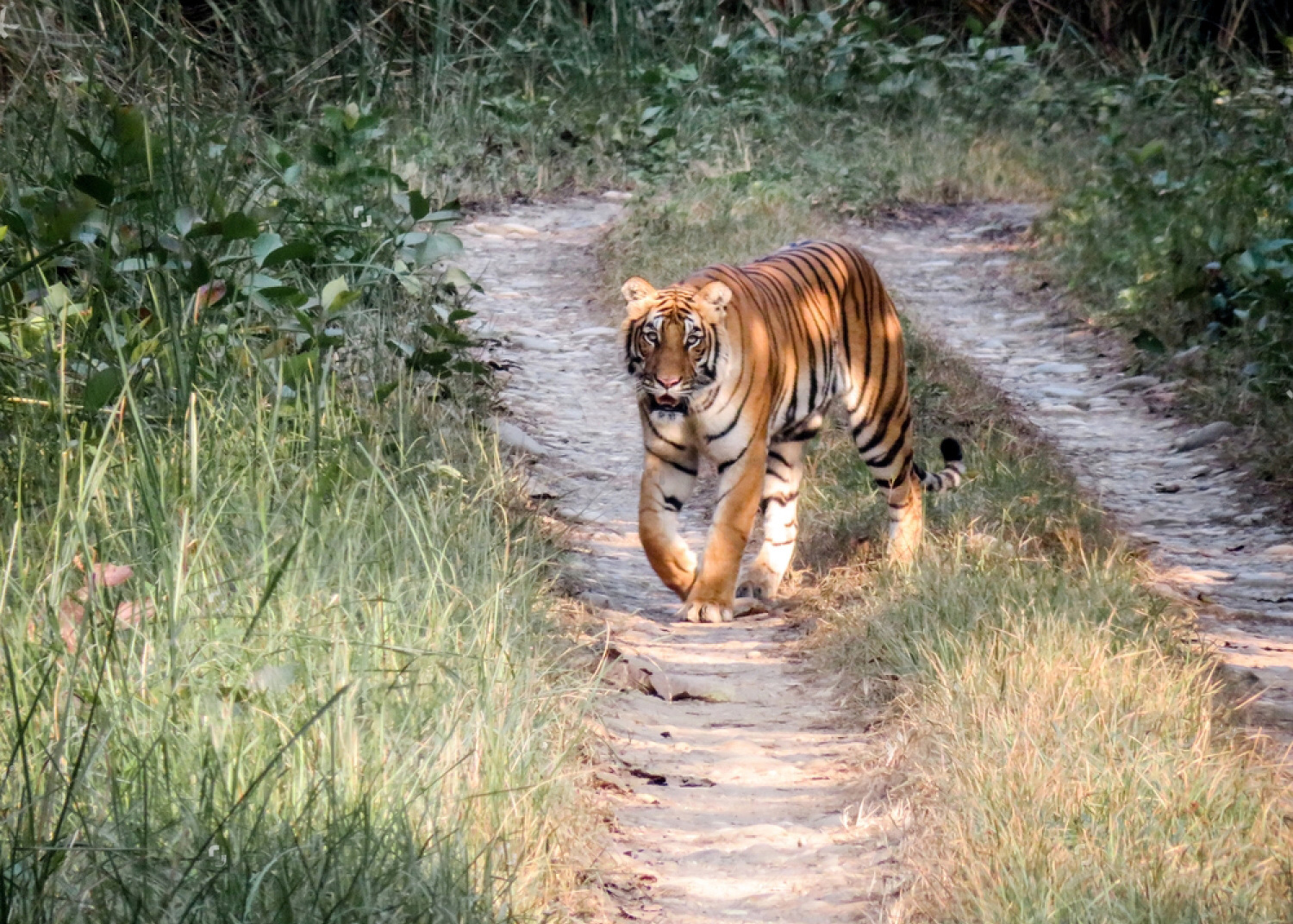
Worth stating plainly, because this changes the odds. Nepal released the results of its fifth national tiger census in July 2026, and Chitwan's population rose to 145 tigers, up from 128 in the 2022 count, the highest of any protected area in the country. Nationally, Nepal's tiger population has climbed from just 121 in 2010 to 429 today.
That's not a rounding change. It reflects two decades of habitat restoration and anti-poaching work, and it means the odds of a sighting, while still never guaranteed, are meaningfully better than they were even a few years ago.
Source: National Tiger Census 2026, Department of National Parks and Wildlife Conservation, as reported by IUCN and the Kathmandu Post.
What Luxury Actually Means on a Chitwan Wildlife Safari

In Chitwan, the resort is not the point, the same way the lodge was never the point on our combined Nepal-Bhutan itineraries. Comfortable lodging matters after a full day of tracking, but it's not what anyone remembers a decade later.
What we're actually offering is a guide with the patience to sit still for two days if that's what it takes, and an itinerary built loosely enough to let him. That's a harder thing to sell than a five-star resort, because it doesn't photograph well in advance. It only shows its value afterwards — usually in a story like Emily's.
Our Luxury Chitwan National Park safari runs three days and covers the core experience well: a private jungle safari, a canoe ride along the Rapti River, the Elephant Breeding Centre, and an evening with the Tharu community. For travellers who want what Emily's group had, we build it as an extension on top of that base — additional treehouse days, chosen based on availability and season rather than tied to one fixed address, with the itinerary structured around waiting rather than moving.
It's not something we can promise will produce a tiger. Nobody honest can promise that. What we can promise is that two unhurried days give you odds a single jeep safari never will.
Luxury Chitwan Wildlife Safari Cost — 2026 Pricing
Worth being straightforward here, because pricing online is inconsistent. Chitwan National Park entry for foreign visitors runs NPR 2,000 (roughly $15) per day, non-refundable regardless of weather or sightings. On the open market, a shared jeep safari through a local Sauraha operator typically runs $25–50 per person for a half-day session; a private vehicle for your own group runs closer to $100–150 for the day.
We don't run elephant-back safaris. The Elephant Breeding Centre visit gives you the conservation angle without the animal welfare cost, and it's built into the itinerary already.
Our own package runs three tiers, based on two people sharing. The difference between them is almost entirely the lodge — the tracking experience is identical at every level.
| Tier | Price (2 sharing) | Lodge | Meals |
|---|---|---|---|
| Silver | $895 per traveller | Siddartha Vilasa Banbas | Full board, tea/coffee/soft drinks |
| Gold | $1,495 per traveller | Barahi Jungle Lodge | Full board + soft alcoholic drinks, souvenir included |
| Platinum | $2,300 per traveller | Meghauli Serai, A Taj Safari | Fully all-inclusive, souvenir included |
Every tier includes: airport and city transfers by Land Cruiser SUV, the Kathmandu–Bharatpur–Kathmandu domestic flights, a private jeep safari, park entry fee, a government-licensed private nature guide, and all applicable Nepal government taxes.
Every tier excludes: travel insurance, international airfare and Nepal visa fees, personal expenses, tips, alcoholic beverages beyond what each tier covers, and the single supplement fee (quoted on request).
Treehouse tracking days, when we build them in, are priced on top of whichever tier you choose — based on the property we secure and how many additional days you want. That's a conversation we have once we know your dates. For more Luxury Chitwan Safari details and pricing, see here.
Best Time for a Chitwan Wildlife Safari
Spring, from March to May, brings warmer weather and animals gathering near water sources as the forest dries out. Autumn, September through November, follows the monsoon with clear visibility and the park at its greenest. Winter mornings can bring fog across the Terai that limits early visibility, and the June–August monsoon makes tracking difficult regardless of patience.
Safari timings inside the park follow the forest's own rhythm — early morning departures and late afternoon sessions, with the middle of the day left for rest, or, if you've built in tracking days, for the hide.
Beyond the Tiger: What wildlife can one expect
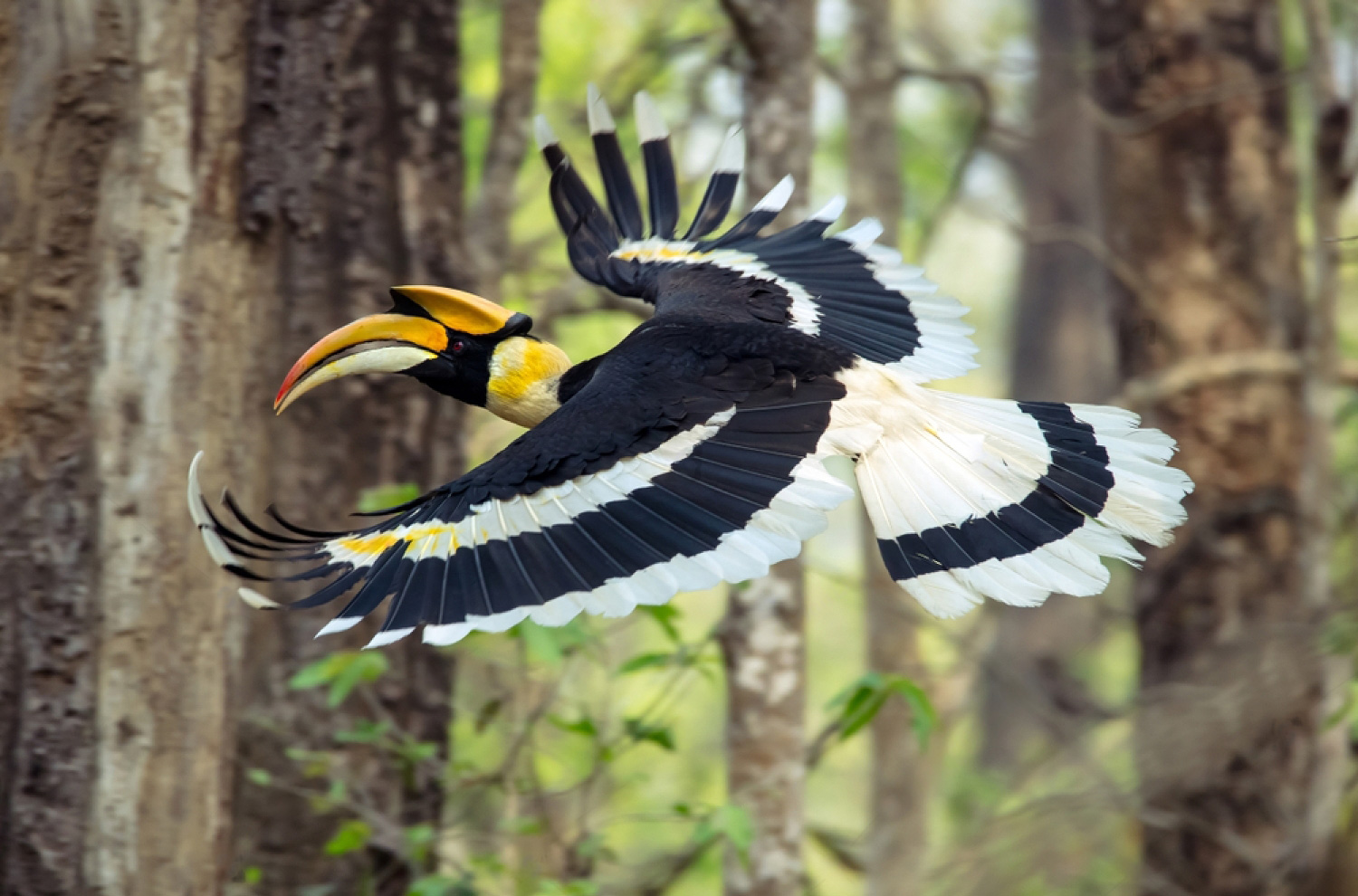
Chitwan's reputation runs on the Bengal tiger, understandably, but the park's real strength is the range of what actually lives there. Most guests, tiger or no tiger, leave having seen more than they expected.
The greater one-horned rhinoceros is the animal you're most likely to see, often from a canoe on the Rapti, grazing along the riverbank in daylight. Chitwan's rhino population has climbed from under 100 individuals in the 1960s to several hundred today — one of Asia's clearer conservation success stories, and the reason a jeep safari here has a very high chance of a close rhino encounter even on a first outing.
The rivers themselves are worth watching as closely as the banks. Two crocodile species share Chitwan's waterways: the gharial, one of the most endangered crocodilians on earth, identifiable by the long, narrow snout it uses to snatch fish; and the marsh mugger, a stockier, more generalist hunter often seen basking in the same stretches. On a quiet morning canoe ride, the Narayani also holds a small population of Gangetic river dolphins — nearly blind, hunting by echolocation, and one of only four freshwater dolphin species left in the world.
Deer make up the backbone of the grassland sightings. You'll likely see all four species Chitwan is known for: spotted deer (chital) in loose herds across the open grass, hog deer keeping low with their pig-like, head-down run, the much larger sambar in the denser sal forest, and barking deer — small, solitary, and named for the sharp alarm call they give when they sense a predator, which is often the first sign your guide has that something bigger is nearby.
The monkeys split into two very different characters. Rhesus macaques are the bold ones, often near lodges and village edges, loud and expressive. Grey langurs are quieter and more elegant — silver-coated, black-faced, moving through the canopy with real precision, and their alarm calls are one of the more reliable tip-offs a guide will use when tracking.
Gaur, the Indian bison and the largest wild cattle species on earth, graze the forest edges in small groups and are an easy, low-effort sighting most of the year. Sloth bears are the opposite — genuinely shy, most active at dawn and dusk, and one of Chitwan's harder animals to see well, though the park holds one of the highest sloth bear densities in Asia. Wild elephants, roughly 50 individuals, move through the buffer-zone corridors between Nepal and India — less predictable than the domesticated elephants at the breeding centre, but a real sighting when it happens.
Birdlife is where Chitwan quietly outperforms its own reputation. Over 500 species have been recorded here, and serious birders can expect 100-plus sightings in a single day during the right season. The park's grasslands are one of the last strongholds of the Bengal florican, a critically endangered bustard whose males perform a leaping courtship display during breeding season — a genuine stop-the-jeep moment if your timing lines up. The great hornbill is easier to catch: its wingbeats are audible from well over 400 metres before you see it. Add sarus cranes along the wetlands, painted storks, pied kingfishers, and crested serpent eagles working the thermals, and Chitwan holds its own against any birding destination in South Asia.
That range is exactly why we tell clients not to treat a tiger sighting as the measure of whether the trip worked. Even on the two-day treehouse stretch we built for Emily, the tiger was the headline — but the days were full of everything above, whether the tiger showed or not.
The Tharu Villages Chitwan Is Built Around
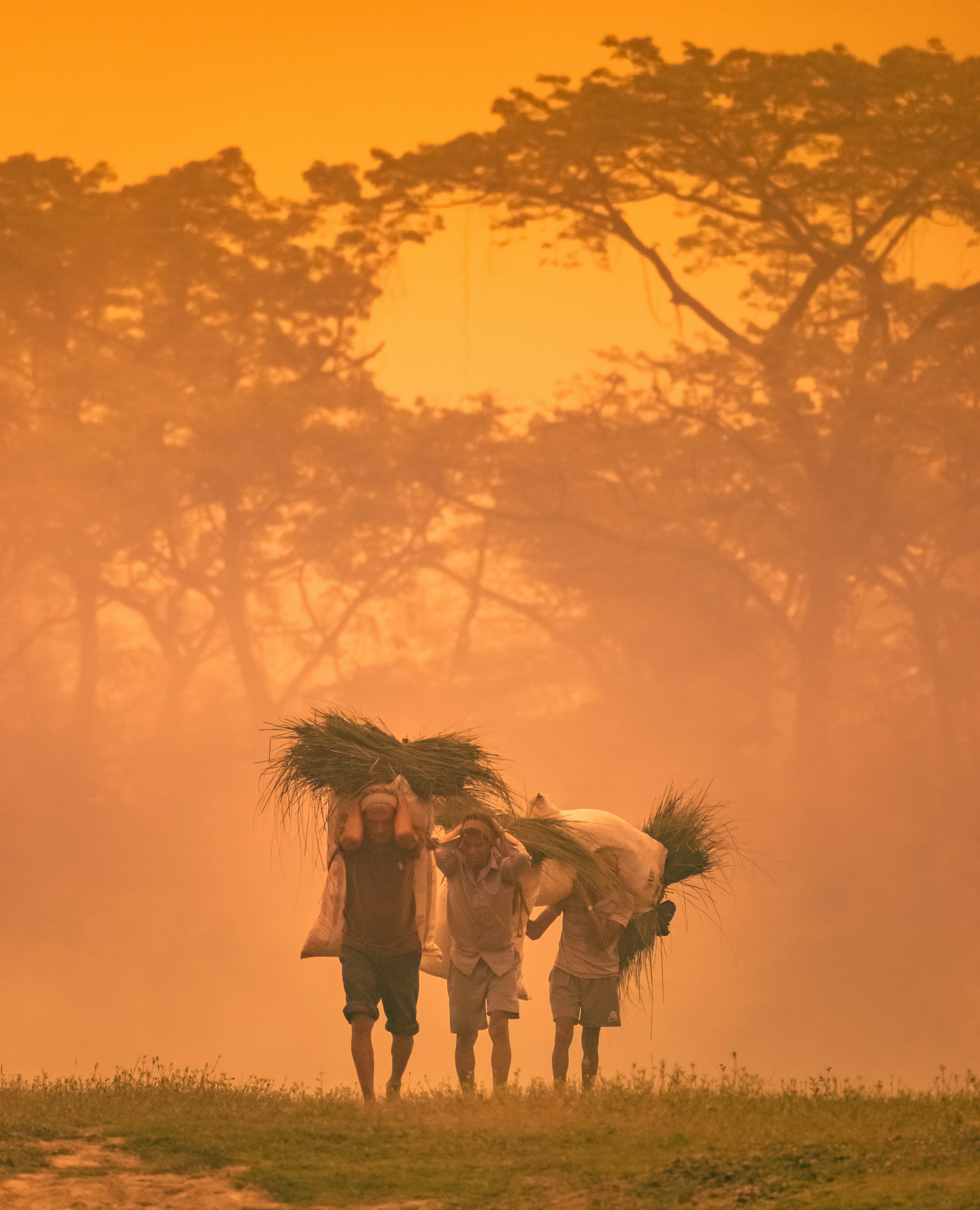
The wildlife gets the headlines, but Chitwan's buffer zone is Tharu country, and has been for generations before the park existed. Their villages sit right against the forest edge — a relationship with the land that predates the national park by centuries.
Walking through a Tharu village is a different register from the safari itself. Houses are built low, with mud-plastered walls and thatched roofs designed for the humidity, often decorated with painted geometric patterns marking the household. Evenings usually bring a stick dance — the Sakhiya, performed with real rhythm and real crowds of villagers, not staged for a bus tour. It's one of the few cultural performances in Nepal that still functions as a community event first and a visitor experience second.
Food is where the culture is easiest to actually taste. Ghungi — a snail curry pulled from the rice paddies and cooked with mustard oil and local spices — is the dish most associated with the Tharu kitchen. Dhikri, steamed rice-flour dumplings, and Bagiya, a rice-flour dessert, round out a meal that looks nothing like the dal bhat served further north. If your guide knows a family well enough to arrange an actual invitation rather than a scheduled program, that's the version worth asking for.
Bengal Tiger vs. White Tiger vs. Malayan Tiger
A white tiger isn't a separate species or subspecies — it's a Bengal tiger carrying a rare recessive gene that suppresses orange pigment in its coat. White tigers don't occur in the wild in Nepal, or anywhere else in meaningful numbers; nearly all alive today exist in captivity, descended from a small number of individuals bred specifically for the trait.
The Malayan tiger, by contrast, is a genuinely distinct subspecies found only in Peninsular Malaysia and notably smaller than the Bengal tiger, which is native to Nepal, India, and Bangladesh. What you're looking for in Chitwan is the Bengal tiger in its natural colouring — the one that actually belongs to this landscape.
Naresh's Take
I think about Emily's story more than most, because it's the clearest example I have of what unhurried travel actually earns you. Not a checklist completed. A tigress and four cubs, walking past two people who had done nothing that day except wait.
If a tiger sighting is genuinely why you're coming to Chitwan, say so when you enquire. We'll talk through whether it makes sense to add tracking days on top of the standard three-day safari, based on your season and chosen lodge — not sell you a promise nobody can honestly make.
Frequently Asked Questions
Can you see Bengal tigers on a Chitwan wildlife safari?
Yes, though sightings are never guaranteed. Chitwan's tiger population reached 145 in the July 2026 national census — the highest of any protected area in Nepal — and odds improve significantly with more time in the park and a guide who tracks rather than drives.
What does a luxury Chitwan wildlife safari cost?
Park entry runs about $15 per day. Our private, guide-led safari starts at $895 per traveller for three days at the Silver tier, staying at Siddhartha Vilasa Banbas, rising to $2,300 at the Platinum tier with a stay at Meghauli Serai, a Taj Safari property. Extended tracking days for a real shot at a tiger sighting are priced separately based on availability.
How many days do you need in Chitwan to see wildlife?
A standard visit runs 2–3 days and covers the park's core experiences well. For a real chance at a tiger sighting, we recommend extending with one to two additional days built specifically around patient, unhurried tracking rather than more jeep hours.
What is the best time of year to visit Chitwan?
Spring (March–May) and autumn (September–November) offer the clearest visibility and most active wildlife. Winter mornings can bring fog; the June–August monsoon is best avoided.
What other wildlife can you see in Chitwan besides tigers?
The greater one-horned rhinoceros, gharial crocodiles, wild elephants, sloth bears, leopards, four deer species, and over 500 bird species.
Is Chitwan safe and suitable for a luxury trip?
Yes. Safaris are guided, lodging is comfortable across all three of our tiers, and the park's Terai terrain is rated easy in difficulty, making it accessible to most travellers regardless of trekking experience.
What permits are required to enter Chitwan National Park?
Foreign visitors need a Chitwan National Park entry permit, priced at NPR 2,000 per day, arranged through your operator or on arrival. No separate visa category is required beyond a standard Nepal tourist visa.
Where can I book a private luxury Chitwan wildlife safari?
Everest Luxury Holidays runs private, guided Chitwan safaris across three tiers, with the option to extend for dedicated tiger-tracking days once we know your dates and priorities.
Conclusion
A luxury Chitwan wildlife safari isn't defined by the resort you choose, though ours range from a comfortable stay to a fully inclusive one at Meghauli Serai, a Taj Safari property. It's defined by whether your itinerary leaves the forest enough time to show you something real. Nepal's tiger population has more than tripled since 2010, and with 145 of those tigers now in Chitwan, it's never been a better time to build a trip that gives those odds a genuine chance to matter.
Get in touch and tell us how much time you have, whether a tiger sighting is the priority, and we'll build the itinerary around it — jeep, canoe, and Tharu evenings as standard, and treehouse stillness for those who want the odds Emily had.