Most guides answer the wrong question. They tell you how many days it takes to see Bhutan, a checklist stacked against a calendar. That's backwards. The real question is how long it takes to be inside a place before you leave it, and Bhutan is built, deliberately, to punish anyone who tries to rush that.
I've built Bhutan trips at four days and at ten. The four-day trips work when they're honest about what they are. The longer ones work when there's a real reason behind the length. What doesn't work is picking a number off a brochure without understanding the one thing that actually shapes every Bhutan itinerary: the Sustainable Development Fee.
The Number Everyone Mentions and Nobody Explains Properly
Bhutan charges $100 per person, per night. That rate is confirmed through August 31, 2027, on top of a one-time $40 visa fee. Since January 2026, a 5% GST also applies to tour services, hotels, guiding, and transport, though not to the SDF itself, which remains a flat government levy separate from whatever your operator charges.
| Trip Length | SDF (per person) | Visa Fee | GST on services |
|---|---|---|---|
| 3 nights | $300 | $40 (one-time) | 5% of package cost |
| 5 nights | $500 | $40 (one-time) | 5% of package cost |
| 9 nights | $900 | $40 (one-time) | 5% of package cost |
| 12 nights | $1,200 | $40 (one-time) | 5% of package cost |
This isn't a hidden tax bolted onto a cheap destination. It's how Bhutan runs "high value, low volume" tourism on purpose- the same philosophy our Bhutan tours are built around. Every night costs the same $100 whether you spend it stuck in a van between valleys or sitting in a farmhouse kitchen in Punakha. The fee doesn't care how the day goes. You should.
4 Days: The Ultimate Bhutan Tour, Done Properly
Our Ultimate Bhutan Tour in Luxury runs 4 days and 3 nights, from $3,535 per person, and it's honest about what it is: Paro and Thimphu, unrushed, rather than a chase across five valleys.
What four days actually looks like:
- Day 1 — Paro: Arrival, the Paro Dzong, and the National Museum, timed so you're not fighting jet lag through either.
- Day 2 — Thimphu: A full day in the capital — the Buddha Dordenma statue at first or last light, when the crowds thin, and an hour at the Choki Traditional Art School.
- Day 3 — Tiger's Nest: The Taktsang hike, plus a home-cooked lunch at a family farmhouse instead of a tour-group restaurant.
- Day 4 — Departure: An unhurried morning before the flight out.
What this length doesn't include is Punakha, and I won't pretend otherwise. I'd rather give you two valleys properly than three valleys badly.
6 Days: Where Bhutan Actually Opens Up
This is where most first-time travellers should land, and it's the length behind our Signature Bhutan Tour — 6 days, 5 nights, from $5,999 per person.
A sketch of the six-day arc:
- Day 1 — Paro: Arrival and first orientation.
- Day 2 — Thimphu: A full second day in the capital.
- Days 3–4 — Punakha: The valley most first-time itineraries skip. Chimi Lhakhang, the countryside, and the Punakha Dzong at the confluence of the Mo Chhu and Pho Chhu rivers.
- Day 5 — Back to Paro: The Tiger's Nest hike.
- Day 6 — Departure: A final unhurried morning.
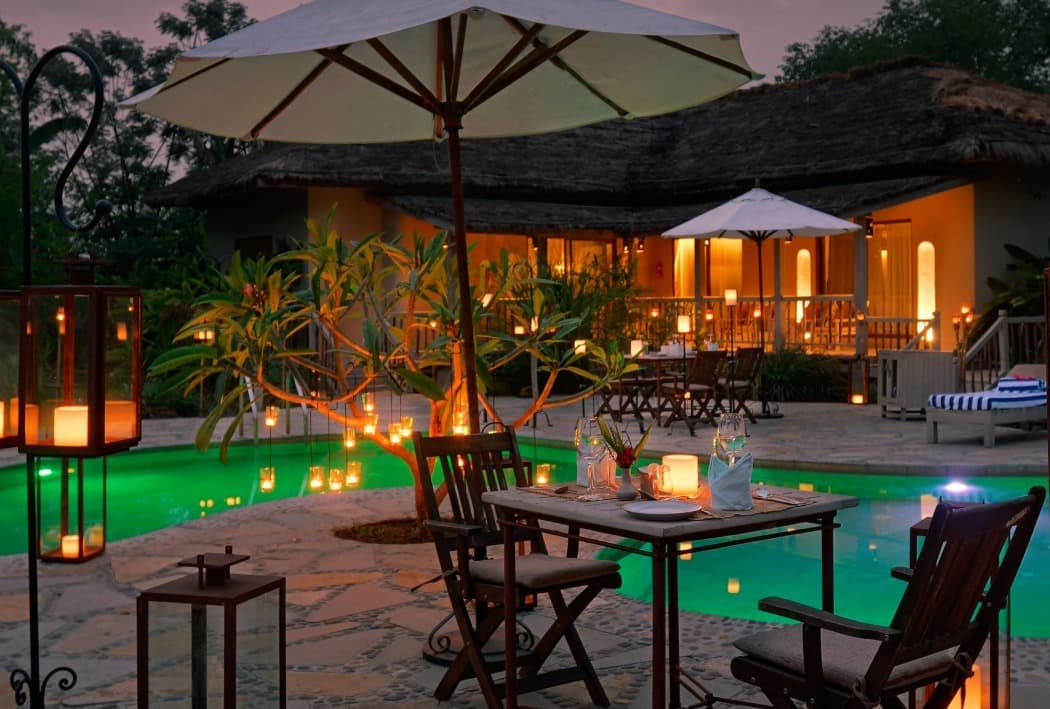
The lever that makes six days feel longer is the transfer between valleys. This is also the bracket where lodge choice starts to matter as more than a place to sleep — we partner with Six Senses Punakha, not for its spa menu but because it sits on the Mo Chhu river in Bhutan's most culturally rich valley. If you're weighing that against Amankora, we've laid out the real difference in our Six Senses Bhutan guide and our Amankora Bhutan guide — worth reading both before you choose.
8–12 Days: What Central Bhutan Actually Asks For
Past a week, the itinerary moves east into Bumthang, and the character of the trip changes with it. This is Bhutan's spiritual heartland — Jambay Lhakhang and Kurjey Lhakhang are two of the oldest temple complexes in the country, both still functioning as living sites of worship rather than museum pieces, and Jakar Dzong sits above the valley as the region's administrative and religious anchor. From Bumthang, most extended itineraries loop toward Gangtey and the Phobjikha Valley — wide, glacial, and quiet in a way Paro and Thimphu no longer are. If your dates fall between late October and February, this is also where the black-necked cranes migrate down from the Tibetan plateau, a sight genuinely worth timing a trip around.
We don't run a fixed template for this bracket. A ten-to-twelve-day central Bhutan trip typically pairs three or four nights in Bumthang with the temple complexes and a slower village pace, two or three nights around Gangtey for the valley and the cranes if the season allows, and the usual Paro–Thimphu–Punakha stretch bookending it. But the actual shape depends on what you're there for — some travellers want every temple in Bumthang in sequence, others want two temples and three long, unstructured afternoons. Our guide in Bumthang, Kinley, has guided long enough that the monks know him by name, and the pacing here gets built around what draws you specifically, not a packaged itinerary. If ten to twelve days in central Bhutan is what you're picturing, that's a conversation to customise your own trip rather than a page to browse.
10 Days: When a Single Purpose Justifies the Length
Our Fly Fishing Expedition in Bhutan's Sacred Rivers runs 10 days and 9 nights, from $21,065 per person (based on 4 adults sharing) — and it's the clearest example on our roster of duration justified by one specific, non-sightseeing experience rather than "seeing more." Nobody adds four extra nights in Bhutan to see more temples at this price point. They add them because the rivers reward patience, and because a river trip has its own rhythm that a sightseeing itinerary simply doesn't share.
When Trekking Changes the Math Entirely
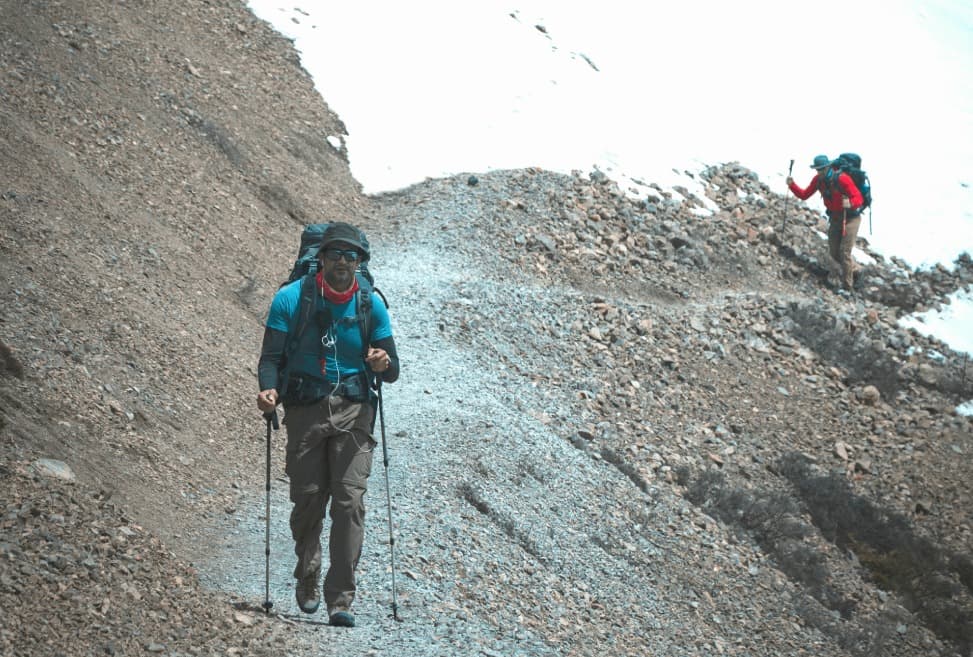
Trekking days in Bhutan don't compress the way sightseeing days do. The terrain sets the schedule regardless of pace or budget. The Druk Path Trek, linking Paro to Thimphu over a string of high-altitude lakes, runs five to six days. It's short enough to work as a genuine add-on to a cultural itinerary, without demanding you restructure the whole trip around it.
The Laya-Gasa Trek is a different proposition entirely. Depending on the operator and how much acclimatisation and cultural time gets built in, it typically runs 12 to 18 days, an extension of the Jomolhari route that pushes north toward the Tibetan border before descending to the hot springs at Gasa. This isn't a trip you slot into a week; the trek dictates the length, and the length dictates everything else about the trip's shape. We've covered both routes, and where they fit into a broader Bhutan itinerary, in our guide to Bhutan's must-visit places.
A Quick Way to Decide
Skip the checklist logic and match yourself to whichever of these sounds closest to your trip:
You're already in Nepal, or planning to be, and Bhutan is the second leg.
Six to seven days. Fly Kathmandu to Paro, cover Paro–Thimphu–Punakha at the pace I laid out above, fly back out. This is the most common shape of trip we build, and it doesn't need central Bhutan to feel complete.
This is your one trip to Bhutan, dedicated, no Nepal attached.
Seven to nine days minimum. You're paying for the Paro flight and the SDF regardless, so there's little reason to leave without at least reaching Punakha and giving Paro proper time either side of the Tiger's Nest hike. Check our Nepal-Bhutan Combined Journey.
You've been to Bhutan before, or you know you want fewer places held longer rather than a circuit.
Ten to twelve days, built around Bumthang and the Phobjikha Valley. This is a return-trip shape, not a first-trip one.
You're timing the trip around something specific — the black-necked cranes, a festival date, a trek.
Let that event set the length, not the other way around. The crane migration only runs late October through February, and only in Phobjikha, so a nine-day trip in April built to see cranes is a wasted nine days. Check the date first, then build the itinerary around it.
You want to trek, not just sightsee.
This overrides everything else above. Druk Path adds five to six days on top of whatever cultural time you build in. Jomolhari adds nine to twelve. Decide the trek first, then treat cultural days as the shorter half of the trip, not the other way around.
If none of these match cleanly, the honest default is still six to seven days connecting from Nepal — it's the shape that works for the widest range of first-time travellers without over- or under-building the trip.
Frequently Asked Questions
What's the minimum recommended length for a first-time Bhutan trip?
Four days, covering Paro and Thimphu without treating either as a drive-through. That's what our Ultimate Bhutan Tour is built for. Six days, our Signature Bhutan Tour length, is where most first-timers get the fuller picture, Punakha included.
Is there a package for a short trip to Bhutan?
Yes. Our Ultimate Bhutan Tour is 4 days and 3 nights, built honestly as a first taste rather than the full country, and a good fit if Bhutan is an add-on to a longer Nepal trip.
What does a trip to Bhutan cost, including the daily fees?
The SDF alone runs $100 per person, per night, plus a one-time $40 visa fee, plus 5% GST on whatever your operator charges for lodging, guiding, and transport. Our Bhutan tours page breaks down exactly what the SDF funds.
Do luxury Bhutan tour packages usually run longer or shorter than standard ones?
Often shorter. Helicopter and lodge placement mean a well-designed six-day trip can cover what a road-bound nine-day trip needs to reach the same places. Length was never the marker of luxury in Bhutan. Pace and access were.
What's the recommended duration for a trekking holiday in Bhutan?
Five to six days for the Druk Path Trek. Twelve to eighteen days for the longer Laya-Gasa Trek, depending on how the acclimatisation and cultural days are built in. Trekking days run on the terrain's schedule, so this is the one bracket where length isn't really a choice.
When should I visit for the black-necked crane migration?
Late October through February, when the cranes come down from the Tibetan plateau to the Phobjikha Valley. That's a strong reason on its own to build a trip in the 8–12 day central Bhutan bracket rather than stopping at Paro and Thimphu.
How many days do you need to see Bhutan's main cultural sites?
Seven to eight days covers Paro, Thimphu, Punakha, and the Tiger's Nest without rushing any of them. Past ten days, you're moving from "main sites" into Bumthang's older, quieter temple complexes, a different register of trip entirely.
Where This Leaves You
Bhutan doesn't reward over-planning any more than it rewards showing up without one. It rewards knowing what the trip is actually for, then building a length where every SDF night earns its cost. Four days can be an honest, complete first taste if that's genuinely what you want. Six days can hold more than twelve spent moving too fast between valleys. Twelve or more can be worth every dollar of the fee if there's a real reason behind it, a trek, a crane migration, a festival date, rather than a vague sense that longer automatically means better.
The number isn't the decision. What you're actually going for is. Get that right first, and the length tends to answer itself.
You can look through everything we've written on Bhutan to see how each of these brackets becomes an actual trip, whether that's four days on the Ultimate Bhutan Tour, a longer cultural circuit through Punakha and Bumthang, or a trek added on top. If you're still weighing where Bhutan fits against a Nepal itinerary, or what season makes sense for what you want to see, our safety and planning guide is a good next stop before you lock in dates.