I've spent 4+ years building trips across Nepal and Bhutan, and most "combined" itineraries I see from other operators are just two separate bookings pushed into one PDF. A week of Everest, a week of Tiger's Nest, a flight in between to make the math work. Nobody has actually asked why the order matters, or whether one country should come before the other at all.
When I put together our Nepal and Bhutan Combined Journey, the goal was never to cover more ground. I wanted one country to set up the other, so that by the time a guest lands in the second half of the trip, they're seeing it through eyes that the first half has already trained. That only works if you build the sequence on purpose, which most itineraries don't.
Nepal and Bhutan Look Alike Until You've Actually Lived in Both
On paper, Nepal and Bhutan sound interchangeable. Both sit in the Himalayas. Both carry a strong Buddhist influence. Both put a mountain on the cover of every brochure. I grew up in Southampton and first crossed into Nepal at thirteen, and even as a teenager I could tell within a day that whatever I'd imagined "the Himalayas" to mean didn't hold once I actually got there — and it certainly doesn't hold as one description for two countries.
Kathmandu Doesn't Wait for You
Nepal doesn't rearrange itself around visitors. You land in Kathmandu, and within the hour you're in traffic that has its own logic, past vendors who aren't performing for tourists, past kids playing cricket in the same alleys their fathers played in. Nothing about that scene changes because a plane full of travellers just landed. That's what makes Nepal feel alive, and it's also why it takes a physical toll on people who expect their first Himalayan trip to be gentle.
Bhutan Built Its Calm on Purpose
Bhutan's stillness isn't an accident of geography. The government caps annual visitor numbers, requires every traveller to book through a licensed operator with a guide, and charges a daily Sustainable Development Fee that goes toward free healthcare and free education for Bhutanese citizens. I go into more detail on how that policy actually works on our Bhutan tours page, because it's usually the first question guests ask when they see the price difference. Nepal lets almost anyone walk in. Bhutan decides in advance how many people it wants inside its borders on a given day, and builds the whole experience around that decision.
Neither approach is better. They're just different enough that experiencing both back to back gives you something a single-country trip can't — a genuine sense of what each place chose not to be.
The First Seven Days: Nepal Without a Filter
Kathmandu: The First 48 Hours
I open every version of this journey in Kathmandu, at full intensity, and I don't ease guests into it. The drive from the airport alone tells them what kind of trip this is — motorbikes cutting lanes, vendors calling out prices, kids playing cricket in alleys that have looked the same for decades. Early the next morning we're at Boudhanath, watching monks circle the stupa as part of a routine they've kept for years, not staged for anyone's camera. Guests who expect a gentle first day usually text their travel companions something like "this is a lot" by lunchtime. That reaction is the point, not a problem to solve.
The Everest Flight
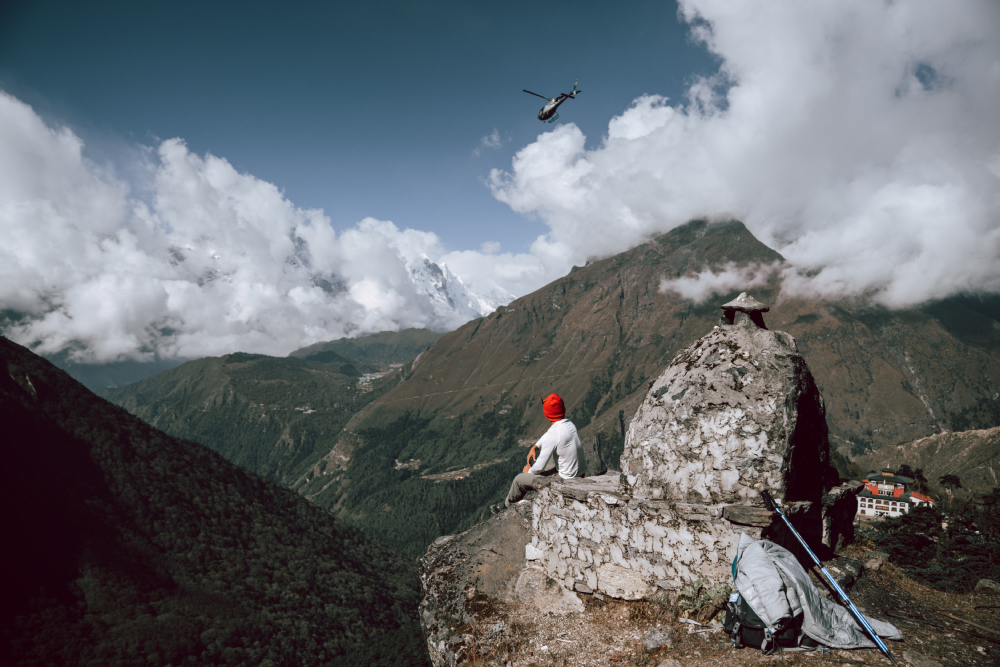
Most guests take an Everest helicopter flight to Everest View Hotel on day three, departing Kathmandu before sunrise so the light is still low over the valley when the helicopter climbs. The hotel sits at 5,545 metres, and the flight itself puts Everest, Lhotse, and Ama Dablam in the window in roughly the order I just named them, depending on the route that morning. I've flown this more times than I can count, and I still watch first-timers go quiet the moment Everest actually appears — not the summit alone, the whole ridge line. Breakfast at the hotel afterwards is almost incidental. The flight is what people remember.
Into the Annapurna Foothills
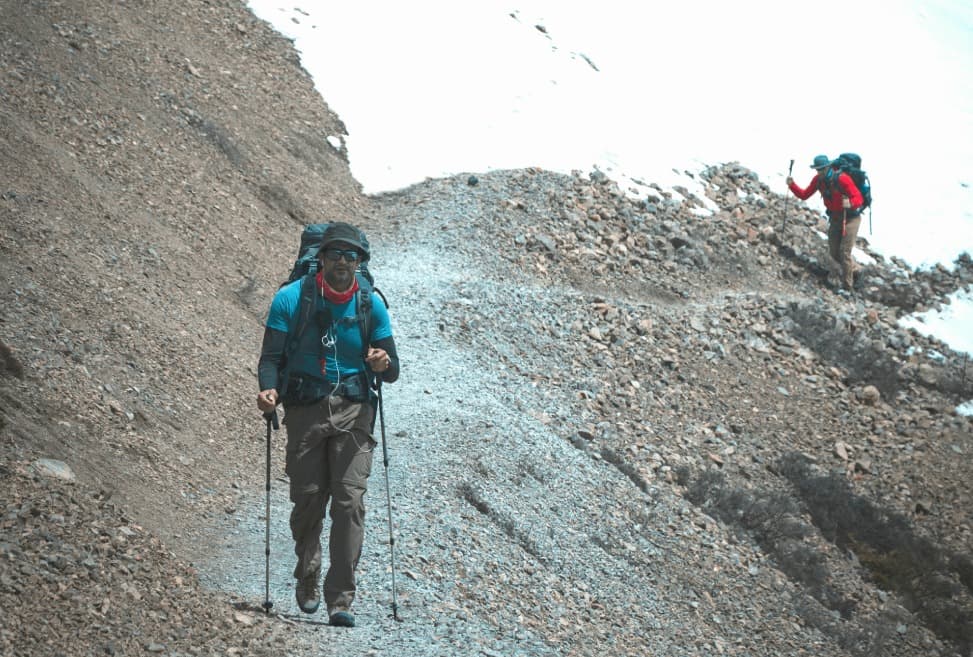
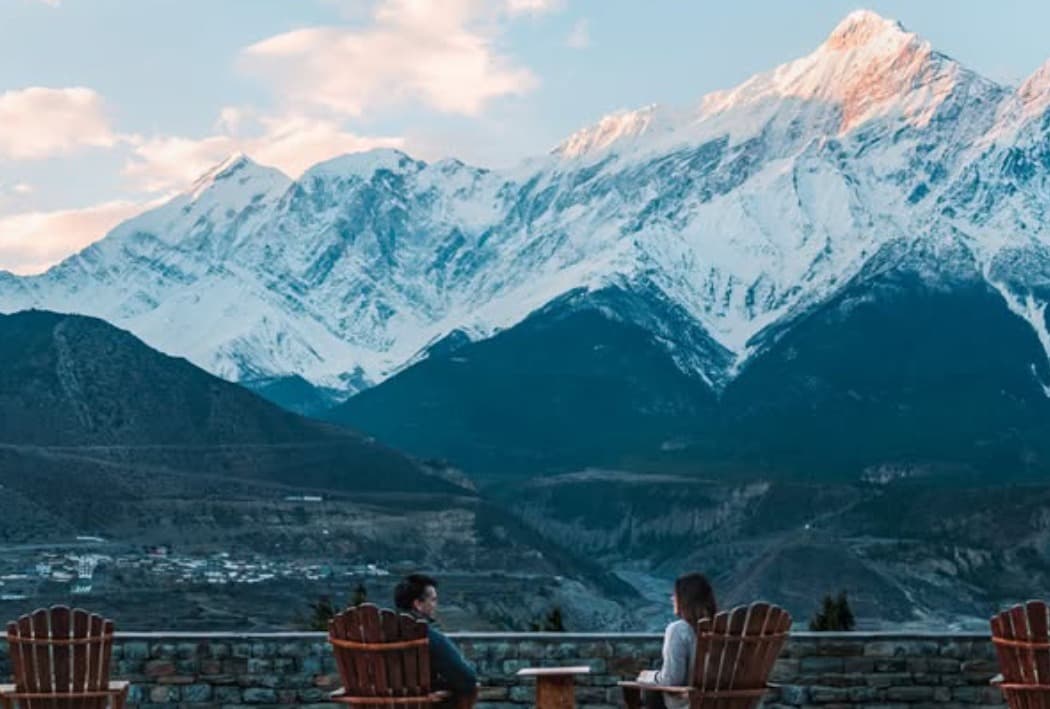
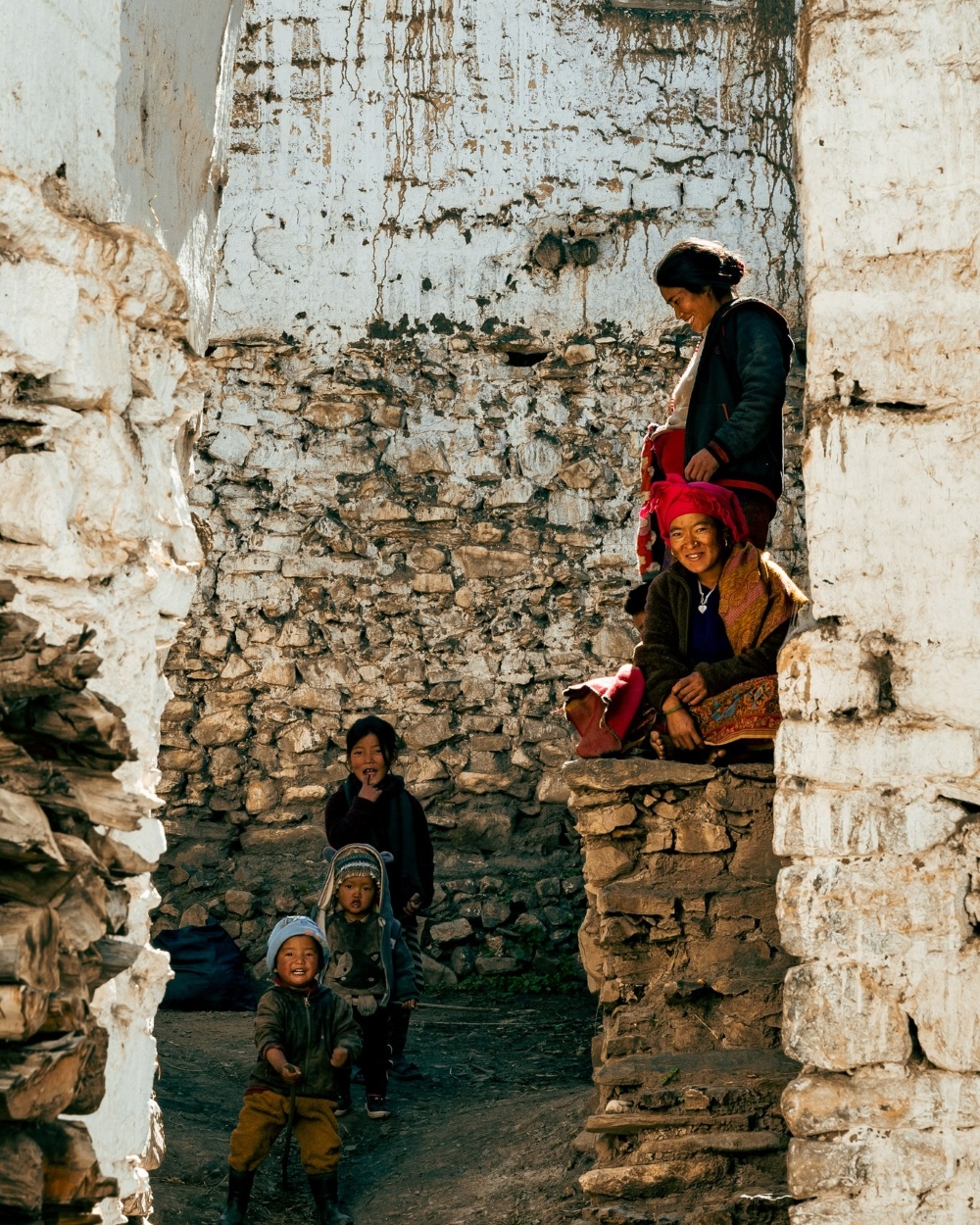
From there we fly to Pokhara and drive into the Annapurna foothills to walk a section of the Annapurna Heritage Trail. This isn't a manufactured "cultural walk" — the stone paths guests are walking on are the same routes local farmers use daily to move grass for their cattle or carry produce toward market. The walking itself runs three to five hours depending on the day and the group's pace, with enough elevation change through the terraced hillsides that I always ask guests about their general fitness before we lock this section in. Guests spend the night in Ghandruk, staying with a family that's run its lodge the same way for years, with Machhapuchhre visible above the rooftops most evenings if the cloud cover cooperates.
Closing the Nepal Half at Pashupatinath
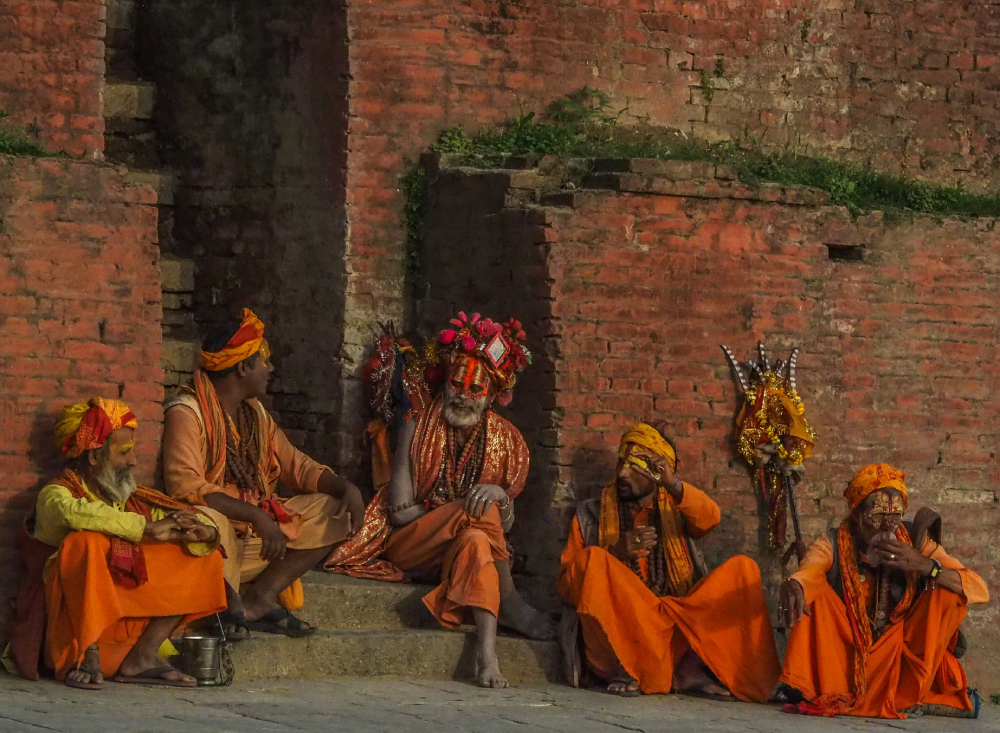
We close the Nepal portion back in Kathmandu, at Pashupatinath for the evening Shiva Arati along the Bagmati. Cremation ghats are visible from where we stand, and pilgrims are usually bathing nearby while the ceremony runs. I don't move this stop earlier in the trip, and I don't soften it once we're there — it's one of the more direct encounters with how Nepal treats death and ritual as public rather than private, and I think guests should sit with that discomfort rather than have it explained away. Some guests find it the most affecting evening of the entire seven days.
What Guests Are Carrying Onto the Flight to Paro
By the time we board for Paro, guests have done real trail distance, eaten meals cooked by families rather than kitchens staffed for tourists, and spent a week inside a city that never once adjusted its pace for their benefit. That's not incidental to the trip. It's the specific condition I need them in before Bhutan starts doing its half of the work.
What Bhutan Gives You Second
The Descent Into Paro
Paro's airport sits in a valley narrow enough that only a small number of pilots worldwide are certified to land there, and the approach involves banking between ridgelines close enough that passengers on either side of the plane can usually name the mountain they're looking at. I've taken this flight probably close to sixty times over the years, guiding groups in and out of Bhutan, and there's a specific moment on final approach when the cabin goes quiet, usually somewhere around the second bank. Guests ask me afterwards whether that's normal or whether something felt off. It's normal. It's just what that runway does to people.
Thimphu: The First Full Day
Thimphu's mornings start at the National Memorial Chorten, where locals circle the stupa, turning prayer wheels the same way their parents did, and their parents before them — this isn't arranged for visitors; it's simply what the city does at 7 am. From there, our guide takes guests into Thimphu's markets and monastery complexes at a pace that would feel slow anywhere else. In Bhutan, on day eight of a thirteen-day trip, it reads as the first real breath the itinerary has allowed.
Punakha: Where the Trip Slows Further
Two things anchor the Punakha days. Chimi Lhakhang is the older of the two — a fertility temple dating back to the 1400s, where local couples still travel to be blessed, not as a tourist reenactment but because people in this valley actually do this. The other is a farmhouse visit I've written about in detail elsewhere in this piece, where a family I've known for years pours ara for whoever's sitting at their table. I keep the Punakha schedule loose on purpose, without a fixed time to leave or a next stop queued up immediately after. Guests coming off a week in Nepal tend to sit with that unstructured time differently than someone arriving fresh into Bhutan would. I've watched both, enough times now to trust the difference is real and not something I'm imagining.
Paro Again: Taktsang and the Close of the Trip
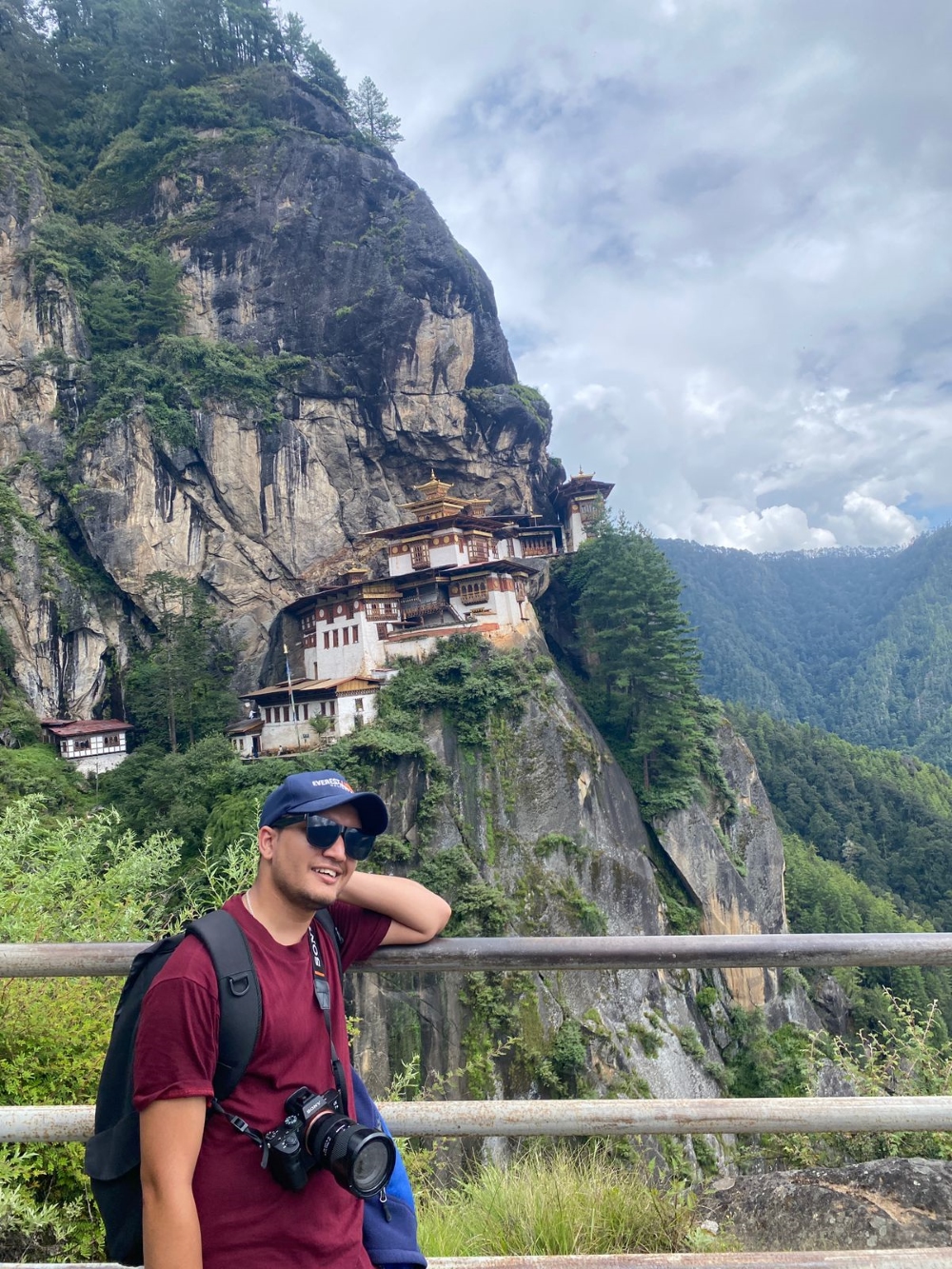
Paro finishes with the hike to Taktsang, the Tiger's Nest monastery, 900 metres above the valley floor — an experience I've written about in more depth in our guide to Six Senses Bhutan and in our breakdown of Amankora's five-lodge circuit for guests deciding between the two lodge networks. It's roughly five to six hours round trip and gains about 900 metres from the valley floor. I schedule it last deliberately. The climb itself does something to how the monastery lands on you once you're standing in it, and I think that gets lost when operators sell this as a rushed half-day add-on from Kathmandu, which happens more often than it should.
Why Sequence Matters Here
None of the above changes if you land in Bhutan first instead of second. The chorten still turns, the ara still gets poured, Taktsang is still 900 metres up. What changes is the guest standing in front of it. A person who's spent the prior week walking real trail distance and eating in family kitchens brings a different kind of attention to a quiet Bhutanese morning than someone stepping off a flight from home with jet lag still in their legs.
Why the Order Matters
What the Nepal Week Is Actually Doing
I don't really think of the Nepal half as a warm-up act or a set of attractions to get through before the "real" trip starts. Functionally, it's conditioning. Seven days of trail walking with actual elevation gain, meals cooked by families rather than kitchen staff, and a week spent inside a city that carries on exactly as it would with or without visitors present. Guests arrive at day seven tired in a way that's closer to stamina than exhaustion, and more alert than they were on day one, not less.
How Bhutan Reads Once That's Behind You
Guests who've just come from that week tend to describe Bhutan's pace using the word "relief," and I've noticed they only use that word when Nepal came first. A guest arriving in Bhutan cold, without Nepal behind them, usually describes the same slower pace as "nice" or "peaceful" instead — which isn't wrong, just a different register entirely. The mandatory guide, the quieter mornings, the lack of anything urgent on the schedule reads as considered rather than restrictive specifically because of what came right before it.
What Happens Running It Backwards
I tried the reverse order for a handful of guests early on, mostly because they asked for it directly. It didn't take many trips before I stopped offering it. Guests who start in Bhutan settle into its calm as their baseline expectation for what a Himalayan trip should feel like. Then Nepal follows, and Kathmandu's traffic, noise, and general lack of interest in accommodating a visitor's schedule reads as disorganised rather than alive. I had one couple, genuinely happy through their entire Bhutan leg, get visibly irritated by Kathmandu's traffic on day eight of a Bhutan-first itinerary — the same traffic that Nepal-first guests barely mention. Nothing about the city changed between those two trips. Only the order did.
Why I Don't Treat This as Flexible
Almost everything else in this itinerary bends to what a guest wants — which lodges, how much walking, which valleys, how much time in temples versus markets. The order doesn't bend, and it's not really a stylistic preference on my part. It's closer to a load-bearing wall in how this trip is built. Move it and the rest of the design stops functioning the way it's meant to, no matter how good either half is when judged on its own.
The Farmhouse in Punakha, and Why I'm Including It Here
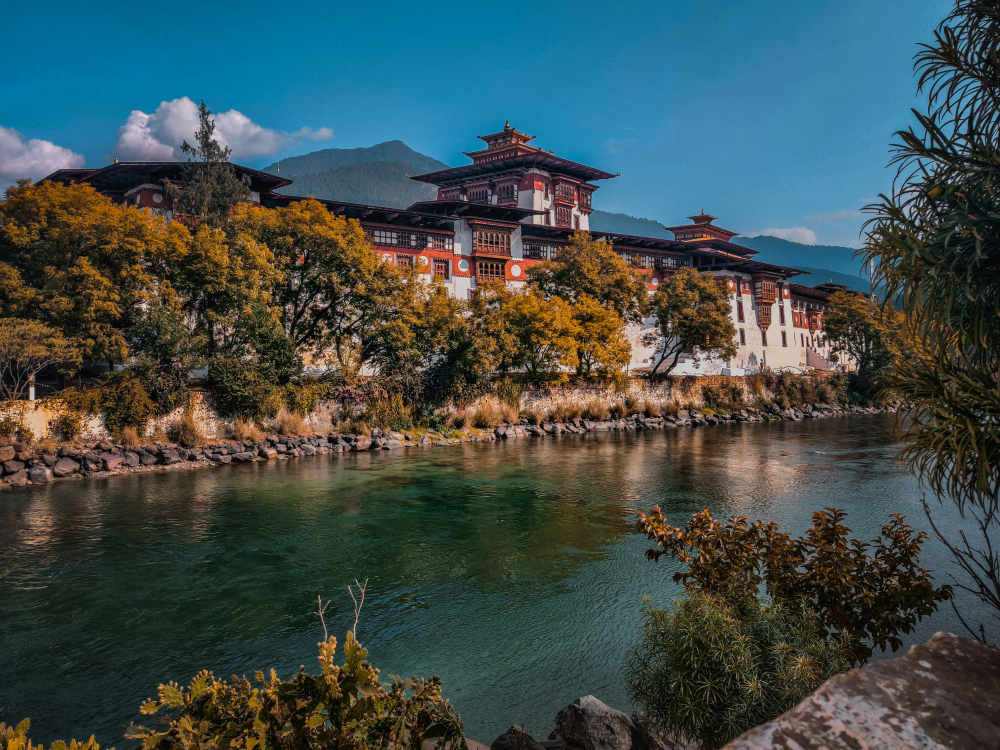
I want to explain why this particular afternoon belongs in an article about combining two countries, rather than treating it as a nice anecdote dropped in for colour.
Everything I've argued so far is a claim about sequencing — that Nepal changes how a guest experiences Bhutan. That claim is easy to make and hard to prove without a concrete example, so here's the one I keep coming back to.
On day ten, after a morning hike to Khamsum Yuelley Namgyal Chorten, our Bhutan guide, Phub Tsering, brings guests to a farmhouse in the Punakha Valley belonging to a family he's known for years. It isn't a booked cultural stop. It's a visit he makes because these are people he'd see regardless of who was travelling with him that week. The family pours ara, the local rice spirit, in a kitchen with a central fire, and nothing about the next twenty minutes is scripted.
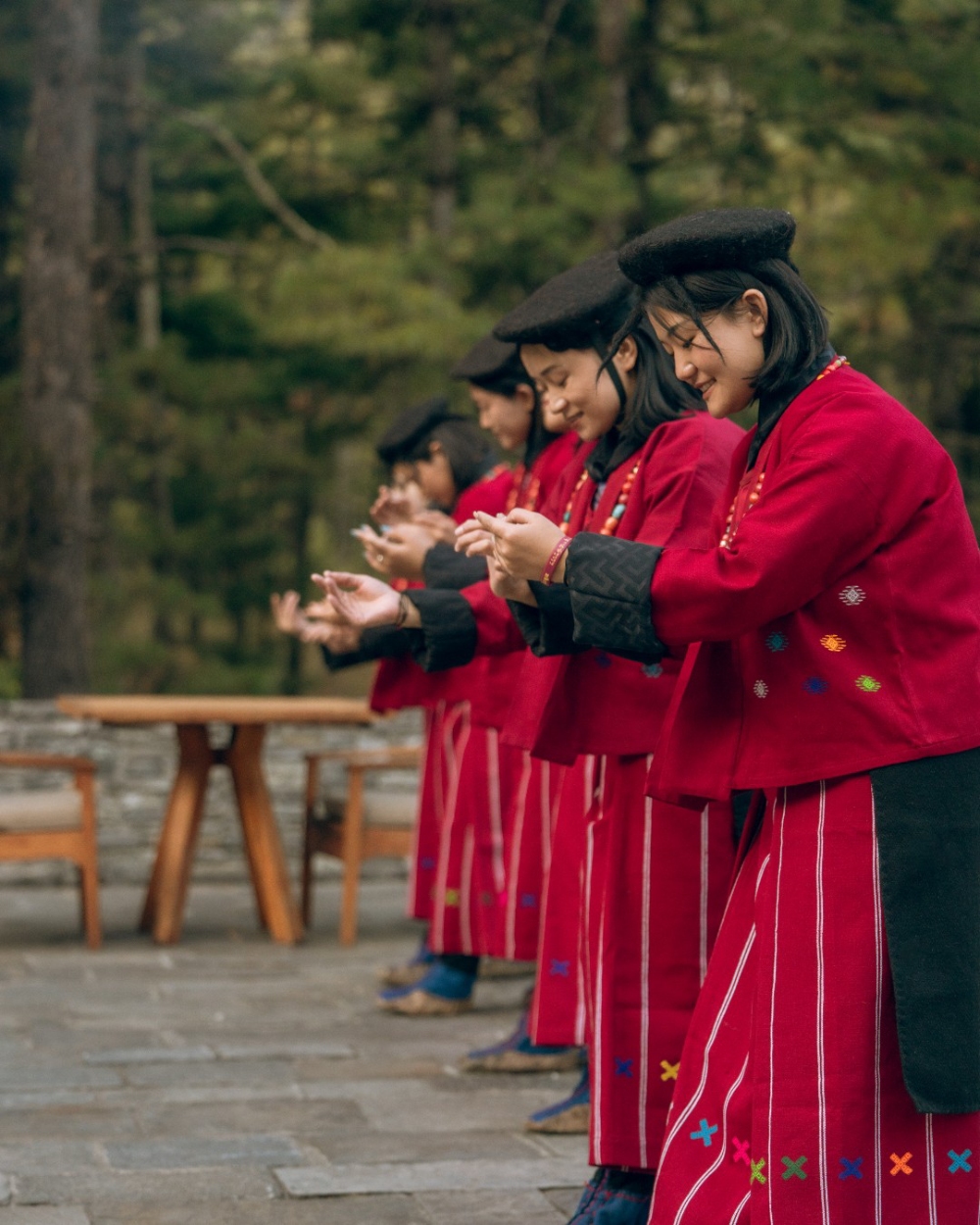
I've stood in that kitchen with guests who arrived in Bhutan directly from a long-haul flight, with no Nepal beforehand. They're polite about it. They take a photo, thank the family, and move on to the next stop on schedule. I've also stood in that same kitchen with guests who'd already spent a week in Ghandruk eating meals cooked by families who run their own lodges, and who'd spent a week in Kathmandu watching daily life continue without adjustment. Those guests recognise what they're looking at. They know, because Nepal taught them without either of us naming it, what the difference is between something staged for visitors and something genuinely ordinary. That recognition is the entire argument of this article, compressed into one afternoon. It's why the farmhouse is in this piece and not just in the itinerary.
A Trip That Actually Happened This Way
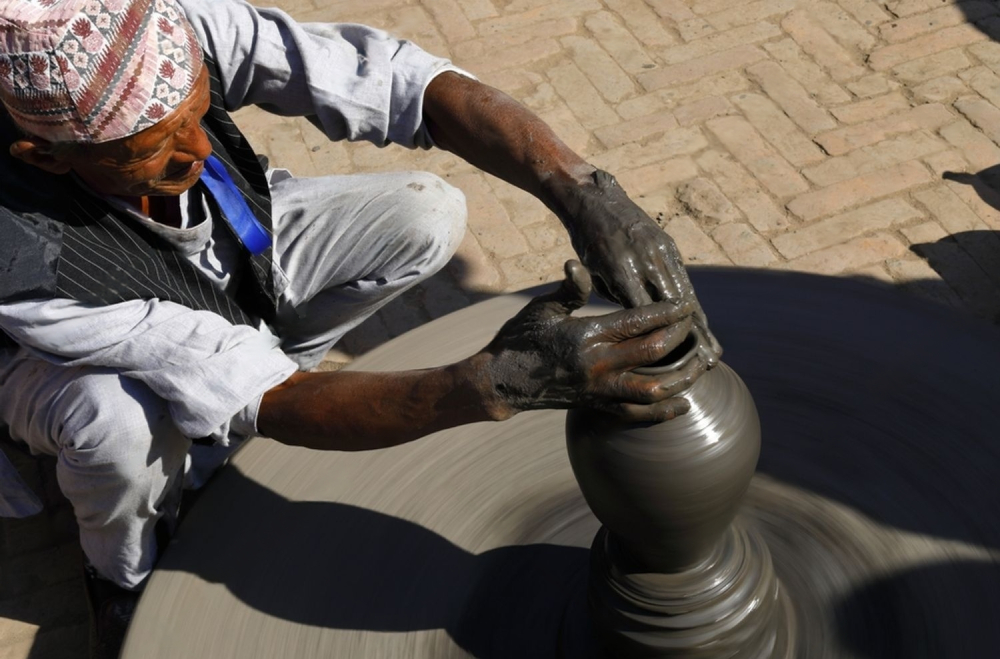
I'd rather point to a specific guest than argue this in the abstract. Marie Fiona travelled with us on this exact route and left a review on our site describing her Nepal and Bhutan trip. Her group did the helicopter flight, a pottery session in Bhaktapur, white-water rafting, and fly fishing in Bhutan, and she named both guides in her review — Rita in Kathmandu and Nima in Bhutan — describing the transfers and guiding as seamless across both countries. You can read her full account on our review page. It's one trip out of many we've run this way, but it's the kind of account I'd point a prospective guest to before I'd point them to anything I write about the itinerary myself.
Thirteen Days of Trip, Not Twenty
I build this journey at 13 days: seven in Nepal, six in Bhutan, with the transition day treated as part of the trip rather than dead time. Go shorter and one country ends up rushed to accommodate the other. Go much longer, and most guests start to tire in a way that flattens the contrast the whole trip depends on. Thirteen days gives Nepal enough time to do its job and Bhutan enough time to do its own, without either half wearing out its welcome.
Some guests want more, and I'll build it when it genuinely serves the trip — an extended trek toward Everest Base Camp, an additional Bhutan valley, timing built around a specific festival. But thirteen days is where I start, because it's the length that lets the sequencing actually do its work.
Who This Trip Is Actually For
This isn't a first Himalayan trip, and I say that directly to anyone who asks. It suits travellers who've already done the obvious version of a big trip — the Maldives, the Amalfi Coast, a group tour through Southeast Asia — and have noticed that the standard luxury product leaves something out. It suits people who want a guide who actually knows the place rather than reciting facts, and who can manage four to five hours of walking a day without treating that as the whole point of the holiday.
It also suits repeat Nepal visitors who've already done Everest Base Camp or the Annapurna Circuit and want the next layer, along with first-timers who have the time and stamina to take on two countries properly instead of skimming one. For guests who'd rather prioritise rest over trekking, I often shift the Nepal half toward The Timeless Way of Wellness in Annapurna and keep the Bhutan structure the same.
What it doesn't suit is anyone trying to check two countries off a list in the shortest possible window. If that's genuinely what someone wants, I tell them directly and build something shorter instead.
Frequently Asked Questions
Can you visit Nepal and Bhutan on one trip?
Yes. The two countries are connected by a direct flight of roughly 45 to 75 minutes between Kathmandu and Paro, and combining them into one itinerary is a common way experienced Himalayan travellers structure a longer trip.
How many days do you need for Nepal and Bhutan together?
I build our combined journey at 13 days, which gives each country a proper arc without either half feeling rushed or the trip overall running long enough to lose momentum. Some travellers extend to 16–21 days to add a specific trek or an extra Bhutan valley.
Should you visit Nepal or Bhutan first?
I run Nepal first and Bhutan second on every version of this trip. Nepal builds a traveller's attention and stamina; Bhutan's structure and stillness then land as a deliberate change of pace rather than the starting point. Reversing the order tends to make Nepal feel chaotic by comparison rather than characterful.
Is a combined Nepal-Bhutan trip more expensive than visiting separately?
Bhutan's daily Sustainable Development Fee applies whether you visit alone or as part of a combined trip, so combining the two countries doesn't double that cost. In practice, sharing logistics, guides, and transfers across one coordinated itinerary is often more efficient than booking two separate trips through two separate operators.
What's the best time of year for a Nepal and Bhutan combined tour?
Spring (March–May) and autumn (September–November) suit both countries well. Spring brings rhododendron blooms in Nepal's foothills and generally clear Bhutanese skies; autumn offers the most stable weather across both destinations and can align with select Bhutanese festivals.
Conclusion
I could sell Nepal and Bhutan as two unrelated bookings. It would be an easier sale, with less to coordinate and no need to explain why one country has to come before the other. But I've watched the difference too many times across two decades to sell it that way. A guest who books Everest and Tiger's Nest as separate trips comes home with two sets of photographs from two unrelated holidays. A guest who does Nepal first and Bhutan second, on one deliberately built itinerary, comes home with a single story where the second half only makes full sense because of the first. That's the entire case for combining them, and it's why I won't sell it any other way.
Ready to see the full day-by-day itinerary? Explore the Nepal and Bhutan Combined Journey or get in touch and tell me your dates, your pace, and what you're hoping this trip gives you. If nothing here fits exactly, I'll customise it until it does.