I first came to Nepal at 13. I didn't understand it then — the noise, the altitude, the way people moved through their days without urgency. What I understood later, after years of walking these trails professionally, is that Nepal doesn't reveal itself to people passing through. It reveals itself to people who walk slowly enough to notice.
That's what a luxury walking holiday in Nepal actually is. Not a trek with better mattresses. A walk designed to place you inside the country — its villages, its rhythms, its silences — with enough comfort that you're never distracted by logistics, only by what's in front of you.
I've walked all 52 districts of Nepal. I run Everest Luxury Holidays from Budhanilkantha, north of Kathmandu, and I've designed walking itineraries for clients who've done the Inca Trail, Patagonia, and the Dolomites. Nepal is different from all of them. Here's how I'd design it for someone who wants to go deep.
What Makes a Walking Holiday "Luxury" in Nepal
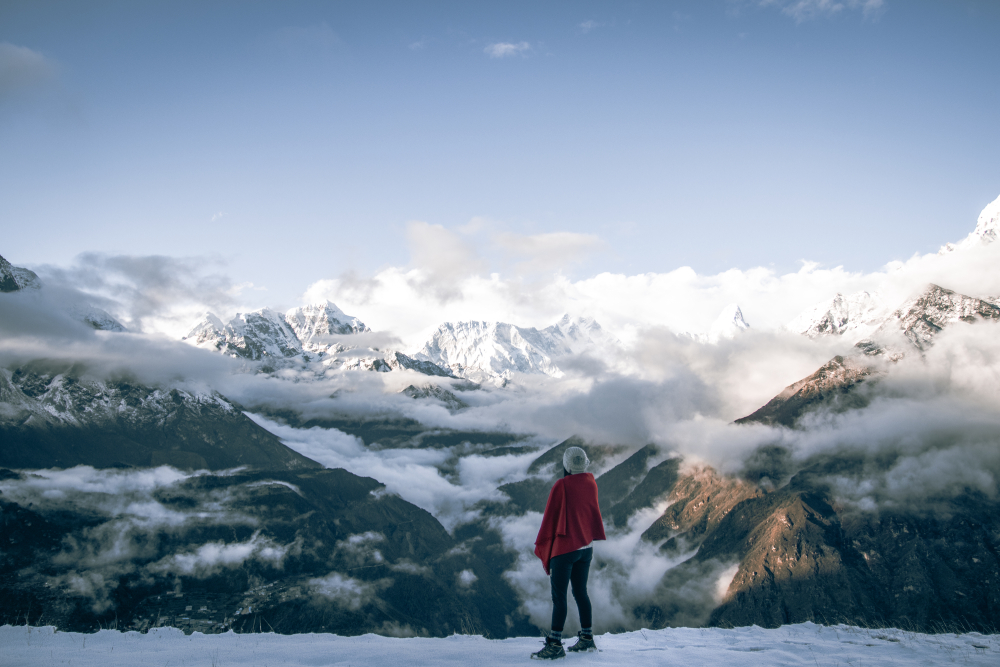
Let me be direct about this because the word gets misused constantly.
Luxury in Nepal is not a thread count. It's not a helicopter transfer to a lodge with a plunge pool (though that has its place). Luxury is the quality of access — to places most tourists never reach, to people who don't perform their culture for cameras, to mornings where the only sound is the trail beneath your feet.
The lodges I recommend are comfortable, sometimes exceptional. But they're chosen because of where they sit, not how they're rated. A room with a direct view of Dhaulagiri at dawn is more luxurious than any five-star hotel in Kathmandu. The right guide is worth more than the most expensive bed.
That's the philosophy behind every route below.
What People Actually Mean When They Ask If Nepal Is "Too Much"
Most UK travellers who contact me have already done their research. They've walked in Tuscany. The Dolomites. Maybe the Camino, or the Scottish Highlands on a good week. They know what a well-designed walking holiday feels like — the rhythm of it, the evenings, the particular pleasure of physical tiredness earned in beautiful country.
And then they look at Nepal, and something hesitates.
It isn't fitness, usually. It's a feeling that Nepal belongs to a different category of travel. Expeditions. Serious trekkers. People with altitude training and a high tolerance for roughing it. That a walking holiday here might become something more effortful than enjoyable.
That hesitation is understandable. It's also, in my experience, almost always based on the wrong version of Nepal.
There are versions of Nepal that are demanding. High passes, crowded trails in peak season, logistics that require constant attention. That exists, and some people seek it deliberately. But that is not the only Nepal, and for most of the travellers I work with, it isn't the right one either.
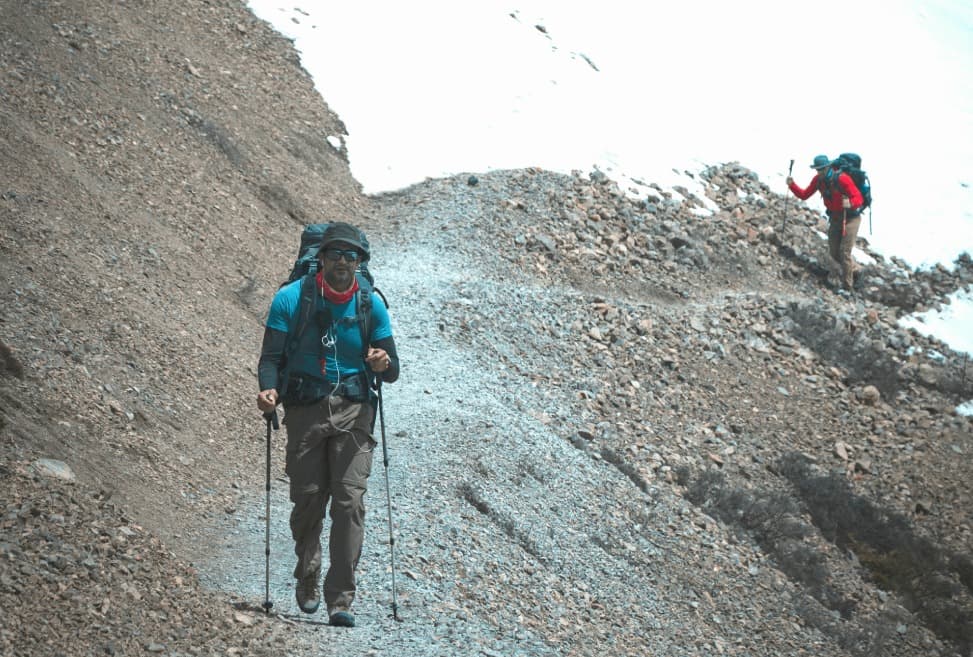
The Nepal I design journeys through has trails that move at your pace — through Sherpa villages below the altitude threshold, along ancient trade routes in Upper Mustang, through the Annapurna foothills where the landscape changes every hour, and the altitude stays well within what you'd encounter at a European ski resort. Eight to twelve kilometres a day. Pack-free. Evenings that are long and comfortable, and quiet.
The question isn't whether Nepal is too much. It's whether you've found the right part of it.
The Difference Between Walking and Trekking in Nepal — and Why It Matters Here
The travel industry uses these words as though they mean the same thing. They don't, and the distinction shapes everything about how a journey is designed.
Trekking is goal-oriented. There's something at the end — a base camp, a high pass, a summit view earned over days of upward movement. The landscape is often remote. Altitude is a variable you manage rather than ignore. The whole experience is organised around an objective.
Walking is different. You're moving through a place, not toward one. What matters is what happens along the way — the village at ten in the morning, the monastery you didn't plan to stop at, the conversation with someone whose daily life bears no resemblance to yours and who, for twenty minutes, treats you as though you're the most interesting thing to happen all week.
Nepal offers both. Most operators sell trekking to people who actually want walking, because trekking is easier to package and price. Our luxury trekking in Nepal exists for those who want the objective. But for travellers who want to be inside a place — genuinely inside it, not passing through on the way to a view — the walking routes are where Nepal becomes something else entirely.
What a Walking Holiday in Nepal Actually Looks Like
You arrive in Kathmandu. It will feel chaotic for about a day — that's universal, and it passes. We don't rush you through it. You spend a night or two in the old city, not as transit but as immersion. The Durbar Squares, the bakeries that have been open for generations, the narrow lanes of Thamel that make no spatial sense until suddenly they do. Kathmandu rewards slowness in a way that most cities don't.
Then you move to your walking base. Where that is depends on what you're looking for — but the common thread is this: altitude stays manageable, days are short enough to leave something in reserve, and the places you walk through are not constructed for walkers. They exist for the people who live in them. You're passing through something real.
Your guide — briefed in advance on your pace, your interests, the things you'd rather not miss — shapes each day without making the shaping visible. The best guiding I've seen in Nepal looks like nothing at all from the outside. The day simply unfolds well.
Evenings at lodges that understand what comfort means at altitude — not the same as comfort at sea level, but in some ways more satisfying. Good food, warmth, the particular silence that comes when you're somewhere that isn't connected to everywhere else.
Our luxury Nepal tours are built around this rhythm. Not a schedule imposed on a landscape, but a pace that lets the landscape do what it does best.
The 4 Best Luxury Walking Holidays in Nepal
Each route below was chosen for one reason: it places you inside Nepal, not above it.
1. Upper Mustang — Walking Through a Kingdom That Barely Changed
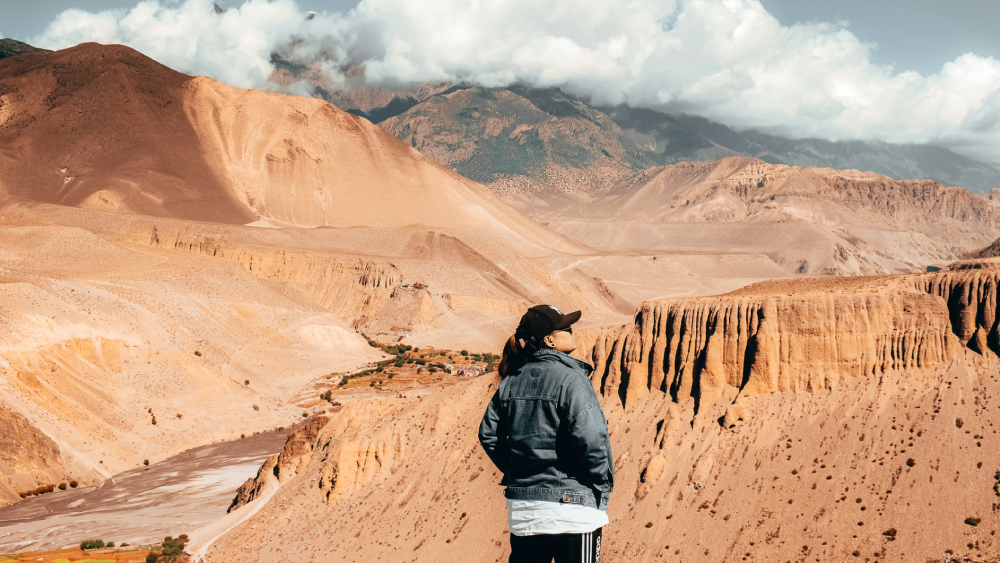
Upper Mustang only opened to foreign visitors in 1992. For centuries before that, it operated as an independent kingdom — Lo Manthang — with its own king, its own dialect, its own relationship with Tibetan Buddhism. A road now connects it to Tibet. But the old walking trails still exist, still wind through the same walled villages, still pass the same cave monasteries cut into ochre cliffs.
This is the walk I recommend to clients who say they've seen everything.
The landscape is unlike anything else in Nepal — almost lunar, wind-carved, stripped of the green that defines the Himalayan foothills. You walk through a palette of rust, ochre, and bone-white, with the sound of wind and nothing else. Villages like Ghami and Tsarang are living archaeological sites. The gompas contain murals and thangkas that predate most European art hanging in museums.
The lodge: Shinta Mani Mustang is where I anchor this itinerary. It's the only property in Mustang that sits at the level of experience the region deserves — architecturally coherent with its surroundings, genuinely embedded in Lo Manthang, with a team that understands the valley. Mornings there, with the wind coming off the plateau and the monastery bells carrying across the rooftops, are some of the most clarifying I've experienced anywhere.
Practical note: Upper Mustang requires a Restricted Area Permit ($50 per day) and a licensed guide — solo entry is not permitted. Fly or charter a helicopter to Jomsom, then walk north. I'd allocate 8–10 days minimum to do it without rushing.
Best for: Clients who find conventional trekking too crowded, who are drawn to ancient cultures rather than mountain scenery alone, and who want a walking holiday that feels genuinely rare.
→ View our Upper Mustang walking itinerary
2. Annapurna Heritage Trail — The Walk That Changed How I Design Itineraries
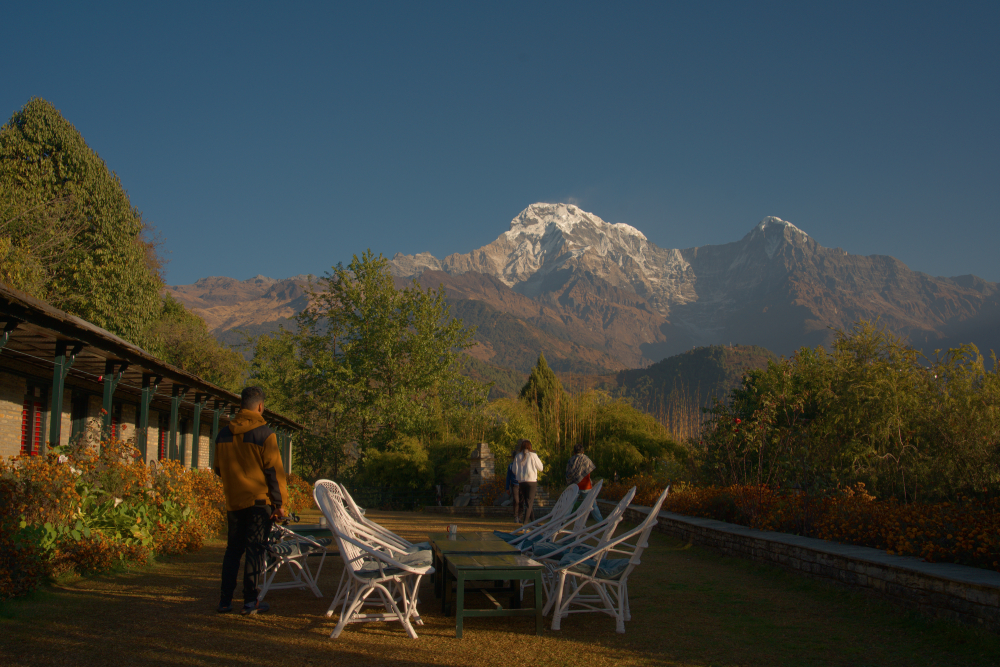
I've done the Annapurna Circuit in its various forms more times than I can count. The Heritage Trail is a different animal. It runs through villages that the main circuit bypasses — old footpaths that Gurung communities still use to carry firewood, drive livestock, and connect with neighbours. There are no teahouse signs every 500 metres. There are no crowds at the viewpoints.
What there is: terraced fields in late afternoon light, stone villages where children don't approach you asking for pens, and the kind of quiet that you realise you've been looking for since you landed.
The walk runs 6–8 days, depending on pacing. I design it so every day ends before the legs are tired — 4 to 5 hours of walking, never more than necessary, because the point is what you notice along the way, not the distance covered. The Gurung villages of Bhichok, Paudwar, and Lwang are on the route. If timed right, you walk during harvest season, and the terraces are gold.
The lodges: I use Ker & Downey lodges or Mountain lodge Nepal along this route — a small collection of properties that are architecturally grounded in the region, with food that reflects where you actually are. Not a buffet. Not an international menu. Locally sourced, regionally specific, genuinely good.
What makes it different from standard Annapurna trekking: My guide Narayan — who is fluent in English and has walked this trail hundreds of times — briefs clients on the community context before every village entry. You're not passing through. You're being introduced. That changes everything about how the experience lands.
Best for: First-time Nepal trekkers who want cultural depth over altitude achievement, couples, and anyone who has done a mainstream trek elsewhere and felt it was too managed.
→ View our Annapurna Heritage Trail walking package
3. Everest Sherpa Heritage Trail — Walking Into the Khumbu Without the EBC Crowds
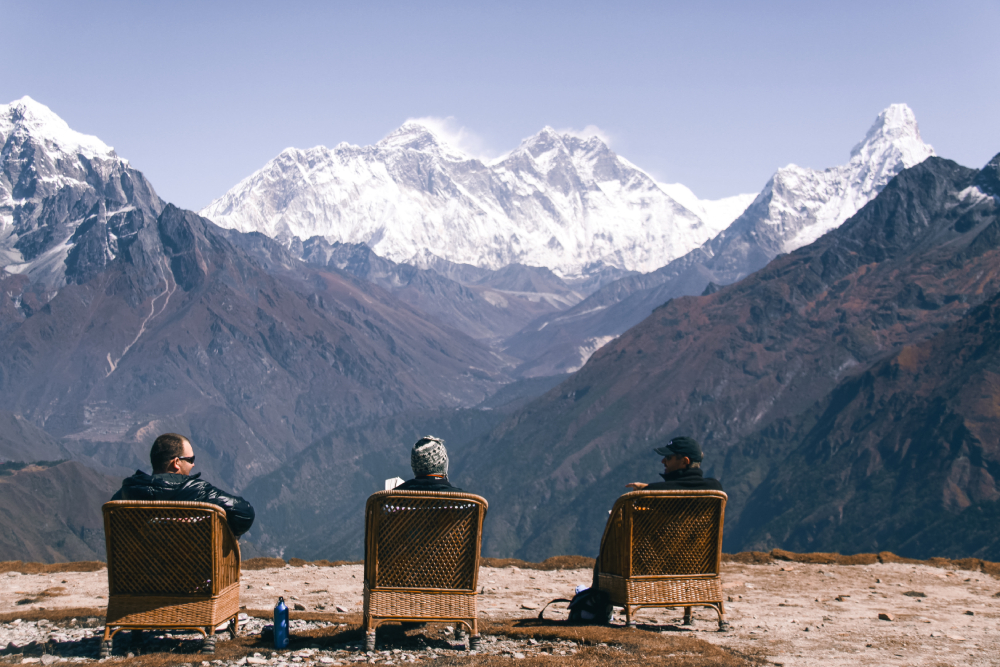
Most people who go to Everest Base Camp don't go to see Everest. They go because EBC is on a list. I understand that impulse. But the Khumbu has something more interesting than a base camp sign: the Sherpa community itself, one of the most extraordinary cultural ecosystems on earth.
The Sherpa Heritage Trail is the version of this walk that I'd design for a client who wants Everest — the real Everest, the living Everest — without the trail traffic of 30,000 annual trekkers.
The route moves through Namche Bazaar, Khumjung, Thame, and Pangboche — villages with functioning monasteries, yak herders, and families who have been guiding expeditions for three generations. At Khumjung monastery, the head lama has shown visitors a preserved relic for decades. In Thame, the monastery sits above a valley so quiet it's almost unsettling after Kathmandu. These aren't stops on a tour. They're the actual story of the Himalaya.
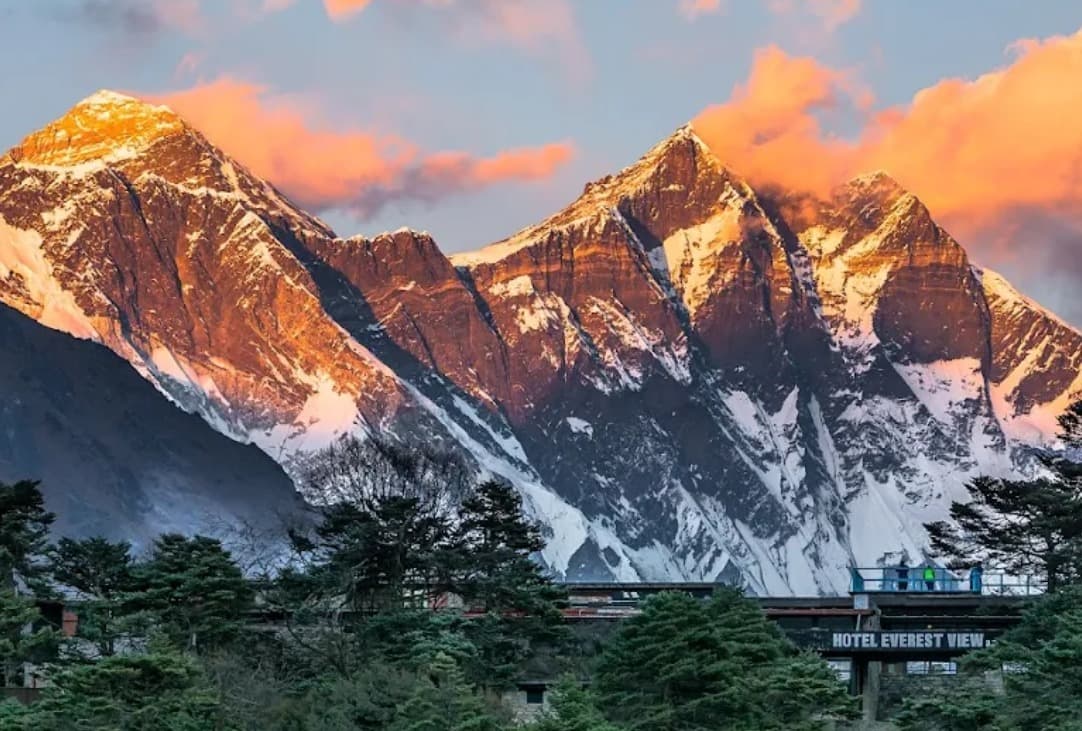
The lodges: Hotel Everest View at Syangboche is where I anchor the mid-section — the only hotel in the world with a permanent view of Everest from its dining room, at 3,962 metres. The Yeti Mountain Home properties at Phakding and Namche are my other anchors: small, well-designed, with the proportions and warmth that most Khumbu lodges lack.
Acclimatisation days: I don't waste these. A rest day in Namche is a cooking class with a Sherpa family — learning to make thukpa and momos in a kitchen that overlooks the valley. That's what clients remember, not the altitude profile.
Best for: Clients who want the Himalayan high-altitude experience and the cultural context that makes it meaningful, without feeling like they're on a conveyor belt.
→ View our Everest Sherpa Heritage Trail walking package
4. Annapurna Circuit — The Classic, Done Properly
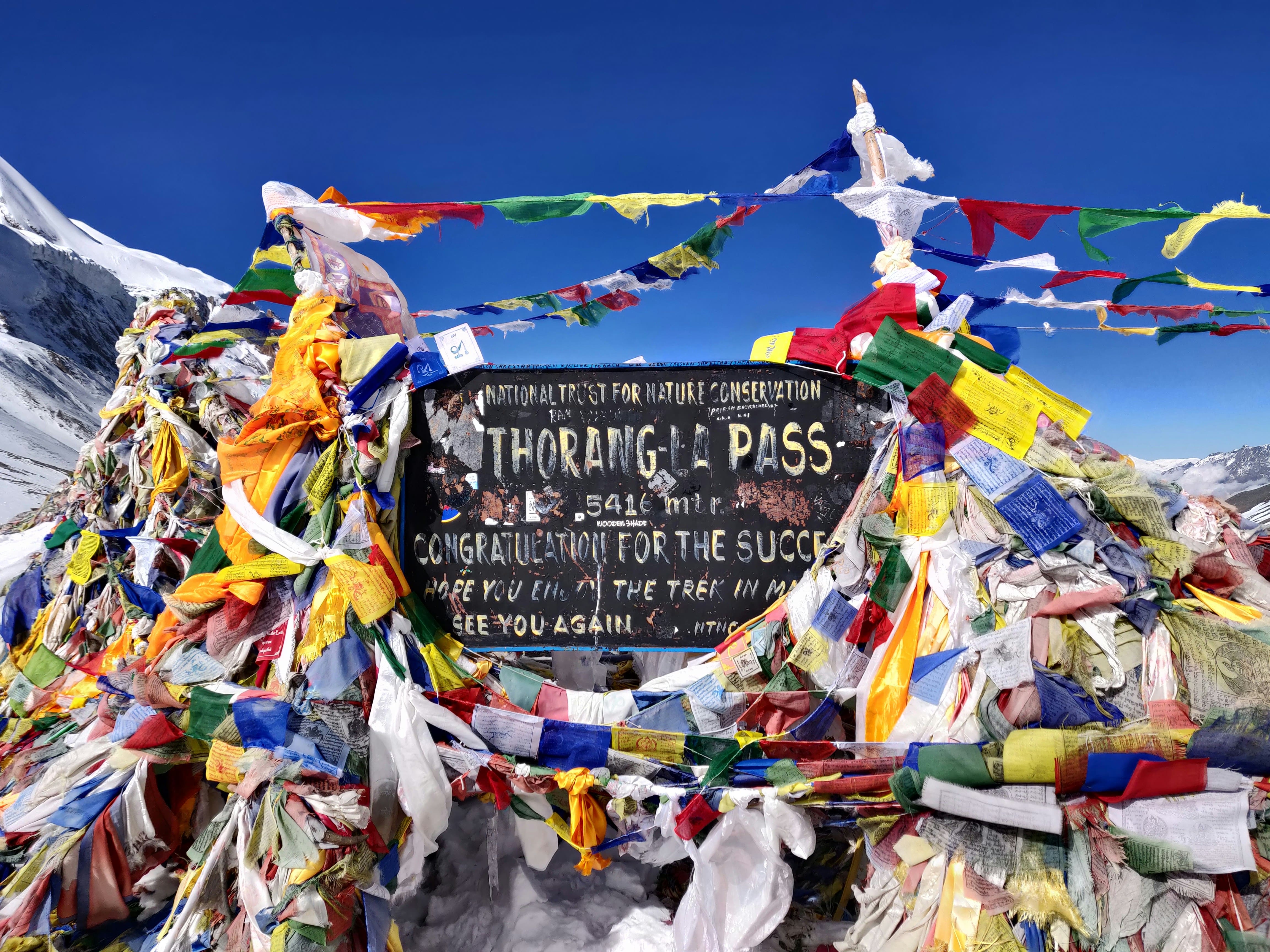
I debated including this because the Annapurna Circuit has been written about endlessly. But I include it because, done well — truly well — it's still the finest long-distance walk in Nepal.
The route crosses Thorong La Pass at 5,416 metres. It passes through the semi-arid Manang Valley, through Mustang's southern approach near Kagbeni, through Marpha's apple orchards and Tatopani's hot springs. No other walk in Nepal contains that range of landscape, culture, and altitude in a single continuous route.
What most operators get wrong: they rush it. They cut days. They bypass Manang. They skip Tilicho Lake. The result is a highlight reel, not an experience.
I design the circuit over 15–18 days with private transport for the approach, lodge upgrades throughout, and acclimatisation days that are actually worth having. Manang deserves two nights minimum — not because altitude demands it, but because the Nyeshang Valley people are extraordinary and the high-altitude lake walks above the village are among the finest afternoons I've spent anywhere in Nepal.
Best for: Fit walkers who want a genuine long-distance achievement with the depth and comfort that makes the length sustainable.
→ View our Annapurna Circuit walking package
How to Choose Between These Routes
| Upper Mustang | Annapurna Heritage Trail | Everest Heritage Trail | Annapurna Circuit | |
|---|---|---|---|---|
| Duration | 8–10 days | 6–8 days | 8–10 days | 15–18 days |
| Max altitude | ~3,840m | ~3,210m | ~3,962m | 5,416m |
| Physical demand | Moderate | Easy–Moderate | Moderate | Challenging |
| Cultural depth | Exceptional | High | High | Moderate–High |
| Crowd level | Very low | Very low | Low–Medium | Medium |
| Best season | Mar–May, Jun–Sep | Oct–Dec, Mar–May | Oct–Nov, Mar–May | Oct–Nov, Mar–May |
| Signature lodge | Shinta Mani Mustang | Ker & Downey | Hotel Everest View | Multiple lodges |
Which Walk Is Actually Right for You
I get asked this more than anything else. People read about all four routes and freeze. So let me make it simpler.
Pick Upper Mustang if you've already done a Himalayan trek and found it beautiful but crowded. If what you're looking for is somewhere that feels genuinely untouched — not "off the beaten path" in the marketing sense, but actually remote, actually ancient, actually still operating on its own terms — Mustang is the answer. It's also the right choice if you're drawn to Tibetan Buddhism not as an aesthetic but as a living practice. The monasteries in Lo Manthang are not museum pieces. People pray in them every day.
Pick the Annapurna Heritage Trail if this is your first time in Nepal and you want to arrive somewhere, not just pass through it. The altitude stays manageable. The daily walking is gentle. But the cultural access — walking through Gurung villages that the main circuit completely bypasses, eating in homes, understanding the land use and seasonal rhythms — is deeper than most people expect from a six-day walk. I also recommend this to clients who've done the Camino or similar routes and want that feeling of walking through a lived landscape, not a designated trail.
Pick the Everest Heritage Trail if the word Everest means something to you but you don't want EBC. You want the Khumbu — the valley, the people, the history of what's been attempted from here — without the crowds that have made the main EBC trail feel increasingly like a queue. The Sherpa community in Thame and Khumjung is extraordinary. The lodges at Syangboche sit at an altitude that clarifies your thinking in a way that's hard to explain and easy to remember.
Pick the Annapurna Circuit if you want length, range, and a genuine physical challenge that also happens to pass through some of the most varied landscapes in the Himalaya. This is the walk for people who want to earn the experience over two weeks rather than taste it over six days. It rewards patience. The best moments on the circuit — a clear dawn on Thorong La, an afternoon in Manang with nothing scheduled — come to people who've spent ten days getting there.
One honest note: if you're still unsure after reading this, it usually means you're not asking about the route. You're asking about readiness — whether this kind of travel is right for you at this point in your life. That's a better question, and it's worth a conversation. I've had clients come to me thinking they wanted the circuit and leave having done Mustang instead. The right walk isn't always the one that sounds most impressive.
The Thing That Stays With You
I've been designing journeys in Nepal for over 3+_years. I've walked through more of this country than most people visit in a lifetime. And the thing I notice most consistently — in what clients write to me months after they return, in conversations over dinner on the last night, in the particular expression on someone's face when they're standing somewhere they didn't expect to feel anything and feel everything — is never the landscape.
It's the people.
Nepal is not a wealthy country in the conventional sense. But the warmth here operates on a different economy entirely. I understood that at thirteen, in a way I couldn't articulate. I understand it better now, and I still can't fully articulate it. Some things resist translation. They have to be experienced in the original.
What I can tell you is this: if you've walked beautiful places in Europe and come home feeling like something was almost there but not quite — some quality of encounter, some depth of connection with a place and its people — Nepal is probably what you've been circling toward.
It was never too much. It was always exactly right. You just needed someone to show you the right door.
When to Go
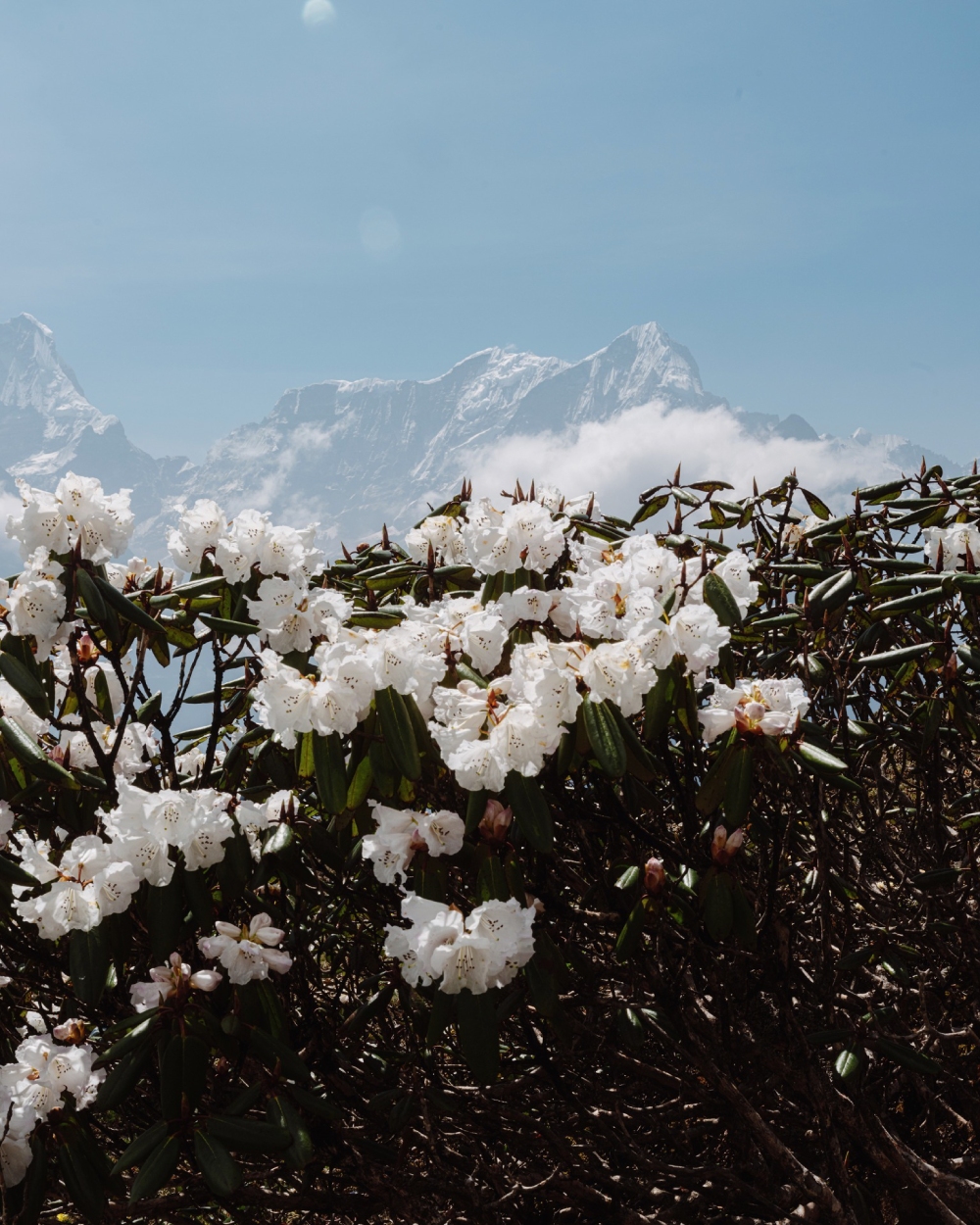
October to early December is the primary season. The post-monsoon clarity gives you views that photographs don't do justice to — Annapurna South from the Heritage Trail ridge, the Khumbu Icefall lit at dawn from Syangboche, the Lo Manthang plateau under a sky so blue it looks artificial.
March to May is my second recommendation — and for Upper Mustang specifically, the early monsoon months (June to September) are actually ideal because the rain shadow keeps Mustang dry while the rest of Nepal is green and wet.
I don't recommend November's last two weeks or the first weeks of October for any of these routes. The trails are at maximum capacity, and the experience suffers.
Before You Leave Kathmandu: The Dhap Dam Walk
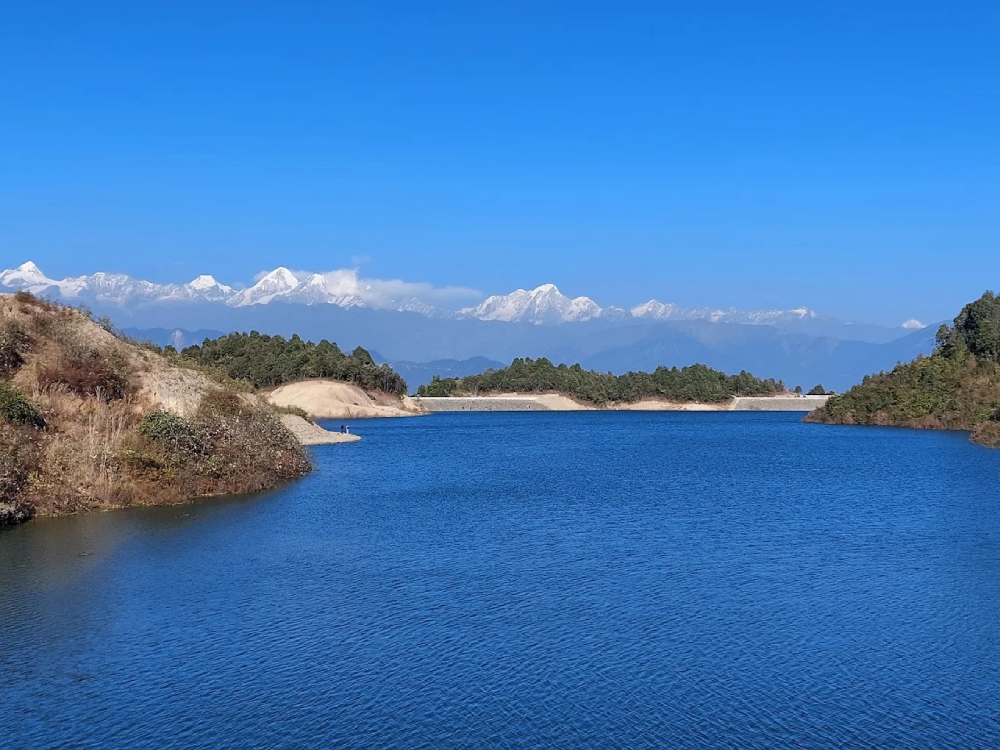
Most clients spend their first night in Kathmandu acclimatising and adjusting. I use that time differently.
Dhap Dam sits inside Shivapuri Nagarjun National Park on Kathmandu's northern edge — 20 minutes from Budhanilkantha, where I'm based. The walk to the reservoir takes 3–4 hours return through dense subtropical forest. It's quiet in a way that Kathmandu's streets never are. You hear birds, water, and your own footsteps. The city disappears almost immediately.
It's not a luxury walking holiday. It's the walk I do when I want to remember why I live here. For clients arriving jet-lagged and slightly disoriented — still carrying the noise of airports and connections — it's the best possible reorientation before the main itinerary begins.
I pair it with lunch at a local restaurant in Budhanilkantha afterwards. Nothing arranged. Just good food, good air, and the first real sense of where you've arrived.
Frequently Asked Questions
Do I need prior trekking experience for a luxury walking holiday in Nepal?
Not for the Annapurna Heritage Trail or the Everest Heritage Trail at moderate pacing. The Annapurna Circuit and Upper Mustang require reasonable fitness but not technical mountaineering experience. If you can walk 5–6 hours comfortably on varied terrain, you can do any route on this list.
What's the difference between your walking holidays and a standard Nepal trek?
A standard Nepal trek is built around an objective — a base camp, a pass, a fixed route. Our walking holidays are built around experience. The routes are shorter, the altitude is managed, and the emphasis is on what you encounter rather than what you achieve. Pack-free, private, and paced to give you space to actually notice where you are.
Can I do a luxury walking holiday in Nepal as a solo traveller?
Yes. Most of my clients come alone. The private guide model means the experience is designed around you, not around a group. Upper Mustang does require a licensed guide by law — but that's true for all nationalities.
How much does a luxury walking holiday in Nepal cost?
Itineraries typically range from $3,500 to $8,000+ per person, depending on duration, lodge choice, and helicopter transfers. Upper Mustang with Shinta Mani sits at the higher end. The Annapurna Heritage Trail with Ker & Downey lodges is more accessible. I'm transparent about what drives the cost — ask me directly, and I'll break it down.
Is Nepal safe for walking holidays?
Nepal is one of the safer trekking destinations in Asia. The trails on this list are well-established, the communities along them are accustomed to international visitors, and all ELH guides carry first aid certification and satellite communication devices. Altitude is the primary variable to manage, which is why I don't rush acclimatisation.
Can I combine a walking holiday with time in Kathmandu or Bhutan?
Yes, and we'd often encourage it. Kathmandu rewards two to three days of slow exploration before you head into the hills. Bhutan pairs beautifully with Nepal — the two countries offer complementary experiences that together make one of the most complete luxury journeys available anywhere. We design combined itineraries across both regularly.
What does a private guide actually add?
Everything that doesn't appear in the itinerary. The conversation happens in a quiet section of the trail. The monastery, your guide, knows you can enter because his uncle is the caretaker. The decision to slow down for an hour because something is happening in a village that won't happen again. A good guide doesn't just lead — they read. Ours are selected and briefed specifically for each traveller.
Ready to Talk It Through?
No itinerary templates. No pressure. Just a conversation about what you're looking for and whether Nepal — the right part of it, designed the right way — is the answer.
Or if you'd like to keep reading first: