You arrive in Thimphu on a clear morning, and the first thing that strikes you is the silence. Not the absence of sound—the capital has traffic, vendors, life—but the absence of noise. No billboards screaming at you. No advertising jingles. No notifications pinging. Just mountains, prayer flags, and a small city that moves like it has nowhere urgent to be.
By your second week, you'll realise you've checked your phone maybe five times.
By week three, you'll wonder why you ever needed to check it that often.
This isn't meditation. This isn't a detox retreat where you're forced to unplug. It's something stranger: you're in a country where the structure itself doesn't demand your attention. The shops close at 7 PM. The wifi is not good as Nepal. There are no billboards. Nobody's trying to sell you something every 6 seconds. So your mind stops expecting to be interrupted.
And something happens that no productivity app has ever delivered: you actually get work done. Deep work. The kind where you think for four hours and lose track of time because nothing is pulling you away.
This is your first real encounter with Gross National Happiness in Bhutan, though you won't understand it yet.
What Happens When a Country Decides Happiness Matters More Than Money
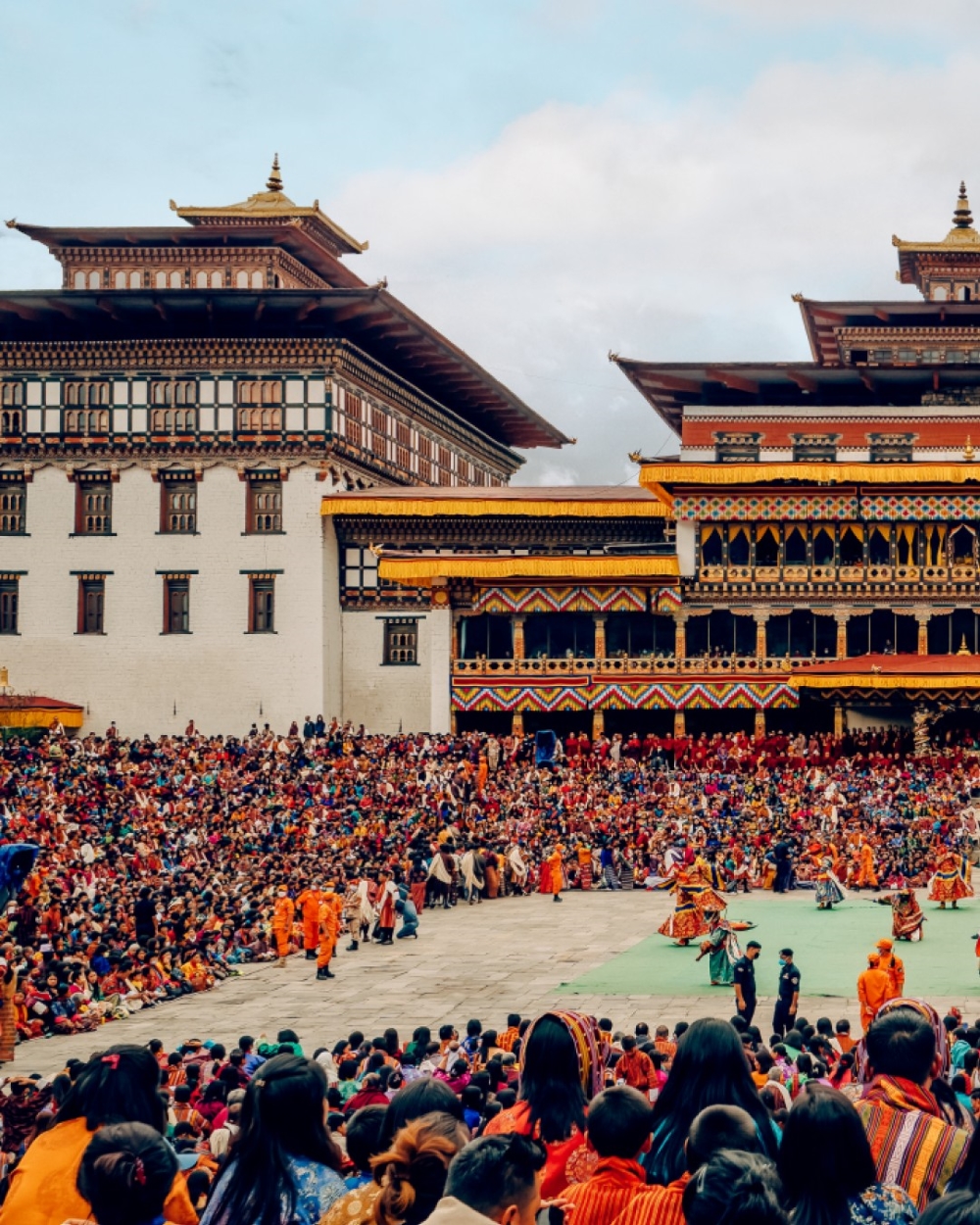
In 1972, Bhutan's fourth king made a decision that sounded like fantasy. He asserted that 'Gross National Happiness is more important than Gross Domestic Product.' At the time, every country on earth was chasing GDP growth. More production. More consumption. More extraction.
The king looked at this model and asked: But are people happy?
Bhutan's ancient legal code of 1629 had already stated that 'if the government cannot create happiness for its people, then there is no purpose for the Government to exist'. So the king didn't invent happiness as a metric. He formalised it. He made it measurable. He made it law.
What happened next is what separates Bhutan from every other destination in the world: they actually meant it.
Fifty years later, the pace is intentionally slow, Buddhist values shape social interactions, and nature is ever-present. Not as marketing. As policy. Every decision—from whether to allow a mining company to expand, to how many tourists can visit, to whether a highway project destroys a valley—gets filtered through one question: Does this increase happiness?
Here's what you need to know: this isn't theoretical. When you land in Bhutan, you feel the difference immediately because the country's structure reflects different priorities than what you're used to.
The Architecture of Happiness: How It Actually Works
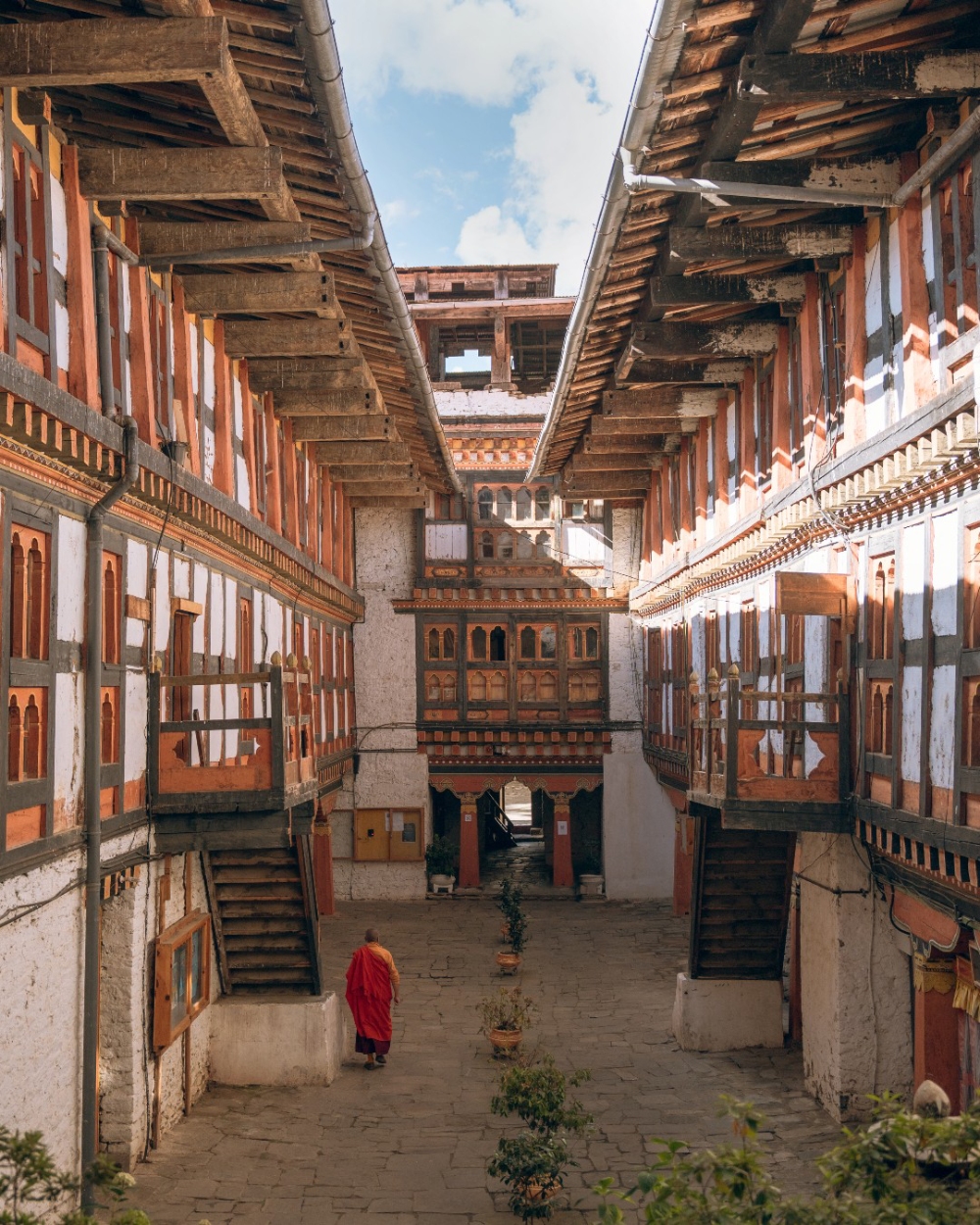
Gross National Happiness rests on four major thrust areas: fair and sustainable socio-economic development; conservation and promotion of a vibrant culture; environmental protection; and good governance.
Notice the order. Economics first, yes—but only to enable the rest. You can't preserve culture if people are starving. You can't protect forests if the government is corrupt.
But here's where it gets concrete. The four pillars are further elaborated into nine domains: psychological well-being; living standard; health; culture; education; community vitality; good governance; and balanced time use and ecological integration. And then, Bhutan has developed 38 sub-indices, 72 indicators and 151 variables that are used to define and analyse the happiness of the Bhutanese people.
Every five years, they measure. Not feelings. Not surveys. Concrete conditions.
This is what separates GNH from "feel-good" policy. When a corporation proposes development, the GNH commission, headed by the prime minister, will judge whether or not it faithfully follows the GNH philosophy. Even if a policy proposal is effective for economic growth, if there is a possibility of destroying the environment or invading the community, the GNH commission will prompt a change.
The result: the country you're entering wasn't designed around profit extraction. It was designed around actual human flourishing.
Learn more about the architecture of Bhutan.
Step into a village, and you'll See It Immediately
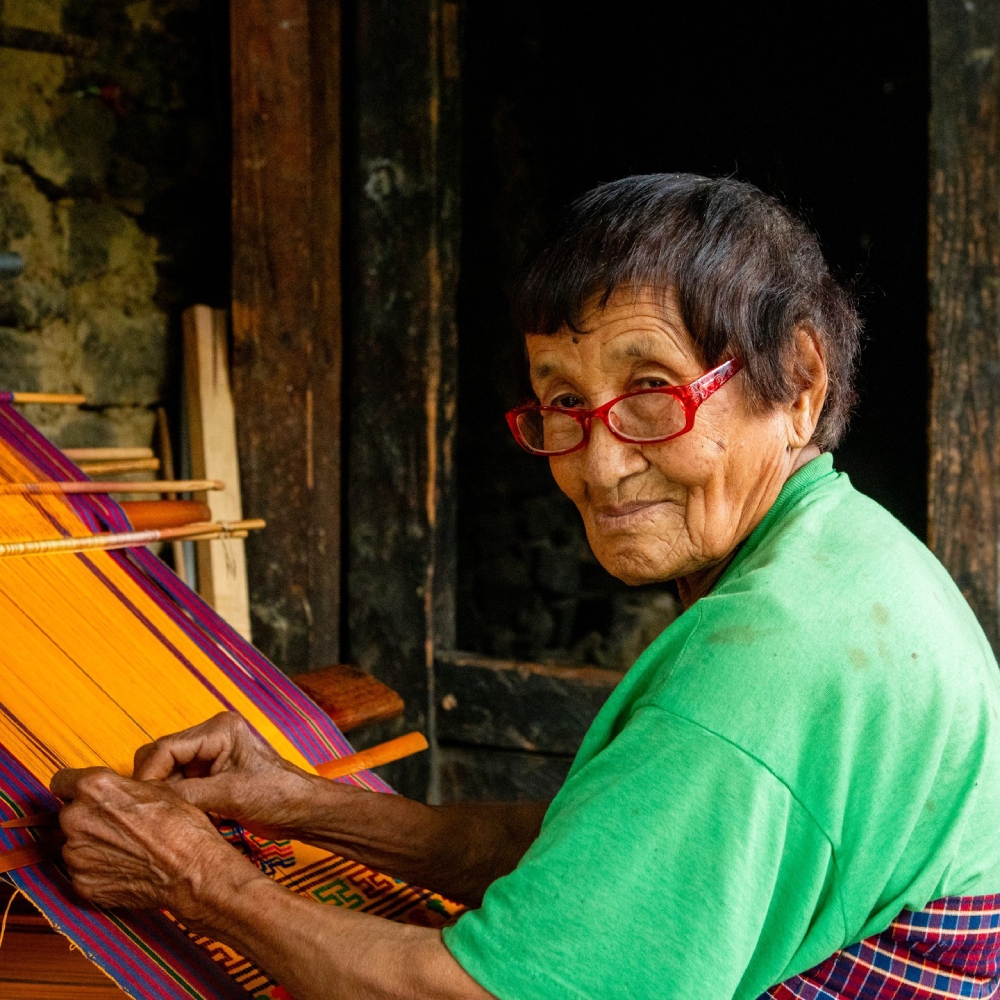
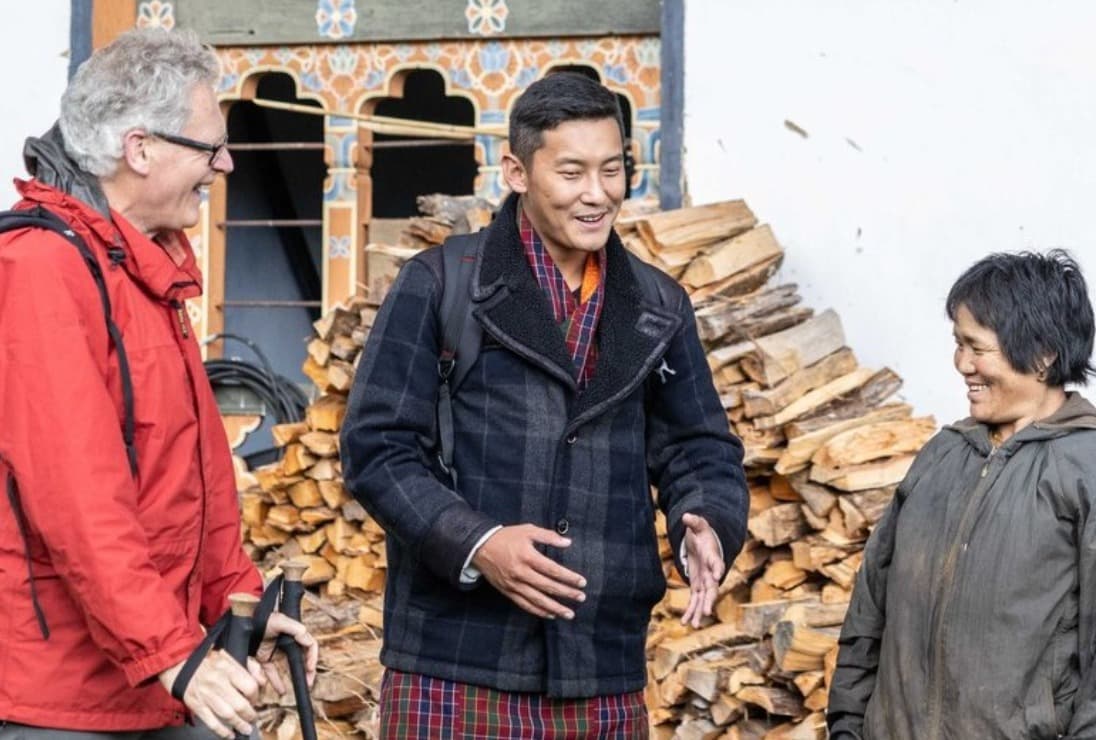
The real test of GNH isn't policy documents. It's what you witness when you sit in a farmhouse at dusk, drinking butter tea with a local family you met that morning.
You'll notice something instantly: the grandparents are there. The parents. The children. In a typical Bhutanese home, you will find multiple generations living together. Not because there's nowhere else to go, but because family is still the unit of society.
When the harvest comes in, neighbours help. When someone builds a house, the village shows up. The Bhutanese follow a highly refined system of etiquette called 'driglam namzha'—a traditional code of conduct that supports respect for authority, devotion to the institution of marriage and family, and dedication to civic duty.
It sounds formal. In practice, it's simple: you show up for people. You're honest. You're present.
And here's what strikes most travellers: nobody is performing. The family isn't putting on a show for tourists. They're living. You're just invited to witness it.
A Specific Memory: What Slowness Actually Teaches You
I was in a small village in the Phobjikha Valley, sitting with a farmer and his wife. It was 4 PM. We'd spent the day walking, and I asked if we could buy some tea before heading back to the lodge.
The wife nodded and went inside. She returned 20 minutes later with butter tea, fresh bread, and momos she'd just made from scratch. No rushing. No "sorry it took long." Just: this is what hospitality looks like.
I asked the farmer why he wasn't rushing. The crops needed tending. There were things to do before dark.
He looked at me like I'd asked a strange question. "Why would I rush the guest?" he said. "The work will still be there. But you're here now."
That moment broke something in me about productivity. I'd built my entire life around efficiency—squeezing more output into less time, treating slowness as waste. But he understood something I'd forgotten: time spent with someone is the value. Not what you accomplish during it.
When I returned to Kathmandu, everything changed. I stopped checking email obsessively. I stopped taking calls during meals. I started saying no to meetings that didn't require deep thinking. And something unexpected happened: I got more done. Better work. Because I was actually present when I worked instead of half-present across six things.
That's what Bhutan teaches you. Not through lectures. Through living inside a society where presence is the default.
Prayer Wheels and Non-Performative Faith
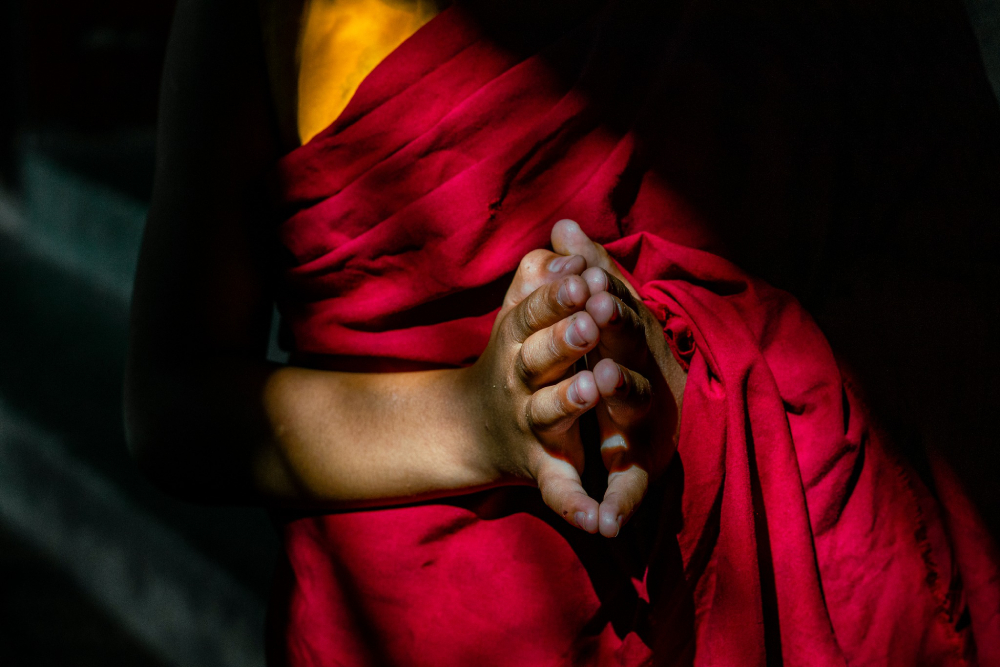
You'll see prayer flags everywhere—strung across valleys, marking sacred sites. They're not decoration. Homes are often built with prayer wheels at the entrance. Families start the day with simple rituals like incense offerings, butter lamps or chants.
When you walk through neighbourhoods at dawn, you smell juniper incense. You hear wheels turning. More than 75% of Bhutanese people practice Tantric Buddhism, and it touches every part of life, from architecture and agriculture to language and landscape.
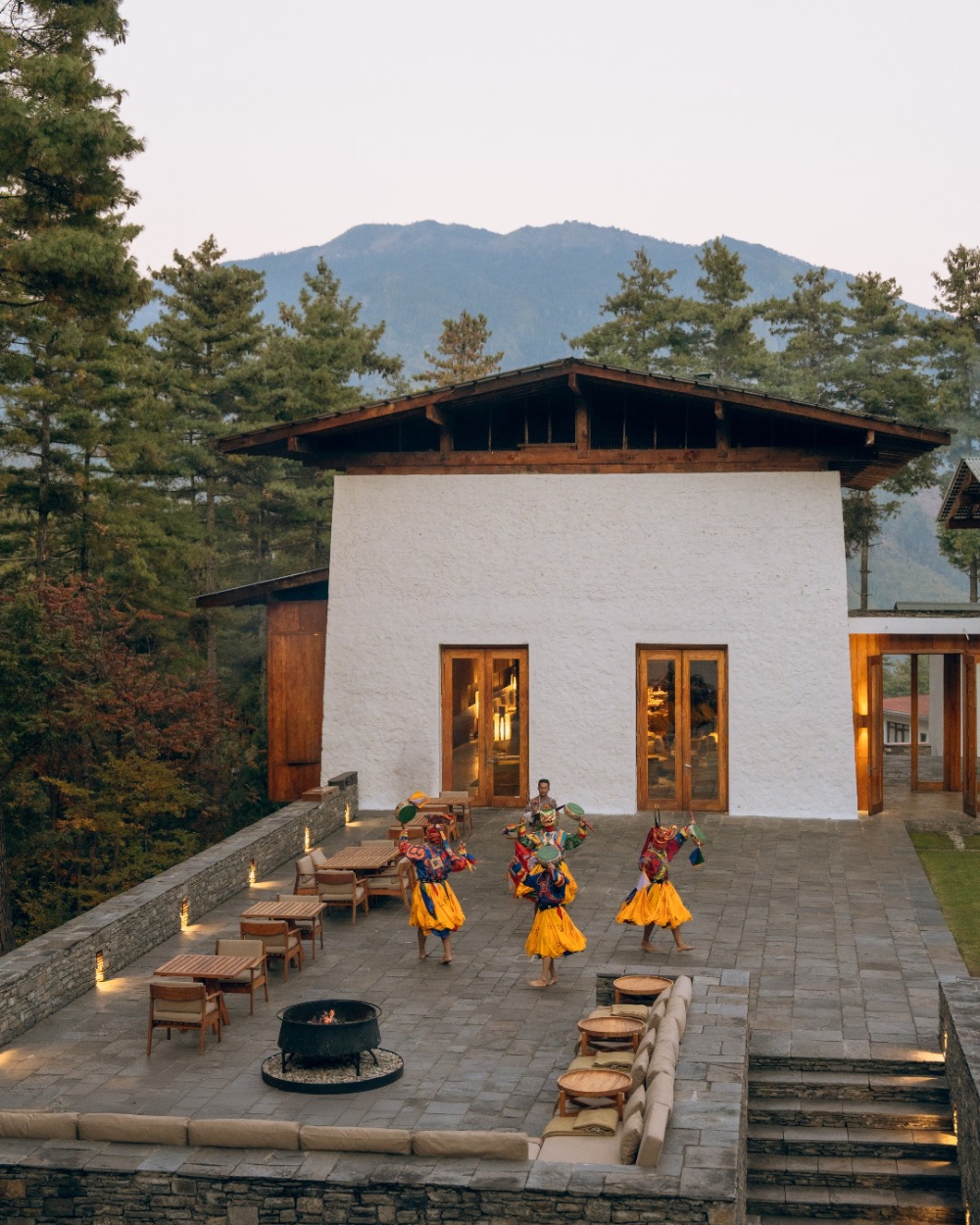
But here's what's important: it's not performed for you. Tshechus (festivals) are not just celebrations, but living rituals of protection, storytelling, and renewal. They happen on the same dates every year, in the same monasteries, with the same masked dances—whether tourists attend or not.
When you're invited to witness a Tshechu, you're not consuming culture. You're eavesdropping on a ritual that's been happening for 500 years. The monks aren't blessing tourists for payment. They're conducting prayers. You just happen to be there.
That distinction matters. It's the difference between tourism that extracts and tourism that participates.
Dress as Daily Choice (Not Costume)
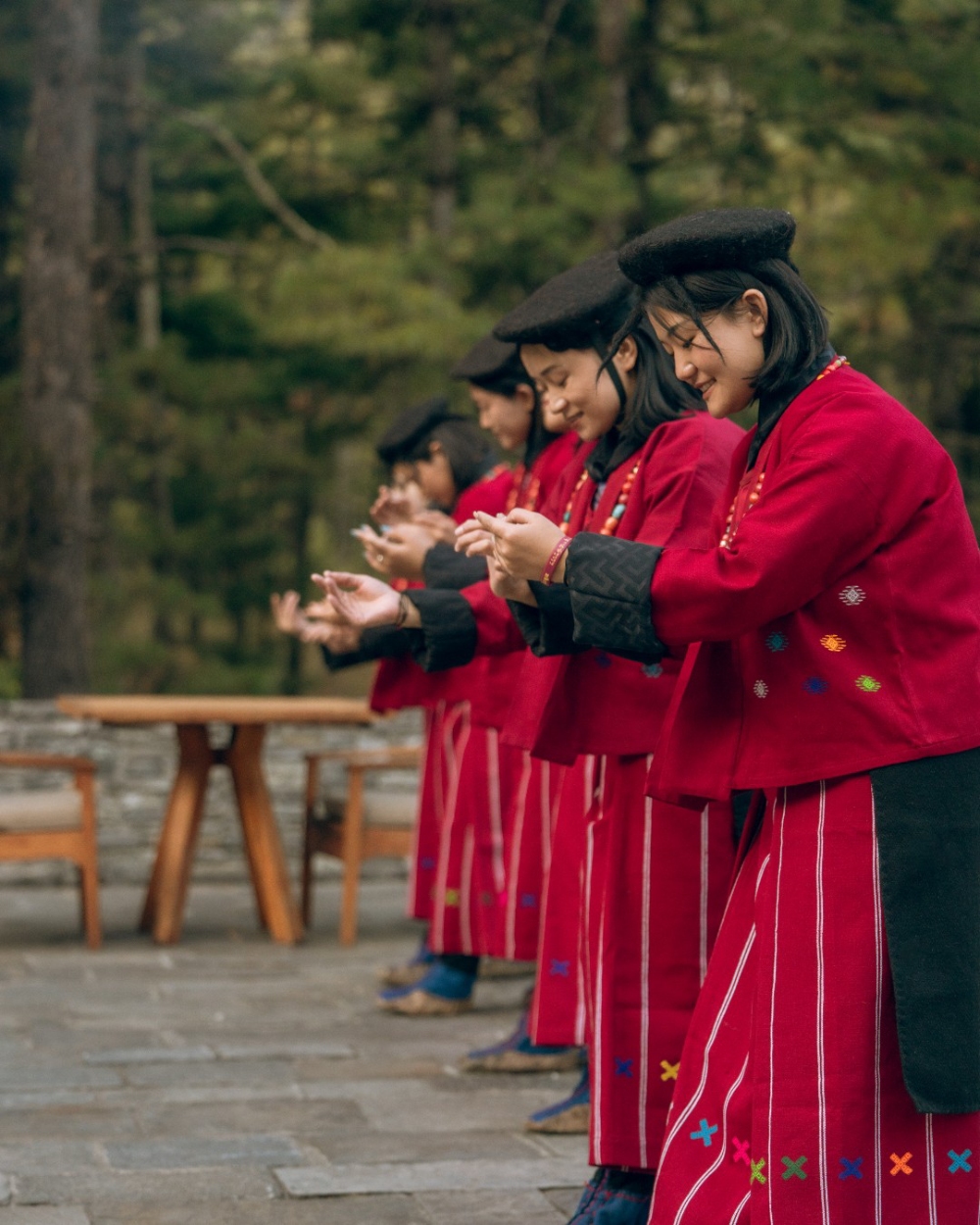
People wear traditional attire, gho (for men) and kira (for women), daily, even in modern settings, as a symbol of national identity. You'll see the accountant in her kira. The teenager in his gho at school. The taxi driver. The shopkeeper.
Government offices, schools, and public events require people to wear these outfits, ensuring that they remain an integral part of Bhutanese daily life.
This isn't backward. It's intentional. A young person wearing a gho every day isn't rejecting modernity. They're living in both worlds simultaneously—modern education, modern job, ancient identity. The clothing isn't a museum piece. It's business casual.
Contrast this with the West, where traditional dress becomes a performance, something you wear to "celebrate culture" once a year. In Bhutan, it's just... how you dress.
Work That Connects to Something Real
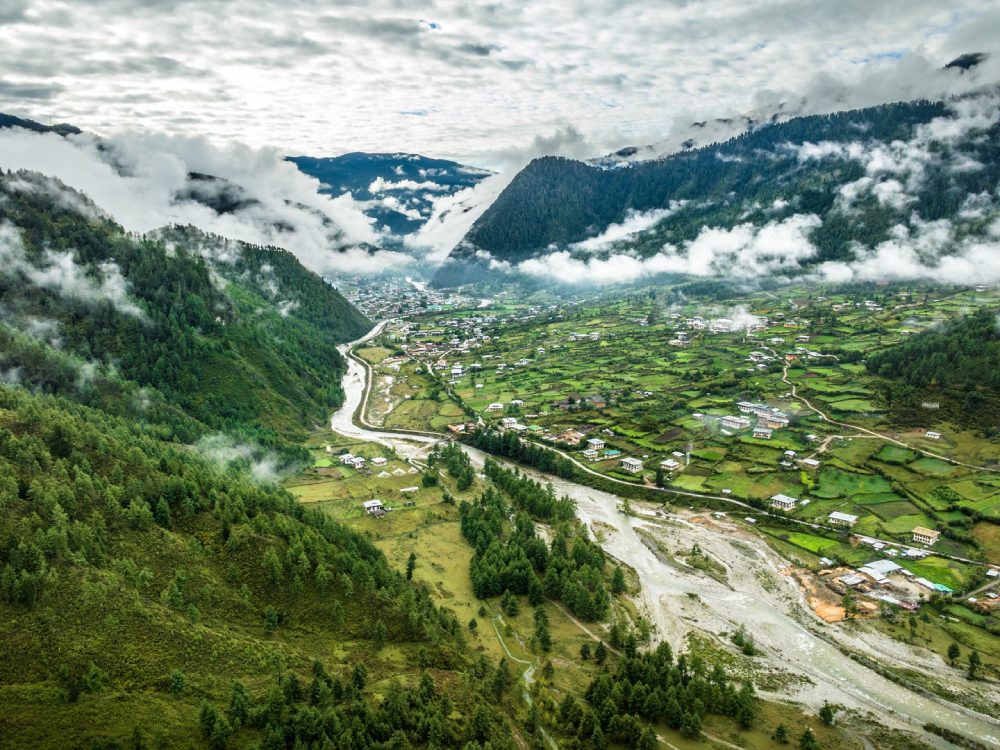
A majority of Bhutan's population still lives in rural villages, relying on agriculture, animal husbandry, and community cooperation. Farming is done on terraced hillsides, and crops like rice, buckwheat, and maize form dietary staples.
When a farmer plants rice, he sees the full cycle: soil → seed → growth → harvest → family table. There's no abstraction. No middleman. No supermarket. The work connects directly to survival and community.
And Bhutan is working toward being the world's first fully organic nation, with natural farming practices being the norm. Not because it's trendy. Because GNH demands it. You cannot have ecological diversity if you're poisoning the soil. You cannot have healthy communities if the food is toxic.
The farmer's choice isn't individual. It's structural. The system supports organic farming because it is designed around wellbeing, not profit extraction.
The Forest is Protected by Constitutional Law
Here's something that hits different when you experience it: Bhutan's constitution mandates that at least 60% of the land remain forested. Not "should be." Not "we hope to." Mandated. Forever. Bhutan Travel
The country is mandated by its constitution to maintain not less than 60% of its land under forest cover for eternity.
When you fly into Bhutan, you see this. The valleys are green. The mountains are thick with forest. The rivers run clear. Not because Bhutan got lucky, but because they made a structural choice: Future wellbeing depends on protecting this now.
Think about that. The law protecting forests isn't a temporary policy. It's constitutional. Future generations can't vote to clear-cut the mountains for profit. It's not allowed.
Now the Honest Part: The Tensions
I need to tell you the reality before you arrive.
1. The Mandatory Guide System is Real
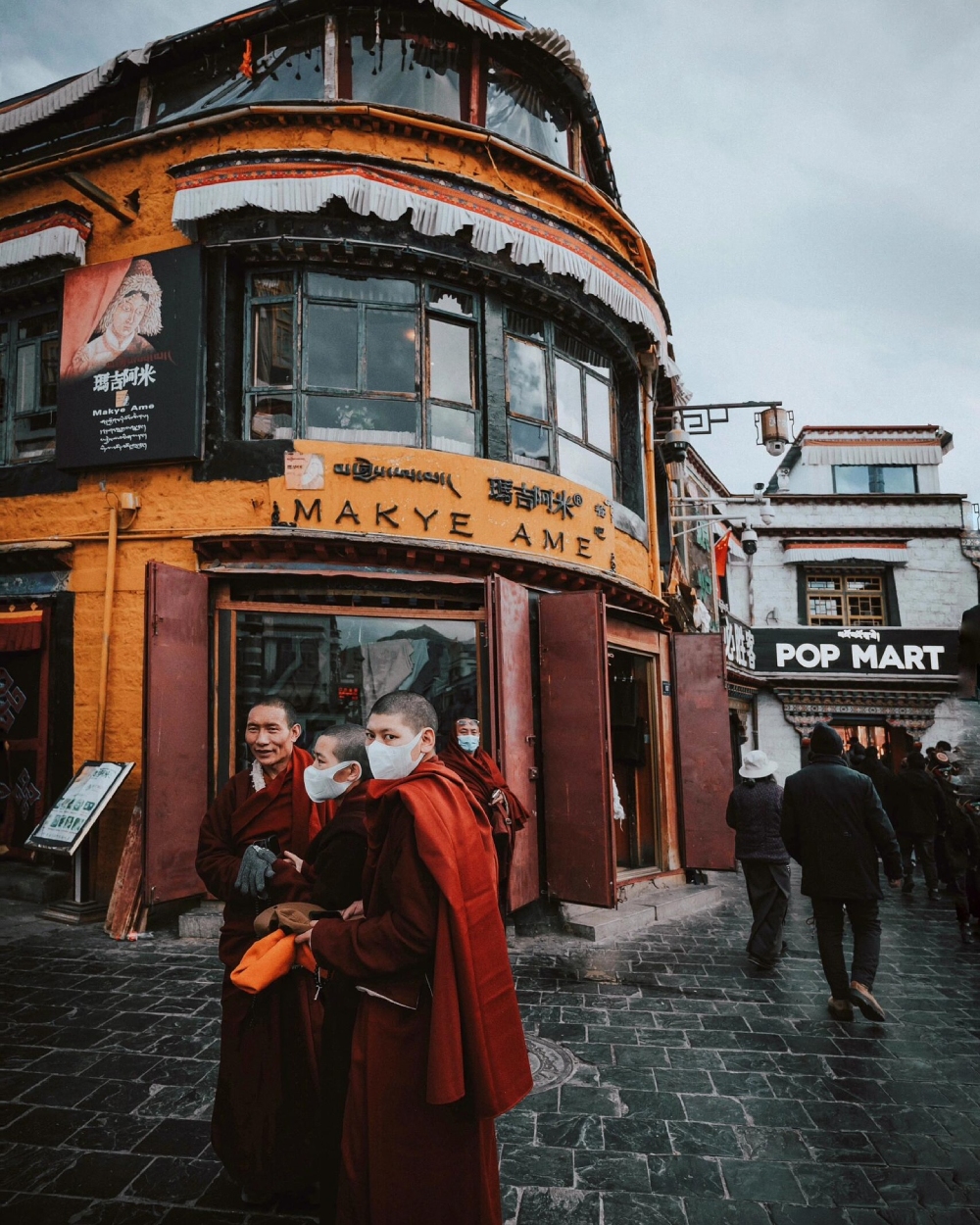
Trips can only be booked via very limited licensed tour operators, which operate in the country. You cannot book a hotel and wander independently. You cannot rent a car and explore on your own.
For some travellers, this feels restrictive. The immediate reaction is: "I'm on a leash."
Here's the actual situation: yes, you're guided. But the reason transforms everything. The guide isn't a service provider you're renting. He's an ecosystem participant. The money you pay stays in Bhutan, with someone who knows the valleys intimately. The itineraries are small—usually 4-8 people max—which means villages don't become tourist attractions where locals live.
The routes rotate. Sacred sites don't get trampled by 500 people daily. The entire system is designed so that your presence adds to the community rather than extracts from it.
Is it different from independent travel? Yes. Is it restrictive? Only if you view a guide as a constraint instead of a gateway.
At ELH, we don't just assign guides. We match them. We brief them on your interests, your pace, and your questions. A good guide doesn't lead—he reveals. He takes you to places tourists don't usually go because he knows them. He introduces you to people genuinely, not transactionally.
Learn more about the SDF fee of Bhutan.
2. WiFi Is Slower Than You're Used To
Bhutan has internet. It works. But compared to what most travellers are accustomed to — or even compared to Nepal, where connectivity in Kathmandu and along major trekking routes has improved significantly — Bhutan moves at a different pace online.
You can send emails, message family, check in with work. What you can't do reliably is stream, video-call in 4K, or operate as if you're in a co-working space.
This isn't a government restriction on connectivity — it's simply where infrastructure is relative to a country that only introduced television and internet in 1999. The pace of modernisation has been deliberate, and digital infrastructure reflects that.
For most travellers, it's a non-issue. For others who need to stay fully plugged in, it's worth knowing before you go.
When you book with ELH, we're upfront about this — not to manage expectations downward, but because the right traveller for Bhutan is one who can step back a little. And once you do, the slower connection stops feeling like a limitation.
3. Young Bhutanese Are Leaving
This is the uncomfortable truth nobody talks about. Despite the GNH policy, young Bhutanese workers are leaving the country because economic opportunities are limited. Tourism is the second-largest revenue source, but it's not generating enough jobs for ambition.
When you visit, you'll notice: the guide might be excellent, but he might also tell you he's saving money to study abroad. The lodge staff are warm, but some are working multiple jobs.
GNH is a powerful philosophy, but it hasn't solved economic inequality. The government is aware of this tension. They're actively working to balance growth with preservation. But it's real, and it matters.
What it means for you: when you travel with intention—choosing small groups, supporting local guides, understanding that your presence funds employment—you're participating in the solution. Not perfectly. But genuinely.
4. Altitude and Physical Reality
Bhutan is high. The Paro airport sits at 7,000 feet. Many treks go higher. Altitude sickness is real. Some people experience headaches. Some experience worse.
We always recommend arriving a day early to acclimate. Drinking water. Moving slowly. The GNH philosophy includes health—and that means taking care of yourself physically before pushing into high valleys.
How You Actually Experience GNH (The Practical Part)
Let me be specific about what happens over a two-week journey.
Days 1-3: Confusion. The pace feels slow. You notice you're not in control of timing. Shops close when you want to shop. Wifi disconnects when you want to work. It feels constraining.
Days 4-7: Shift. You stop fighting the rhythm. Your nervous system begins to downregulate. You sleep better. You eat more slowly. You notice things—the way light hits the valley, the conversations with your guide, the taste of food instead of just consuming it.
Days 8-10: Clarity. You realise you haven't checked your work email in days. Not because you're avoiding it, but because your brain stopped treating it as urgent. You're thinking differently. Deeper. The anxiety that normally hums in the background has quieted.
Days 11-14: Integration. You understand why people come back. Bhutan didn't change your life with grand moments. It changed your life by removing stimulation and letting you remember how to think clearly.
This is the transformative part that's hard to market because it's not a hotel feature or a trekking difficulty rating. It's neurological. Your nervous system recalibrates when it's not constantly under activation.
When you go home, you'll try to protect that. You might turn off notifications. You might block time for deep work. You might be more selective about what you do.
Some of it will stick. Some will fade when you return to the constant stimulation of your normal life.
But something fundamental will have shifted. You'll know it's possible to work well without constant interruption. You'll know slowness doesn't mean laziness. You'll remember what it feels like when your mind isn't fractured across six things.
Customize you trip to Bhutan with ELH.
The SDF: What Actually Happens With Your Money
Bhutan charges a Sustainable Development Fee (SDF) of $100 per person, per day, which will remain in place until August 2027. (Children 6-12 pay $50. Under 6 are free.)
I could tell you all the ways these funds are used for conservation and education. But here's what matters: read our guide to sustainable tourism in Bhutan to understand exactly where the money goes and what's changed because of it.
What I'll say here: when you're spending that $100 daily, you're not buying luxury. You're participating in a system where tourism funds development that benefits actual Bhutanese people—not just tourism infrastructure.
Why This Matters: My Personal Philosophy
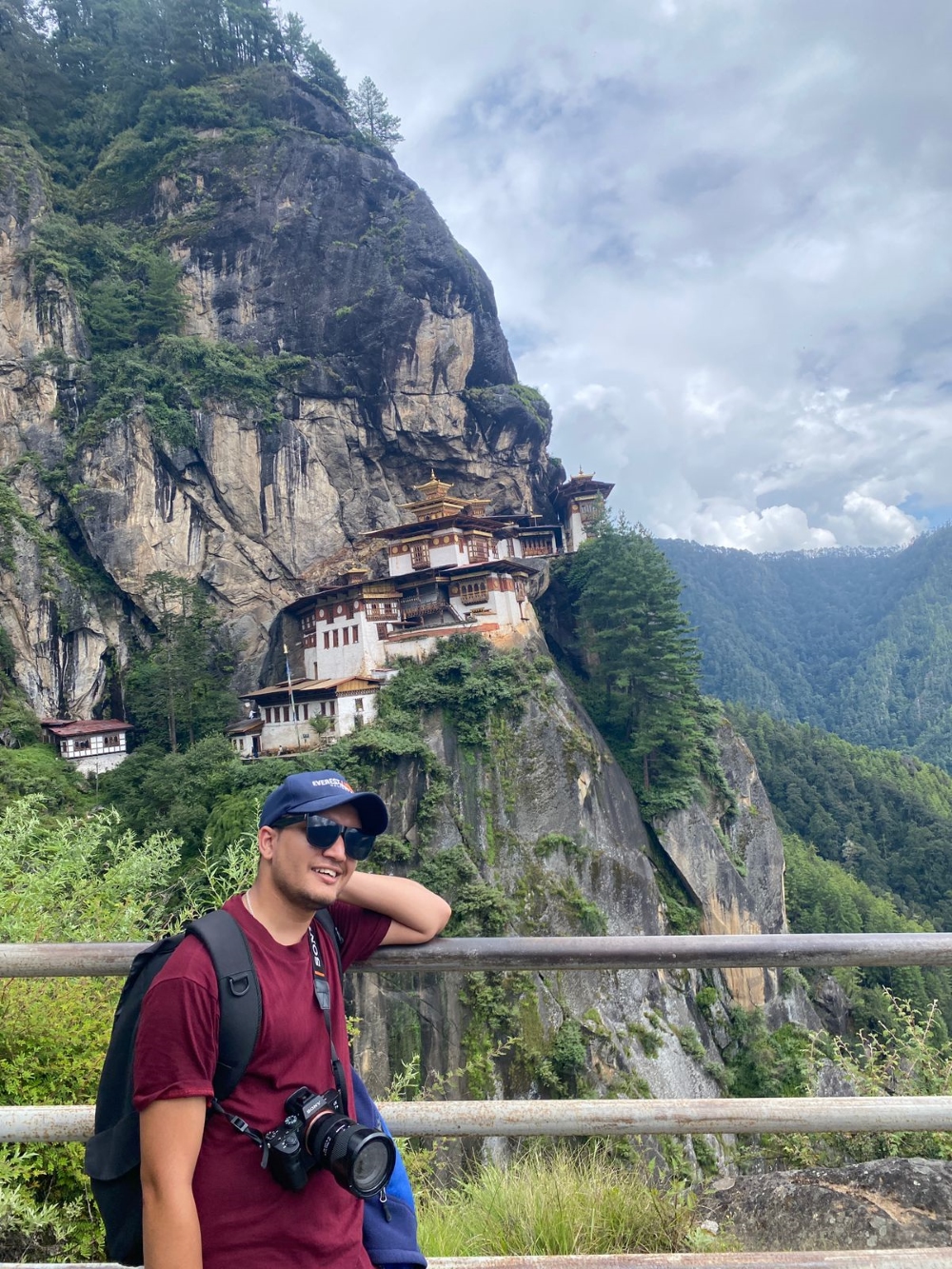
I started ELH because I got tired of travel that extracts.
I'd spent years watching tourism and travel advisors destroy destinations. Communities commodified. Culture performed. Environments degraded. And travellers wondering why their expensive trip felt hollow—beautiful on Instagram and TikTok, empty in the soul.
Bhutan showed me something different. A country where tourism participates in preservation instead of extraction. Where a guide isn't a service provider—he's a person whose livelihood depends on protecting his home. Where visitors are limited because the government knows what the land can sustain.
I built ELH around one principle: your happiness and the community's happiness shouldn't be in conflict.
When they are, you get extraction tourism—better hotel, better view, better experience for you. Worse village, worse cultural preservation, worse environment for them.
When they're aligned, you get something different. Smaller groups. Longer itineraries. Guides chosen for character, not just competence. Itineraries designed around what creates meaning for you and the place, not just what looks impressive.
This takes more effort operationally. It costs more to run small groups. It requires matching guests with guides thoughtfully. It means saying no to travellers who want to extract rather than participate.
But it works. Because transformation happens when you're genuinely welcomed into a place instead of consuming it.
Ready to Experience It
Explore our Bhutan journeys and see how we design every itinerary around this principle.
Most luxury travel sells you comfort. We sell you presence.
Most travel promises transformation. We create the conditions for transformation—slowness, authenticity, meaningful connection—and then get out of the way.
You'll return differently. Not because you did something hard, but because you remembered what it feels like to live like a human instead of a consumer.
That's what Gross National Happiness actually means. Not a policy in a government office. Not philosophy in a textbook.
It means you, sitting in a farmhouse at dusk, drinking butter tea with a family who invited you in. No performance. No transaction. Just: this is what a life built around presence looks like.
Everything else follows from that.