Most families arrive in Nepal expecting mountains. What they don't expect is how quickly this country gets under their skin — the children most of all.
I've been bringing families to Nepal for 3+ years. I've watched teenagers who barely looked up from their phones stand completely still at Poon Hill, watching Annapurna South catch the first light. I've seen fathers who thought they were booking a holiday realise, somewhere on a quiet trail above Dhampus, that they were actually having a conversation with their kids for the first time in months.
Nepal does that. Not because it's designed to. Because it's real.
This is not a list of Nepal's most Instagrammed spots. These are five family experiences I've personally curated, walked, and refined over years of bringing high-value travellers here — people who have been to the Maldives, done Tuscany, ticked Southeast Asia, and are now asking: what next?
The answer, more often than not, is Nepal.
Why Nepal Works So Well for Families
Before I get into the experiences, I want to address something I hear often: "Is Nepal actually family-friendly?"
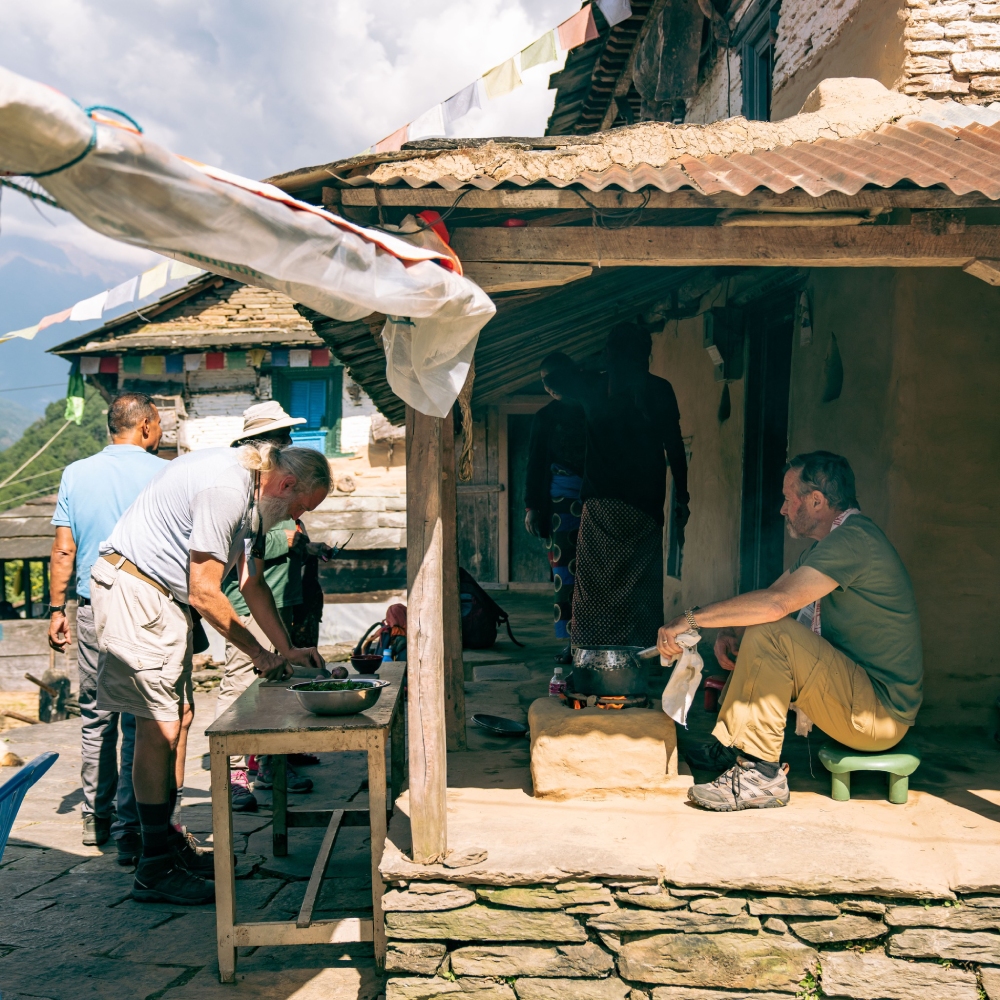
The question surprises me every time. Nepal is one of the most naturally family-oriented destinations on earth. Not because it has resorts built around children — it doesn't, and that's the point. It works because the country itself is layered enough to hold everyone's attention simultaneously. Young children find wonder in the most ordinary moments: a monk offering incense, a yak crossing a trail, a kitchen that smells nothing like home. Teenagers, who are often the hardest to engage on family travel, tend to thrive here because Nepal demands something from them — attention, presence, a bit of physical effort. Adults, meanwhile, get the depth they've been craving.
Kathmandu has direct connections from Doha, Dubai, Delhi, Singapore, Istanbul, and Bangkok. For families flying from the US or Europe, that typically means one stop in Doha — usually under 18 hours door-to-door. It's easier to get to than most families assume.
The autumn window — September through November — is when Nepal is at its finest. The monsoon has finished its work, the trails are green and washed clean, the skies are crystalline, and the mountains reveal themselves in full. Dashain and Tihar fall within this window too, which adds a cultural layer that no itinerary can replicate. If you're planning a family trip, this is the season I'd point you toward first.
Now, to the experiences.
1. The Annapurna Himalayan Retreat: Where Families Find Their Rhythm
Route: Kathmandu → Dhulikhel → Pokhara → Dhampus → Landruk → Tomijung / Majhgaon
This is the experience I recommend most often to families arriving in Nepal for the first time — particularly those with mixed ages or children under twelve.
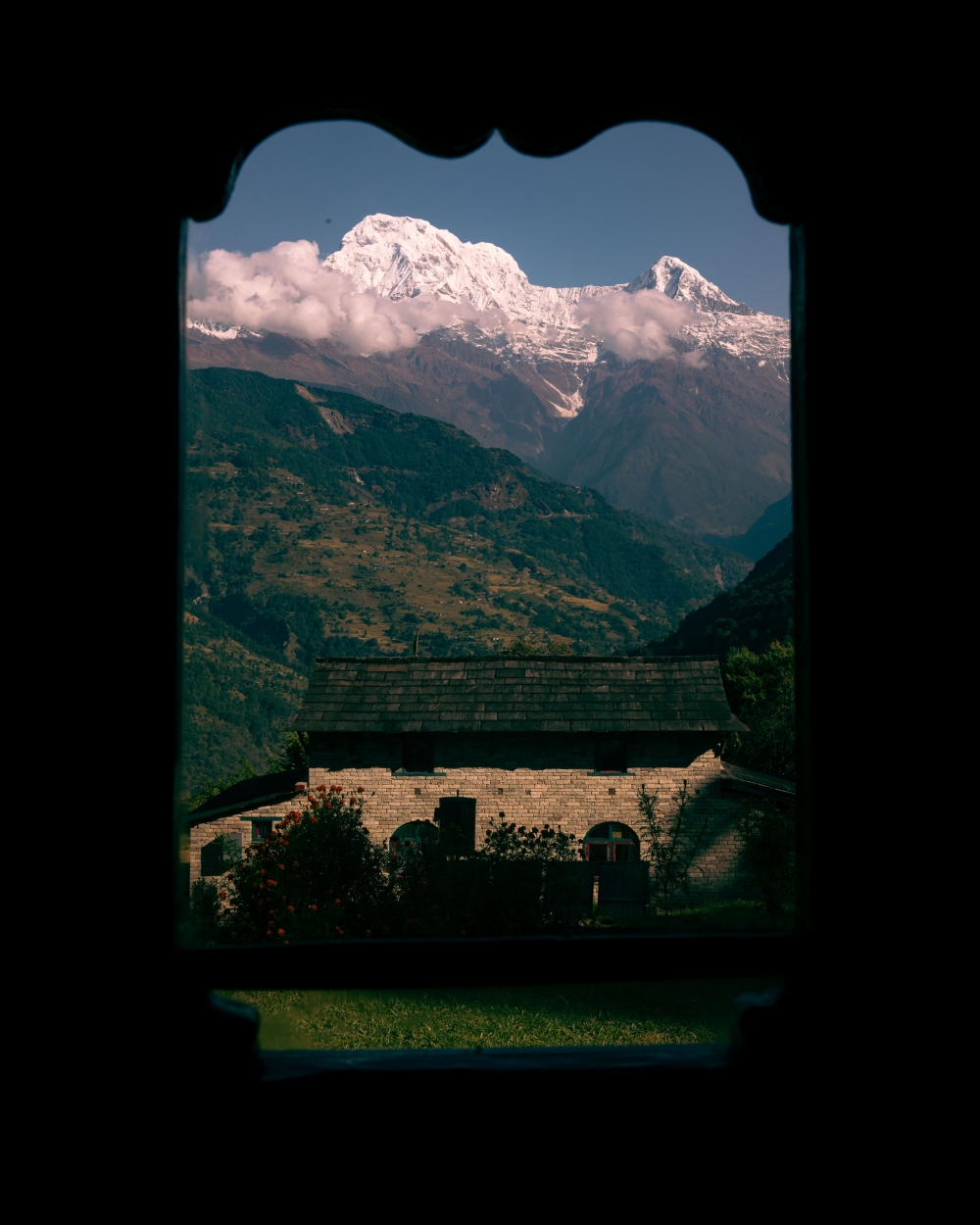
The Annapurna region is accessible in a way that Everest is not. You don't need weeks to earn the views. Within two days of leaving Kathmandu, your family can be standing in a village above the clouds, looking at a wall of Himalayan peaks that stretches further than any horizon you've seen. No altitude drama. No exhausting approach. Just the mountains, immediately and completely.
The route I've designed threads through some of the quieter parts of the Annapurna Conservation Area — deliberately bypassing the crowded Poon Hill circuit without sacrificing the views. Dhulikhel grounds the experience first, giving families a day to decompress from travel in a town where traditional Newari architecture lines cobbled streets, and the mountain panorama from the ridge above town is, frankly, an unfair introduction to what's coming.
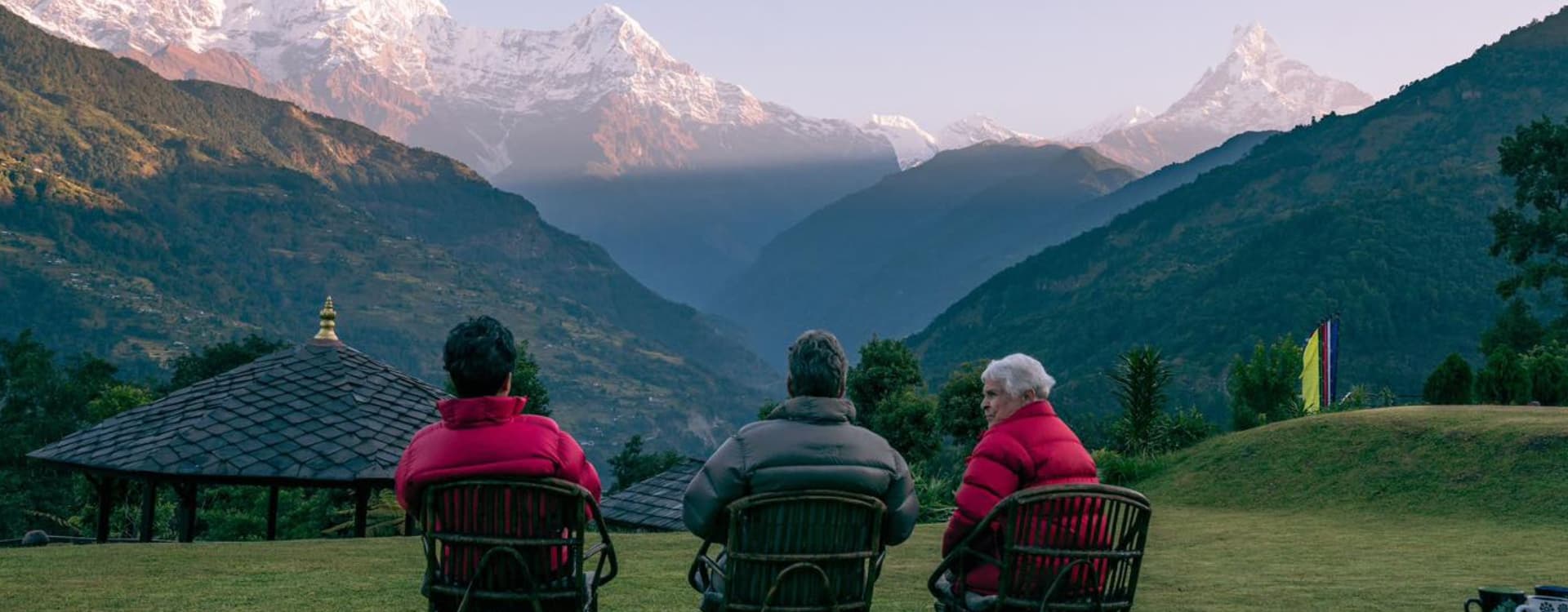
From there, you move to Pokhara — Nepal's most relaxed city, a lakeside town that even children with no interest in trekking tend to love — before heading uphill into the villages. Dhampus. Landruk. Eventually, Tomijung or Majhgaon, communities that see genuine foot traffic but not the tourist volumes of the main circuit. Families stay in lodges that I've selected for position and character, not fame. The mornings here, when the mist drops and Annapurna South appears above the treeline, are the kind of thing families still talk about years later.
Acclimatisation days aren't filler on this trip. We use them. A Sherpa cooking class — learning to make dal bhat and momos in a local kitchen — teaches children more about Nepal in two hours than any museum could. A monastery visit in the late afternoon, when the monks are at prayer, and the light through the windows is gold, is not a tourist experience. It's just life here, and we're allowed to witness it respectfully.
For families who want to extend and earn a slightly bigger view, the trail toward Ghandruk or Poon Hill is within reach. I'll be honest — those areas are popular, and popularity has consequences. But if your family has the legs and the curiosity, the extension is worth it.
Ideal for: Families with children aged 6 and above. Mixed ages. First-time Nepal visitors who want maximum impact with managed exertion.
👉 Explore the Annapurna Heritage Trail →
2. Lower Mustang: A Family Journey Into Another World
Route: Fly Pokhara → Jomsom → Kagbeni → Muktinath → Marpha → Dhumba Lake
There is a moment on the flight from Pokhara to Jomsom — about six minutes after takeoff — when the landscape below changes completely. The green hills disappear. The terrain goes ochre and carved and ancient. You're crossing into the rain shadow of the Himalayas, and it looks like nothing else in Nepal. Children press their faces against the window. Adults go quiet.
That reaction is why I include Lower Mustang on family itineraries for families who have either done Annapurna already or want something that feels genuinely off the expected path.
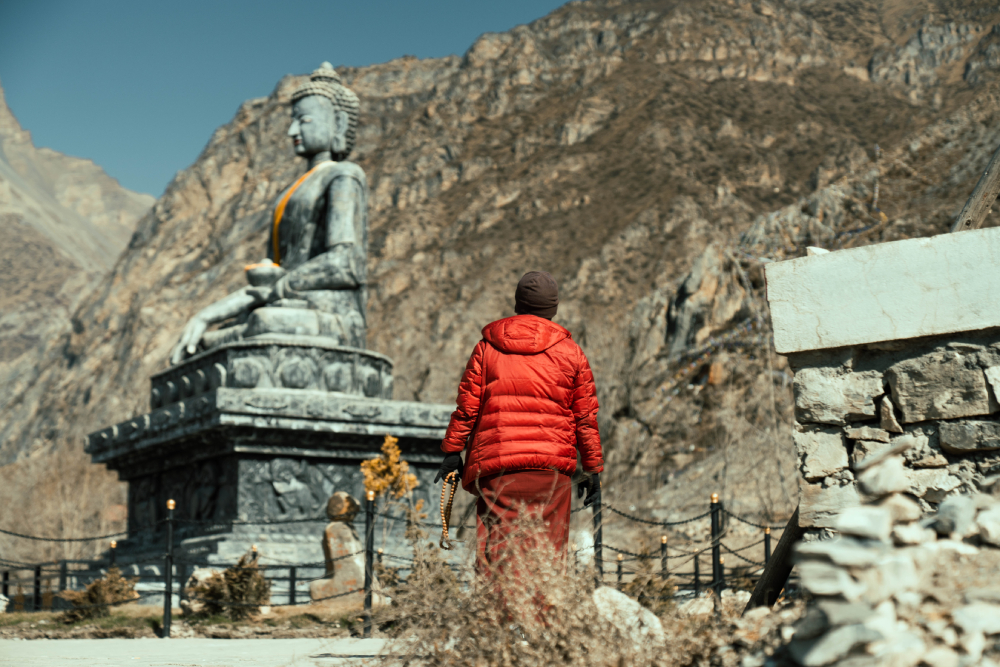
Mustang is often called "Mini Tibet" — a shorthand that undersells it, but gestures at something true. The culture here is Tibetan Buddhist, preserved in a way that feels unforced. Kagbeni, the walled medieval village at the confluence of the Kali Gandaki and Jhong Khola rivers, is one of those places that makes children ask questions adults can't easily answer: How old is this? Who built it? Why did they build it here? Good questions. The kind that doesn't happen in a hotel lobby.
Muktinath is sacred to both Hindus and Buddhists — one of the few sites in the world where both traditions worship together. The temple complex is set at 3,710 metres, which is high enough to notice but manageable for healthy families with no prior altitude complications. The jeep journey through the Kali Gandaki Valley — the world's deepest gorge — is itself an experience. Canyon walls on either side, the river threading below, mountains appearing and disappearing in cloud.
Marpha deserves a slow afternoon. Apple orchards line the village paths. The apple brandy here is something I've introduced to many a grateful parent after a long day with the children.
For families wanting a true luxury anchor in Mustang, Shinta Mani Mustang — one of the finest properties in the Himalayas — transforms this into a retreat-level experience. The property is thoughtfully designed, the spa is extraordinary, and waking up to the Nilgiri massif from your room is something I've never seen a guest be unmoved by.
Ideal for: Families with children aged 8 and above. Those who've done Annapurna or Pokhara and want cultural depth and dramatic landscape without demanding trekking.
👉 Explore Upper Mustang by Luxury Jeep →
3. Glamping in the Himalayas: Two Experiences Worth Knowing
Some of the most memorable family trips I've designed involve no luxury hotel at all — at least not in the conventional sense. Nepal's landscape is too varied and too beautiful to experience entirely from a lodge. These two glamping experiences are built for families who want to sleep inside the country, not beside it.
Phaplu and the Everest Foothills — Sherpa Country, Without the Crowds
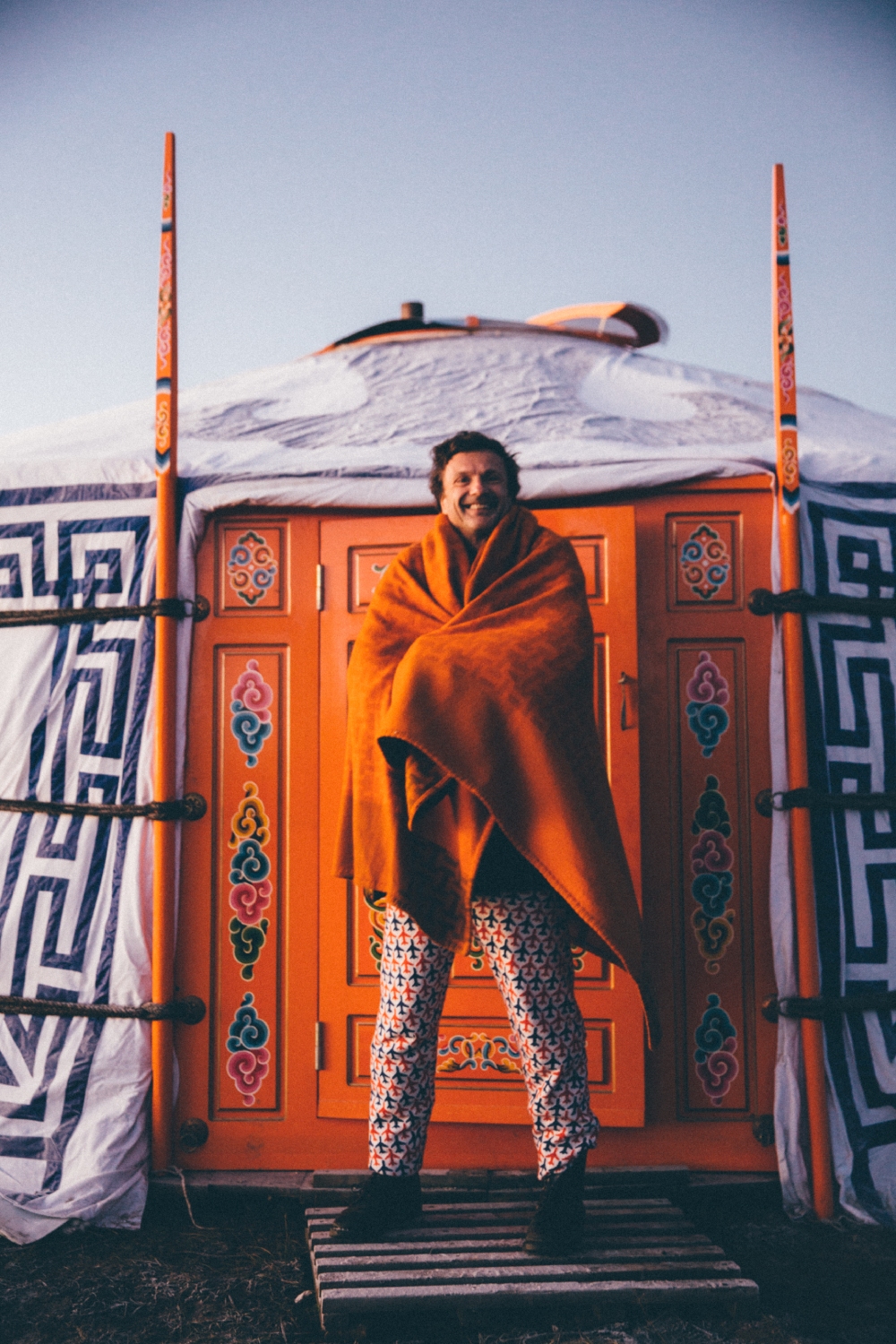
Phaplu sits in the lower Everest region, accessible by a short flight from Kathmandu. It is, in my view, one of the most underused entry points into Sherpa culture — precisely because it hasn't been overrun in the way that Lukla and Namche have. The Happy House Retreat here is not a luxury resort. It is something better: a thoughtfully run lodge in a village where life continues around you as it always has.
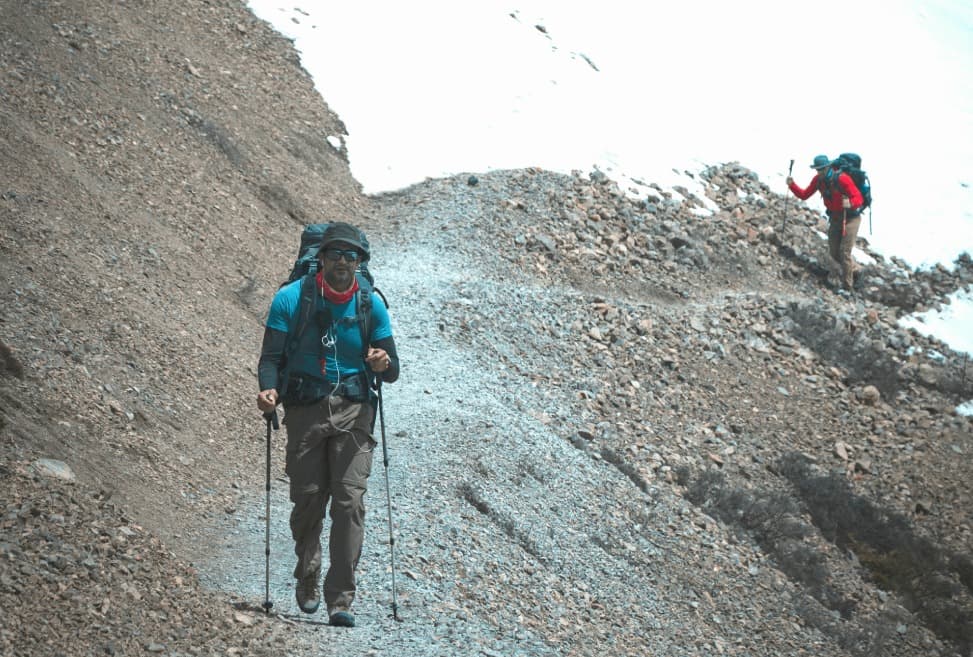
From Phaplu, families hike to Chiwong Monastery — an active monastery perched above the valley, where monks will sometimes share tea and conversation if approached respectfully and unhurriedly. From there, the trail continues to Rantange Ridge, where on a clear autumn morning, Everest appears above the ridgeline without warning. Children have no frame of reference for how large it is. That moment of recalibration — realising the mountain is still miles away and yet fills the horizon — is one I've watched many times and never grown used to.
The night spent in expedition-style tents on the ridge is optional but worth doing with older children. The stars at that altitude, in autumn, are something that no screen can prepare you for.
For families who want to add Pikey Peak — Sir Edmund Hillary's own favourite viewpoint, with panoramas spanning from Kanchenjunga in the east to Dhaulagiri in the west — the extension is available and exceptional.
Dhading and Ruby Valley — Village Life at Its Most Honest
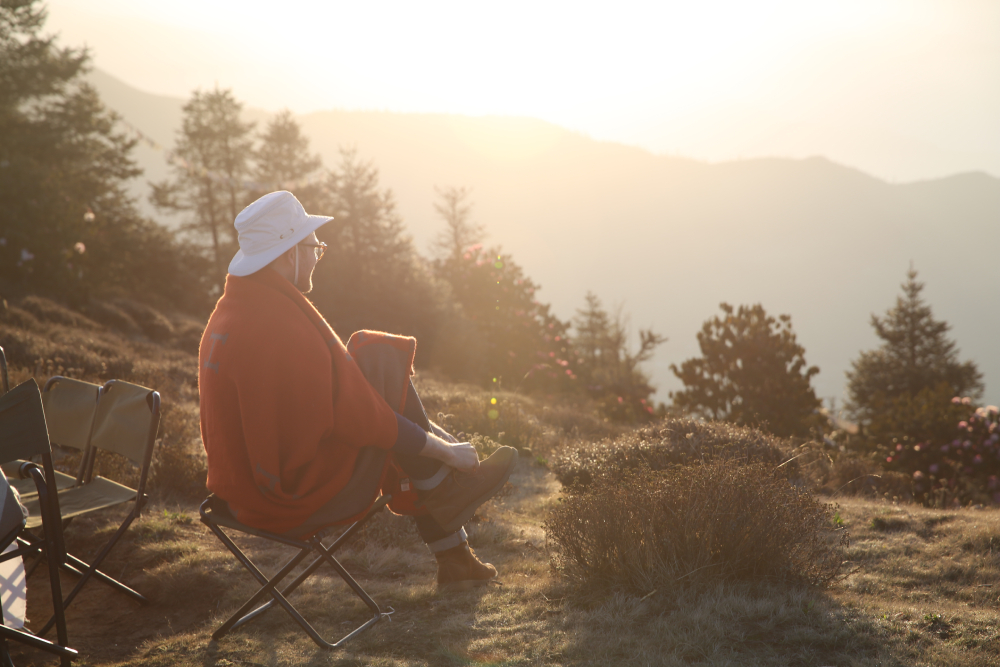
Four to five hours from Kathmandu by private jeep, Achane Village in Dhading sits above the Budhi Gandaki River with views toward the Langtang range. This is a full camping experience — not a shorthand for roughing it, but a genuine immersion into rural Nepali life with the comfort infrastructure that a luxury operator can provide.
Families join the village in its daily rhythm. Farming. Harvesting. Milking. There is something quietly powerful about children — often from cities, often from lives of considerable comfort — working alongside a Nepali family and realising how much effort goes into a single meal. It recalibrates things. Parents notice it happening in real time.
Evenings are spent around a bonfire under the Langtang peaks. Meals are locally sourced and cooked over an open fire by our team. For families wanting an arrival that matches the experience, a private helicopter transfer from Kathmandu turns the journey into its own event.
Ideal for: Adventurous families with children aged 8 and above. Families who want their children to encounter genuine Nepal, not a curated version of it.
👉 Explore the Everest Off-The-Beaten Glamping Trek → 👉 Explore the Cross-Cultural Village Experience in Dhading →
4. Chitwan National Park: Jungle, Wildlife, and the Tharu World
Properties: Meghauli Serai (Taj Safari), Barahi Jungle Lodge, Siddhartha Vilasa Banbas
If the mountains are Nepal's most obvious gift to families, the Terai lowlands are its most underestimated one.
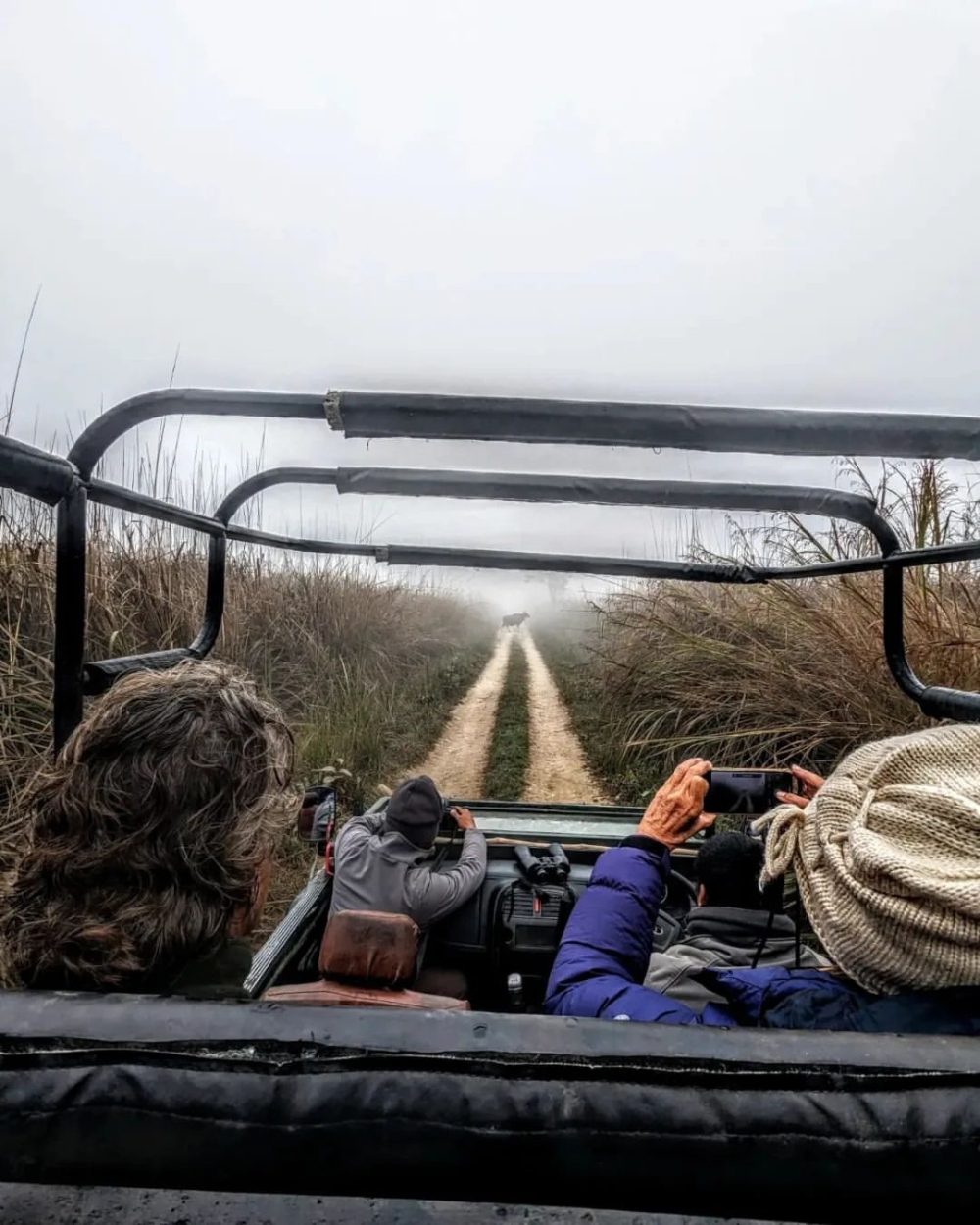
Chitwan National Park sits in the southern flatlands, a UNESCO World Heritage Site protecting one of Asia's last significant populations of one-horned rhinoceros and Bengal tigers. For families, particularly those with children who have exhausted their interest in mountain scenery by day three, Chitwan is the pivot point that saves the itinerary — and often becomes the highlight.
Jeep safaris here are serious. You are in the buffer zone and the core zone of a functioning national park, guided by naturalists who know this forest the way I know the trails above Namche. The game viewing in autumn is excellent — the grass has been cut, visibility is high, and the resident rhino population is reliably active near the riverbanks at dawn. Tiger sightings are not guaranteed, but in October and November, they're more likely than at any other time of year.
Beyond the safaris, Chitwan offers something I think is genuinely important for families: an encounter with the Tharu community. The Tharu are the indigenous people of the Terai, with a culture entirely distinct from the hill communities most visitors encounter in Nepal. An evening with a Tharu family — watching the stick dance, sharing food, learning about a way of life built in the shadow of the jungle — is the kind of cross-cultural moment that travel is supposed to produce and often doesn't.
I use Chhannu Dai, our senior Tharu naturalist, for Chitwan itineraries. He is the kind of guide who notices a rhinoceros footprint from the jeep at 40 kilometres per hour and knows, from the depth and angle of the print, how recently it was made. Children are transfixed by him.
The lodge options I've listed above are all positioned within or directly adjacent to the park, with river-facing rooms and naturalist-led programming. Meghauli Serai, as part of the Taj Safari portfolio, is the most polished, but Barahi Jungle Lodge has a character and intimacy that families with younger children often prefer.
Ideal for: All ages. Works exceptionally well as part of a combined Nepal itinerary — typically days 7–10 after the mountains.
👉 Explore Luxury Chitwan National Park →
5. Everest by Helicopter: The Himalayan Moment, Earned in Hours
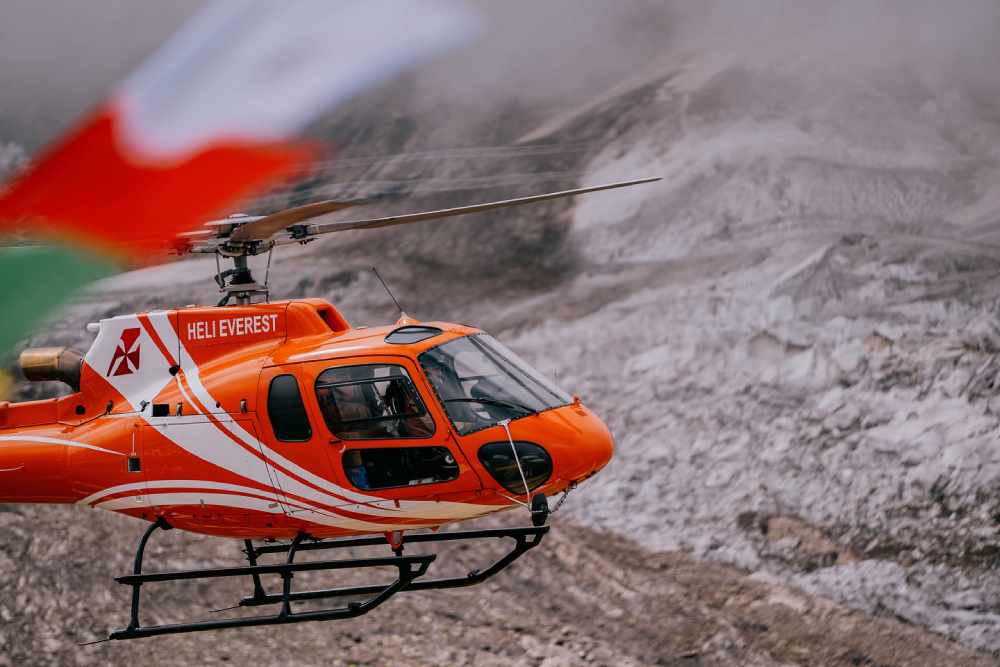
For families where trekking isn't an option — whether because of age, fitness, time, or simply preference — the Everest helicopter experience is the most direct route to a genuine encounter with the world's highest mountain.
Let me be clear about what this is and what it isn't.
It is not a substitute for standing at Everest Base Camp after ten days on the trail. That experience has a different quality — a weight that comes from earning the view. The helicopter is something else: access, immediate and extraordinary, to an altitude and a landscape that most humans never see in their lifetimes.
We fly from Kathmandu at dawn, when the air is coldest and clearest. The route takes you directly into the Khumbu, over ridgelines that trekkers spend days crossing. The helicopter lands at Kalapatthar — subject to Civil Aviation Authority permit approval — where Everest fills the entire sky to the northeast, so close that the detail of the Southwest Face is visible. Children who have never shown any interest in mountains stand here and don't speak. I've watched it happen more times than I can count.
From Kalapatthar, we continue to Hotel Everest View at Syangboche, where breakfast is served at 3,880 metres with panoramic views of Everest, Lhotse, Ama Dablam, and Thamserku. The hotel itself is a remarkable place — eccentric, high-altitude, with a history stretching back to the Japanese expedition era. I've written about it in detail here →.
For families choosing the two-day version, the second morning at Hotel Everest View — waking before dawn and watching the light hit the summit pyramid from your bed — is the moment that tends to follow people home. The village of Khumjung, a short walk from the hotel, is traditional Sherpa country: a school founded by Hillary, a monastery holding what the community believes is a Yeti scalp, a life lived at altitude in a way that has no parallel anywhere else on earth.
Ideal for: All ages, including very young children and elderly grandparents. Families with limited trekking capacity. Works as a standalone 1–2 day experience or combined with any itinerary above.
👉 Explore the Everest Helicopter Tour with Hotel Everest View →
OR,
Everest Mountain Flight: Himalayas at Dawn, Home by Breakfast
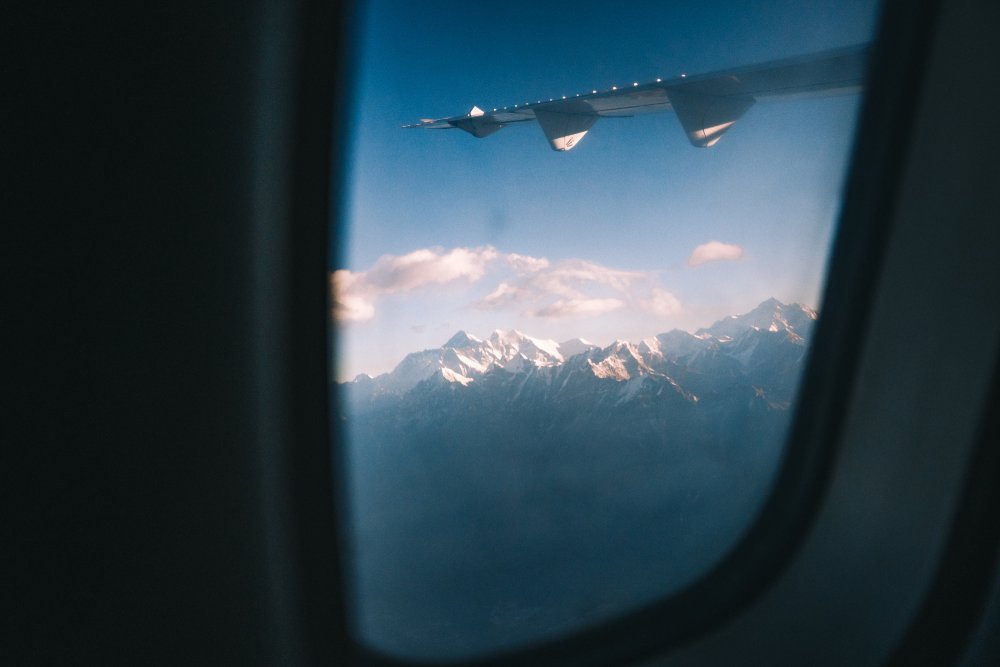
For families with a single spare morning in Kathmandu — or those who want one final Himalayan moment before flying home — the Everest Mountain Flight is the most time-efficient way to see the roof of the world.
The flight departs early from Tribhuvan Airport, climbs east along the Himalayan arc, and gives every passenger a window seat and an unobstructed view of Everest, Lhotse, Makalu, and Cho Oyu in a single sweep. No landing. No altitude. No physical demand whatsoever. An hour in the air, and you've seen a horizon that most people never see in a lifetime.
I'll be honest about what this is and what it isn't. It doesn't have the weight of the helicopter experience — you're further from the mountains, and you don't step outside into the cold and silence of the Khumbu. But for families with very young children, elderly grandparents, or simply a tight schedule, it's a genuine encounter with the Himalayas rather than a compromise. Children are glued to the window the entire flight. That counts for something.
It works beautifully as a half-day add-on to any Kathmandu cultural itinerary, or as a standalone morning experience on a short stopover.
Ideal for: All ages. Families with very limited time or those adding a quick Himalayan moment to a broader Nepal itinerary.
👉 Explore the Everest Mountain Flight →
+1: Should Your Family Consider Bhutan?
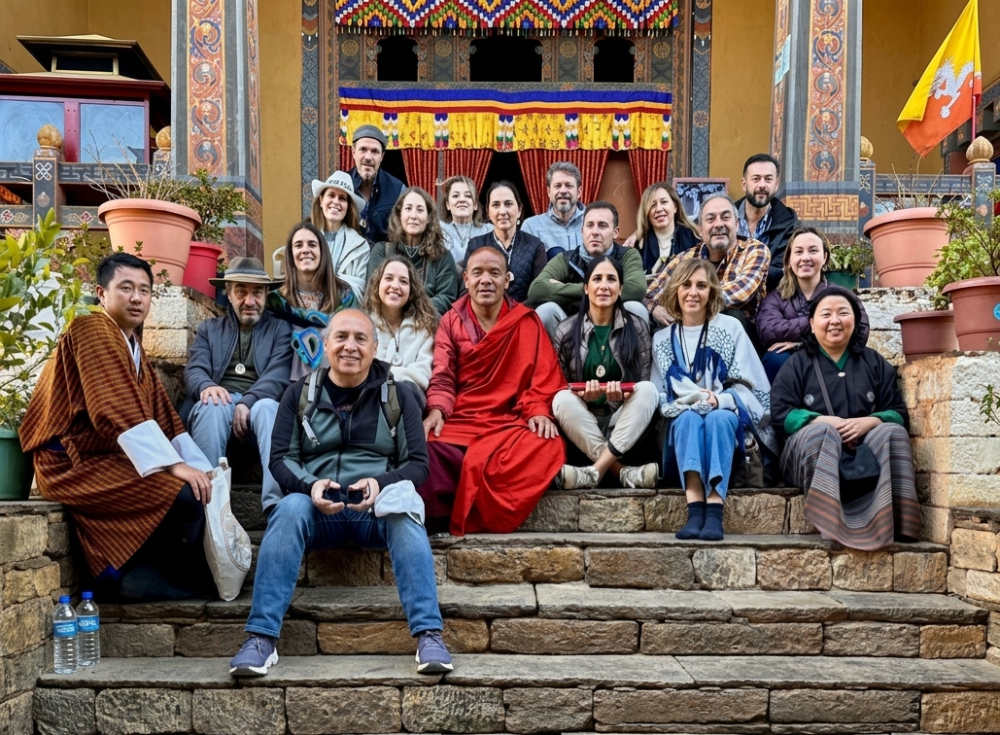
If your family has two weeks or more, and particularly if you've already been to Nepal, I want to raise something most operators don't mention in a Nepal blog: Bhutan.
Bhutan is not an extension — it's a destination in its own right. But it pairs with Nepal in a way that nothing else does. The two countries share a Himalayan horizon but almost nothing else: different culture, different architecture, different philosophy of what a country is for. Nepal moves fast and loud. Bhutan is deliberate and quiet. Children who experience both in the same journey often come away with a sense of contrast that opens something in them — an understanding that there is no single way to live.
Bhutan charges a Sustainable Development Fee of $100 per person per day. Families with three or four members do the mental arithmetic quickly — I understand the pause.
Here's how I frame it: this isn't a tourism surcharge. It's the mechanism by which Bhutan funds its public healthcare, free education, and the infrastructure that keeps one of the world's most intentional countries functioning without selling itself to mass tourism. When your children walk into a monastery in Punakha that hasn't been converted into a gift shop, or watch monks debate in a courtyard that hasn't been roped off for photographs — that's the SDF working. The country looks the way it looks because it decided that volume was never the goal.
Children under 5 enter free. Ages 6 to 12 pay a reduced rate.
The mandatory guide, which some families read as a restriction, is in practice one of the best things about Bhutan. Our guides — Phub Tsering, Karma, and Kinley — are not tour leaders. They are interpreters of a culture with no real Western equivalent. Without them, you see Bhutan. With them, you begin to understand it.
👉 Explore Luxury Bhutan Family Tours →
When to Go: The Honest Seasonal Guide
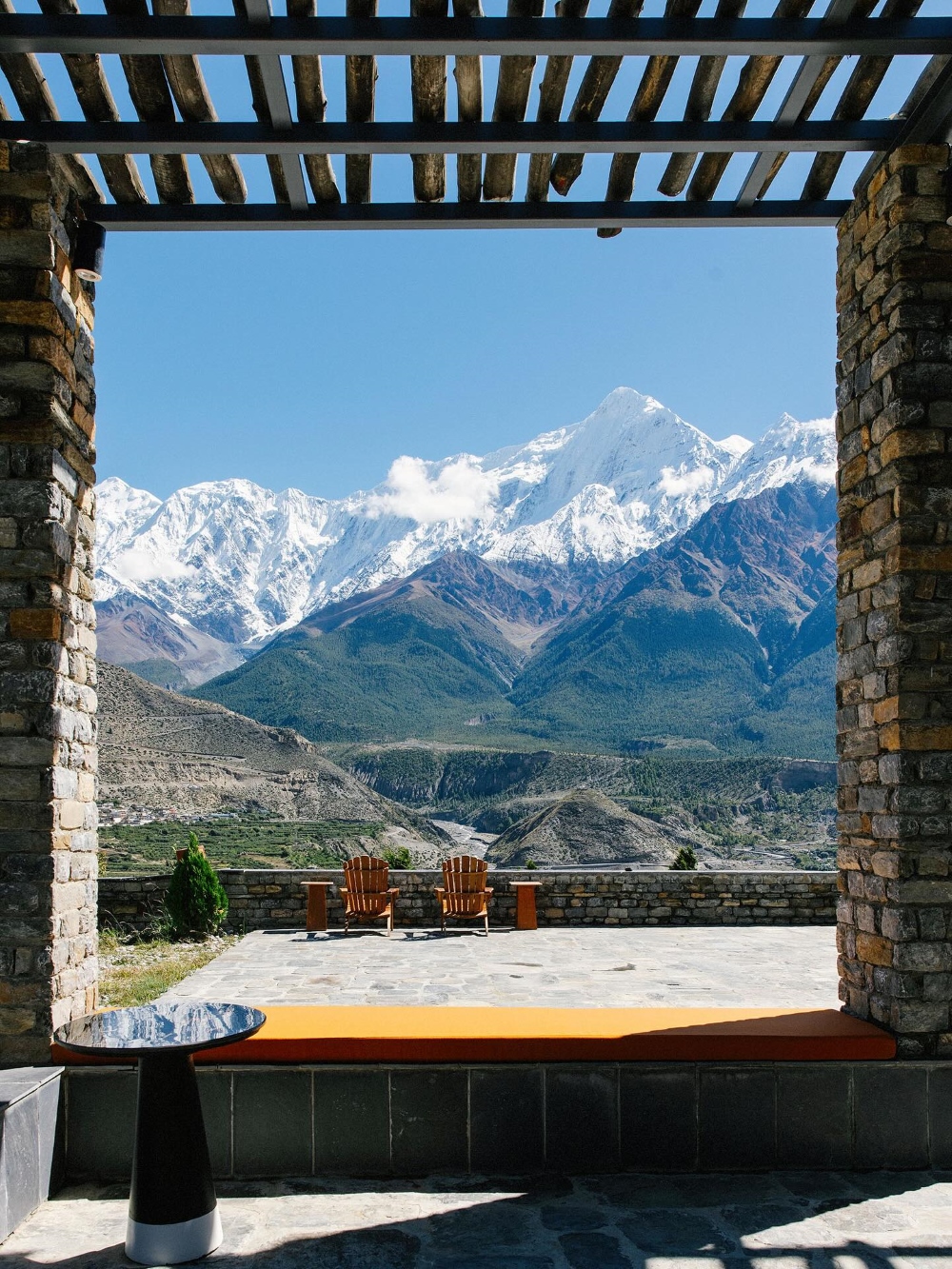
Autumn (September–November) — Our primary recommendation.
The monsoon ends in late September, leaving trails clean, skies clear, and the mountains fully visible. October and November are the peak months for good reason: the light is exceptional, temperatures are comfortable from the lowlands to altitude, and the rhododendron forests above Dhampus are in their second bloom. Dashain — Nepal's largest festival — falls in October, and travelling during this period gives families a chance to encounter the country in celebration. Book early; October fills fast.
Spring (March–May) — Our secondary recommendation.
The rhododendrons bloom red and pink from 2,000 metres upward, and the mountains are clear before the pre-monsoon haze builds in May. The Annapurna and Mustang experiences work beautifully in spring. Upper Mustang is particularly good in May, after the snow clears from the high passes.
Winter (December–February) — For Chitwan and Kathmandu.
The mountains are cold, and some high-altitude routes are closed, but Chitwan in winter is superb. Cooler temperatures bring wildlife to the water, game viewing is excellent, and the lowland lodges are comfortable year-round. A Kathmandu cultural itinerary combined with Chitwan works well for families visiting during this window.
Monsoon (June–August) — Generally not recommended for families.
Trails are slippery, leeches are active, and mountain views are unreliable. Mustang is the exception — the rain shadow keeps it dry, but it requires more planning.
Frequently Asked Questions: Family Holidays to Nepal
What is the minimum age for trekking in Nepal with children?
There is no official minimum, but practically speaking, children aged 5 and above manage the gentle trails around Dhampus and Landruk without difficulty. For higher-altitude experiences like Muktinath (3,710m), I'd recommend children be at least 8 and in good health. The helicopter experiences and Chitwan safari are appropriate for all ages, including infants.
Is Nepal safe for families with young children?
Yes — particularly when travelling with an experienced operator who pre-vets every element of the journey. The risks that exist in Nepal (altitude sickness, variable road conditions, occasional political disruptions) are all manageable with proper planning. I've navigated all of them, including Nepal's 2025 political unrest, without disruption to client itineraries. Local knowledge is the safety net that generic booking platforms don't provide.
Do we need vaccinations to visit Nepal?
The standard recommendations include Hepatitis A, Typhoid, and ensuring routine vaccinations are up to date, for jungle-based itineraries like Chitwan, a malaria risk assessment is advisable (the risk is low but exists in the Terai lowlands). Consult a travel health clinic at least six weeks before departure.
How do we handle altitude with children?
For experiences above 3,000 metres — specifically Muktinath and the Everest helicopter — we build acclimatisation time into the itinerary and brief families thoroughly in advance. The helicopter experiences allow for rapid descent if any family member shows signs of altitude sickness, which makes them lower-risk than trekking approaches. I advise against rushing altitude with children; we never do.
What is the Sustainable Development Fee for Bhutan?
$100 per person per day (as of 2025), reduced from the previous $250 rate. Children under 5 are exempt, and children aged 6–12 pay a reduced rate. This fee funds public services across Bhutan and is paid directly to the government.
Can we customise these itineraries for our family?
Every itinerary I design is built from scratch around the specific family's ages, interests, pace preferences, dietary requirements, and guide language needs. Nothing here is a fixed package. If you want the Annapurna experience with an extra acclimatisation day and a cooking class added, we can build that. If you want Chitwan first and the mountains second, we'll reverse it. The structure is mine; the itinerary is yours.
A Final Thought
I came to Nepal for the first time at 13. I've now spent the better part of 3+ designing journeys here for people who are asking the same question I was asking as a teenager on that first trip: what is this place, and why does it feel so different from everywhere else?
I still don't have a complete answer. But I've watched enough families walk off a trail at dusk, children asleep on their parents' shoulders, to know that Nepal finds a way of answering it for them.
If you're ready to start planning — or just want to talk through which of these experiences fits your family — I'd like to hear from you.
👉 Get in Touch with Everest Luxury Holidays →
Further reading:
How to Design a Luxury Nepal Tour→