A guest asked me last spring what our wellness itinerary included. I told her: a farmhouse in Ghandruk with no spa at all. A wood stove. A family who'd been hosting trekkers since her own grandparents' generation passed through. A night sky with no light pollution for forty kilometres in any direction. She went quiet for a second, then said something I've been turning over since. "I think that's what I actually wanted. I just didn't know how to ask for it."
Most of what gets sold as luxury wellness in Nepal is a trekking itinerary with a spa afternoon stapled to the end. Most travellers who'd genuinely benefit from what this country does to a person have no way of telling the difference until they're standing inside the real version of it.
Why "Wellness Retreat" Has Become a Meaningless Phrase
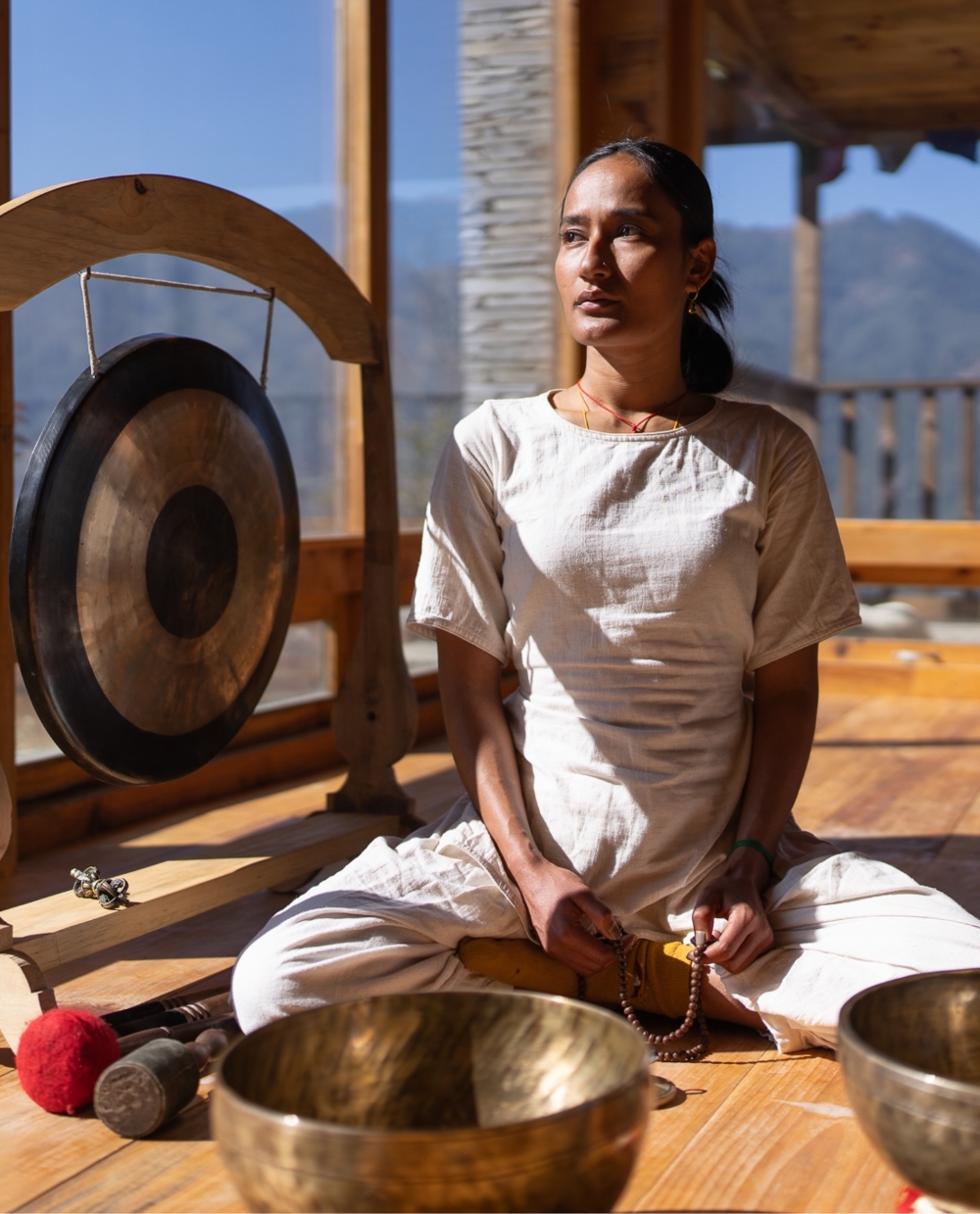
Search "wellness retreat Nepal" and the results start blending together by the third page. Rejuvenate. Sanctuary. Mindful. Journey. Balance. The words rotate, but underneath them it's usually the same product: a hotel with a spa menu, a yoga instructor booked for 7 am, a "digital detox" that just means the Wi-Fi password is written on a card instead of posted at reception. A massage after four days of walking is a good massage. Nobody's arguing otherwise. But treating that massage as the wellness misses what's actually working on the traveller — everything happening around the treatment room, long before they ever walk into it.
Nepal was doing this before the "wellness industry" existed as a category to sell into. A monastery bell at four in the morning doesn't know it's part of anyone's itinerary. A village in the Annapurna foothills that has kept roughly the same rhythm of planting, harvest, and prayer for three centuries isn't performing that rhythm for a passing group — it's just how the place runs, watched or not. A well-built trip gets you close enough, and slow enough, to feel that rhythm instead of photographing it through a bus window.
The Mechanism Behind Himalayan Wellness Travel
The treatment isn't the wellness. The treatment is a nice half hour. The actual wellness happens in the hours around it, in a place already doing the work on you whether or not you paid extra for the privilege.
Altitude Does the Work Before You've Made a Single Deliberate Choice to Relax
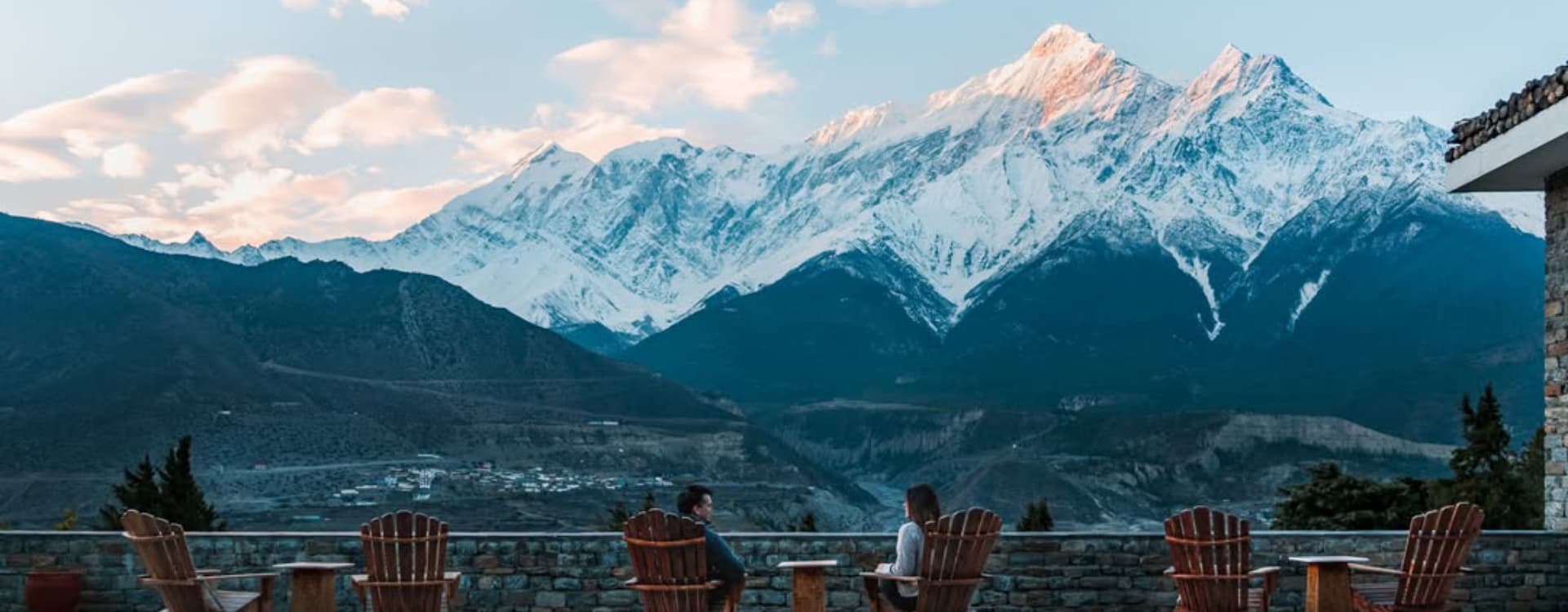
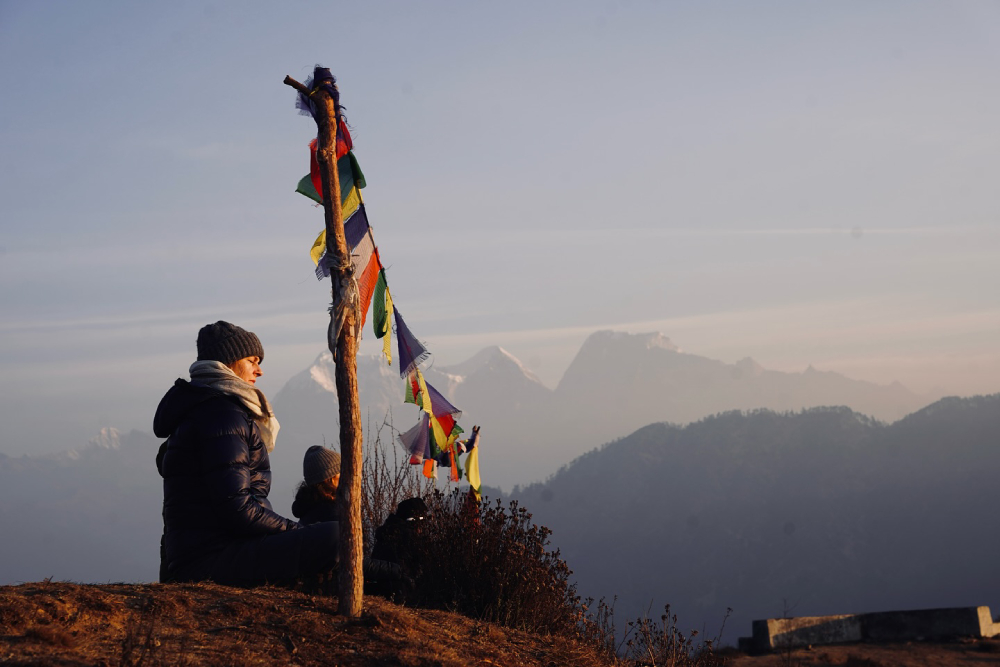
Shinta Mani Mustang sits at 2,800 metres, on a shelf above the Kali Gandaki — the river that carved the deepest gorge on the planet directly below the lodge. Guests fly in from Pokhara, or take the helicopter transfer, and within an hour of landing they're at an altitude most people have never spent a night at, without having climbed a single step to get there. That's a different kind of altitude exposure than a trek produces — no gradual acclimatisation, no days of walking up to it. The body just has to catch up.
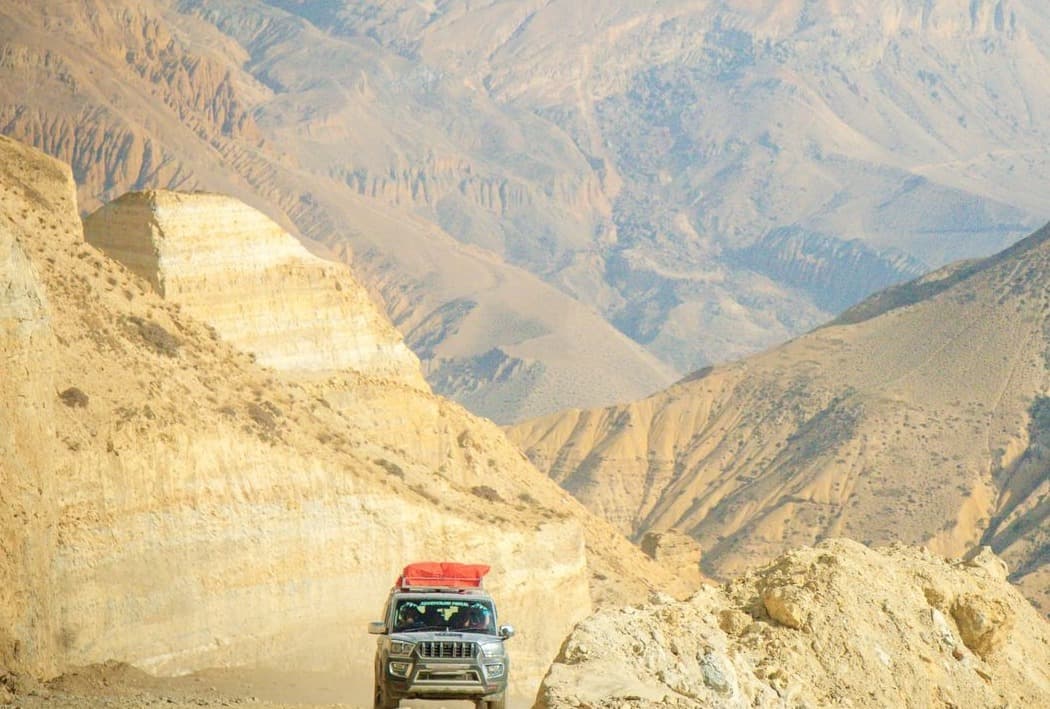
What guests report, consistently, is the wind more than the height. Mustang's signature afternoon wind picks up like clockwork most days, dry and constant, and it does something to how people move through the rest of the day — conversations get shorter, walks get quieter, everyone ends up back at the lodge earlier than planned, not because anyone suggested it. The dryness of the air plays a part too. This is high desert, not alpine forest, and the starkness of it seems to switch something off in people that a green, familiar landscape doesn't.
One recent guest, writing about this exact stay, described the Nilgiri views from his room and said the wellness portion of the trip "became a healing trip" almost by accident — he'd expected the culture and the landscape to be the point, and the actual shift caught him off guard.
A Monastery Running on Its Own Clock Resets Yours
The value here isn't a single striking day. It's five consecutive nights in the same lodge, the same room, the same view of Nilgiri each morning — long enough that the place stops feeling like a stop on an itinerary and starts feeling like where the trip actually happens. In between the Amchi consultations, days go to Thini village, Dhumba Lake, Marpha's orchards, Jharkot's gompa.
None of these is packaged as "activities" in the usual sense; they're simply where you end up if you're staying in Mustang long enough to notice what's around it rather than just passing through on the way to somewhere else. That distinction — passing through versus staying put — is most of what separates this from a standard Annapurna itinerary with a wellness label stuck on it.
Where This Stops Being Philosophy: A Ten-Day Route Through Annapurna
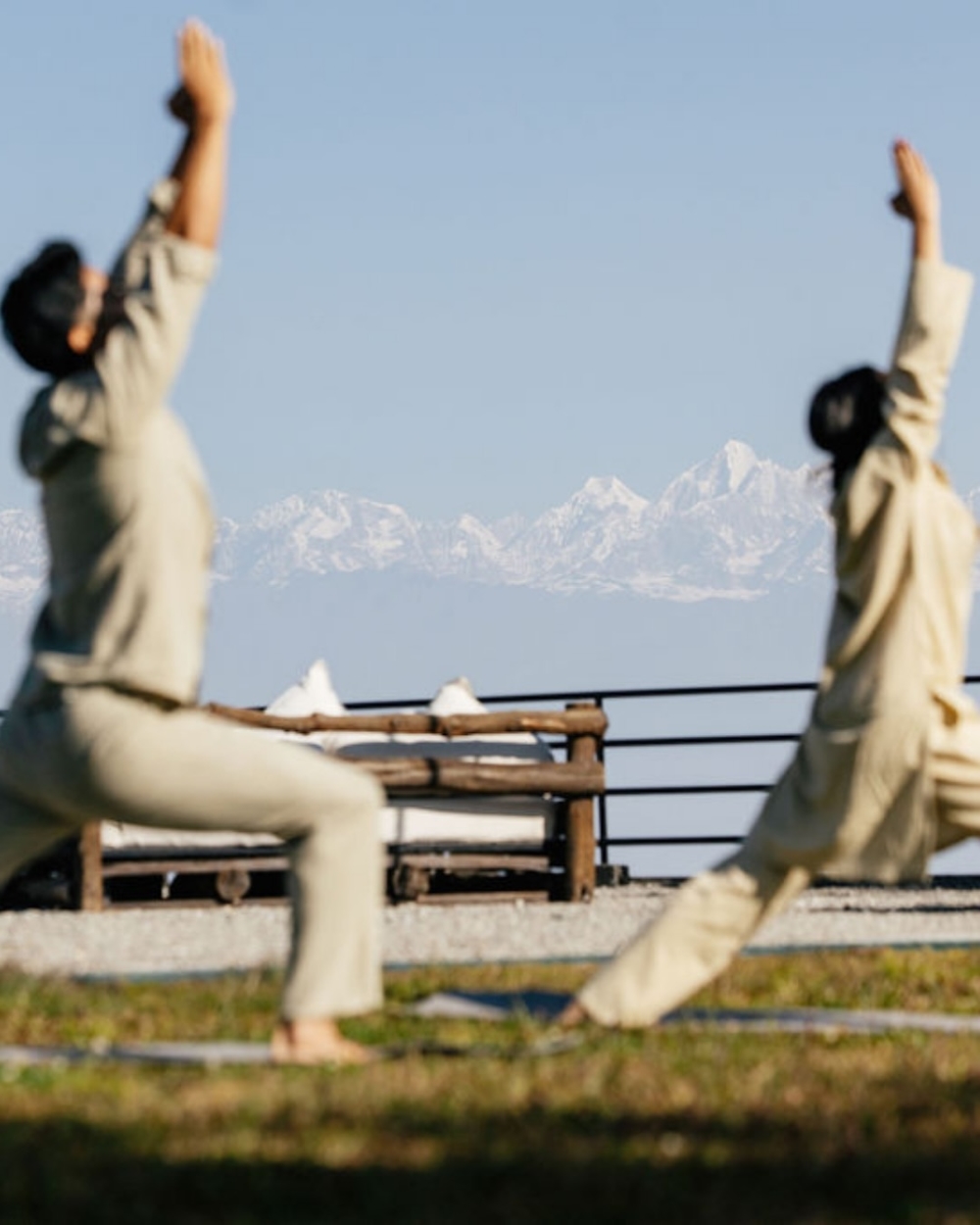
I can talk about mechanism for another few paragraphs, but the honest version of this article points at something concrete. The Timeless Way of Wellness in Annapurna is our ten-day route built on the logic above, and it doesn't try to squeeze wellness into a trekking schedule. Five of those nights are spent in one place, Shinta Mani Mustang, with nowhere else the day is required to go.
Dr Tsewang Gyurme Gurung and the Sorig Wellness Centre
The lodge's resident Amchi, Dr Tsewang Gyurme Gurung, isn't a spa hire brought in for the season. Guests meet him twice across the stay — once on arrival for an initial consultation, and again on the retreat day, when he tailors treatments using traditional herbs, oils, and compresses specific to what he found the first time. That's the actual structure: diagnosis, then days of village life and monastery visits in between, then a second appointment built on what changed. A single spa afternoon can't do that, but a five-night stay can.
Marpha, Jharkot, and the Villages That Aren't on the Way to Anywhere
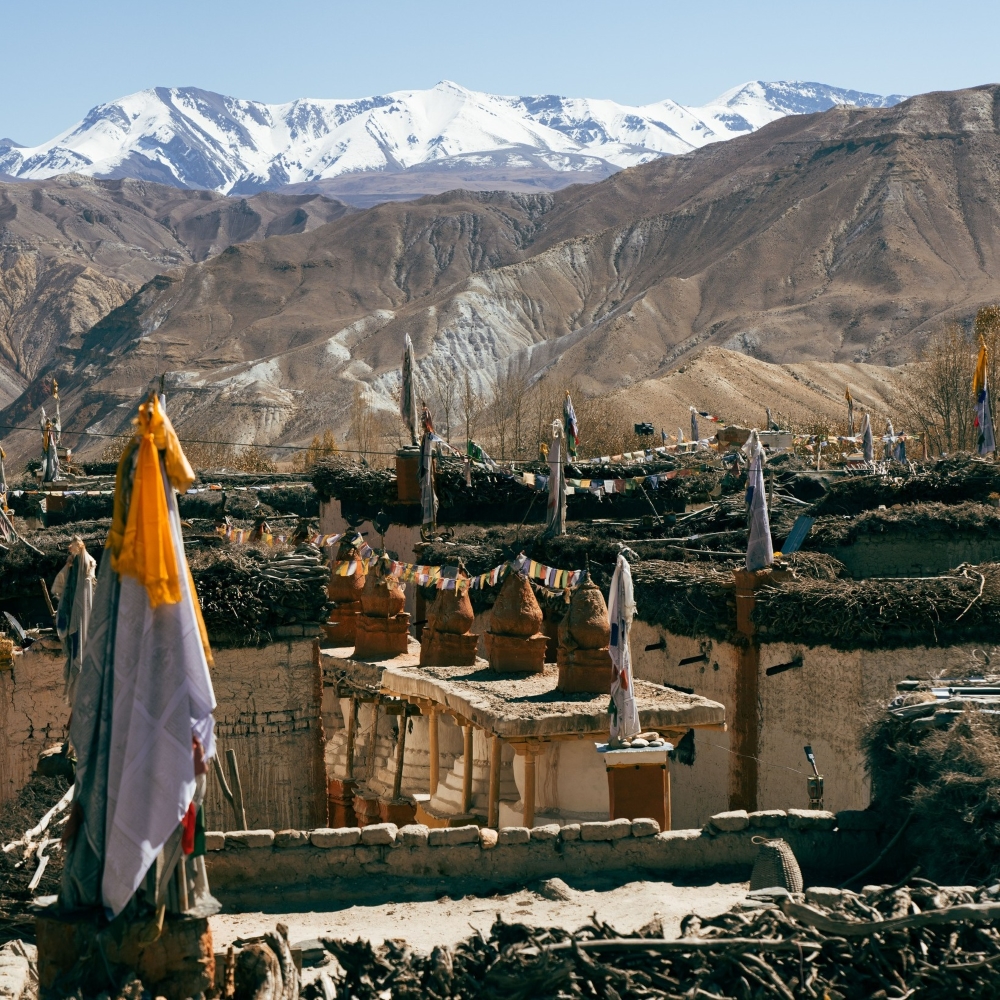
The days between the two Amchi consultations aren't padding. A hike to Dhumba Lake, sacred to both Buddhist and Hindu communities, leads to Khutsab Terenga Monastery perched above it. From there, on to Marpha — a village known for apple orchards and whitewashed stone alleys — where lunch is served in the home kitchen of Mrs. Kamala, a local cook who feeds guests a traditional Thakali meal rather than a hotel's idea of one. Later in the stay, a drive to Jharkot's centuries-old gompa, then a walk through orchards and over old bridges to Jhong village, ending in a monastery-side lunch prepared by the lodge's own team. None of it was built around a photo opportunity. It's built around where people in this valley have actually been eating, praying, and living for generations, and guests are simply let into it for a few days.
A Small Moment I Keep Coming Back To
One guest on this exact trip mentioned, almost as an aside in his review, that their guide in Mustang, Narayan, seemed to know the region from every angle at once — its history, its politics, the contemporary version of Nepal sitting alongside the ancient one. Not the usual guide script, delivered on schedule at each stop. Something closer to a person who'd spent years actually thinking about the place he was walking guests through, and who answered whatever came up rather than what was printed on a laminated card.
What's Actually Included in a Premium Wellness Package
Since this comes up constantly, worth answering directly. The Timeless Way of Wellness in Annapurna runs $8,495pp based on two sharing over ten days, and includes private transfers by road and helicopter where the route requires it, accommodation throughout including the stay at Shinta Mani Mustang, full board built around regional Nepali and Tibetan-influenced cooking rather than a fixed Western menu, a dedicated guide for the walking days, and the rest and yoga programming at the lodge. What it doesn't include is a rigid daily schedule of treatments — mornings shift depending on weather, group energy, and how everyone's handling the altitude, because a programme that can't flex isn't restful. It's just another fixed itinerary wearing a different label.
Ayurvedic elements show up here too, though the honest framing is that Nepal's Ayurvedic tradition runs alongside Tibetan medicine and Buddhist healing practice rather than standing apart from them. A guest chasing a pure Ayurveda-only programme is often better served in Kerala. What Nepal offers instead is the blend — Ayurvedic principles, Tibetan Amchi consultation where the route passes through the right region, and monastic practice, folded together rather than separated into treatment-room categories.
Nepal Wellness Year 2027
In April 2026, Nepal's Tourism Board and Ministry of Culture, Tourism and Civil Aviation announced Nepal Wellness Year 2027, timed to the country's newly UN-recognised International Wellness Day and backed by a ten-year national wellness tourism strategy running through 2035. The aim is to shift Nepal's global reputation from adventure-first toward a genuine centre for yoga, meditation, Ayurveda, and natural healing, targeting travellers who spend well above the average visitor rather than chasing volume.
What that means practically, for anyone reading this now rather than a press release later: demand for real wellness routes through Nepal is about to climb sharply, and the small number of properties capable of delivering on that promise — Shinta Mani Mustang, Dwarika's, a handful of others — aren't expanding capacity anywhere near as fast as the campaign suggests they should. If 2027 turns out to be the crowded year, then the current booking window is still the quiet one. That's a scheduling fact, not a sales pitch, and it applies regardless of which operator someone eventually travels with.
Telling a Real Wellness Route From a Trek With a Massage Added On
Ask what happens on the rest days. If the answer is a spa afternoon and nothing else, that's an amenity. If the answer names a specific village, a specific altitude, a specific pace of walking, and a reason for choosing that stretch of trail over another, that's a route built around what the place does to someone who slows down inside it, rather than a route built around what a resort can bill for.
FAQ
How is a luxury wellness experience in the Nepalese Himalayas different from a wellness resort elsewhere?
Altitude changes breathing and sleep on its own — a resort at sea level can't manufacture that effect, no matter how good the programming. On the Annapurna route, that altitude shift happens alongside a consultation with an 11th-generation Tibetan Amchi at Shinta Mani Mustang, a lineage medical practice rather than a spa therapy adapted for tourists. That combination doesn't exist as a package outside this part of the world.
Which operators provide luxury wellness journeys in Nepal, and how should I judge between them?
Ask what an operator can show rather than what they claim. A named guide you can ask about directly. A specific lodge, and a specific reason it's on the route rather than a competitor's lodge. Clear pricing with nothing vague folded into "inclusions." Everest Luxury Holidays runs the Timeless Way of Wellness in Annapurna on exactly that basis, and we've reviewed the wider set of Nepal and Bhutan wellness properties directly in our operator's guide to luxury wellness retreats, with real pricing rather than rate-card guesses.
Which specific properties should I compare for a wellness stay in Nepal or Bhutan?
Shinta Mani Mustang and Happy House in Nepal, Six Senses and Amankora in Bhutan, alongside smaller specialists like Bhutan Spirit Sanctuary and &Beyond Punakha River Lodge — we've stayed at nearly all of them and written up what each one actually delivers, with per-night pricing, in our full retreat comparison. This piece focuses on the Annapurna route specifically; that one's for comparing properties side by side.
What does a premium, all-inclusive wellness package in Nepal typically cost?
The ten-day Timeless Way of Wellness in Annapurna runs $8,495 per person based on two sharing, covering transfers, full-board accommodation at Shinta Mani Mustang, guiding, and the rest and yoga programming built into the route. Shorter or longer routes, and different lodges, shift that figure — this is a reference point for this specific itinerary, not a Nepal-wide average.
What does the Tibetan Amchi consultation at Shinta Mani Mustang actually involve?
An 11th-generation Amchi — a doctor trained in Tibetan medicine since childhood — runs a personal consultation and builds a treatment plan around pulse diagnosis and herbal therapy specific to the guest, not a set treatment menu applied uniformly. It's the reason we recommend a minimum of five nights on this leg of the route; shorter stays only get the introduction, not the actual program.
What cultural elements are built into the route, rather than staged for guests?
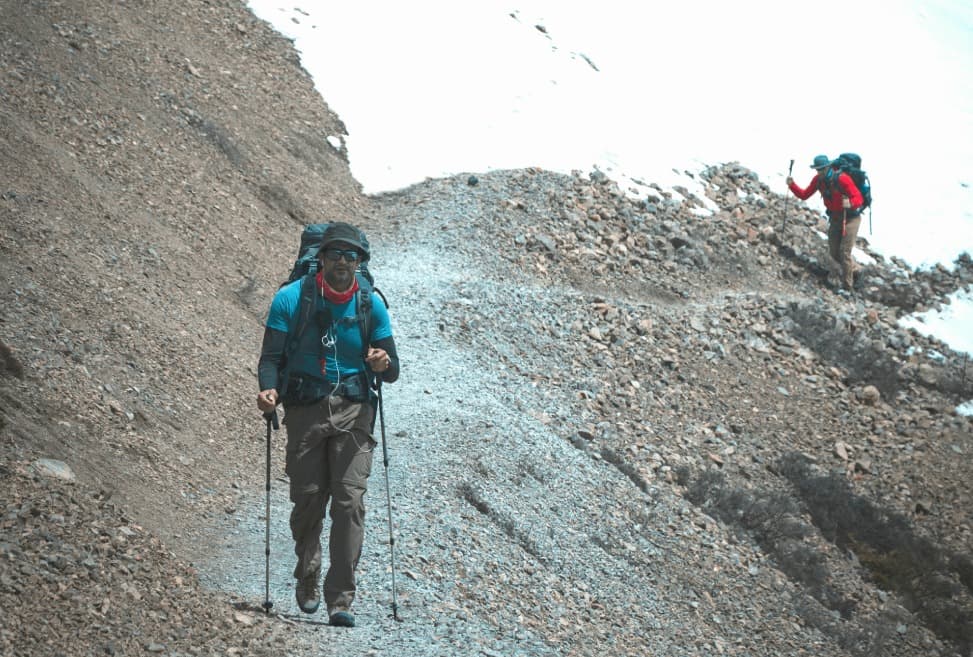
Monastery visits and puja attendance where the timing lines up naturally, not scheduled around a group's arrival. Village walking days between Ghandruk and Ghorepani where the wellness activity is simply pace — slow enough to notice terraced fields, wood smoke, a household's daily routine that hasn't been arranged for anyone passing through. Nothing on this route was built to be photographed; that's largely why it works.
What is Nepal Wellness Year 2027, and how does it affect planning now?
A national initiative announced by Nepal's Tourism Board in April 2026, tied to a UN-recognised International Wellness Day and a ten-year wellness tourism strategy running to 2035. Demand for genuine wellness routes is set to climb through 2027, while the small number of properties capable of delivering them — Shinta Mani Mustang among them — aren't expanding capacity at anything close to the same pace. The current booking window is the quiet one; that's a scheduling fact worth acting on now rather than waiting for 2027 itself.
Conclusion
None of what's described above is a package you tick a box for. It's a route through specific villages, at a specific pace, ending at a specific property that understands the difference between comfort and distraction. If that's closer to what someone actually meant by "wellness trip" than a spa day ever was, the Annapurna wellness route is where that conversation should start. For a broader sense of how we build walking days into any Nepal itinerary — wellness-focused or not — the luxury trekking routes across Nepal page covers the wider picture, and the luxury Nepal tour piece is a useful next read for anyone still deciding about a Nepal tour with operator insights.
Tell us your dates and what you're hoping to walk away with, and we'll build the route from there. Get in touch.