There's a version of a luxury Bhutan tour that most operators sell. Private car. Five-star lodge. Tiger's Nest with a guide. Dzong photos at sunset. Back to Paro. Comfortable, efficient, forgettable.
Then there's the version where Phub — my guide in Paro, who's been walking these valleys for over two decades — calls ahead to a monastery because he knows the head monk personally, and you spend an hour inside a room that isn't on any itinerary, watching a prayer ceremony that started before tourism existed and will continue long after it passes.
The difference between those two trips isn't the hotel. It's the relationship. It's knowing the right people.
I run Everest Luxury Holidays. I've been designing luxury Bhutan tours for years, and I've watched the same pattern repeat itself with every guest who comes back changed: it wasn't the lodge that did it. It was the moment the country opened up and let them in.
This is what I mean by local connection — and this is what this guide is actually about.
Why Bhutan Is Genuinely Different From Every Other Luxury Destination
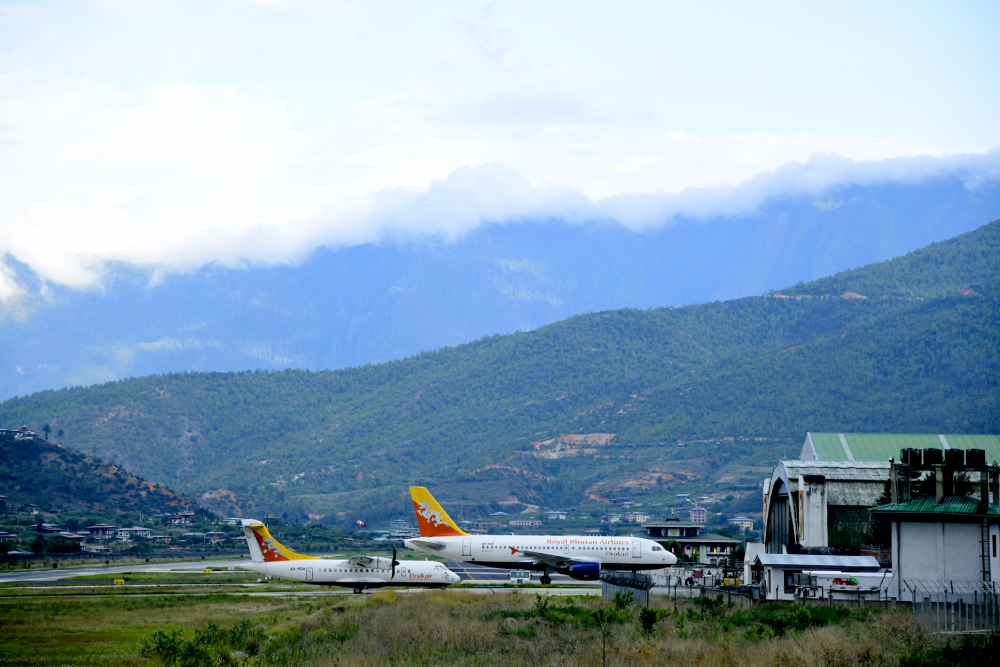
Before we talk about what a luxury Bhutan tour includes, it helps to understand what Bhutan is.
Bhutan is the only country in the world that measures Gross National Happiness as a policy framework. Tourism is controlled not by quotas, but by cost — a $100 Sustainable Development Fee per night per visitor that funds healthcare, education, and conservation. Every visitor must travel with a licensed guide. There are no backpacker hostels, no unplanned arrivals, no accidental tourism.
This isn't restrictive. It's intentional. Bhutan has made a deliberate decision to protect what it is — the free education, the free healthcare for citizens, the pace of life — rather than sell it cheaply to volume. When you arrive in the Paro Valley, and the first thing you notice is that it looks almost exactly as it did in photographs from fifty years ago, that's not an accident. That's policy.
For the luxury traveller, that intentionality is actually the product. You're not buying access to a place that's been flattened for tourism. You're travelling to somewhere that has actively resisted that flattening.
The question is whether your operator has the connections to take you inside that — or whether you'll experience it from a respectful distance.
What "Authentic" Actually Means in Bhutan (And Why Most Operators Don't Deliver It)
The word authentic has been so abused in travel marketing that it's nearly meaningless. Every operator uses it. Most of them mean: local food on the menu, traditional architecture in the lodge, a guide who wears a gho.
That's aesthetics. It's not authenticity.
Real authenticity in Bhutan looks like this: my guide Karma knows a farming family in Punakha who grows the valley's famous red rice. They don't receive tourists. They've never been on a travel blog. But Karma grew up near them, and when we visit, there's no performance — just a family going about their morning, who happen to be willing to share tea with people Karma brought. The conversation is real because the relationship is real.
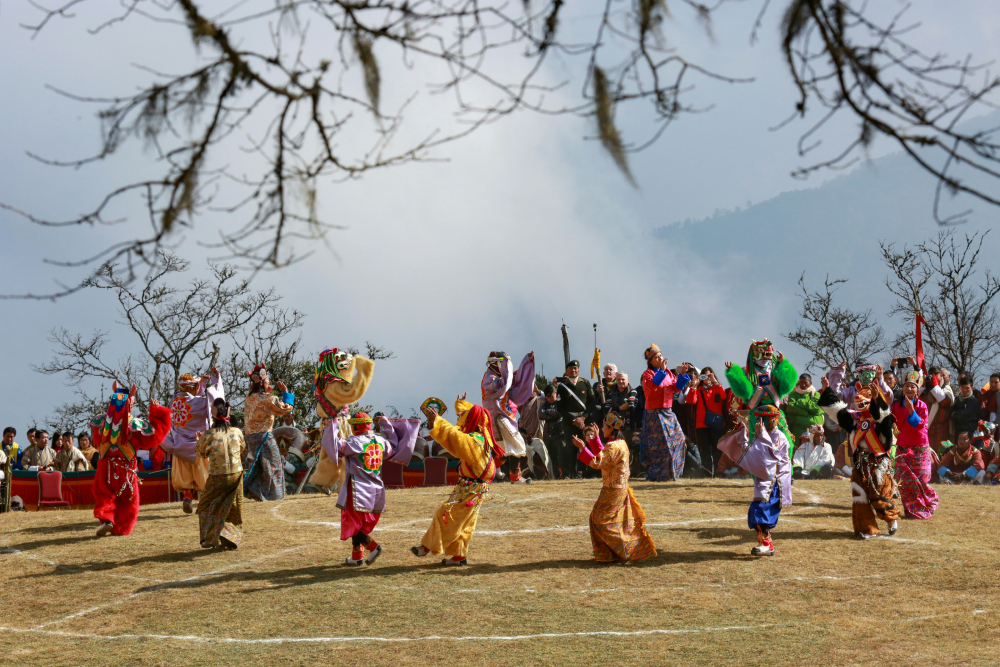
Or: Kinley, who has guided in Bumthang for years, sat with us at a festival where the monks knew him by name. We weren't observers at a cultural display. We were guests of people Kinley had known for a decade.
This is the texture of what a luxury Bhutan holiday should feel like. Not staged encounters designed for cameras. Actual access through genuine relationships.
The reason most operators can't offer this isn't that they're dishonest — it's that they don't have those relationships. They're outsiders building itineraries around public sites and hotel recommendations. The difference with ELH is not a marketing line. It's the difference between a guide who knows the monk and a guide who books the monastery visit online.
The Five Valleys and What Each One Actually Gives You
A luxury Bhutan tour moves through a sequence of valleys, each with its own character, its own pace, its own reason for existing in your itinerary. Most operators treat them as stops on a route. The difference is what happens inside each one — and that depends entirely on who's taking you there.
Paro: The Threshold
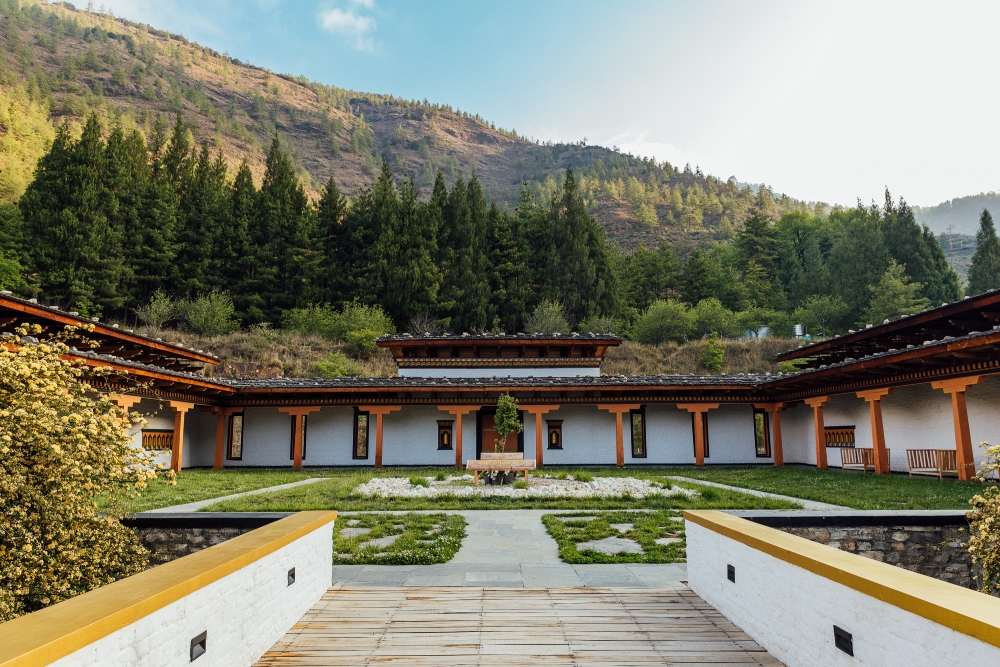
Paro is where every journey begins and most end. Tiger's Nest — Taktsang Monastery, built into a cliff face 3,000 feet above the valley floor — is here, and it earns its reputation. But Paro is not just Tiger's Nest.
It's a valley of wheat fields and cold river water, of ancient dzongs visible from the road, of farmland that has fed the same families for generations. The town moves slowly. The light in the late afternoon, when it falls across Drukgyel Dzong at the valley's head, is some of the most quietly beautiful light I've seen anywhere in the Himalayas.
Paro is where you acclimatise — not just physically to the altitude, but psychologically to Bhutanese time. The country asks you to slow down from the first hour. Paro is where that process begins.
Thimphu: The Capital That Isn't What You Expect
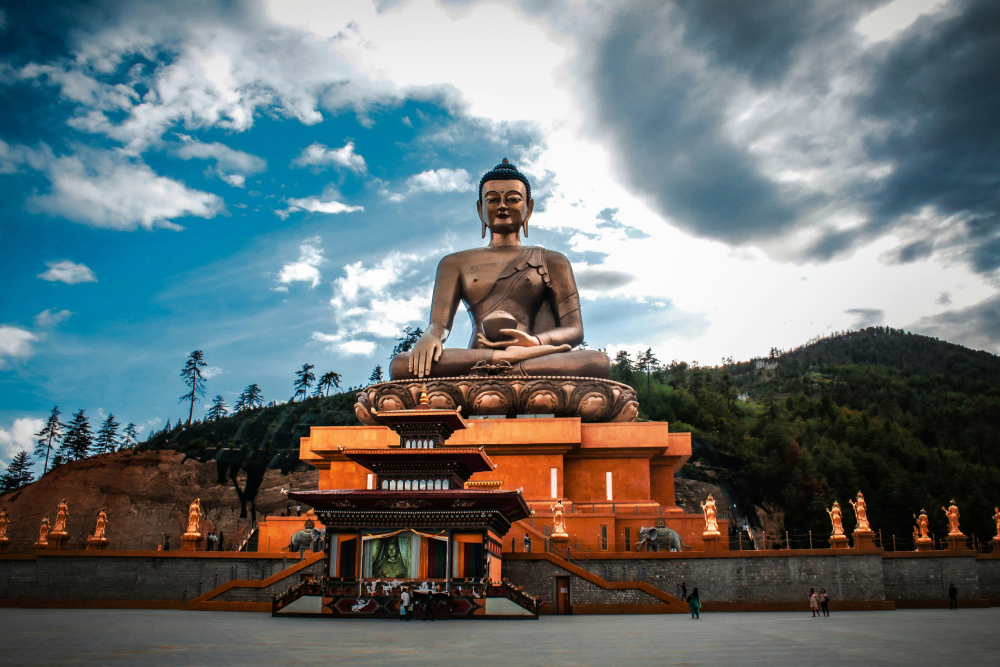
Thimphu has 100,000 people and no traffic lights. That tells you something important about what kind of capital it is.
What most tourists do here: Tashichho Dzong, the memorial chorten, and a shop or two. What's actually here: artisan workshops where thangka painters spend three years learning a single technique, government buildings where Buddhist architecture and modern policy coexist without contradiction, a city that is modernising at its own deliberate pace and on its own terms.
One day in Thimphu, done with someone who knows where to go, explains Bhutan's entire philosophical framework — happiness over GDP, purpose over consumption, tradition and progress held in careful tension. That understanding changes how you see every valley that follows.
Punakha: The Valley That Changes People
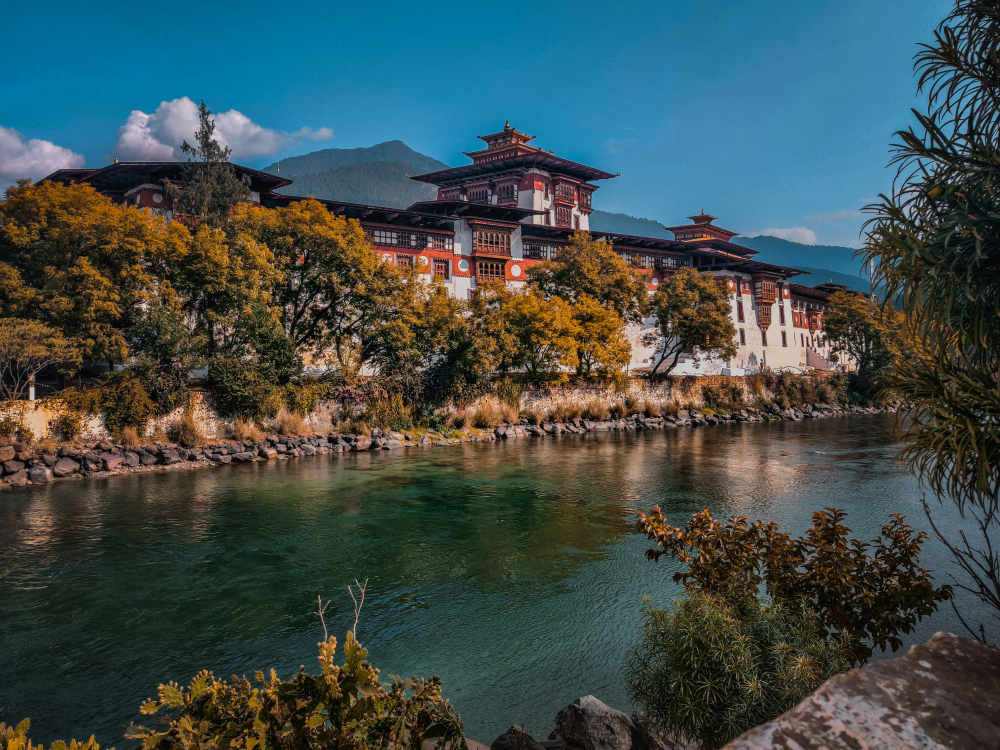
Punakha is Bhutan's old capital and, for many of our guests, the place they remember most clearly years later. It sits at the confluence of two rivers — the Pho Chhu and Mo Chhu — warmer and greener than anywhere else in the country. Punakha Dzong, the country's most sacred fortress, stands at that junction.
But the dzong isn't what lingers. What lingers is the walk through rice paddies at seven in the morning, when the light is still flat, and the farmers are already working. The suspension bridge with no one else on it. The sense that this valley has been sustaining life for so long that your presence barely registers in its continuity.
Punakha is where travellers stop moving and start being present. That shift — when it happens — is irreversible.
Gangtey and Phobjikha: Where Stillness Is the Activity
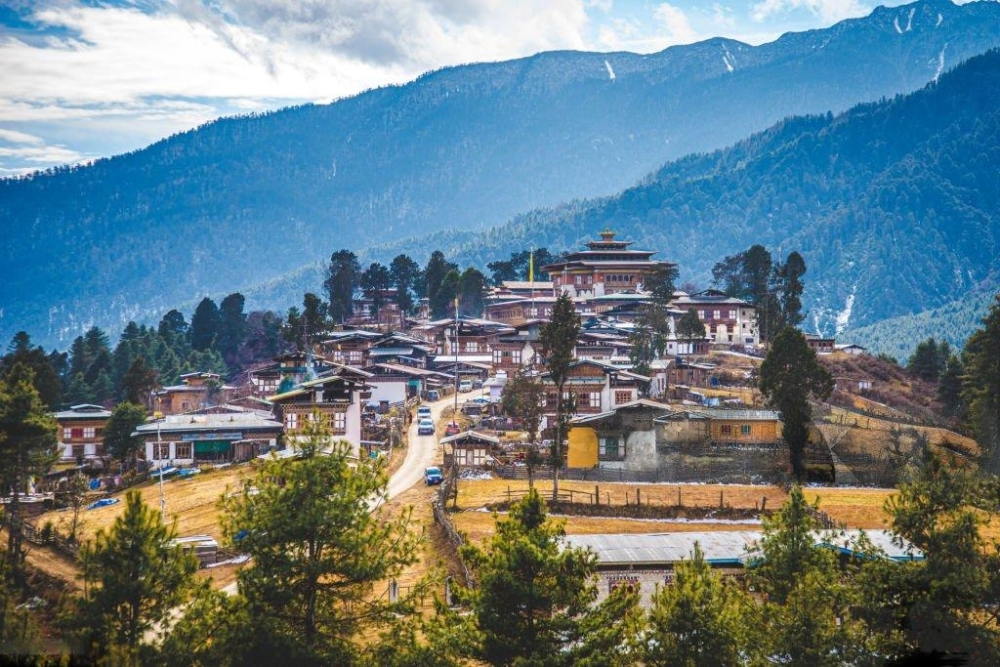
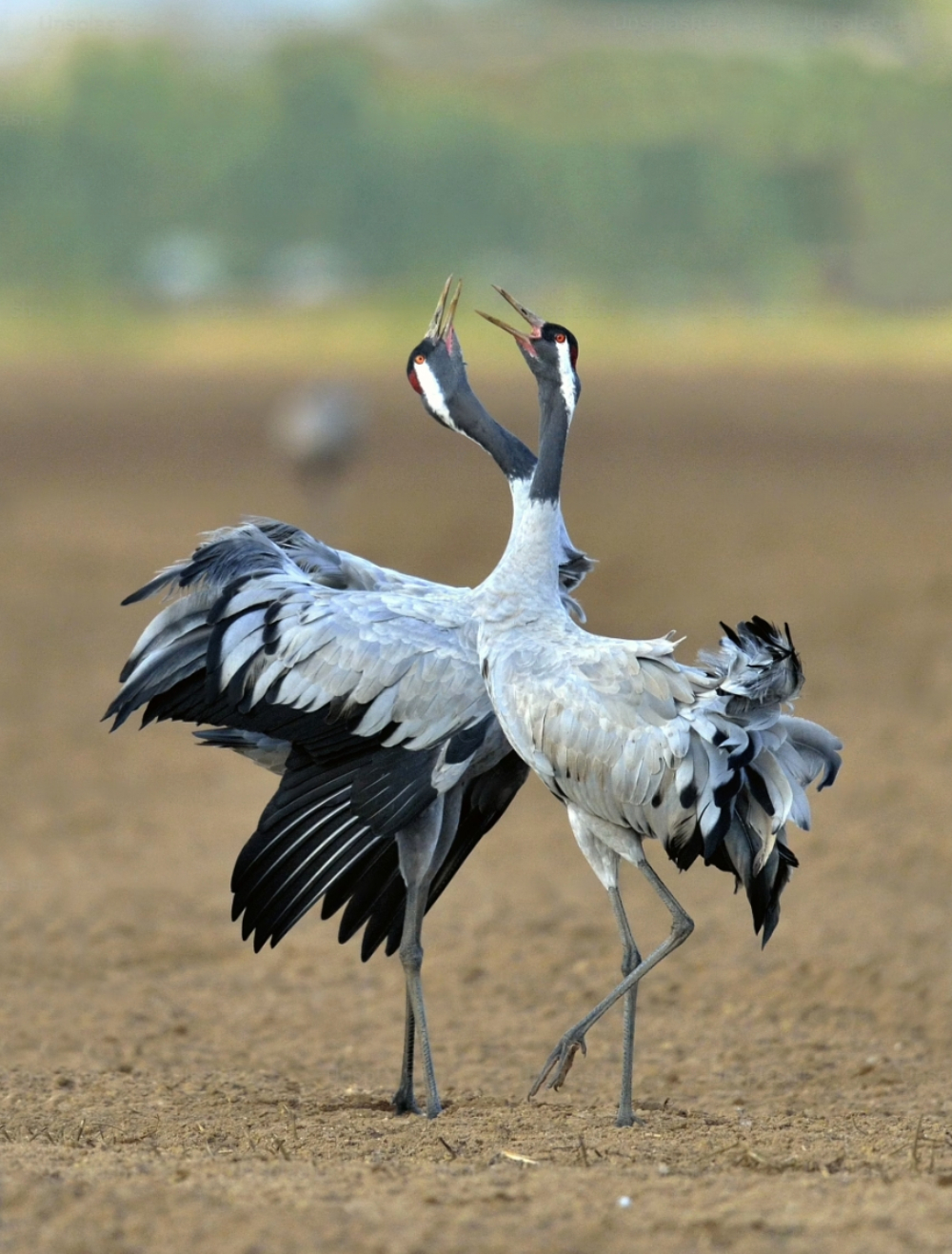
Phobjikha is a wide glacial basin in the centre of Bhutan — flat in a country of mountains, quiet in a way that feels deliberate. From November through March, the black-necked cranes that migrate from the Tibetan plateau winter here. They arrive at dawn and call across the valley in a sound that carries further than you'd expect.
Most travellers are surprised by Gangtey. There is no checklist. There is no famous site to photograph and move on from. What there is: a valley that teaches you that doing nothing, attentively, is one of the most demanding and rewarding things a person can do.
We spend at least two nights here on any itinerary that has space for it. Guests who thought they wanted to keep moving are invariably the ones most grateful we insisted.
Bumthang: Where Bhutan's History Sits Closest to the Surface
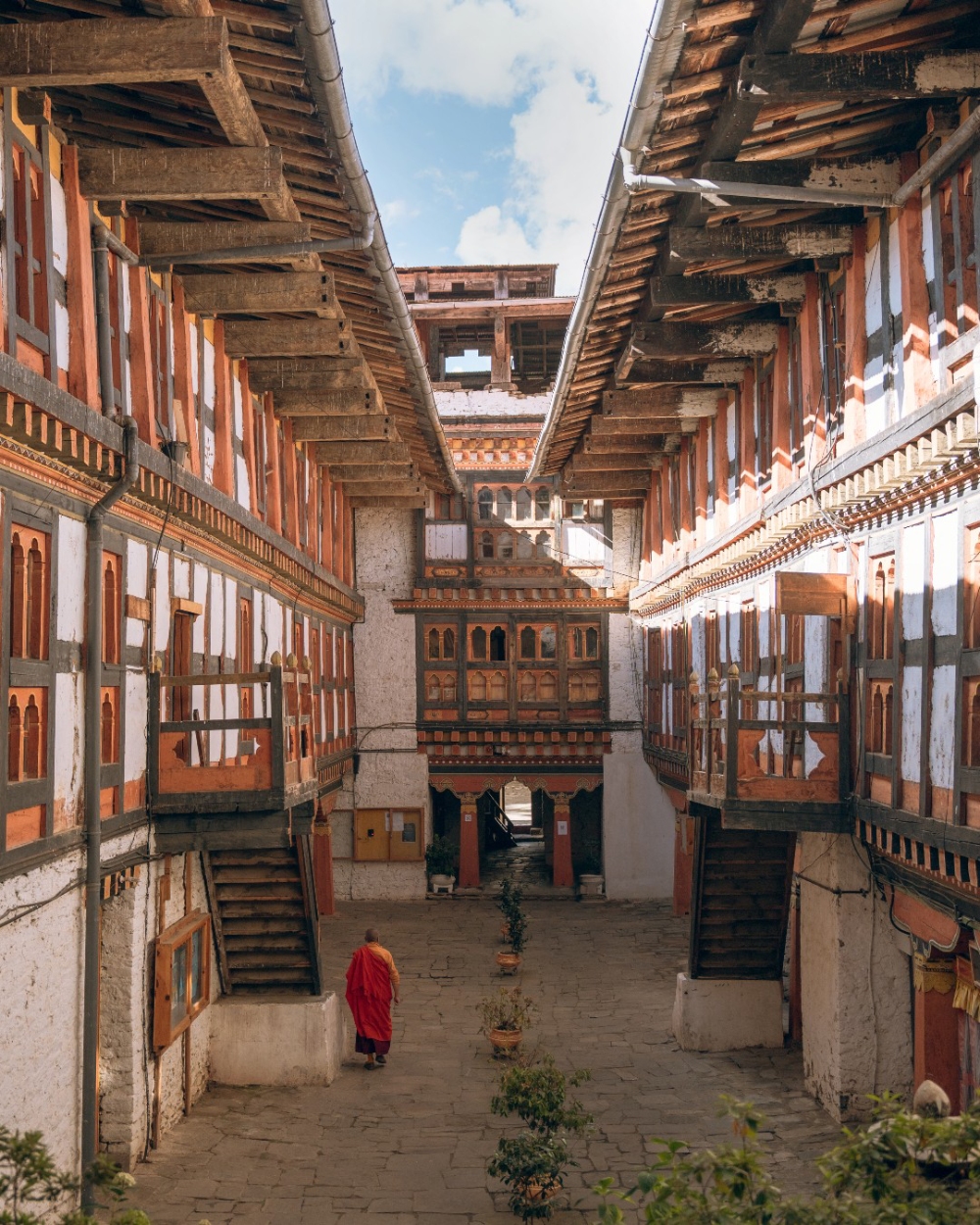
Bumthang is the most remote of the main valleys and Bhutan's spiritual core. The temples here are centuries old. The pilgrimage routes predate modern Bhutan. The monks follow schedules that have not fundamentally changed in generations.
Getting to Bumthang requires commitment — a full day's drive from Paro or a short domestic flight. That remoteness is not incidental. It's what preserves the valley's character. Tourism hasn't yet changed the rhythm here the way it has in more accessible places.
I have guides in Bumthang who have worked these valleys their entire lives. They know which monastery is holding a ceremony this week, which family will share a meal if asked respectfully, and which road leads somewhere that isn't on any map. That knowledge is not transferable. It belongs to people who have been here, continuously, for a long time.
Bumthang is where most guests finally understand why they came to Bhutan.
How to Choose a Luxury Bhutan Tour: The Questions That Matter
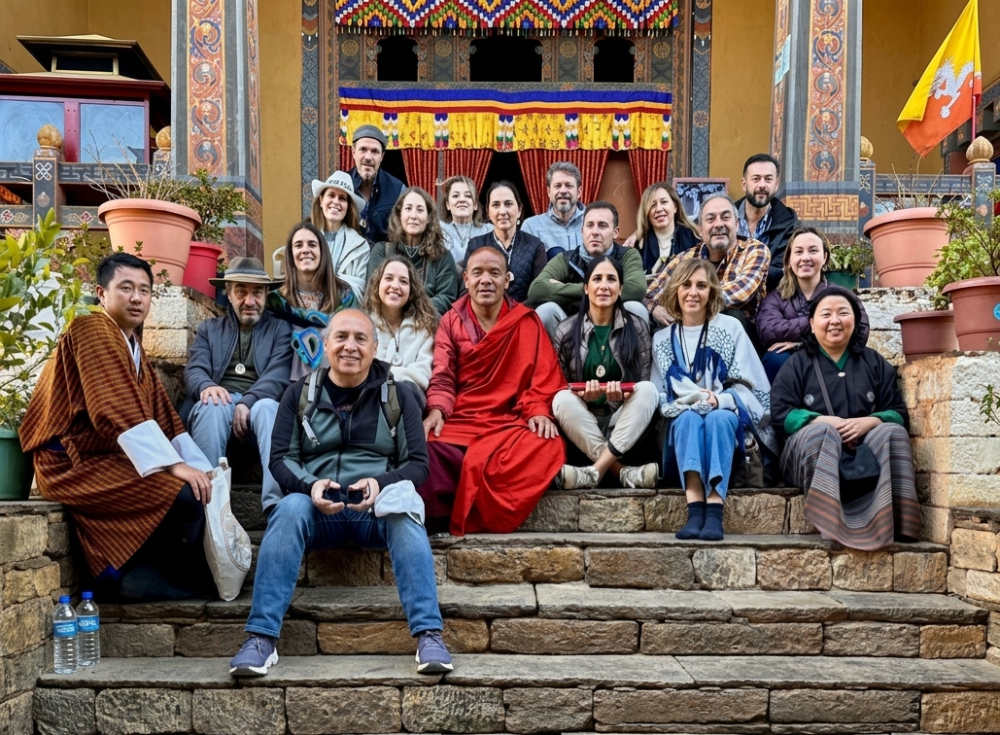
When you're comparing luxury Bhutan tour operators, the price difference between them is rarely the most important variable. The questions that actually matter are different.
Who is your guide, specifically, and what are their relationships?
A guide who grew up in a valley knows the families, knows the monks, knows which monastery is having a ceremony this week and which farmer will let you walk his land — that guide changes what's possible. Ask your operator who exactly will be guiding you and what their background in that region is.
How is the itinerary built?
Is it a fixed route that everyone gets, or does it respond to who you are — your pace, your interests, the things that move you versus the things that exhaust you? Good luxury travel is built around the traveller. Not the other way around.
How many guests does the operator manage at once?
Ask this directly, because the answer changes everything downstream of it. We run private departures only — we don't fill spare seats on a shared itinerary to hit a minimum. Ramkrishna and I know every guest's name and itinerary before they land, not because that's a nice touch, but because at our volume it's simply still possible to. Ask a larger operator the same question and watch how the answer shifts to talking about group sizes rather than guest count. If they're managing forty departures a month, your guide is executing a script, not building a day around you.
What happens when something doesn't work?
Bhutan is remote. Flights get cancelled. Ceremonies change dates. The monastery you planned to visit is closed. The difference between a good operator and a great one is what they do in those moments — and that comes down to relationships and flexibility, not call centres.
Whether Bhutan is safe to travel.
Luxury Accommodation in Bhutan: What to Know Before You Choose
Bhutan has a small number of genuinely world-class properties. The choice between them matters — but not in the way most people think when they start researching.
Six Senses Bhutan: The Full Circuit With Wellness at Its Core
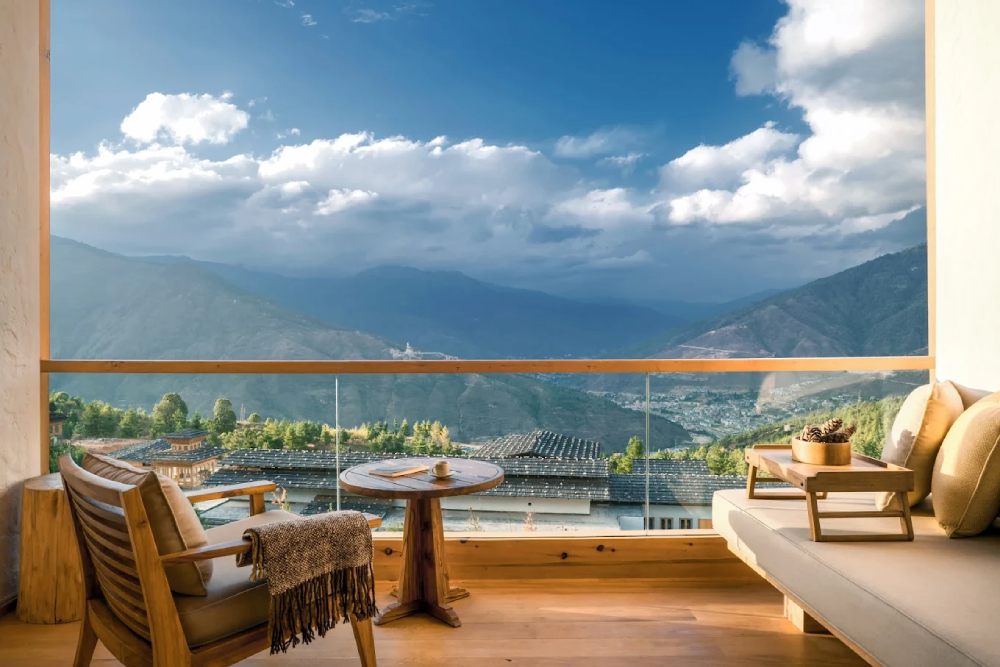
Six Senses Bhutan operates five lodges across Thimphu, Punakha, Gangtey, Bumthang, and Paro. Each is positioned inside its valley rather than above it — the design philosophy places you in the landscape, not overlooking it from a distance.
The wellness programming here is the most developed in Bhutan. Spa treatments draw on traditional Bhutanese medicine, the hot stone bath is done properly rather than as a tourist novelty, and the sustainability credentials are operational rather than decorative. For travellers who want consistency across the full five-valley circuit — same service standard, same philosophy, moving with you — Six Senses is the architecture that makes that possible.
We have a complete Six Senses Bhutan guide covering lodge-by-lodge detail, 2026 pricing, and how we design journeys around their properties.
Amankora: When You Want the Luxury to Be Invisible
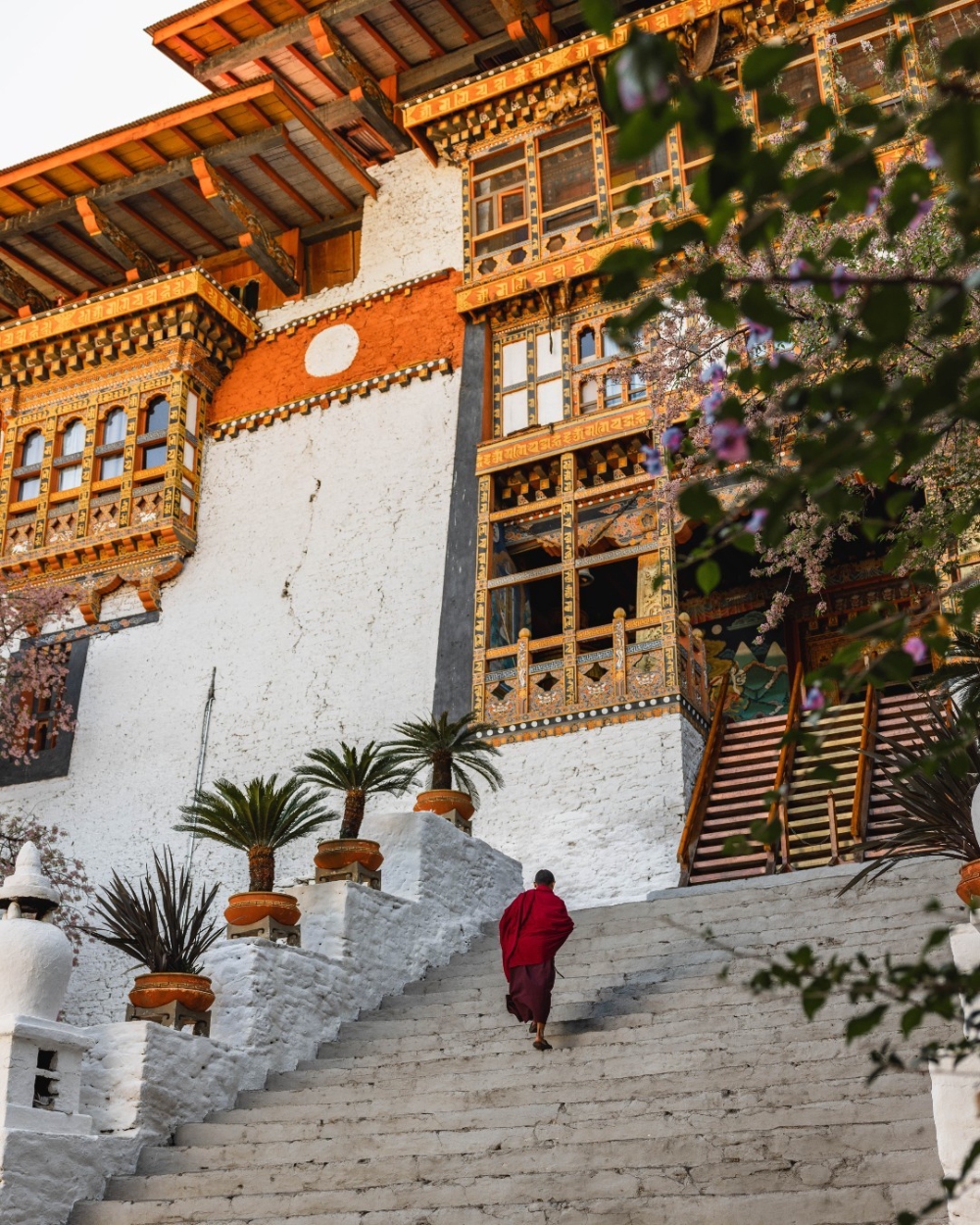
Amankora also covers all five valleys with the same circuit logic — Paro, Thimphu, Punakha, Gangtey, Bumthang — but the character is different. Quieter. More minimal. The lodges are built from local stone and timber, warm rather than designed, and the service model is calibrated to anticipate rather than perform.
If Six Senses makes its presence felt — in a good way — Amankora tends to recede. The country comes forward. That's a deliberate choice, and for certain travellers it's exactly right.
Our Amankora Bhutan guide covers itineraries, honest pricing, and what the circuit actually feels like across seven to nine nights.
COMO Uma: Smaller Footprint, Exceptional Standard
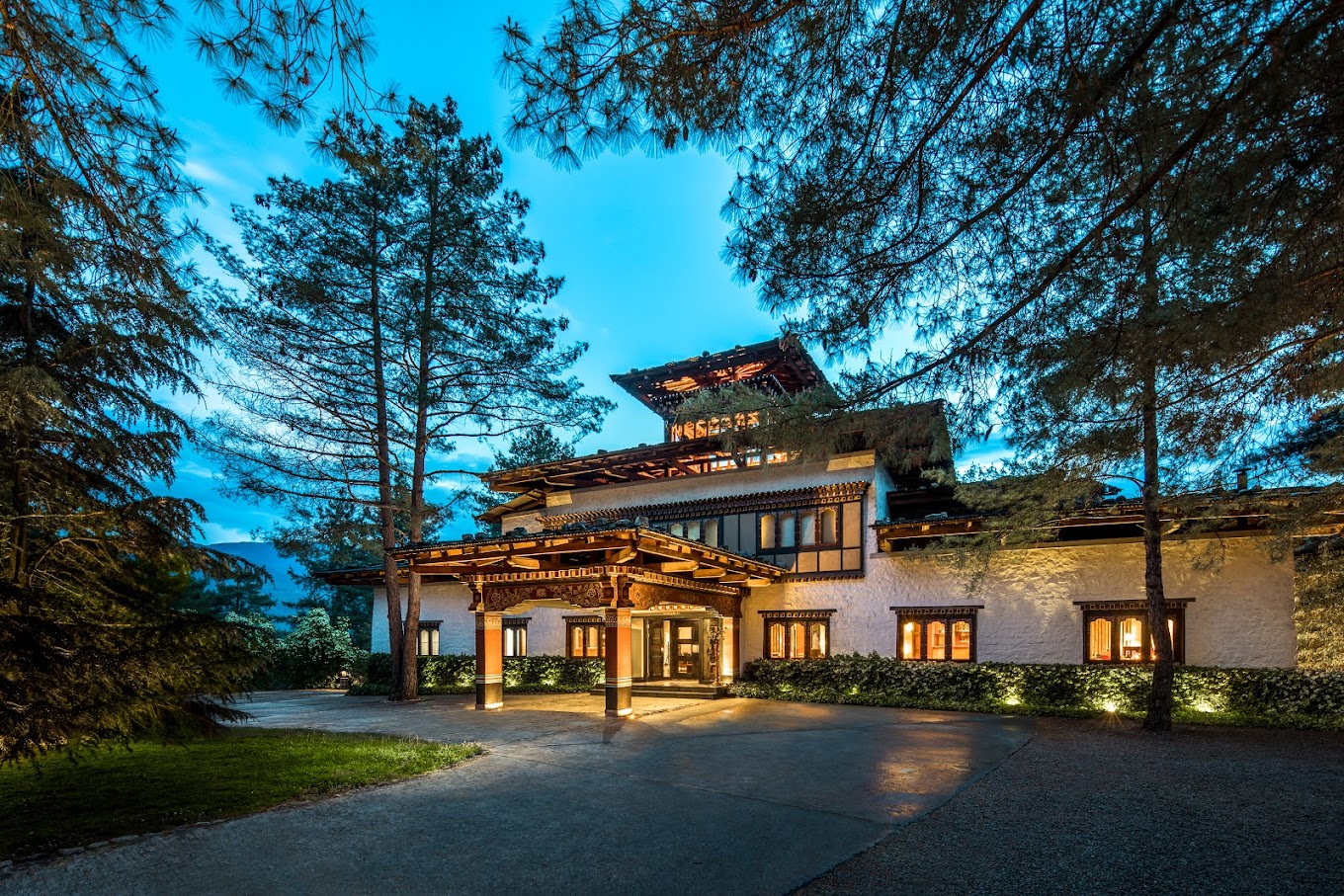
COMO Uma has two properties — Paro and Punakha. For travellers who don't need the full circuit, or who want to anchor a shorter journey in Bhutan's two most visited valleys, COMO Uma delivers exceptional food, strong wellness programming, and a level of privacy that the larger circuit properties can't always match. It's a good choice for couples on a five or six-night journey who want quality without complexity.
The Honest Truth About All of Them
The lodge is the container. It is not the content.
I have watched guests in a Six Senses suite miss Bhutan entirely because the itinerary was wrong and the guide had no real relationships in the valley. I have watched guests in considerably simpler properties leave genuinely changed because the person guiding them knew what mattered and when to be quiet.
Choose the lodge that suits your taste and your budget. Then make sure the operator behind it has the depth — the guides, the relationships, the genuine knowledge of each valley — to fill those days with something real. That's the variable that actually determines what you bring home.
When to Go: Seasons Without the Brochure Language
Spring (March to May) is when the rhododendrons bloom across the mountain passes, the weather is warm enough to be comfortable, and the Paro Tsechu festival brings masked dances and enormous thangka unfurlings that you will not see anywhere else on earth. It is peak season — prices are higher, availability is tighter, and you should book three to six months in advance.
Autumn (September to November) is clearer. The monsoon has ended, the skies are open, and the Himalayas are visible in a way they aren't for much of the year. The Thimphu Tsechu happens in September. October is, in many respects, the best month in Bhutan — light, temperature, and visibility all align. Book further ahead than you think you need to.
Winter (December to February) is what most people overlook. Fewer tourists, lower prices, and the Phobjikha Valley full of black-necked cranes. The cold is real — Bumthang in January requires serious preparation — but it is the most peaceful time to experience Bhutan, and for certain travellers, that peace is exactly what they came for.
Monsoon (June to August) is not impossible, but the landscape is dramatically different — green, heavy, wet. Some valleys are inaccessible. If you go this season, go knowing what it is, not expecting what it isn't.
For our wellness retreats in Bhutan.
What a Luxury Bhutan Tour Costs: Honest Numbers
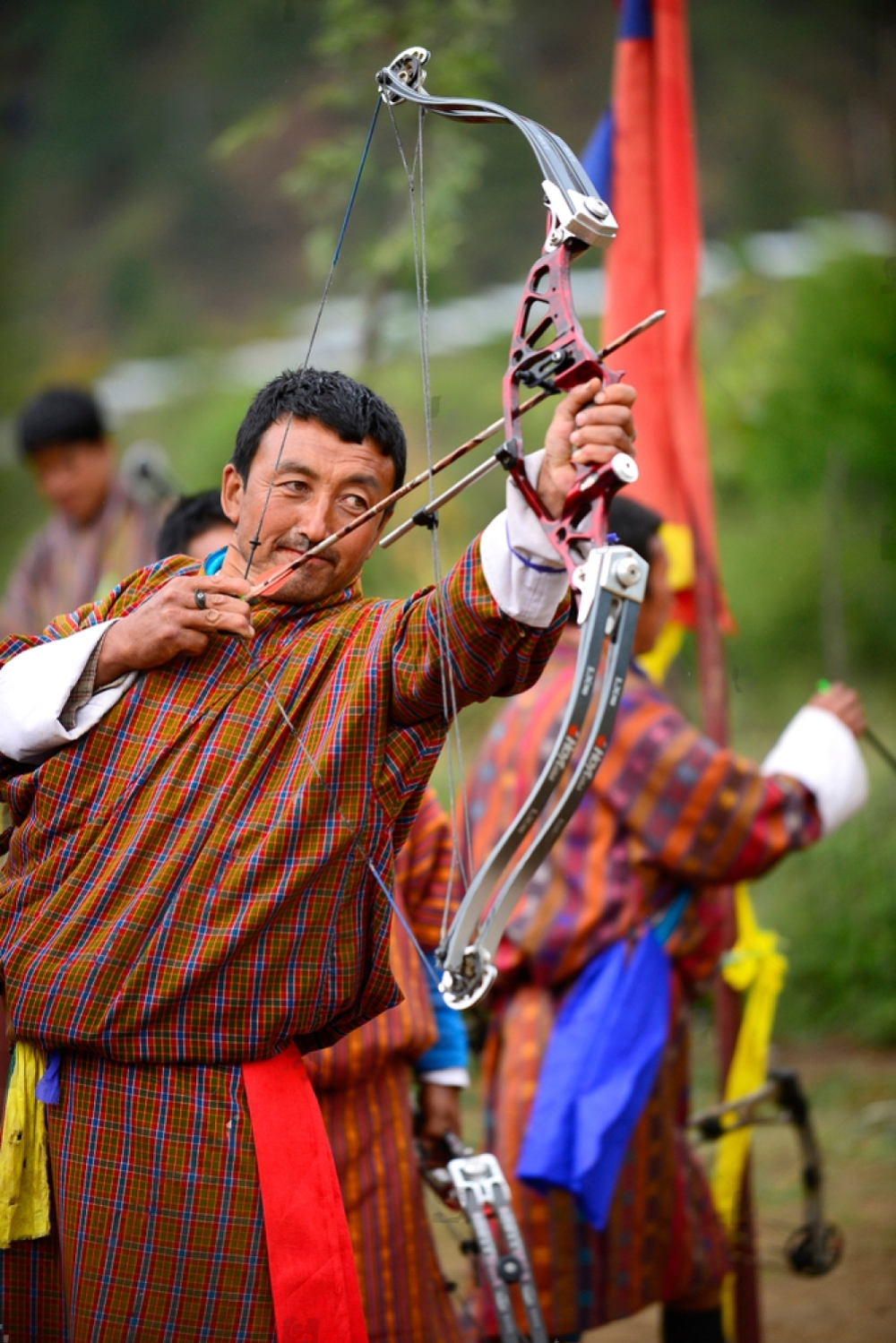
Bhutan's $100 per night Sustainable Development Fee is non-negotiable and goes directly to the government. It funds the infrastructure that keeps the country intact. It is not a tourism tax — it is participation in a system that makes Bhutan what it is.
Beyond that, a fully private luxury Bhutan tour — including accommodation, private guide, private transfers, all meals, and visa processing — starts from around $1,200 per person per night based on two people sharing, depending on season and lodge. A five-night journey runs from approximately $5,999 per person; longer itineraries are priced on request.
That is a significant investment. What it buys, done correctly, is irreplaceable access to one of the few countries in the world that has refused to be consumed by mass tourism. Whether that represents value depends entirely on what happens inside those seven nights — and that, again, comes back to who designs it and who guides it.
For a detailed breakdown by property, see our Six Senses Bhutan guide and our Amankora guide, both of which include 2026 pricing tables.
Why the Right Operator Changes Everything
I want to be direct about something, because I think it matters.
There are many operators who will sell you a luxury Bhutan tour. The lodges are the same. The valleys are the same. Tiger's Nest is on every itinerary. At the level of logistics, the differences are small.
What isn't the same is this: when Phub calls a monastery and the monk answers because he knows Phub, that's not replicable through a booking platform. When Karma adjusts your entire day because he noticed you were more interested in the farmers than the fortress — without you saying a word — that comes from a guide who understands people, not just places. When Kinley sits next to you at a ceremony and explains what's happening in real time, not because it's scripted but because he understands both the culture and you, that's what a decade of relationships produces.
We have been designing luxury Bhutan holidays long enough to know that the country rewards patience, presence, and genuine connection. Those aren't things you can manufacture. They're things you build over years of being here, knowing the people, and caring about what the country actually is rather than what it looks like in photographs.
If that's the kind of Bhutan you're looking for, we should talk.
Frequently Asked Questions
Do I need a visa for Bhutan?
Yes. All visitors except Indian nationals require a visa, which must be processed through a licensed Bhutanese tour operator. ELH handles the entire visa process as part of your booking. Processing takes approximately five to seven business days. Indian nationals require an entry permit rather than a traditional visa, but still need a licensed guide.
What is the Sustainable Development Fee, and is it worth paying?
The SDF is $100 USD per person per night, paid to the Bhutan government. It is not negotiable and not operator profit. It funds healthcare, education, conservation, and the tourism infrastructure that makes Bhutan what it is. I'd argue it's one of the most honest travel fees in the world — you know exactly where it goes and exactly why it exists.
How long should a luxury Bhutan tour be?
Seven nights is the minimum I'd recommend for a meaningful experience of Bhutan's main valleys. Five nights is possible but compressed. Nine or ten nights, if you have the time, allows Bumthang and Gangtey — the two valleys that most consistently change people — to breathe properly. Anything under five nights is a rushed introduction rather than a journey.
Which is better — Six Senses Bhutan or Amankora?
They're different in character rather than quality. Six Senses offers stronger wellness programming and a slightly more present design aesthetic. Amankora is more minimal — it tends to recede into the valley. Both are exceptional. The right choice depends on what you want the evenings to feel like. We have detailed guides on Six Senses and Amankora that will help you decide.
Is Bhutan worth the cost compared to other luxury destinations?
The cost is real. So is what you get. Bhutan is one of the only places left where controlled tourism has actually preserved culture rather than commodified it. Whether it's worth it depends on what you're travelling for. If you're looking for another beautiful hotel in a beautiful place, there are cheaper options. If you're looking for a country that will surprise you — that will feel genuinely different from everywhere else you've been — Bhutan is singular. I haven't met a guest who came back and said it wasn't worth it.
Can Bhutan be combined with Nepal?
Yes, and it's one of the most rewarding combinations in the region. Kathmandu connects directly with Paro, and many of our guests design two-week itineraries that take in Nepal's Himalayan landscapes and cultural depth before continuing to Bhutan. We design both destinations and can build the full journey as a single itinerary. Explore our luxury Nepal tours for context.
What should I pack for a luxury Bhutan tour?
Layers are essential — temperatures shift dramatically between valleys and between morning and afternoon. Modest dress is required for monastery and dzong visits (covered shoulders, knees below the knee). Good walking shoes matter more than you'd expect — even non-trekking itineraries involve significant walking on uneven ground. A lightweight down jacket works for most seasons; winter visits require serious cold-weather preparation, particularly for Bumthang and Gangtey.
Plan Your Luxury Bhutan Tour With ELH
Every journey we design starts with a conversation — not a quote form, not a template itinerary. We ask who you are, what you've already seen, what moved you on previous trips, and what you're genuinely looking for in Bhutan.
From there, we build something specific to you: the right lodges, the right valleys in the right sequence, guides who have the relationships that matter, and days that have space in them for the moments you can't plan.
Enquire about your Bhutan journey — or if you want to understand the properties first, read our in-depth guides to Six Senses Bhutan and Amankora Bhutan.
Bhutan doesn't open for everyone. It opens for people who approach it correctly. We'll make sure you do.